← Marketplace Morning Report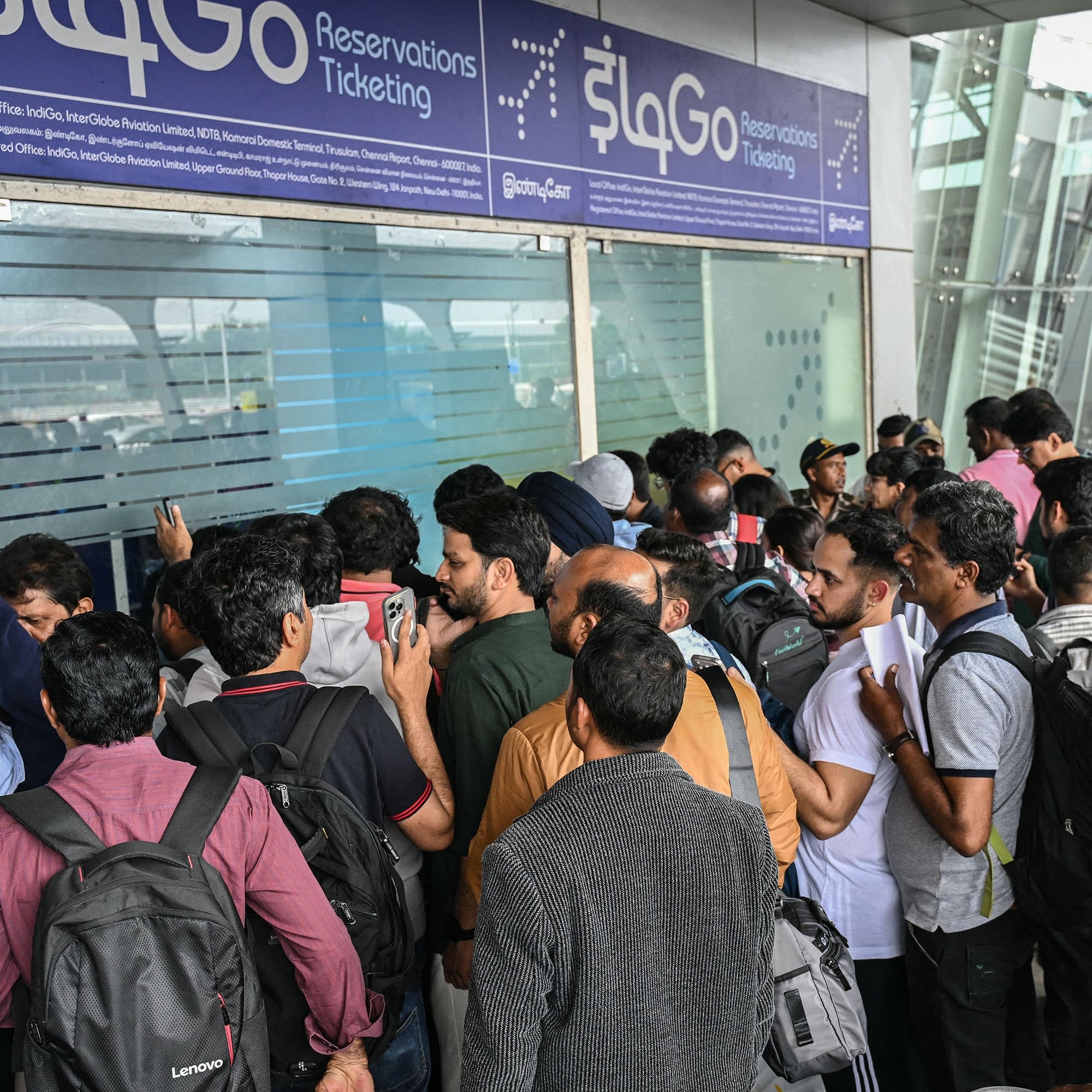
Marketplace Morning Report
India's biggest airline faces another day of delays and cancellations
00:06:40
Loading summary
Transcript23 lines
- [00:00]
A
This is the exclusive table with the view. This is your name on the list. This is three times points on dining with Chase Sapphire Reserve and a $300 dining credit Chase Sapphire Reserve now even more rewarding.
- [00:10]
B
Learn more@chase.com Sapphire Reserve cards issued by JPMorgan Chase bank and a member FDIC.
- [00:14]
C
Subject to credit approval.
- [00:16]
B
Noches mas brigantes momentos mas intensos y tu aroma debe Desta Cartanto Como 2 La Collection Azzaro wanted ofrese fragancias audaces calidas e sensuales parada temporada the most wanted eau de parfum intense 10 un aroma magnetico deliciosamente seductor conotas de to y madera sambar forever wanted elixir combina notas de cuero y frambuesas con elegancia e intencidar es la comfiance.
- [00:41]
Dos descubre azaro y esta tempurada be wanted Compraya.
- [00:47]
D
India's biggest airline faces another day of delays and cancellations. Live from the uk, this is the Marketplace Morning report from the BBC World Service. I'm William Lee Adams. Good morning. Major airports in India have descended into chaos after the airline Indigo either canceled or delayed hundreds of flights for the fourth consecutive day. Archana Shukla has been following the story from Mumbai. Hi, Archana.
- [01:10]
E
Hi, William.
- [01:11]
D
So what's behind this?
- [01:13]
E
Well, you know Indigo, which is India's largest airline, has been cancelling multiple flights every day for the last few days. In fact, flight cancellations have picked up to 170 to 200 flights being cancelled a day, which is leaving thousands of travelers stuck at airports across the country. There's chaos at every single airport. In fact, even today, all the domestic flights out of the capital city of New Delhi have been cancelled. Now why this is happening is because Indigo says there have been certain technical issues with aircrafts or winter schedules that has delayed some of their flight schedules. But the biggest reason is because of a pilot shortage. Now, the government had come up with some new crew rostering rules which gives more rest time to pilots and reduces nighttime flying. All the airlines were supposed to adhere to that by the 1st of November and Indigo has failed to quickly adapt to it. And right now it's facing pilot shortages and hence is leading with these cancellations. We are not seeing these type of cancellations with the other airlines like Air India or Akasa.
- [02:18]
D
When are things likely to get back to normal?
- [02:21]
E
Indigo has said that, you know, it would take at least till February to get its operations sorted and adhere to the timelines and the rules and regulations. With the new crew rostering rules for the next two days, the spate of cancellations will continue, they've said, and from 8th of December they are going to cut back their flight operations. Now this means that, you know, there is going to be continued chaos for passengers who would be trying to look for alternate and rescheduled flights and there would be fewer in number for them to choose from.
- [02:55]
D
What have authorities said about it all?
- [02:57]
E
There has been sharp criticism, but also now that Indigo has admitted it has failed, it has also requested that it needs more time to adhere to these rules. The aviation regulator has given them exemption till February to adapt to these rules.
- [03:11]
D
Archana, thanks for joining us on Marketplace.
- [03:14]
E
Thank you, William.
- [03:15]
D
Alright, let's do the numbers. More threads, often called China's Nvidia surged roughly fivefold after its $1 billion listing as investors bet the US sanctioned firm will gain from Beijing's push to strengthen domestic chip product. And BlackRock's Bitcoin exchange traded fund shed $2.7 billion in the five weeks to November 28th. The leaders of the Democratic Republic of Congo and Rwanda have signed a peace deal aimed at ending the long running conflict in the resorts rich region at a Summit hosted by US President Donald Trump in Washington. Here's the BBC's Ann Soy.
- [03:51]
F
It's a complicated security outlook in the eastern Democratic Republic of Congo with multiple conflicts going on in this vast region, but also very r region with mineral wealth estimated to be worth about $25 trillion. And that is thought to be part of the problem. There are dozens of armed groups operating there and Rwanda is a tiny country in Eastern Africa, but then it has the military strength and after signing this deal now many people are waiting to see what's going to happen. There's a lot of skepticism, it has to be said on the ground because there have been other deals signed in the past.
- [04:31]
D
Andsoy and a major British and Swedish study into the impact of deep sea mining for critical minerals has confirmed it causes significant damage to animal life on the ocean floor. The seabed contains minerals needed for green technologies, but mining isn't yet permitted. The Eurovision Song Contest is frequently described as the world's most watched non sporting event, drawing in more than 160 million viewers every year. But next year contest stalwarts Ireland, Spain, the Netherlands and Slovenia, they won't be there. They're boycotting in protest of Israel's participation. They announced their decision after the European Broadcasting Union, which runs the event, decided not to hold A vote on whether Israel should be excluded over its military action in Gaza. The contest costs tens of millions of dollars to put on every year, a bill that split among participating nations. Here's Mark Savage, the BBC's music correspondent.
- [05:23]
G
Tensions over Israel's participation in the Eurovision Song Contest have been festering for two years now, ever since they responded to the deadly seventh of Octo Hamas attack by invading Gaza. And of course, as the death toll has risen, those protests have become more and more vociferous. In Geneva, there was a meeting of all of the member states who take part in the Eurovision Song Contest, and some of them were pushing for a vote on whether or not Israel would be allowed to participate next year. Now, in the end, the organizers did not allow that vote to go ahead. Instead, they pressed for a vote where people would ratify a package of measures that will make the public vote for the Eurovision Song Contest, where people phone and text in slightly tighter to avoid outside influence, to counter accusations that there had been government campaigns to get people to vote for certain acts across Europe. Tied to that vote was the idea or an agreement that they would not press ahead with a vote on Israel's exclusion. So when that motion passed, Israel sailed through to next year's contest and immediately four countries pulled out. And the speed with which they issued their press releases suggests that they were prepared for this eventuality.
- [06:38]
D
Early on, Israel's large scale marketing campaign for its most recent entry was a major point of concern for some rival broadcasters.
- [06:46]
G
There was a campaign that was funded by the Israeli government to advertise Israel's entry on YouTube on social media. And there was even a post on Prime Minister Benjamin Netanyahu's Instagram account advising people outside of Israel how they could vote for the act. Now, that doesn't necessarily mean that the scales were tipped in Israel's favor. It was a very popular song going into the contest, but some eyebrows were raised at how big that campaign was.
- [07:15]
D
Mark Savage there and in the uk. I'm William Lee Adams with the Marketplace Morning Report from the BBC World Service.
- [07:27]
C
A moment now to say thank you Marketplace listeners. Your giving Tuesday support made a real impact. In a moment when public media funding has been cut nationwide, your support keeps Marketplace's independent reporting on the economy accessible for everyone. And if you didn't get a chance to donate, it's always a great time to become a Marketplace investor. Give now@marketplace.org or click the link in the show notes.