Loading summary
Transcript21 lines
- [00:01]
Grainger Advertiser
If you're an H VAC technician and a call comes in, Grainger knows that you need a partner that helps you find the right product fast and hassle free. And you know that when the first problem of the day is a clanking blower motor, there's no need to break a sweat. With Grainger's easy to use website and product details, you're confident you'll soon have everything humming right along. Call 1-800-GRAINGER, click grainger.com or just stop by Granger for the ones who get it done.
- [00:31]
Nick Qureshi
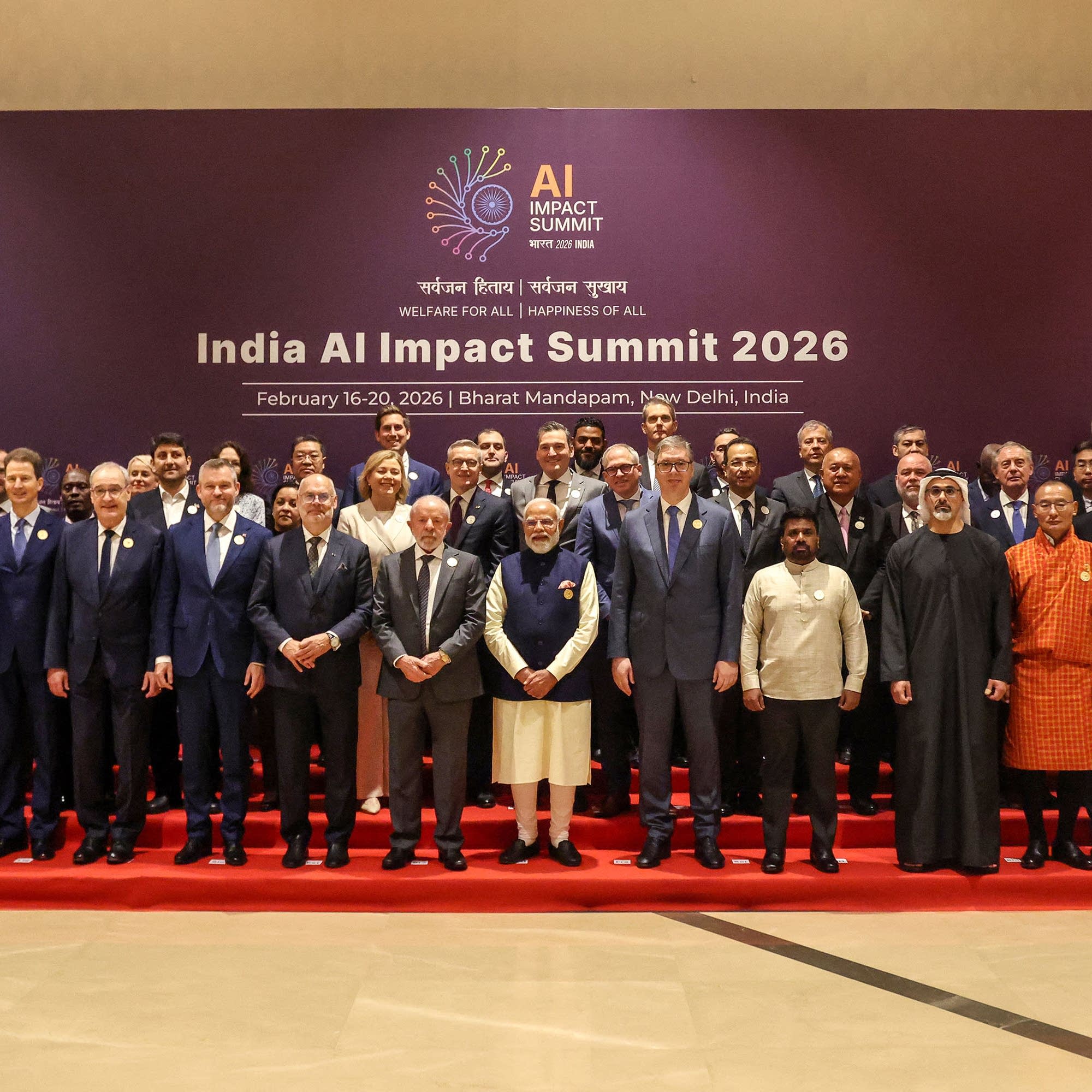
India hosts a key AI summit without Microsoft founder Bill Gates. Live from the uk this is the Marketplace morning report from the BBC World Service. Hello, I'm Nick Qureshi, founder of Microsoft. Bill Gates has pulled out of a keynote address to a major AI summit in India after growing scrutiny over his ties to the late sex offender Jeffrey Epstein. Mr. Mr. Gates has always denied any wrongdoing, but his absence has not stopped the conference from debating the future of artificial intelligence in India and the global South. The BBC's Aruna Day Mukherjee is up the summit for us. Hi, Arunde.
- [01:05]
Aruna Day Mukherjee
Hi, Nick.
- [01:06]
Nick Qureshi
Now this conference is part of India's efforts to showcase the country as a major player in the artificial intelligence space. Is that proving successful so far?
- [01:15]
Aruna Day Mukherjee
The entire intention of the country was to position itself as a leader of sorts in the global south, that this the country to look at in terms of investment. It's the world's most populous country with the 1.4 billion people, the world's largest youth population, you know, over 800 million smartphone users. So the message was that this is the market to look at. This is the emerging market where AI is not just going to be consumed, but it's going to be created, built and even exported. That's why the focus has been on building infrastructure, strengthening existing infrastructure, the kind of investments that we've heard about. The for instance from billionaire industrialist Gautam Adani talking about $100 billion in India for infrastructure investment. You know, you've got the Indian government talking about $200 billion coming in over the next two years for infrastructure investment. So I think they've been trying to position itself as the country which is going to play a crucial role in sending up that message amidst concerns at the moment globally that given the adoption of AI has been uneven across the world, this is one area which could offer a solution to make it even and ensure that developing nations, developing economies don't get left behind in the global race. And I think that's the message which Seems to have resonated because the kind of statements that we've heard coming in from, you know, the likes of OpenAI, for instance, you know, Sam Altman said that, you know, they have tremendous growing presence in India and India appears to be one of their most crucial markets. You had Anthony Guterres of the UN Secretary General essentially saying that, you know, advancements in AI cannot be limited to just a handful of countries, but it has to, you know, move away from just a few billionaire businessmen. And I think that's the message that's resonated, that it is the global south also which needs to play a pivotal role. And India, by hosting the summit, has tried to position itself as the leader of sorts.
- [03:06]
Nick Qureshi
And very interesting comments from Narendra Modi saying that he wants AI to be deeply human centric.
- [03:13]
Aruna Day Mukherjee
That's right. You know, launching something called Manav, which literally translates into human. And you know, essentially building on the fact that human capital must go hand in hand as you look at artificial intelligence and take strides in technology. You know, once again, the kind of conversations that we've heard being centered around is that artificial intelligence cannot replace humans, but must complement humans. And I think in that context, the kind of statements that we heard from the Indian government, either the technology minister or even the prime minister, when for instance they talked about, you know, building large language models which is specific to India, would be game changers given the kind of diversity India has given the multiple languages that are spoken in the country. You know, talking about sovereign models. The real test is going to be whether they are able to see through all of these commitments that are being talked about.
- [03:58]
Nick Qureshi
Arundel Day Mukherjee, very nice to talk to you on Marketplace.
- [04:02]
Aruna Day Mukherjee
Thank you for having me.
- [04:03]
Nick Qureshi
Okay, let's do some numbers. South Korean shares rose to a record high on Thursday, resuming trading after a three day holiday. With a tech led rebound on Wall street. Buoying investor sentiment, the benchmark kospi closed up 3%. Major Gulf stock markets retreated in early trading Thursday as investors assessed efforts by the US and Iran to de escalate tensions. And food and drinks giant Nestle has reported better than expected fourth quarter sales growth. Well now it used to be that a review from a major publication could make or break a restaurant. Now that power increasingly lies with influencers who can turn a family run cafe into a viral hit or flood a major restaurant chain with bad reviews. Well, owners and customers around the world are starting to take action to crack down on what they call entitled behavior. The BBC's Stephanie Prentiss reports would Your
- [04:58]
Stephanie Prentiss
favorite dish in a restaurant be less tasty with a side of LED lighting as nearby influencers filmed food content? Or would you be pleased a place you love is being promoted in a world where running a business isn't easy? That battle seems to be hotting up in major cities. In New York, some influencers have reported fellow customers getting tough with them.
- [05:23]
Customer/Influencer
We were seated next to this couple. We're trying to be as careful as possible to not shine the light in their face. And when the server comes to their table and asks them how their meal was, they go, actually it went really bad because this is ridiculous.
- [05:37]
Stephanie Prentiss
Others have had their bright ring lights turned off by staff. Now in London, home to dozens of Michelin starred restaurants, one leading restaurateur is biting back. Jeremy King, the man behind the Ivy chain, says his new project, the park, is being plagued by tripod toting influences, blocking bathrooms to do photo shoots and complaining about cold food after leaving it untouched. Jerry Dalgosillo runs the London based Bite Twice food reviews and told us what he thinks of Jeremy's comments.
- [06:11]
Aruna Day Mukherjee
We do not use ring lights. A lot of people do Now I really think in a low lit restaurant that's really going to damage the ambiance. So I don't think that that's fair. I don't think that trying control a space. Now what Jeremy alluded to in his quotes were that fashion bloggers are coming in, getting changed in the toilets, coming back out. They're like controlling in areas they're not there for the food because his restaurants are so beautiful and picturesque that basically people would come there, change their outfits. Now that's a circus. You're turning a restaurant into a circus.
- [06:38]
Stephanie Prentiss
While some restaurants often invite the influencers hoping for a boost in business through positive posts, others are asking at what cost? Nisha Katona is founder of Mowgli street food, which has 26 restaurants across the UK and is known for its influence of friendly fairy lights and rope swings.
- [06:59]
Nisha Katona
When you go into a new city for restaurateurs now, it is the only way for people to know that you're going into a city. So it's very, it's a kind of wise marketing strategy. But yes, you do pay very often you are paying for the meals. People come in with changes of outfits and if they go and do that in the toilets, then actually it'd be churlish to kind of, you know, to object to it in a way because they are out there telling people how beautiful your restaurants are. But it can get to the point where yes, when they bring lights in and there are tripods and they're not eating the food.
- [07:28]
Stephanie Prentiss
So what's the solution? At the park, Jeremy King said he won't rule out a mobile phone ban if disorder continues, while London's Harrods department store has already banned influencers eating and filming anything bought inside their famous food hall. That matches a policy by the Korean style Cafe Day in the US which banned all filming after being overrun by what it called hordes of people armed with tripods just walked to the place
- [07:59]
Marketplace Host
that does the olive oil ice cream
- [08:01]
Stephanie Prentiss
and folderol in Paris boomed with TikTok tourism so quickly that neighbors repeatedly called the police and the overstretched team there labeled themselves an unwilling sensation, satisfied, saying they wanted to keep their core customers and hiring a bouncer to fend off anyone approaching with a lighting rig, leading some to ask, could becoming an anti influencer business be the future of true hospitality?
- [08:28]
Nick Qureshi
The BBC's Stephanie Prentice with that report. In the UK, I'm Nick Qureshi with the Marketplace Morning Report from the BBC World Service.
- [08:42]
Marketplace Host
Want even more Marketplace? Sign up to receive weekly tips from our editorial team to help you make the most of your money. Plus, you'll also be the first to know about exclusive Marketplace merchandise and local events. Text Marketplace to 80568 to sign up.