Loading summary
Transcript26 lines
- [00:01]
Golddealer.com Representative
Golddealer.com provides one of the nation's largest inventories of gold, silver, platinum, palladium and rhodium bullion and our website offers live buy and sell prices. We specialize in precious metal, IRA accounts, charge no setup or shipping fees and provide one of the best storage programs in the business. Golddealer.com also provides a free audio quote line that is updated twice each day and a gold newsletter that is published every week.
- [00:27]
David Brancaccio
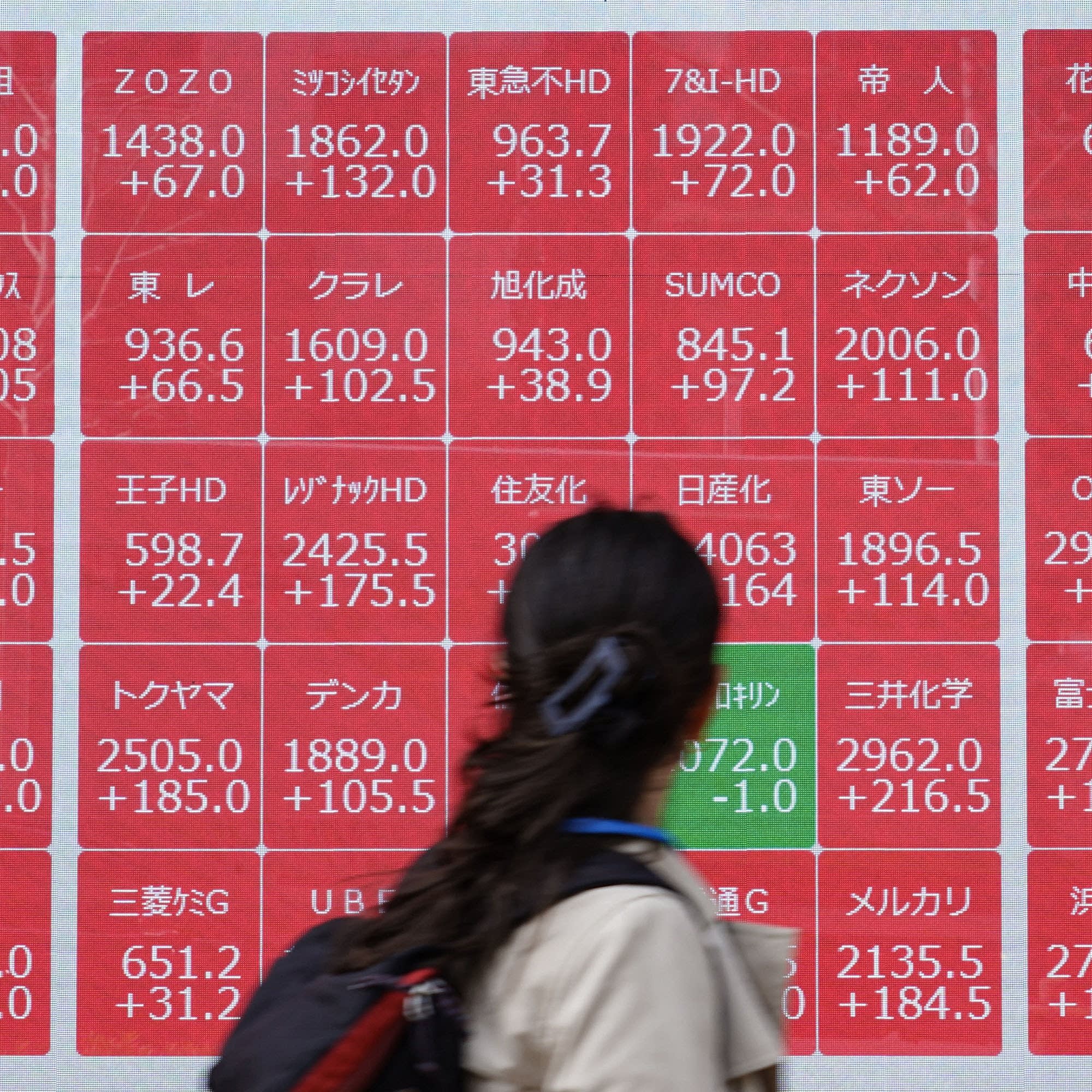
You can turn to Marketplace to hear from powerful leaders and everyday people about the economy and their roles in it. Now we hope we can turn to you. Marketplace is facing real threats and challenges as we plan for the future. As a public media program, donations from you are an important part of our budget. Here's one action you can take right now that will have a long lasting start a monthly donation to Support our work. $5 a month is a great place to start. Head to marketplace.org donate and thank you. I'm taking my ball and going home. What if foreign investors in the US Said that? I'm David Brancaccio in Los Angeles. With Congress struggling to find spending cuts to offset its evolving plans for a tax cut, there's always the concern about mounting government debt. Investors here and abroad buy that debt and what would happen if they were to take their investments elsewhere. Amid all the policy uncertain, a report from Nikkei Asia finds that during the month the US Raised tariffs sharply. That's April. More foreign money flowed into Japanese stocks and bonds than ever before, about $50 billion worth. Japan Marketplace's Kimberly Adams explains why.
- [01:43]
Charles Litchfield
While the US is still considered by most global investors as a safe haven, for many it's looking a lot less safe than it used to, says Charles Litchfield at the Atlantic Council.
- [01:53]
Gillian Tett
There's less interest in dollar denominated assets and especially a desire by big, big investors like central banks and sovereign wealth funds to get out of dollar denominated assets to an extent, and into others.
- [02:07]
Charles Litchfield
So they're looking around the globe for other big stable economies where they can park their cash.
- [02:14]
Gillian Tett
And the Japanese yen and yen denominated assets are now comparatively more attractive.
- [02:19]
Charles Litchfield
But Japan isn't the only place seeing a boost in investment due to Trump's tariff policies. Charles Bustani is a senior advisor at the National Bureau of Asian Research.
- [02:29]
David Brancaccio
Global investors are looking at markets in Europe. The German market, for instance, has seen an uptick in investment. There are other markets as well, and.
- [02:38]
Charles Litchfield
He expects that will continue until economic policy in the US Becomes a bit more predictable. In Washington, I'm Kimberly Adams for Marketplace.
- [02:48]
David Brancaccio
Now to a related obsession of players in the financial world. Wall street and others want to know if the Trump administration really has an actual plan to weaken the US Dollar. A weaker dollar might chase more investment money elsewhere, which could push U.S. interest rates higher. But a weaker dollar would also make US Products cheaper and therefore easier to sell overseas and imports less attractive, helping US Jobs potentially. But is there an actual plan to weaken the dollar, something people have taken to call a Lago accord, if such a thing even exists. Let's bring in Gillian Tett, a Financial Times columnist. Welcome.
- [03:23]
Gillian Tett
I'm delighted to be talking with you.
- [03:25]
David Brancaccio
There's been talk that there's, like, maybe a single document that would set out this idea of weakening the US Dollar as a general principle. Some called it the Mar a Lago Accords. Are you a believer that there's actual, like a document bound in fine leather, that if we could just open it up, we'd really understand what's going on?
- [03:46]
Gillian Tett
Well, I think it's an exaggeration to say that the Trump team have some secret master plan or manual which they are essentially rolling out and operating to. But there are people around him who definitely have a vision for how they'd like to reorder the global financial and economic system. And if you tie together the statements from many other people, you see a pattern, which is that, firstly, they want to reorder the global financial and trading system to cut the trade deficit. They want to keep the dollar as a reserve currency because they know that's a source of a lot of their geopolitical power. But they're also questioning whether having constant dollar strength is a good thing or not. And the thing to realize is that, ironically, the very fact they've been talking about all this means that actually, without actually doing anything, the dollar have been weakening anyway.
- [04:39]
David Brancaccio
Yes. I mean, if you look back at the dollar versus a basket of currencies this year, it's down. However, tariffs can be inflationary, economists tell us, and if we look forward in the coming weeks and months, we may see more inflation in the US which would have the effect of raising the strength of the dollar. And that would go counter to this whole idea.
- [05:02]
Gillian Tett
And the fact it hasn't strengthened, is actually weakened in said suggest two things. Firstly, some traders and economists are taking what the administration has been saying about not liking a strong dollar very seriously and essentially doing, if you like, the market's dirty work for it by simply selling off the dollar ahead of time. But the very fact we've had these flip flops in policy. And these dramatic changes in the policy regime is causing many investors outside America to get pretty nervous about holding American assets in general because they just don't feel they can trust where policymaking is going in the future.
- [05:41]
David Brancaccio
Wait, that's money. That's financing my lifestyle here, you know? Right. I mean, they're buying the debt so that I don't have to pay such high taxes?
- [05:50]
Gillian Tett
Well, absolutely, because one of the important things to realize about having a reserve currency is the very fact that everyone has to buy the dollar means that money comes into America, they buy lots of American debt, and that keeps the interest rate that's set in the markets according to investor supply and demand. That keeps the interest rate low, unusually low, because in most countries in the world, if you had debt as big as America has today, you'd have a much, much higher level of interest rate in the markets because investors would demand compensation for taking the risk that you might default. So if America was ever to lose its status as reserve currency, one thing you would be able to predict is that interest rates in the markets would go up. And that of course would affect the price of mortgages and credit card borrowing and things like that.
- [06:42]
David Brancaccio
Why we're talking about this Gillian Tett, Financial Times columnist on the FT's editorial board. Thank you very much.
- [06:49]
Gillian Tett
Thank you very much indeed.
- [06:50]
David Brancaccio
As well, Gillian also gave us a helpful tutorial on why we should care if the US remains the world's reserve currency. It's called if you missed it on the air. That part of our conversation is now streamable from Marketplace Online.
- [07:20]
Reputation Defender Representative
According to salt as wealth, 41% of high net worth individuals report having been victims of financial crime. Are you next? High profile individuals like you need more than a off the shelf solutions. You need concierge digital security from Reputation Defender. It's not just another app, it's a team of experts using best in class tools to protect you and your family covering virtually every aspect of your digital life. Visit reputationdefender.com success to learn more. That's reputationdefender.com success.
- [07:50]
Marie Mejres
Every day thousands of Comcast engineers and technologists create connectivity solutions that change the way we work, live and play. Like Kunle, a Comcast engineer who is focused on revolutionizing the in home wi fi experience today and for the next generation. Kunle builds powerful Xfinity wi fi devices that deliver a fast reliable connection with capacity to connect hundreds of high bandwidth devices at once and next level latency for the applications of the future like augmented in virtual reality and cloud gaming. Learn more@comcastcorporation.com wifi.
- [08:29]
David Brancaccio
Checking markets after mixed results yesterday this morning, the indexes are all red, not green. S and p futures are down 5, 10%. Nasdaq futures are now down 7. 10%. Dow futures are down about 157.4%. The benchmark interest rate governing a lot of consumer borrowing, that's the 10 year yield hasn't been this high since mid February. 4.51%. Now, two days ago I told a friend about a show on Max. I mean, you know, hbo. HBO Max. Its owner, Warner Brothers Discovery has now fixed the issue for us. The name is going back to HBO Max. If only we could get Meta to go back to Facebook or, or Google was first called backrub. I looked it up. I'm David Brancaccio. Marketplace Morning report from APM American Public Media.
- [09:23]
Marie Mejres
Claudette Powell spent a decade in Hollywood building her career before making a radical change. She quit her job, gave away her belongings and drove across the country to become a nun.
- [09:34]
David Brancaccio
I had nothing left. I had turned over my car to the community. I had no more savings, closed my savings account, my checking account, shut down my cards. And that's really scary.
- [09:47]
Marie Mejres
I'm Marie Mejres and this week on this is uncomfortable. Is it possible to find financial security and avow poverty? Listen to this is uncomfortable. Wherever you get your podcasts.