← Marketplace Morning Report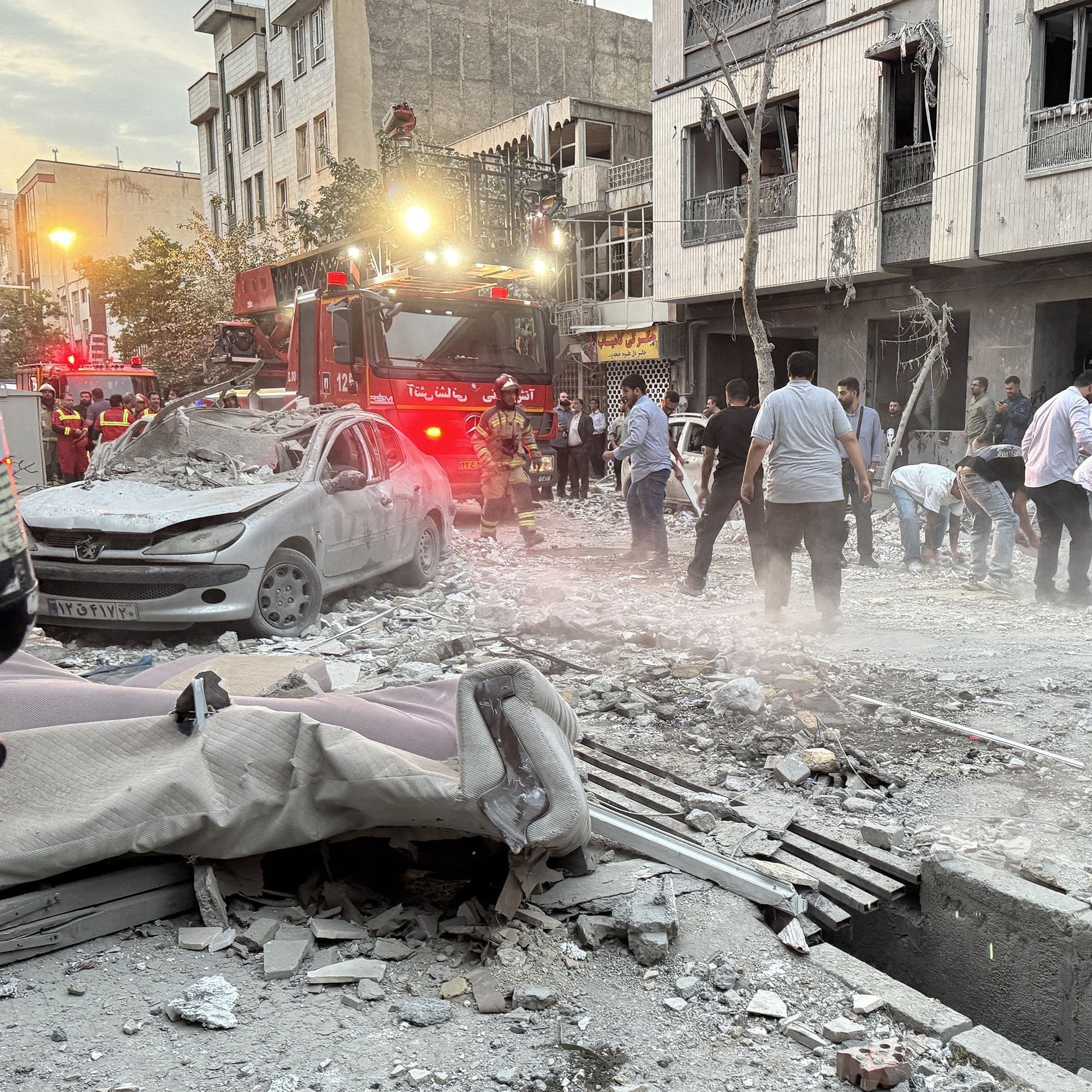
Marketplace Morning Report
Israel attacks Iranian cities and nuclear sites, and oil prices rise
00:06:38
Loading summary
Transcript15 lines
- [00:01]
Richard Karn
Hey there and thanks for listening. We want to know more about our audience. Stick around at the end of this episode to hear about how you can help, provide feedback and have a chance to walk away with a $75 gift card. Hi, I'm Richard Karn and you may have seen me on TV talking about the world's number one expandable garden hose. Well, the brand new pocket hose Copperhead with Pocket Pivot is here and it's a total game changer. Old fashioned hoses get kinks and creases at the spigot, but The Copperhead's pocket PIV swivels 360 degrees for full water flow and freedom to water with ease all around your home. When you're all done, this rust proof anti burst hose shrinks back down to pocket size for effortless handling and tidy storage. Plus your super light and ultra durable pocket hose Copperhead is backed with a 10 year warranty. What could be better than that? I'll tell you what an exciting radio exclusive offer just for you for a limited time. You can get a free pocket pivot and their 10 pattern sprayer with the purchase of any size Copperhead hose. Just text water to 64,000. That's water to 64,000 for your two free gifts with purchase W A T E R to 64,000. By texting 64,000 you agree to receive recurring automated marketing messages from Pocket host. Message and data rates may apply. No purchase required. Terms apply.
- [01:15]
Stuart Clarkson
Available at pockethose.com terms Fears over oil supplies after an escalation of strikes in the Middle East. Live from the uk, this is the Marketplace Morning report from the BBC World Service. I'm Stuart Clarkson in for Lianna Byrne today. Good morning. Global oil prices have jumped after Israel said it had struck Iran. In a dramatic heightening of tensions, the price of the benchmark Brent crude was up more than 10% shortly after the news emerged, reaching its highest level since January. Traders are concerned a conflict between Iran and Israel could disrupt supplies coming from the energy rich region. Our business reporter Katie Silver has explained just how volatile the situation has left the global markets.
- [01:55]
Katie Silver
Part of this is this fears regarding supply. About 30% of global oil is supplied by the Middle east region. Five of the top 10 countries oil producing nations are all in the Middle east. And the other part as well is fears regarding whether or not we might see a wider conflict. What that could mean, for example, to the Strait of Hormuz. About 20% or a fifth of oil passes through that every single day. So one analyst I've been speaking with said that the market before this had been underpricing oil. Basically, they'd shrugged off Middle east concerns. There was thoughts that OPEC would significantly increase production and that the US China tensions would reduce demand for oil. Now we're seeing it plague catch up. And this is initial response, analysts saying it could well keep growing if we see, for example, continued strikes from Israel as well as that response from Iran, with many suggesting that we might see oil infrastructure targeted. And of course, this matters for the likes of you and I when it comes to things like hitting homes, flying and also just increasing the cost of goods because if the price of oil goes up, that also increases the cost of all the inputs that go into creating other goods as well.
- [03:02]
Stuart Clarkson
That's Katie Silver reporting. Let's do the numbers now. And global oil prices now trading 7% higher. This and the ongoing tension in the Middle east has had a negative impact on stocks in Europe and Asia. This morning, shares in airlines were worst hit, including the British Airways owner IAG, Germany's Lufthansa and budget operator EasyJet, all down between 4 and 5%. Many major airlines have also suspended flights in and out of countries including Iran, Iraq, Jordan and Lebanon. And exports from the European Union fell 8.2% in April compared with the previous month. Exports to US from Europe were down a third, likely reflecting the announcement on tariffs. Now, investigations are continuing into yesterday's air crash in India that killed all but one of the 242 people on board shortly after takeoff from Ahmedabad. The air India Boeing 7878 Dreamliner was bound for London. Most of the passengers were Indian, with 53 Brits, seven Portuguese and one Canadian citizen. Several people are feared dead on the ground. Now families have been giving DNA samples to help identify the victims. We can talk to our correspondent Davina Gupta, who's in Ahmedabad for us. Hello, Davina. How's the mood there today?
- [04:10]
Davina Gupta
Well, it's been an emotional morning. I was at the government hospital where many of those families had gathered to give a DNA sample, essentially a blood test so that they can be matched with the bodies that have been recovered. I was then at the crash site. It was a complete mess because there was still parts of planes that were mangled with charred and burnt trees.
- [04:35]
Stuart Clarkson
Obviously, that investigation work is ongoing. Have we heard anything from Air India or the crash investigation team this morning?
- [04:42]
Davina Gupta
There was a team of global investigators who made their way to the crash site. I spoke with two officials there who've told me that they did see people coming to the site. There were People from the US There were people from the UK who had come with the Indian officials. They've taken some sample from the site. We haven't heard from Air India management after yesterday. Today when the CEO Campbell Wilson said that they will be cooperating with the authorities and express condolence about the entire event that has happened. This particular investigation will reveal exactly what happened in those crucial seconds, and we're waiting for official answers.
- [05:23]
Stuart Clarkson
Okay. I'm sure there'll be more to come over the next few days. Thanks for being with us on Marketplace.
- [05:27]
Davina Gupta
Davina, thank you.
- [05:28]
Stuart Clarkson
Let's find out more about the airline involved now. Air India. Ben Katz is an aviation reporter at the Wall Street Journal.
- [05:34]
Ben Katz
It's a very interesting carrier. It's, you know, undergoing this transformation since 2022. Up until then, it was state owned, and then Tata Group, they bought it out. They've spent billions on brand new aircraft that they've been incorporating into the fleet. They've been turning around the maintenance operations, you know, the whole really, the whole hq. They've been retrofitting some of their older aircrafts, are putting in brand new seats, doing a big marketing campaign. You know, they've really been trying to revitalize this, this flag carrier that was really waning over the last few decades in terms of safety. It's difficult to kind of rank one airline kind of better or worse than others. There have been incidents in Air India's past, but not under this new ownership. And this new ownership really is kind of prioritized, you know, making sure that the operation is spick and span and operating properly and well. But a lot of questions here, you know, especially if the evidence starts pointing to, you know, for example, a maintenance issue that may have caused the aircraft to come down.
- [06:29]
Stuart Clarkson
And the air travel sector in India has been having something of a boom recently.
- [06:33]
Ben Katz
India is the fastest growing. They kind of compete with China a little bit. You know, there are some forecasts that say that it will become the biggest market for aviation in the world. You know, population of around a billion people, many of whom don't fly or have never flown. And that's also been part of Air India's strategy. They're seeing that they want to capitalize on that boom in domestic travel, but then also, you know, as that growing middle class starts to develop in India, you know, be able to connect the country to the world. So Air India really has this ambition to become, you know, almost what Emirates is to, to Dubai, you know, a hub airport, a destination, but also a place where you can connect. And India can be kind of the gateway to, to, to Asia.
- [07:14]
Stuart Clarkson
That's Ben Katz, aviation specialist at the Wall Street Journal. And finally for today, with locals already struggling with the daily chaos brought by tourists, residents in Venice have another complaint. The upcoming extravagant wedding of the Amazon founder Jeff Bezos and Lauren Sanchez, due to get married there later this month. Protesters in the Italian city have put up posters saying he's not welcome. One on an historic Bel tower of the San Giorgio Maggiore church, which has the word Bezos and a red X through it. Thanks for listening. Today, our producer was Linda Walker. Our editor, James Graham. In the UK I'm Stuart Clarkson with Marketplace Morning Report from the BBC World Service.
- [07:56]
Marie Maglaj
Personal finance isn't just about spreadsheets and investing. It's emotional. Talking to your partner about money, negotiating a raise. Even the smallest decisions, like splitting a bill, can bring up feelings of shame or anxiety. I'm Marie Maglaj, host of this Is Uncomfortable, a podcast from Marketplace about life and how money messes with it. In this season, we get into topics like workplace drama, tough financial trade offs, and the quiet tension that builds when love and finances collide. Listen to this Is Uncomfortable. Wherever you get your podcasts.