← Marketplace Morning Report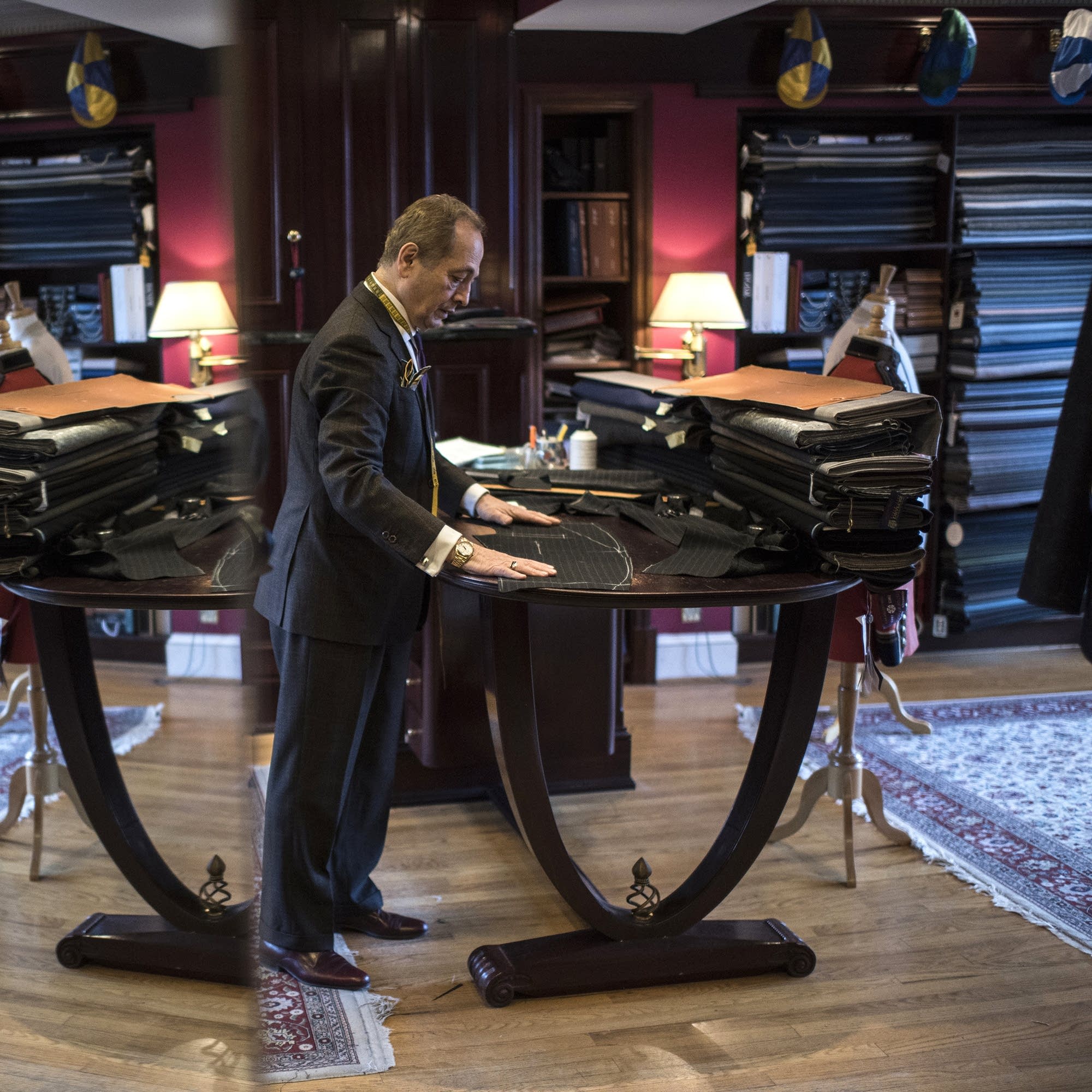
Loading summary
Transcript35 lines
- [00:00]
Wix Studio Narrator
You're a professional web creator who needs a platform that works as hard as you do. Wix Studio is built for you whether you're a designer, developer or marketer ready to amplify your impact. Build intuitively with advanced design features and AI powered tools. Manage your clients and projects efficiently from one workspace scale with dynamic systems and fully managed infrastructure. Create exceptional websites with hyper efficiency on WIX Studio.
- [00:28]
VRBO Advertiser
How do you make an Airbnb a vrbo? Picture a vacation rental with a host who's showing you every room like you've never seen a house before. Now get rid of them. There you go. No host ever. Now it's a vrbo. Make it a vrbo.
- [00:44]
David Brancaccio
You can still make clothes in the United States at a profit. I'm David Brancaccio in Los Angeles. First, big retailers are coming out with their spring into summer results. One bellwether for the economy is Home Depot, which posted disappointing profits today. And some of that is the flagging state of the real estate market. Marketplace's Nancy Marshall Genzer reports.
- [01:06]
Nancy Marshall Genzer
Home Depot reported second quarter earnings and revenue below analysts expectations. It says total sales for the quarter were about $45 billion. Home Depot CEO says its customers are focused on smaller home improvement projects. Consumers are putting off home purchases. Those who already own homes are delaying big job kitchen and bathroom remodeling as they wait for interest rates to come down. Home Depot is focusing more on professional contractors. Lowe's is set to report its second quarter earnings tomorrow. So is Target. Its first quarter sales were dragged down by weak consumer spending and a boycott by consumers upset that Target was ending some of its diversity initiatives. Walmart is set to report earnings Thursday. Last spring it said it would pass the cost of tariffs on to consumers.
- [01:57]
Daniel Ackerman
Nancy?
- [01:57]
Nancy Marshall Genzer
I'm Nancy Marshall Genser for Marketplace.
- [02:01]
David Brancaccio
Staying on Home Depot results, let's turn to Larry Adam, chief investment officer at Raymond James.
- [02:06]
Larry Adam
I mean, if you listen to what they said on their earnings, basically they said that they really haven't raised prices yet because they had previously imported a lot of goods prior to the tariffs. But they did say that these price increases are coming. And that's why I think the earnings reports that will continue this week, whether coming from Target or Walmart, we're going to have a clear focus on what they're doing from a pricing strategy and really what is the strength of the consumer. As we've been going through this summer.
- [02:33]
David Brancaccio
We'Re living in a moment where the tariff buffers, stuff that had been piling up in warehouses purchased ahead of tariffs has been drawn down and the merch with the tariffs are moving to the consumer.
- [02:45]
Larry Adam
You have to remember that these inventory levels on average were around 40 days or so when it came to retailers. And when you look at when they got put into place, they were able to work through a lot of that inventory without increasing their cost. But now that they got this new inventory, I think they're going to have to start to increase their cost if they want to maintain their margins and their profitability going forward.
- [03:11]
David Brancaccio
Larry Adam, chief investment officer at Raymond James, a firm that has been a marketplace underwriter, there's contradictory data today from the housing market. Housing starts rose sharply 5.2% June to July, but new building permits were down. And here's not a number per se, but a rating AA plus. That is an increase in the creditworthiness rating of the United States as assessed by S and P Global. As we've been reporting, tariffs aren't just tools to manage trade and jobs. There are also taxes on imported goods that generate a fortune for the US treasury, helping to part balance out the big increases in spending in that package recently passed by Republicans.
- [04:15]
Wix Studio Narrator
You're a professional web creator who needs a platform that works as hard as you do. Wix Studio is built for you whether you're a designer, developer or marketer ready to amplify your impact. Build intuitively with advanced design features and AI powered tools. Manage your clients and projects efficiently from one workspace scale with dynamic systems and fully managed infrastructure. Create exceptional websites with hyper efficiency.
- [04:41]
Sling TV Advertiser
Go to wixstudio.com so you've got your streaming subscriptions sorted. But every now and then live TV FOMO hits hard. Good news with passes by Sling. Get instant access to live TV when you want it. Big football game tonight? Grab a day pass baseball series? Try a week pass show or movie marathon. You guessed it. Weekend pass introducing passes. Get the live TV you love for the day, week or weekend starting at $4.99. Sling lets you do that Offer applies to Orange. Day pass restrictions apply.
- [05:14]
David Brancaccio
The manufacturing of clothes has been on the decline in the US for decades. One of the biggest employers in my hometown in Maine was the Hathaway Shirt Factory. Once a big famous factory, now it's lots of residential condos. But here and there we still make clothes. Stateside, the largest tailored clothing factory is in New Bedford, Massachusetts. It makes men's suits for Joseph Abood, about 600 of them a day. From reporter Daniel Ackerman. Went to see how they're doing it.
- [05:40]
Daniel Ackerman
Running along the ceiling of the factory are what look like upside down railroad tracks. It's a sort of conveyor belt shuttle system to get suits in progress from station to station. Fabric moves from cutting to stitching to buttonholing all on its own.
- [05:54]
Factory Worker
In the old days, there was somebody with a book out on the floor that was moving those goods to one job or another.
- [06:01]
Daniel Ackerman
VP of manufacturing Joe Behena installed this fabric railway in 2019. Bahina says all told, there's about 200.
- [06:11]
Factory Worker
225 steps to make a soup.
- [06:13]
Daniel Ackerman
And automating the transport between those steps is one way the factory has kept labor costs down, at least enough to stay in business. Many other U.S. garment makers have folded.
- [06:23]
Jason Miller
We used to have over 10 times more people employed making apparel in the U.S. just 35 years ago.
- [06:29]
Daniel Ackerman
Jason Miller is an economist at Michigan State. He says those jobs have gone to places like China where labor is cheaper. Miller says tariffs can't make up that difference.
- [06:39]
Jason Miller
Quite frankly, for everyday clothes that the vast majority of Americans wear, we will never be competitive again.
- [06:46]
Daniel Ackerman
Tough luck socks and underwear. But Miller says men's suits, particularly high end ones, are different. Maybe a once in a lifetime purchase where the customer really wants something special.
- [06:57]
Jason Miller
Domestically made apparel has to be things that are essentially specialized or tailored, in.
- [07:05]
Daniel Ackerman
Other words, not competing on price, says University of Michigan economist Betsey Stevenson.
- [07:11]
Nancy Marshall Genzer
It almost has to be focusing on quality rather than low cost.
- [07:16]
Daniel Ackerman
And that quality is because the US does still have one advantage in our labor force.
- [07:21]
Nancy Marshall Genzer
It's that we have very high skilled.
- [07:25]
Daniel Ackerman
Labor at the suit factory, Behena says a lot of skill goes into one job. Sleeve setting, probably the hardest job in the factory. A worker at a sewing machine plucks a sleeve off the conveyor and carefully stitches it onto a navy coat so.
- [07:40]
Factory Worker
That the sleeve then will lay in a beautiful manner.
- [07:44]
Daniel Ackerman
Behna says sleeve setting is so important.
- [07:47]
Factory Worker
After this job, 100% of our coats get inspected. We're going to make that coat look perfect before it moves on and it gets to our customer.
- [07:57]
Daniel Ackerman
Because if you can't win on price, you kind of have to be a perfectionist. In New Bedford, Massachusetts, I'm Daniel Ackerman for Marketplace.
- [08:05]
David Brancaccio
Our producers are Tamar Fagan, Ariana Rosas and Erica Soderstrom. Our senior producer is Alex Schroeder. Our supervising senior producer is Meredith Garretson Morby In Los Angeles, I'm David Brancaccio. It's the Marketplace Morning Report from APM American Public Media.
- [08:25]
Wix Studio Narrator
Poetry has the power to connect our inner universe and the outer world. I'm Maggie Smith poet and host of the Slowdown, a podcast from American Public Media. Each weekday, find time to take a breather from your to do list, or doom scrolling for that matter, and take in a moment of reflection with a hand picked poem. Listen to the Slowdown wherever you get podcasts.