Loading summary
Transcript26 lines
- [00:00]
Narrator
This is the story of the one. He's responsible for keeping a leading health care facility clean and safe. And he trusts Granger's high quality H vac cleaning and safety products combined with their world class supply chain to consistently deliver, ensuring he's covered inside and out so he can focus on keeping his facility clean to help protect the health of everyone inside. Call 1-800-granger clickranger.com or just stop by Granger for the ones who get it done.
- [00:32]
David Brancaccio
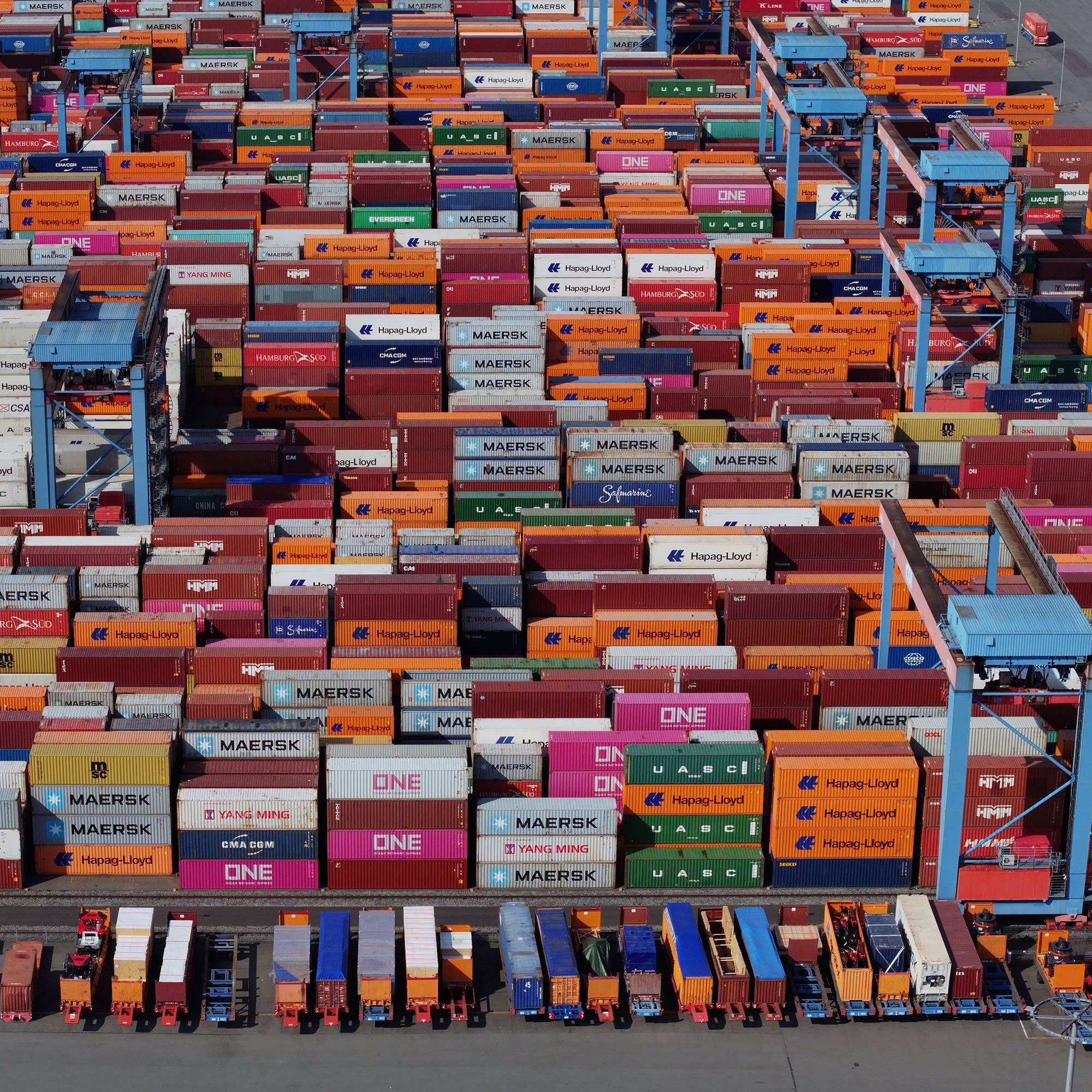
Today is the updated, pushed, delayed, we mean it this time. Tariff deadline imposed by the Trump administration. I'm David Brancaccio in Los Angeles. The latest round of US Tariffs on most countries around the world are now in effect. And we're now at the highest average level of import taxes since the 1930s, all in the name of boosting US jobs, raising money to pay for government spending and exercising US Influence. Marketplace's Henry EP is here with more details.
- [01:01]
Henry EP
Yeah, David, Imports from countries around the globe now face taxes anywhere from 10 to over 40%. The higher end of that scale includes one of our top trading partners, Canada, at 35%. But as we've seen for months now, the Trump administration could still change these rates. The US Is still trying to negotiate agreements with China and Mexico, for example, and even the trade partners the US has reached agreements with, like the European Union and Japan. The details of those frameworks have not been fully sorted out. And one important note, many goods coming into US Ports won't actually face these higher tariff rates yet. According to Customs and Border Protection, anything loaded onto a ship and in transit before 1201 Eastern Time this morning will be taxed at a maximum of 10% as long as it arrives before early October.
- [01:52]
David Brancaccio
All right, so a few more weeks of wiggle room for some products before the fully tariff stuff gets, gets to people and companies.
- [01:59]
Henry EP
Yeah, that could give some companies additional time to try to blunt the impact on consumer prices. And so far, we've seen many of them try to absorb the additional tariff costs that they've faced instead of passing it all on to consumers. But that may not last much longer. Procter and Gamble, for example, told investors last week it would start hiking prices on household staples. Walmart has also warned of higher prices. And overall, the Yale Budget Lab estimates that Trump's tariffs will shrink American household incomes by about $2,400 on average. But that won't be felt. Equally lower income households will take a larger hit to their incomes.
- [02:37]
David Brancaccio
All right, Henry, thank you. S and P and Nasdaq futures are both up in the seven to eight tenths of a percent range. About two and a half hours here before markets open officially. The key index on the Moscow Stock Exchange is up nearly 5% right now after a Kremlin official confirmed Presidents Putin and Trump will meet in, quote, the coming days. The US President has been setting deadlines for Russ and Ukraine to reach a peaceful solution to the war Russia started and has lately been pushing for new economic penalties on Russia.
- [03:21]
Narrator
This Marketplace podcast is supported by Ubico, makers of the yubikey Protecting the personal and business applications and accounts that people and companies rely on every day. The Yubikey stops AI powered cyber attacks, online identity scams, fraud and account takeovers. It provides powerful protection and it's easy to use. Simply tap your Yubikey to log in securely to everything from email to finance to productivity applications across all of your devices. Yubikey still undefeated. The original passkey more@yubico.com this is the.
- [04:00]
Story of the one as a quality technician in a food processing center, she knows that making the right call is the best way to avoid a recall. That's why she trusts Grainger's world class supply chain to deliver the high quality supplies she needs to help keep her production line, her equipment and her customers happy and healthy. Call 1-800-GRAINGER Click grainger.com or just stop by Grainger for the ones who get it done.
- [04:29]
David Brancaccio
WhatsApp, owned by Meta, Facebook, said this week it has deleted nearly 7 million accounts it says are linked to criminal scam centers. If you have WhatsApp, you'll be familiar with those spams pulling you, without asking into, say, groups purporting to make you wealthy with cryptocurrencies. Meta says it's coming out with new tools to help users better defend themselves from fraud. And there's new data from Pew Research center on the near constant attempts to use our devices to swindle us out of money. Marketplace's senior economics contributor Chris Farrell's been looking at the data. Hey Chris.
- [05:02]
Chris Farrell
Good morning, David.
- [05:03]
David Brancaccio
What do you think? I mean, I'm seeing multiple attempts at fraud every single day now. The fraudulent call blocker on my mobile phone sometimes has to knock down eight creepy calls from the same number in rapid succession. Pew's been getting real data. What does it show us?
- [05:18]
Chris Farrell
That your experience is commonplace. 73% of US adults have experienced some kind of online scam or attack.
- [05:27]
David Brancaccio
Older adults can be especially vulnerable, but the fraudsters are happy to swindle any demographic.
- [05:33]
Chris Farrell
This is a truly inclusive part of our economy. They don't care about age, income, education, so on. Everyone is a potential victim. However, Pew does highlight that these scams, or the group that's most vulnerable is younger and older adults. Pew also found there was no difference between racial and ethnic groups in experiencing online scams. But black, Hispanic and Asian adults are more likely to have multiple forms of online frauds happen to them.
- [06:03]
David Brancaccio
How much money are we talking about?
- [06:05]
Chris Farrell
So the FBI says a record 16.6 billion in losses from online scams and other Internet crimes last year. And that's an increase of one third from the previous year. But David, the true dollar amount, it's a lot higher. Since many online frauds are not reported. Pew says roughly three quarters of those surveyed who lost money to an online scam did not report the crime to law enforcement. By the way, the most common scams, online hackers making fraudulent charges on credit or debit cards. And that was followed by purchasing an item online. It never arrives. Or what arrives is a counterfeit.
- [06:42]
David Brancaccio
All right. And people don't report it because often they're ashamed or they're scared. But you would hope that government business banking would coordinate on trying to block fraud. What's the status?
- [06:56]
Chris Farrell
There is progress. There is more effort. That said, David, everybody is struggling to keep up with these tech savvy scammers. The likelihood of an online crook getting caught, it might not be zero, but it's so low. And an additional barrier to arrest and prosecution is the perpetrators. These are often organized global crime groups and they're operating across multiple borders.
- [07:20]
David Brancaccio
Yeah, I mean, they did bust this one guy at JFK for, for online fraud and making threats, but the victim was the former head of the FBI who had also been former head of the CIA. I mean, yeah, they got that perpetrator. I don't know about the rest of us.
- [07:37]
Chris Farrell
Yeah.
- [07:38]
David Brancaccio
And in this vein, as for who might defend us from the fraudsters, they're not getting good ratings.
- [07:43]
Chris Farrell
No. The Pew data, 68% said the federal government is doing a very or somewhat bad job. 56% said tech companies are doing a bad job. Yet it turns out. And you've covered this a lot. I know, David, you know the politics of dividing responsibilities for protecting people. Really difficult. In the meantime, considering how relentless and pervasive online scammers are, odds are you're gonna eventually fall for one.
- [08:10]
David Brancaccio
Oh, look, I did not get a spam text during the course of our three minute conversation here. Will wonders ever cease? Marketplace's senior economics contributor, Chris Farrell in St. Paul. Than.
- [08:21]
Chris Farrell
Thanks a lot, David.
- [08:23]
David Brancaccio
Our producers are Tamar Fagan, Ariana Rosas and Erica Soderstrom. Our senior producer is Alex Schroeder. Our supervising senior producer is Meredith Garretson. Morby In Los Angeles, I'm David Brankacoats. The Marketplace Morning Report from apm American Public Media.
- [08:43]
Narrator
This is the story of the One As a quality technician in a food processing center, she knows that making the right call is the best way to avoid a recall. That's why she trusts Granger's world class supply chain to deliver the high quality supplies she needs to help keep her production line, her equipment and her customers happy and healthy. Call 1-800-GRAINGER clickgrainger.com or just stop by Granger for the ones who get it done.