← Marketplace Morning Report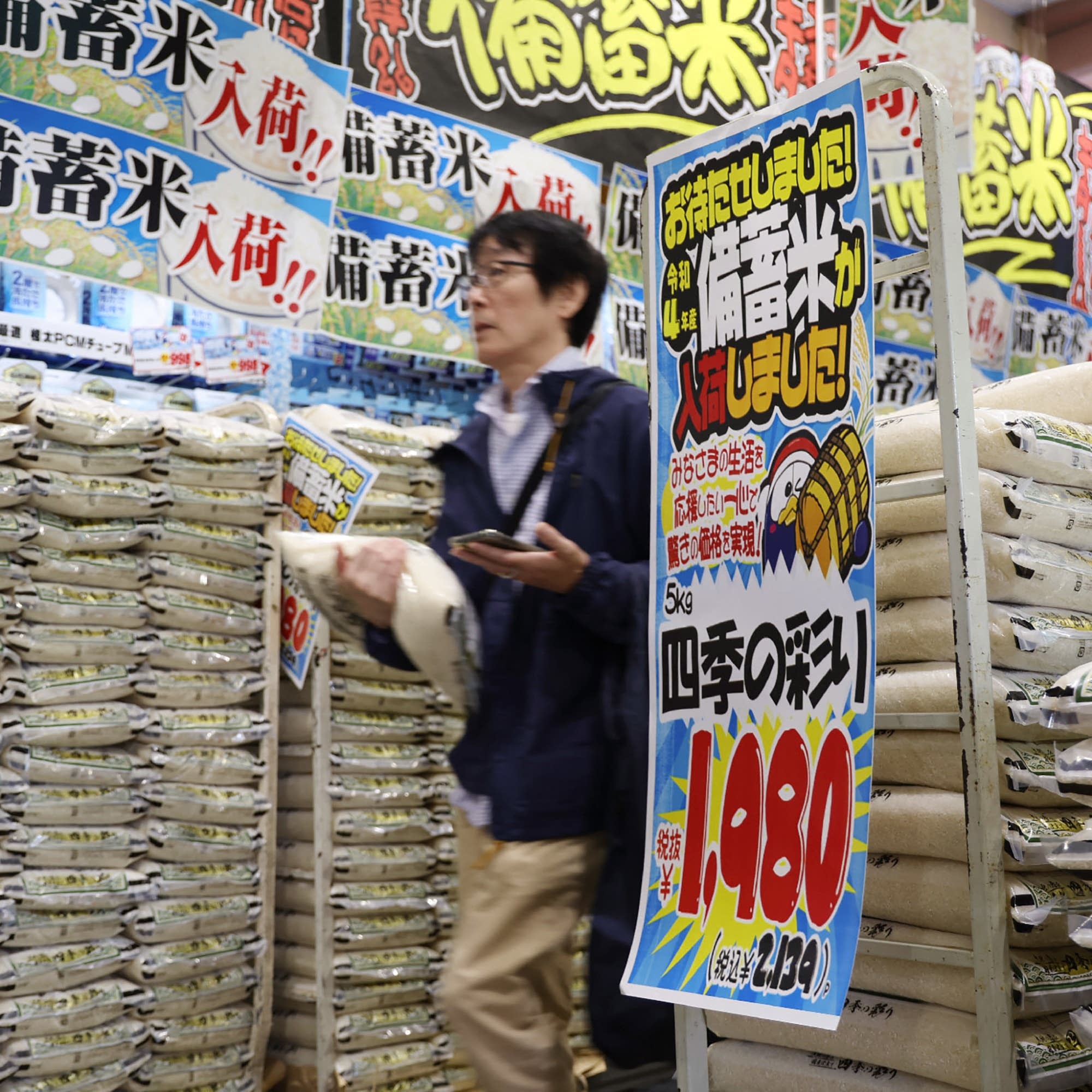
Loading summary
Transcript24 lines
- [00:01]
Host
Hey there, and thanks for listening. We want to know more about our audience. Stick around at the end of this episode to hear about how you can help provide feedback and have a chance to walk away with a $75 gift card.
- [00:16]
Wix Advertiser
You know where your business would be without you. Imagine where it could go with more of you. Well, with Wix, you can create a website with more of your vision, you, your voice, your expertise. Wix gives you the freedom to truly own your brand and do it on your own with full customization and advanced AI tools that help turn your ideas into reality. Grow your business into your online brand. Because without you, your business is just business as usual. Go to wix.com Japan's running low on.
- [00:49]
Liana Byrne
Rice and it's causing chaos. Hello, this is the Marketplace morning report and we're live from the BBC World Service. I'm Liana Byrne. Thanks for tuning in. So Japan is facing a rice emergency. Prices are soaring, supplies are tight, and it's already cost one government minister his job. So what's going on? Well, a mix of bad weather, fewer rice farming households and booming demand from tourism. And dining out. The BBC's Shaima Khalil has more.
- [01:18]
Reporter
It's a busy afternoon in Akadai, a small local supermarket chain here in Tokyo. It's been a tough couple of years for Japanese households. They've struggled with inflation, high prices, stagnant wages and a sluggish economy. And yet not many could see the rice crisis coming. Hiromichi Akiba is the owner of the Akidai supermarket chain.
- [01:40]
Hiromichi Akiba
Honestly speaking, our customers are in trouble. Many other things like food prices had gone up. Then the rice, which had been inexpensive, went up so sharply, I'm looking at.
- [01:51]
Reporter
The rice shelves close to the till. Unlike other supermarkets, this one still has some bags left. But like all other supermarkets, the prices have doubled since last year. Images of long lines of people queuing up to get their hands on a bag of rice shock the public here. Momoko Abe is here shopping with her four months old baby.
- [02:09]
Momoko Abe
As you know, like it's a staple in our lives. Sort of a ticket for granted. And it was quite shocking that the price could rise within such a short period of time.
- [02:20]
Reporter
The government has started releasing rice from its emergency natural disaster reserve. But it's been very slow getting to consumers. They're also considering importing rice, but Mr. Akeba doesn't think this is a good idea.
- [02:33]
Hiromichi Akiba
Japan is a nation of rice. We take pride in that. I'm worried that one import of rice would make the rice producer weak here and become a new threat for Japanese farmers.
- [02:43]
Reporter
The current agriculture minister, Shinjiro Koizumi has vowed to bring the prices down and to modify the supply chain. The problem is more structural here. For decades, Japan has tightly regulated rice production to avoid supply overflow and to control prices. But this policy backfired, with one expert describing it as disastrous. The rice crisis is symptomatic of the country's broader struggle to revitalize the economy and contain inflation. Japan imports oil, over half of its food, but the Japanese are very particular about the rice. For many here, this is about much more than putting food on the table.
- [03:21]
Liana Byrne
That report from Shyla Khalil. Now the US China trade talks resume in London today with hopes high for progress on rare earths and tech shipments. After six hours of talks on Monday, officials are back at Lancaster House near Buckingham Palace. President Trump says things are going well while US Commerce chiefs called the meeting fruitful. And of course markets are watching closely. And with that, let's do the numbers. Chip giant tsmc, which makes chips for Apple and Nvidia, says its May sales jumped nearly 40% thanks to strong AI demand and firms stockpiling revenue hit $10.7 billion. And in Italy, a set of opposition backed referendums on citizenship laws and job protections failed to secure the required voter turnout. Just 30% of of voters took part. Now the Danish drug maker Axelia Pharmaceuticals is Europe's last maker of key antibiotics ingredients. But it's closing its factory in Denmark within the next decade. That could mean more production moves to China. Not good news for the EU which wants to make its drug making to be more independent. Its chief executive Michael Cocker told me it would take about $200 million to build a new factory in Europe and another $28 million a year to keep it running. But but without EU subsidies he says it just doesn't stack up. I asked him why close the Denmark site at all?
- [04:42]
Michael Kocher
There are three main reasons. Reason number one, increasing price pressure. Reason number two, rising operational costs. And then we are facing very challenging market dynamics.
- [04:53]
Interviewer
What would it take to keep a facility like yours running In Europe it's.
- [04:58]
Michael Kocher
About two kinds of support. We need to invest in new manufacturing equipment and here we would need so called capex support. And on the other side we would need support to cover our operational costs because the operational costs in Europe are by far higher than the costs in low cost manufacturing countries.
- [05:22]
Interviewer
But then at the same time drug prices, they are low, aren't they?
- [05:26]
Michael Kocher
That's the dilemma we are in. And since a lot of markets in Europe are regulated, there is not the possibility to increase prices.
- [05:35]
Interviewer
Could things like subsidies and policy support make a difference?
- [05:38]
Michael Kocher
Oh, it could make a big difference. I would like to highlight two different kinds of support. On the one hand, side, support for new machinery, new equipment, and on the other side, ongoing support to cover the difference in operational costs.
- [05:57]
Interviewer
Now, roughly 80% of Europe's active drug ingredients already come from China and and India. Do you think that that's a problem? Do you see this heavy dependence on Asia, a strategic risk for critical medicines in Europe overall?
- [06:11]
Michael Kocher
Oh, absolutely. It's a big risk and the trend is kind of intensifying at this point in time. We are spending lots of time discussing reshoring exercises and that concerns me. We should spend our energy at this point in time in keeping the critical infrastructure in Europe.
- [06:31]
Interviewer
Do you feel any responsibility towards that then, that you know your company has to leave?
- [06:37]
Michael Kocher
Absolutely. And that's the reason why we are trying to trigger discussions with the EU in order to maintain a footprint in Europe and secure the supply chain in Europe. It would be a nightmare if the society in Europe would entirely depend on supply out of China. And we need to do everything to keep the existing supply chains for critical medicines in Europe.
- [07:01]
Liana Byrne
That was Michael Kocher from Axelia Pharmaceuticals. The European Commission told us that supporting competitiveness in the pharma sector is a high priority. It says a new Critical Medicines act is in the works to boost drug making resilience and attract investment. We've also asked the Danish government for comment. Still no reply. I'm Liana Byrne with the Marketplace Morning Report from the BBC World Service.
- [07:28]
Host
Really quick, before you go, please complete a short anonymous survey by going to marketplace.org survey. It should only take about 10 minutes. And as a token of our appreciation, you can enter your name to win a $75 gift card when you've completed the survey. You do all of us at Marketplace a huge favor by filling it out.