Loading summary
Transcript20 lines
- [00:00]
A
It's tax season and at Lifelock, we know you're tired of numbers, but here's a big one you need to hear. Billions. That's the amount of money and refunds the IRS has flagged for possible identity fraud. Now here's another big number, 100 million. That's how many data points Lifelock monitors every second. If your identity is stolen, we'll fix it, guaranteed. One last big number. Save up to 40% your first year. Visit lifelock.com specialoffer for the threats you can't control. Terms apply.
- [00:31]
B
Some good news for Japan's sluggish economy as exports jump. Live from the UK this is the Marketplace Morning report from the BBC World Service. Good morning. I'm Nick Qureshi. It's the start of the Lunar New Year this week and one country in Asia seems to be doing very well because of the strong demand ahead of the holidays. The BBC Suranjana Tiwari joins us. Hi, Suranjana.
- [00:54]
C
Hi there.
- [00:55]
B
So Japan's exports have marked their biggest jump in more than three years. What is driving this growth this week.
- [01:03]
C
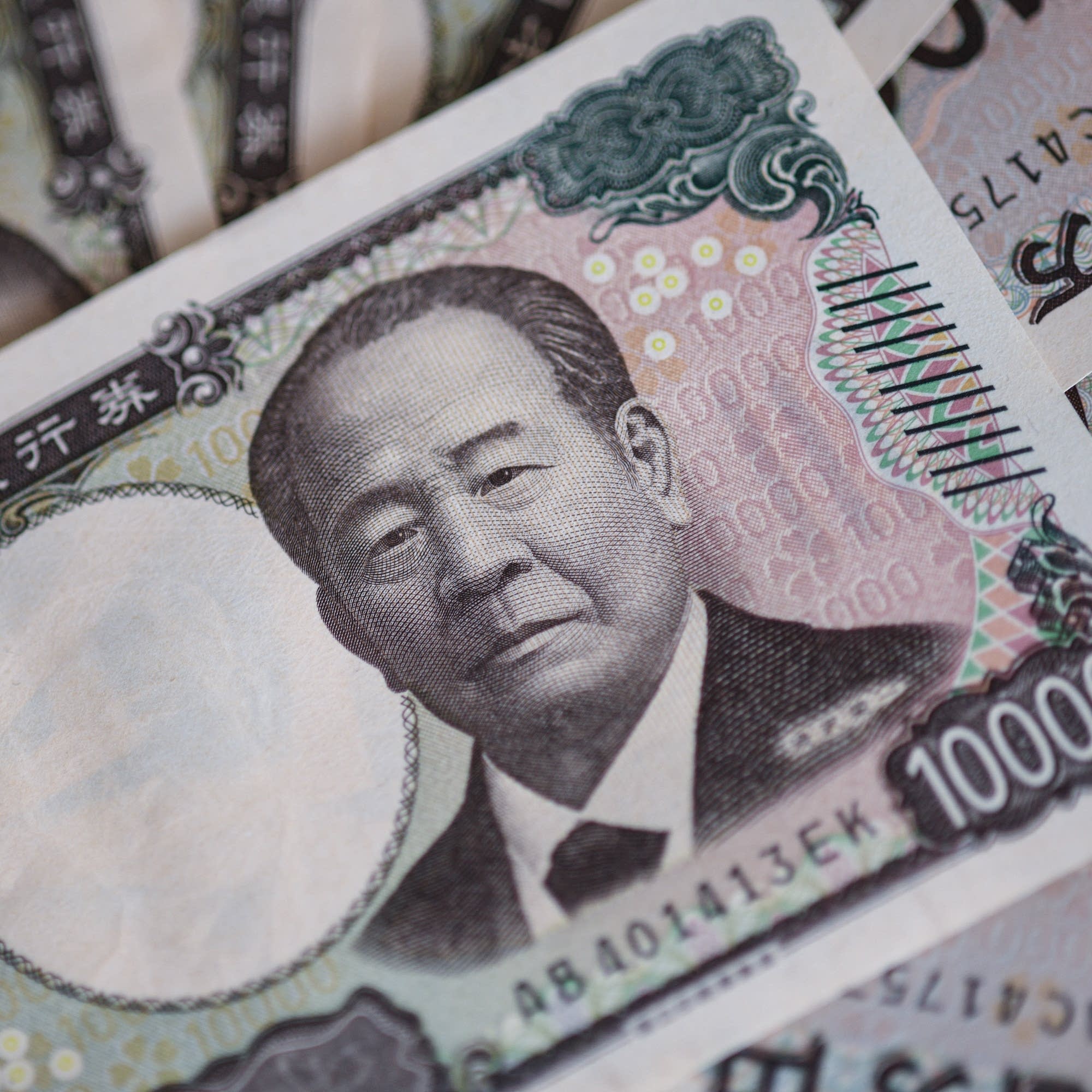
Is the Lunar New Year holidays. And obviously, Japan and China are major trading partners, even though they often have frosty relations diplomatically. But these numbers come from January and it shows that Japan's exports were boosted by the strong demand all around Asia for its products. And this is really interesting because it actually follows separate data this week that showed that the Japanese economy has only just limped back to growth in the fourth quarter of last year, significantly, significantly missing market forecasts because of weaker exports and capital expenditure as well. Now, in these figures, exports to China actually jumped 32%, which is why experts and economists are saying that this is because of the demand ahead of the Lunar New Year. But exports bound for the European Union were also up by 30%. So a real front. Loading.
- [01:59]
B
Not such good news. We learned that Chinese visits to Japan plummeted by some 60% in January, according to official figures from the Japanese Tourist Board.
- [02:11]
C
That's right. And that's why it's so interesting that the exports are actually up because Japan and China are in the middle of one of those tensions between the two countries. And that's largely over comments that the Japanese prime minister had made about Taiwan. And China, of course, was upset by that. And so what we're seeing is a lot of group tours being stopped from China into Japan. And as you mentioned, Japan's tourist body has said that in January they're seeing a slump of 60.7% of Chinese visitors going to Japan. Now There are many areas where China and Japan trade on, but of course, tourism is a huge area for both countries. Both Chinese tourists going into Japan, Japanese tourists also going into China. But this just shows, you know, even though those exports are good, there are other areas of the trading relationship that there are still quite a lot of trade tensions going on where exporters push out those products, product before a certain period of time.
- [03:13]
B
Now, President Trump has announced some of the investments that Japan plans to make as part of the US Japan trade deal. Just outline what some of them are.
- [03:23]
C
That's interesting because Japan's exports were hit by the US Tariffs before the two countries did agree on that trade deal. And that trade deal included a colossal $550 billion pledge by Japan to invest in the U.S. the problem was we weren't sure of the details and I don't think they knew either. Now we know that $36 billion will go towards three infrastructure projects in the U.S. japan will be working with the Americans on a natural gas facility in Ohio, a deep water oil export facility in the Gulf of Mexico, and a synthetic diamond manufacturing facility. Now, Donald Trump, posting on Truth Social, said the deal was excellent and that the scale of these projects are so large that they could not be done without one very special word, tariffs.
- [04:13]
B
Sirinjano, very good to talk to your marketplace. Thanks for your time.
- [04:16]
C
Thanks a lot.
- [04:17]
B
Okay, let's do some numbers. In the UK inflation dropped to 3% in the year to January, down from 3.4% in December as the price growth of bread, cereal and gas eased. And the Canadian government's long awaited $366 billion Defence Industrial Strategy has been announced. It aims to award 70% of federal defence contracts to Canadian firms within a DEC. That's up from the current 43%. The German biotech giant Bayer is offering to pay more than $10 billion to settle lawsuits over the weed killer Roundup, which has been linked with cancer. Most of the money would go to resolving current and future legal claims. The BBC's Samira Hussain reports.
- [05:05]
D
Bayer has been dogged by the Roundup cancer claims after the German pharmaceutical firm bought Monsanto, the company that made the weed killer, a decade earlier. Over the years, the company has had to pay billions of dollars in lawsuits despite glyphosate, the main ingredient in the weed killer, being deemed safe by regulators around the world. According to the proposal, anyone who can prove they were diagnosed with non Hodgkin's lymphoma and were exposed to roundup before February 17th of this year can file a claim and receive a portion of the settlement.
- [05:42]
B
Samaira Hussain Next this morning, Foreign nationals who wish to live and work remotely from Sri Lanka can now apply for the digital nomad visa. It's part of Sri Lanka's strategy to make the country a long stay digital destination. Eligible applicants must be foreign nationals who are at least 18 years old and applicants must bring in at least $2,000 a month in foreign currency to Sri Lanka. European commercial flights have resumed to Venezuela for the first time since the American ousting of President Nicolas Maduro. A plane from Spain's capital Madrid landed in Caracas on Tuesday. It follows the EU Aviation Safety agency lifting its no fly advisory for Venezuelan airspace. European airlines canceled their routes to the country late last year. In the weeks leading up to the US military action to capture Mr. Maduro, we shall stay in South America, where Peru has been plunged into a fresh wave of political chaos after Congress voted to remove its interim president, Jose Herry, on corruption charges. He had admitted holding secret meetings with a Chinese businessman. It was an overwhelming vote against him just months after he was chosen to lead the country. This after the previous president was ousted over allegations of corruption and links to organized crime. The BBC's Luis Fajardo says that unusually, the political chaos does not reflect Peru's economic situation.
- [07:10]
E
Peru is in an unusual situation in Latin America in the sense that its economy is doing relatively well. Actually, Peru is one of the leading exporters, receiving a lot of investment both from the US and from China and from other places. So the economic problems that are at the center of the discussion many times in other parts of Latin America are not so intense in Peru. What people definitely are arguing against is against this sense of corruption in the public sphere, of impropriety from the leaders in Peru. And time and time again they have elected outsiders who have promised to clean up Peruvian politics. And time and time again they have been disappointed. And this is, according to many experts, part of the explanation for this political instability. The fact that people have really lost trust in a lot of Peruvian political institutions.
- [08:00]
B
That's the Marketplace Morning Report.
- [08:07]
F
Hey everyone, I'm Rima Reis, and this week on this Is Uncomfortable. I'm joined by my fellow podcaster Sam Sanders for a special Love Advice episode. We tackle listener questions about money and relationships, everything from secret investment accounts to parents making risky financial choices.
- [08:26]
A
I have told people all the time, when you are experiencing an adult in your life who is acting like a child, that is the time at which you most need to be an adult.
- [08:37]
F
Listen to this is uncomfortable on your favorite podcast.
- [08:40]
B
Applause.