Loading summary
Transcript33 lines
- [00:01]
Lifelock Customer
Lifelock.
- [00:01]
Lifelock Representative
How can I help?
- [00:02]
Concerned Taxpayer
The IRS said I filed my return, but I haven't.
- [00:05]
Lifelock Advertiser/Narrator
One in four taxpaying Americans has paid the price of identity fraud.
- [00:08]
Worried Customer
What do I do?
- [00:09]
Guy Kilty
My refund though.
- [00:10]
Concerned Taxpayer
I'm freaking out.
- [00:11]
Phoebe Amoroso
Don't worry.
- [00:12]
Lifelock Representative
I can fix this.
- [00:12]
Lifelock Advertiser/Narrator
LifeLock fixes identity theft guaranteed and gets your money back with up to $3 million in coverage.
- [00:18]
Concerned Taxpayer
I'm so relieved.
- [00:19]
Phoebe Amoroso
No problem.
- [00:19]
Lifelock Representative
I'll be with you every step of the way.
- [00:21]
Lifelock Advertiser/Narrator
One in four was a fraud paying American. Not anymore. Save up to 40% your first year. Visit lifelock.com Specialoffer terms apply what are.
- [00:31]
Vanguard Advertiser/Narrator
You doing in a meeting? That could have been an email. That's right. You're losing interest. Don't let it happen to your money too. Vanguard's CashPlus account can't help you at work, but we can help with your savings because Vanguard believes in giving you more. So how much interest could you earn? Find out@vanguard.com cashplus offered by Vanguard Marketing Corporation member FINRA and SIPC.
- [01:03]
Guy Kilty
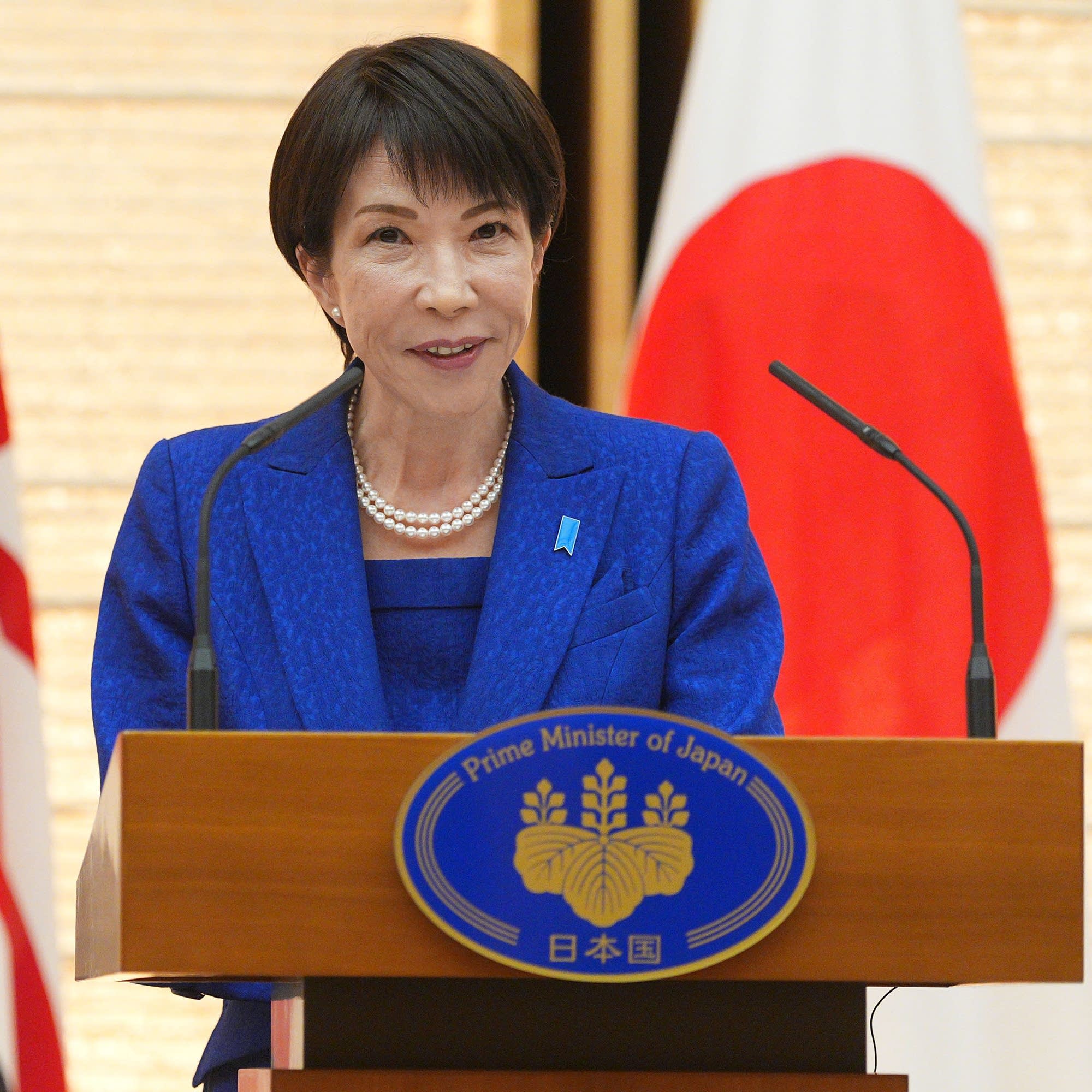
Japan goes to the polls this weekend. Live from the uk, this is the Marketplace Morning Report from the BBC World Service, I'm Guy Kilty. Good morning. Japanese voters will give their verdict on the government of Sanai Takaichi this weekend. Japan's first female prime minister called a snap election just months into her term. With the rise in the cost of living front of mind for many voters. Fellow Phoebe Amoroso looks at how the economy is shaping this campaign and what people want from their next government.
- [01:34]
Phoebe Amoroso
Here in Tokyo, the streets are bustling with weekend shoppers, but people are streaming past both sales advertisements and political campaigners. Prime Minister Sanae Takechi has called a snap election just three months into her term, asking the public for a clear mandate on her leadership. For many here, the economy is a key issue as the cost of living continues to rise. I asked people for their thoughts.
- [02:08]
Lifelock Customer
People are suffering greatly from the rise in prices. Low income earners are suffering even more from the rising prices, and I'm not sure how the government will respond. They say they're providing a lot of subsidies, but it's still not trickling down to the lower classes.
- [02:24]
Tokyo Resident
Prices are definitely rising, but it also feels like people are just generally more depressed. Things don't feel very hopeful.
- [02:31]
Phoebe Amoroso
With the upcoming election. Is there anything you'd like the next government to do?
- [02:38]
Tokyo Resident
I want the government to do something to do with the economy, like getting rid of the consumption tax or doing something that actually reaches ordinary people. I really want them to put proper policies in place.
- [02:53]
Phoebe Amoroso
Hiroyuki Okano has been working in the restaurant industry for more than 30 years. His latest restaurant in West Tokyo is just over one year old. He runs the place by himself, serving up a mix of French and Japanese style dishes, including clay pot rice. But the cost of rice has risen sharply since late 2024.
- [03:20]
Hiroyuki Okano
It's not just rice that's going up. Everything is Rice prices have certainly gone up, but meat, vegetables and fish prices have all gone up by one and a half to nearly two times. So the impact is that if we don't raise prices, we won't make a profit. But if we do, customers won't come, so we can't raise them.
- [03:44]
Phoebe Amoroso
As a new restaurant, you want to build relationships with your customers, but the cost of ingredients is also rising. How do you balance that?
- [03:57]
Hiroyuki Okano
Right now we don't have many customers, but we want to attract good customers, so we're offering very low prices. My food cost percentage is about 60%. Normally you're supposed to keep it at around 30%, but right now it's costing me double that. Still, I keep going like that to earn customers, trust me. But it means I'm basically not making any profit at all. It's been exactly a year now, but I haven't been in the black even once. I've been in the red the whole time. And even so, I still have to pay consumption tax. Honestly, the tax system is just the worst.
- [04:38]
Phoebe Amoroso
Down south, in Okinawa, Japan's poorest prefecture, businesses are also feeling the pinch.
- [04:48]
Concerned Taxpayer
I don't think economic climate will get any better in the future.
- [04:52]
Phoebe Amoroso
That's the voice of Miyako Nimi. She runs a small coffee shop in Naha, Okinawa's capital.
- [05:01]
Concerned Taxpayer
Especially now, with the weakened yen, we've become so dependent on tourists. So I'm really worried about what will happen when the number of tourists decreases and we're left with only Japanese people. Every day I'm thinking, what will tomorrow be like? Will there be a lot of tourists? Will there be a few? I worry every day.
- [05:19]
Guy Kilty
That was Miyako Nimi, a coffee shop owner in Okinawa, Japan, ending that report. By Phoebe Amoroso let's do the numbers. Shares in the European carmaker Stellantis, which owns brands like Chrysler and Fiat, are down 20% on Friday after it said it would take a $25 billion write down on its electric car business. And bitcoin has fallen to its lowest level in more than a year. A single bitcoin is now worth around $65,000. Just three months ago, it was worth more than double that amount. The Cuban president, Miguel Diaz Canel, says his government is trying to solve an energy crisis exacerbated by the US Blocking oil shipments to the country. He says transport, hospitals and the economy are all affected, but that Cuba is ready for dialogue with the US President, provided it's on an equal footing. In response, the White House says diplomacy is already taking place, but that the Cuban government is on its last legs. The Winter Olympics formally opens today in not one, but two locations for the first time in the game's history. The city of Milan and the ski resort of Cortina d' Ampezzo in the Dolomites. Curling, one of the most popular sports with fans, has already begun. If you've watched it, you'll know it's basically teams sliding heavy granite stones down a 150 foot ice sheet while their teammates brush in front of them with broom. Curling demands a very particular type of stone. In fact, the stones used for the curling matches at every Winter Olympics and Paralympics have come from a small, uninhabited Scottish island, ailsa Craig. The BBC's Evan Davies spoke to Paul Davidson, chairman of Cays Scotland, the company that makes them.
- [06:57]
Worried Customer
It's two different kinds of granite. There's a common green granite which makes up the main body of the stone, which is the bit that you see when it's sliding along the ice. And then the secret sauce is called the bluehorn granite, which is the base of the curling stone, which is the bit that touches the ice and slides along the ice. We go offshore in a boat once every few years and we take a very large excavator. We don't blast on the island. All the rock falls down. Naturally. That's a natural phenomenon that we can pick it up. And we're ideally looking for boulders that are somewhere between 5 and 10 tons each, and we bring them back onshore and that's where we process them. How many curling stones do you make in a year? Is there much demand? I mean, it's not a massive market. I mean, there's about 3 million curlers globally. One of the problems, and it's a kind of first world problem, our products tend to last a very long time. So we've actually had somebody phone us up this week looking to replace their curling stones that they bought off us 50 years ago. But we do about 2,000 new curling stones a year. We're probably the biggest manufacturer out there just now, so we will have the vast majority of it. But there is a manufacturer in Canada as well. I mean, it's not a simple process. It's a very traditional process. There's a lot of manual work involved. We've got 14 very, very skilled guys in the factory who've been doing this for a long time. John and Mark, who made the curling stones for this games. That'll be their sixth games that they've done the stones for. I mean, so the difference between a good curling stone and a bad curling stone, I mean, you can botch it. You can botch it. A bad curling stone would be one that just doesn't curl. And by curl I mean move on the ice. So if the stone's been used too much and it's too old, there's no grip. So it doesn't grip on the ice and it won't cur, it'll just go straight. So it becomes more like some sort of bowling game or something, I guess, where the ball, it just carries on running all the way through. So that would be a bad curling stone and hopefully we don't make many.
- [08:53]
Guy Kilty
Of them in the uk. I'm Guy Kilty with the Marketplace Morning Report from the BBC World Service.
- [09:07]
Lifelock Representative
Ready to make the most of your money? Sign up to receive weekly tips from Marketplace designed to help you make smarter financial decisions. Plus, you'll also be the first to know about exclusive Marketplace merchandise and local events. Text Marketplace to 80568 to sign up.