Loading summary
Transcript24 lines
- [00:00]
Dell Advertisement
This Marketplace podcast is supported by Dell introducing the new Dell AI PC powered by the Intel Core Ultra processor. It helps you do your busy work for you so you can fast forward through editing images, designing presentations, generating code, debugging code, summarizing meeting notes, finding files, managing your schedule, responding to long emails, leaving all the time in the world for the things you actually want to do. Get a new Dell AI PC starting at $749.99 at Dell.com AI PC how those ahead Stay ahead.
- [00:32]
Palo Alto Networks Advertisement
This Marketplace podcast is supported by Palo Alto Networks. Enterprises are deploying and experimenting with AI apps and agents, often without the right security in place. Leverage the power of a comprehensive AI platform to secure AI at every step from apps, agents, models and data. Deploy AI bravely with Prisma airs more at Palo Alto networks.com voters economic fears.
- [01:02]
Luke Wilson
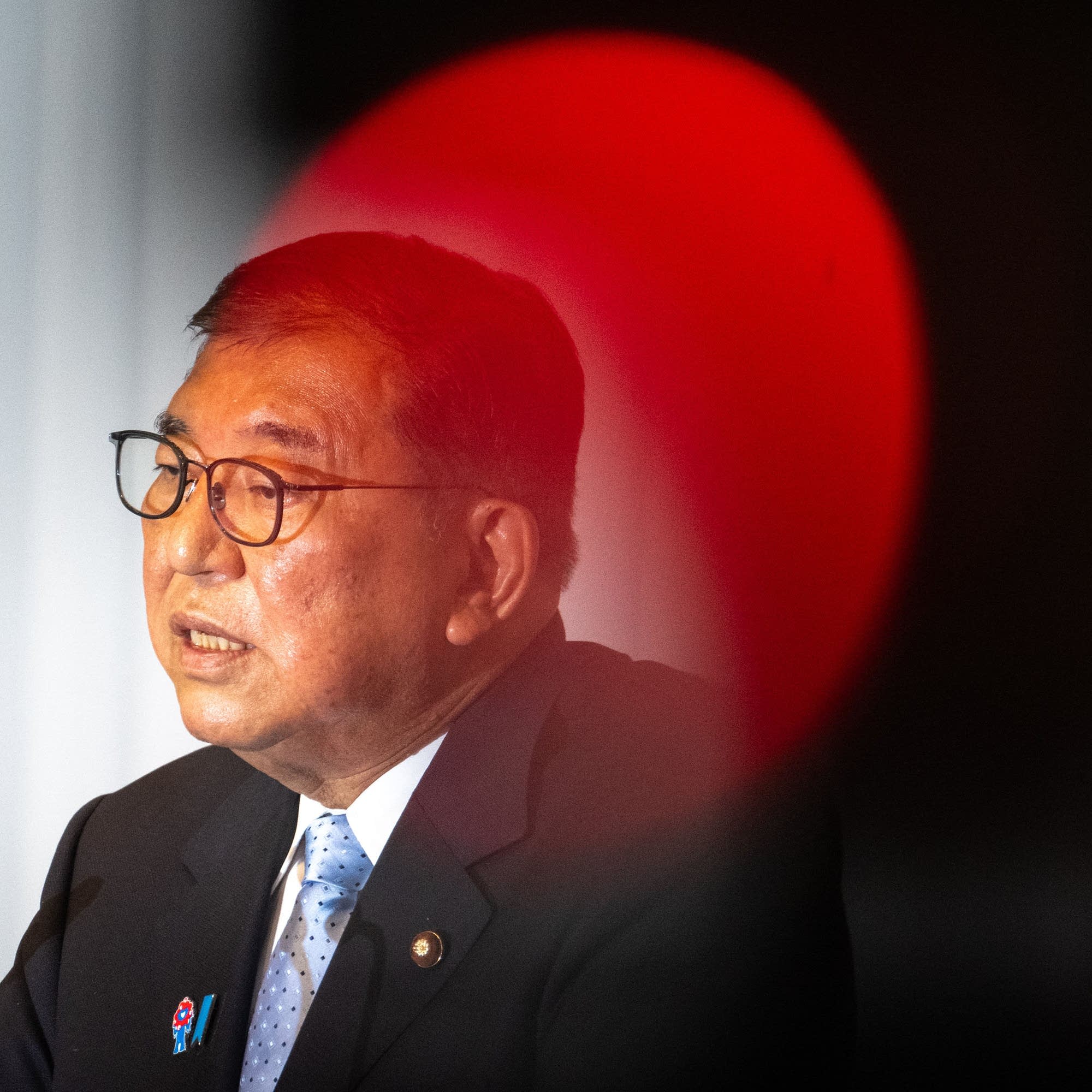
Lead to a bruising election defeat for Japan's prime minister, but he says he's not going anywhere Live from the BBC World Service, this is the Marketplace Morning Report. I'm Luke Wilson in for Liana Byrne. Good morning. Japanese Prime Minister Shigero Ishiba has described the result as a harsh verdict. His governing coalition lost its majority in the upper house of parliament, their Senate, after losing control of the more powerful lower house of representatives last October. Mr. Ishaba says with the threat of extra US tariffs and rising inflation, there are too many pressing issues to resign. The BBC's Shaima Khalil reports from Tokyo.
- [01:42]
Shaima Khalil
This is a painful blow to a leader who's now lost control of Japan's legislative process and who's struggled with consistently low approval ratings since he took office in October. While there is discontent within the ruling party itself about his leadership, the prime minister will remain in power, albeit significantly weakened. Mr. Ishiba said. The government faces a tough road ahead with with Japan's tense trade negotiations with the US and the deadline for a 25% tariff fast approaching. Tackling rising prices has been a major concern for voters who've criticized how slow the government has been in dealing with inflation. The populous Sansetto Party, which has been using social media to attract young voters, has made significant gains. The right wing party's Japanese first slogan has struck a chord with many conservatives online, although its hardline stance on foreigners and immigration has been described as xenophobic.
- [02:33]
Luke Wilson
Shaima Khalil there, Taro Kono, is a member of parliament for Mr. Ishiba's ruling party and a former Japanese foreign minister and defense minister.
- [02:41]
Taro Kono
We have had the wrong policy tackling the inflation. We should have asked the bank of Japan to raise the interest rate. So yen would be stronger. Right now yen is very weak. So, so weak yen resulted in higher price for whatever we import. We should have stand firm and talk to the bank of Japan, but we didn't do that. So that was a wrong policy.
- [03:08]
Luke Wilson
Japanese Parliament Member Taro Kono let's do the numbers. Japan's markets are closed today for a holiday, but the yen has strengthened following that election result, up 2/10 of a percent. Meanwhile, shares in BP are up a quarter of a percent after the oil giant named its new chair. Albert Manifold is the former CEO of the New York listed construction company CRH. There's now only 10 days left on President Trump's pause on his so called reciprocal tariffs. And with the prospect of no deal looming, the European Union is ramping up efforts to avoid their goods being hit. A 30% tariff on all European goods is due to come in on August 1st. The EU has threatened to retaliate with their own taxes on US goods from Boeing plains to bourbon whiskey if a deal can't be made. The BBC Suranjana Tiwari has more.
- [03:58]
Suranjana Tiwari
The US Commerce Secretary over the weekend saying that he was confident that the United States can secure a trade deal with the European Union before the deadline. He also said that August 1st is the hard deadline. They've extended that deadline quite a few times, but it seems that they're sticking to the August 11 deadline. And we also hear that South Korea's team of negotiators has headed over to Washington in order to try and strike a deal, although the chief negotiator says that the goal is not to get rid of tariffs, but to lower them.
- [04:34]
Luke Wilson
Suranjana Tiwari if you're a parent, you are likely well aware that paying for childcare is expensive. With the costs in the U.S. outpacing inflation, both Republicans and Democrats say more financial help is needed. The spending package did something towards this end, but it's still hard. Here's the BBC's Monica Miller.
- [04:55]
Monica Miller
It's dinner time at the Harrisons House in the suburbs of Philadelphia, Pennsylvania. Alison and her husband have three baby high chairs lined up in a row for their one year old triplet daughters. She's a primary school teacher at a government funded school and wasn't given much time off before the girls were born. I worked up until the Wednesday and.
- [05:14]
Shaima Khalil
I had the girls Friday. I was not able to take leave before.
- [05:18]
Monica Miller
I would have had to take my sick time. Unlike most countries, the US does not have paid parental coverage. There's the family and Medical Leave act, which allows 12 weeks off unpaid after the birth of a child or an adoption. But some states like California and New York have put into effect mandatory paid parental leave programs. And some companies also offer their own programs for new parents.
- [05:40]
Suranjana Tiwari
Are you gonna see thunder?
- [05:42]
Monica Miller
A few towns away is Sydney Gleckler. She has a four and a half year old daughter and eight month old twin girl. Her job in the pharmaceutical industry is hybrid, so she works from home a few days a week.
- [05:52]
Elliott Haspel
We're really lucky that we had the amount of leave that we do.
- [05:56]
Monica Miller
Both she and her husband's employers offered parental leave which helped. When the babies were young. They considered putting them in full day childcare, but it would have cost roughly $4,000 per month. The bank of America has found that the average family's child care costs more than a third greater than 2019. That's due to inflation and reduced childcare help during the COVID pandemic. Given that the responsibilities traditionally fall disproportionately on mothers, many of them are torn between spending a large portion of their salary on care, cutting back their hours or quitting their jobs.
- [06:32]
Elliott Haspel
I like to work, but I also. We're a household that I think relies on two incomes.
- [06:38]
Monica Miller
Since the pandemic, American families pay more than their rent for full time care of a child under the age of five. Elliott Haspel is a senior fellow at the Family Policy Lab at the think tank Capita.
- [06:50]
Palo Alto Networks Advertisement
Different in the US than most other countries is there's very little public funding that comes in to defray those costs.
- [06:57]
Monica Miller
The US spends roughly 0.3% of its GDP on childcare in pre kindergarten. That's compared to the average 0.7% of other industrialized nations and 1.9% in Iceland and Sweden. But some child care advocates in the US say there are signs of bipartisan support to offer some financial relief to families. Sarah Ritling from the First Five Years Fund.
- [07:21]
Elliott Haspel
Once we get on the ground and you're in communities and actually when you're in the halls of Congress, there are really good glimmers of hope.
- [07:29]
Monica Miller
Both Republicans and Democrats have made it clear that they need more support to raise their young children. I'm the BBC's Monica Miller for Marketplace.
- [07:38]
Luke Wilson
That's all from us this morning. I'm Luke Wilson with the Marketplace morning report from the BBC World Service.
- [07:48]
Palo Alto Networks Advertisement
Yeah, federal funding for public media was just eliminated. And without federal funds, local public radio stations across the country will struggle to acquire and broadcast Marketplace. That has a big impact on our bottom line. So we're turning to you at this critical time. Individual donations are so important right now. Give to your local station and if you can, please donate directly to Marketplace. Go to marketplace.org donate and thank you.