← Marketplace Morning Report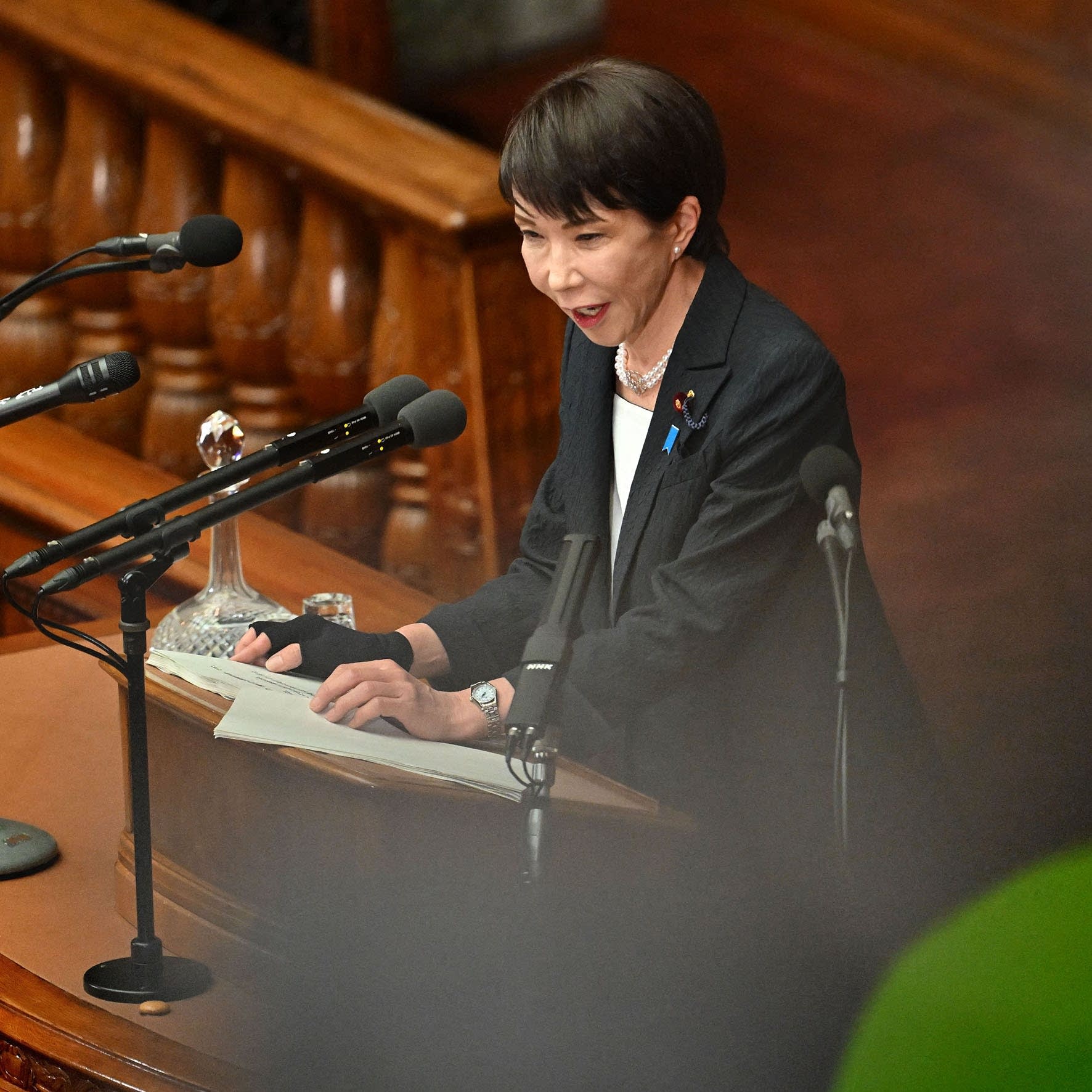
Loading summary
Transcript22 lines
- [00:02]
Guy Kilty
Japan's Prime Minister promises to pump up the economy. Live from the UK this is the Marketplace Morning report from the BBC World Service, I'm Guy Kilty. Good morning. In her first major speech since being re elected as Japan's Prime Minister, Sanai Takaichi has promised to make Japan stronger and more prosperous. The BBC's Tokyo correspondent Shima Khalil has been listening.
- [00:25]
Shima Khalil
What a couple of weeks. She's had a landslide election win, securing a rare 2/3 majority. Now officially re elected by Parliament, Sanae Takaichi setting the tone for her leadership. There were plenty of applause during her policy speech, but very few real surprises. She promised a shift in direction, saying that Japan would fundamentally change its policy approach with responsible, proactive fiscal policy at its core. That includes big government spending, strategic industrial investment and subsidies. Remember that lurking in the background to all of this is Japan's heavy debt and sluggish growth and that worries the markets. She has also vowed to push ahead with a two year suspension of the consumption tax on food and beverages, essentially aiming to ease the pressure on Japanese households when it comes to the cost of living. She's also looking to developing rare earths resources off Japan's coast. With the help of the United States, the two allies are aiming to build a supply chain less dependent on China.
- [01:23]
Guy Kilty
Shaima Khalil, let's do the numbers. Shares in the Swedish buy now, pay later group Klarna lost around a quarter of their value on Thursday after the company reported a loss of more than $250 million in 2025. And Anglo American has cut the value of its De Beers diamond business by half. As demand for precious stones continues to drop, the price of gold is rising again following the latest diplomatic tension between the US and Iran. The BBC's Asia business presenter Suranjana Tiwari joins us for more. Hi Suranjana.
- [01:57]
Michael Moreau
Hi there.
- [01:58]
Guy Kilty
So just run us through exactly what's been happening with the prices of gold.
- [02:02]
Suranjana Tiwari
Yeah, it's been rising for a third day, pushing above $5,000 an ounce. And a few weeks ago even $5,000 was an all time high for the commodity. And this is largely because traders are really weighing geopolitical risks in the Middle East. That's what's happening right now. Of course, President Donald Trump said that 10 to 15, pretty much all he would allow for talks on a nuclear deal with Iran to complete. Investors are taking that as uncertainty, as a little bit of insecurity and as a result they are flocking to the safe haven that is gold. And that's something we've seen over the past few months as well. With just so much uncertainty going around the world, one other thing that's pushing up the gold price is that central banks are also buying a lot of gold.
- [02:50]
Guy Kilty
Suranjana, many thanks for joining us on Marketplace.
- [02:53]
Suranjana Tiwari
Thanks a lot.
- [02:54]
Guy Kilty
In France, restaurants selling traditional French food like steak and chips, coq au vin or mussels in white wine sauce are closing at a rate of 25 a day. One problem is that they've become too expensive. Many people say they are going out less because they can't afford it. And large numbers of bistros and brasseries are now worryingly empty. John Laurenson reports from the western French town of Angers.
- [03:20]
John Laurenson
It's half past 12 and the Angevin, a restaurant in an industrial park on the edge of Angers, is still pretty empty. The owner, Michael Moreau, is disappointed about lunch times like these and anxious about the future.
- [03:35]
Michael Moreau
We should be 3/4 full at this time, but we're more than 3/4 empty. The last year's been really bad because of the rising cost of our raw materials. First of all, a basic like minced beef, for example, was about $10 a kilo a year ago. Now it's about 15.
- [03:55]
John Laurenson
Michael says he's kept prices low $19 for his three course lunch menu, but he still lost 10% of his clientele over the past year. Statistics for France show average net profits in the restaurant sector that were 11% pre Covid have now fallen to under 3%. For Michael, things are a bit worse than that.
- [04:18]
Michael Moreau
Nowadays I feel like I'm working for nothing. Once I've managed to pay my staff, pay my suppliers and pay all the obligatory charges, taxes and contributions, it's almost a relief if I manage to break even at the end of the year.
- [04:35]
John Laurenson
When you say break even, do you manage to pay yourself a salary?
- [04:38]
Michael Moreau
Not every month, no. It's like everything's falling apart. It is possible that I lose everything after 20 years of work. 20 years with nothing to show for it. Obviously, it's not a happy prospect.
- [04:58]
John Laurenson
In the pretty square in the centre of town, surrounded by buildings of white stone, none of the people I stop and talk to have done this lunchtime what was, until recently, the French thing to do.
- [05:09]
Celine Vial
I never go to proper restaurants. It's a question of time, but also money. For special occasions, like celebrating getting my internship, I go to restaurants, but otherwise, no. Usually I eat at home because it's cheaper and healthier.
- [05:32]
John Laurenson
Celine Vial, department or county level, president of the hotel and restaurant owners union says traditional restaurants are disappearing fast.
- [05:44]
Celine Vial
Between June 2024 and June 2025, the number of restaurants that closed in France increased by 10%. About 9,800 closed for good in that period. Here in Nanj, there have been plenty of closures in the past few years. A traditional restaurant will go bankrupt and immediately be replaced by a kebab place or a burger chain or some other fast food restaurant.
- [06:12]
John Laurenson
But it's not just the prices. Younger French people are much less keen on sitting down for a traditional French meal than their parents or grandparents. Celine Vial says that if things keep going the way they have, there will soon be two tiers of dining, with a few eating in expensive gastronomic restaurants while the rest will eat fast food or at home.
- [06:33]
Guy Kilty
John Laurenson There in the French town of Angers in the uk, I'm Guy Kilty with the Marketplace Morning Report from the BBC World Service.
- [06:47]
Reema J. Reyes
What if the most romantic thing you could do is plan for the worst case scenario? I think there's nothing more romantic than actually knowing and being prepared for the future. Why would you want to have a messy divorce? That's unromantic. I'm Reema J. Reyes, and this week on this Is Uncomfortable. We're talking prenups, the myths that make them feel taboo, what they actually protect and and the bigger questions they bring up about love and power. Listen to this Is Uncomfortable. Wherever you get your podcasts.