Loading summary
Transcript38 lines
- [00:00]
Odoo Advertiser
Running a business is hard enough, so why make it harder with a dozen different apps that don't talk to each other? Introducing Odoo, the only business software you'll ever need. It's an all in one fully integrated platform that makes your work easier from CRM, accounting, inventory, e commerce, and more. And the best part? Odoo replaces multiple expensive platforms for a fraction of the cost. This is why over thousands of businesses have made the switch. So why not you try Odoo for free@odoo.com that's o d o o.com
- [00:32]
Rima Reis
let's
- [00:32]
Kimberly Adams
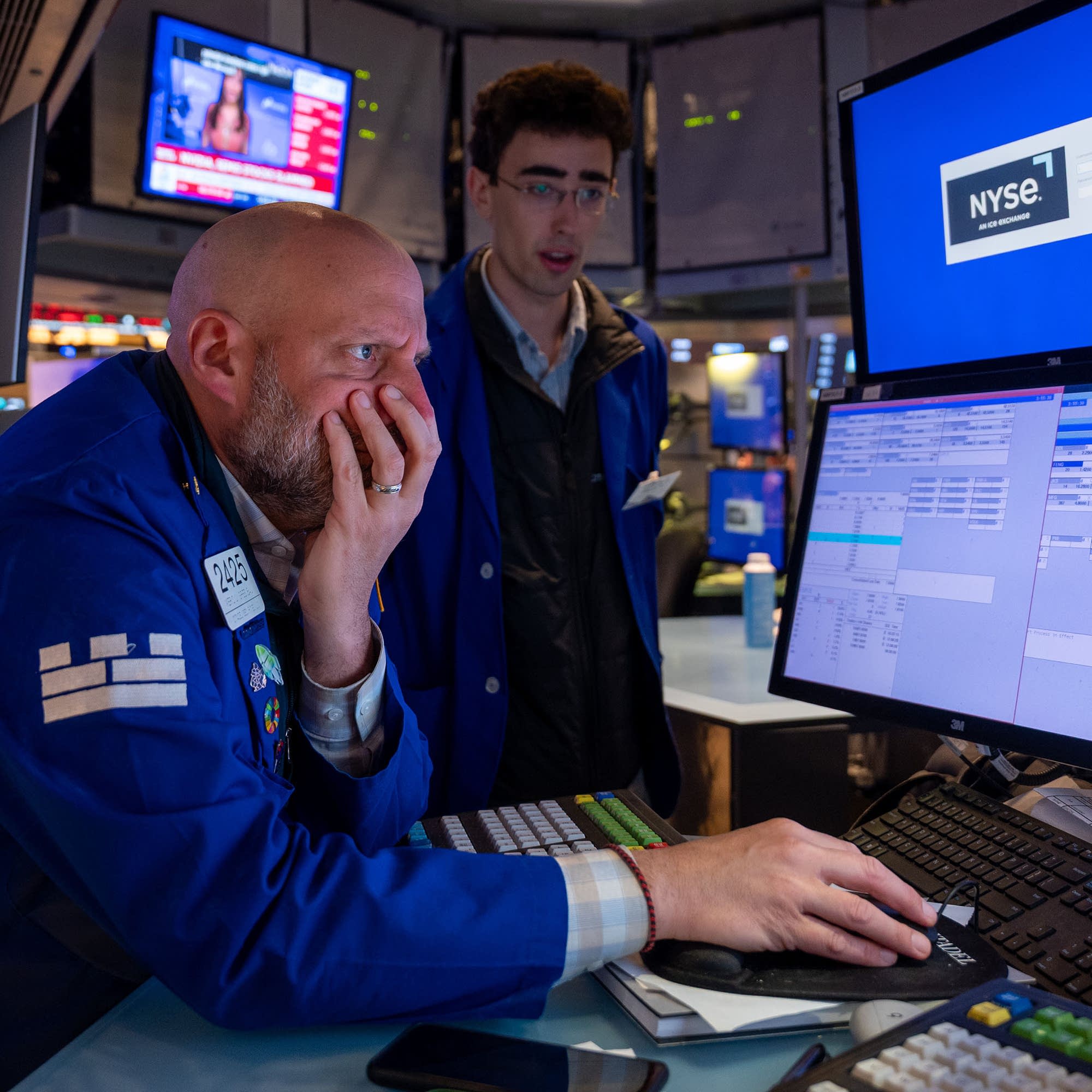
talk about your feelings, how investors are feeling about stocks and how the different generations are feeling about the economy in general. From Marketplace in Washington, I'm Kimberly Adams. Investors are apprehensive as we get into this action packed week in the economy. The Federal Reserve finishes up an interest rate setting meeting tomorrow. Plus dozens of companies on the S and P report earnings. Oh, and we also get reports on inflation and gdp. Marketplace's Nancy Marshall Genzer has more on what's ahead and why traders are nervous.
- [01:04]
Nancy Marshall Genzer
Wall Street's fear thermometer the Vix index shot up more than 10% over the past five days as investors pondered what's ahead. We'll get earnings reports from some big tech companies including Meta, Amazon, Apple and Microsoft. Investors have already gotten disappointing reports from Alphabet and Tesla. Then there's the Federal Reserve new chair Kevin Warsh's strategy is to keep traders guessing the that makes them nervous. Some Fed watchers are predicting that Warsh will announce a surprise interest rate hike tomorrow. We'll get more big news on Thursday with an advance estimate of GDP for the second quarter of this year, plus the Personal Consumption Expenditures Price Index, or pce, which as you know is currently the Fed's preferred inflation yardstick. We'll also get a peek at weekly jobless claims on Thursday. I'm Nancy Marshall Genser for Marketplace.
- [01:58]
Kimberly Adams
Nancy mentioned those big tech earnings coming this week, including Meta, Microsoft and Amazon. Those releases come amid investor concerns about cash burn at companies that are building out AI data centers. Marketplace's Nova Safo has more going into this earnings season.
- [02:14]
Daniel Newman
Daniel Newman, founder of the AI tech consultancy the Futurum Group, was wondering if any big tech players would blink, as he put it, as in pull back on the hundreds of billions of dollars they plan to spend on AI.
- [02:28]
Jurrien Timmer
They're staring versus blinking.
- [02:30]
Daniel Newman
Alphabet last week increased its AI spending forecast for the year by $15 billion. Neumann expects the same this week from Microsoft, Meta and Amazon.
- [02:40]
Jurrien Timmer
They're staring down the barrel of trillions of spend in a market that basically doesn't want them to spend more, but would probably penalize them for spending less because that would be some type of admission of failure.
- [02:54]
Daniel Newman
That's the conundrum, and some investors don't want to wait to find out how this all ends. They're diversifying away from the biggest names in tech, at least those known as hyperscalers, the ones investing the most to build out AI infrastructure.
- [03:08]
Jurrien Timmer
They're going everywhere else.
- [03:10]
Daniel Newman
Jurrien Timmer is director of Global Macro at Fidelity Investments, which is a Marketplace underwriter.
- [03:16]
Jurrien Timmer
What we're seeing now is that the sort of the non AI space is
- [03:21]
Daniel Newman
really broadening out, and that's good, timur says. If you want to avoid a bubble, I'm NovaSafo for Marketplace.
- [03:46]
Even Realities Sponsor
This podcast is supported by even realities even G2 productivity smart glasses designed to keep real time support right in view with teleprompting, conversation support, real time translation, AI assistance and more help you stay on top of work and daily life. And unlike most smart glasses, they're designed to look and feel like premium eyewear with no camera and a lightweight 36 gram design you can wear all day. The more context you give them, the smarter they get, adapting to how you work and what you need. To learn more about even G2, go to evenrealities.com and see how everyday smart classes keep helpful information in sight so you can stay productive and hands free throughout the day. And for our listeners, use Promo code marketplace@evenrealities.com to get 10% off even ring one and or even clip when you add them to your even G2 order. That's evenrealities.com promo code marketplace.
- [04:46]
Odoo Advertiser
This podcast is supported by Raymond James, a financial firm offering wealth management, banking and capital markets services that are inspired by people before Raymond James. Financial advisors build plans. They build relationships so they can craft individual strategies designed to achieve priorities and pursue what's possible. That's the power of personal disclosures. At raymondjames.com, raymond James Associates, Inc. Member NYSE SIPIC
- [05:16]
Kimberly Adams
Young people tend to be more optimistic about the economy. That's not New survey data has shown that for years. But the most recent consumer confidence data from the conference board shows the sentiment gap between younger and older generations is getting wider. Over the past few months, the silent generation's confidence in the economy has tanked. While last month Gen Z's increased, Marketplace's Kaylee Wells explains what's going on.
- [05:43]
Kaylee Wells
The main driver of this trend 20 year olds and 80 year olds are just worried about different things. The more pessimistic groups, the baby boomers and the silent generation, they're very concerned
- [05:53]
Jurrien Timmer
about what's happening with health care, and they're also very concerned with things like retirement or if they are retired, okay, how well are their benefits going to be doing?
- [06:04]
Kaylee Wells
Tom Arnold teaches finance at the University of Richmond. He says young people worry about labor and credit, their ability to make and spend money.
- [06:12]
Jurrien Timmer
The only time that the younger generation really, really gets pessimistic is if there aren't any jobs, okay, but unemployment's at
- [06:22]
Kaylee Wells
a relative low, so the job market and credit environment aren't all that worrisome right now while health care costs keep rising, therefore, sentiment gap, the gap is also especially wide in the conference board survey because it focuses on the labor market. Camelia Kunin teaches household finance and labor at University of North Carolina.
- [06:42]
Jurrien Timmer
They put a lot of weight on the questions, which are about wages or expected wage growth, things like that.
- [06:51]
Kaylee Wells
So younger workers appear more optimistic because
- [06:54]
Jurrien Timmer
objectively, young people experience higher wage growth year to year than older people.
- [07:00]
Kaylee Wells
Kunin says other surveys, like the one from the University of Michigan, ask about the prices of cars and homes, things you might feel less optimistic about if you haven't had much time to build up some wealth.
- [07:12]
Jurrien Timmer
And so in the Michigan survey, you can understand why you would see young people appearing much more pessimistic than older people.
- [07:20]
Kaylee Wells
So the confidence gap is narrower in that survey. But no matter how rough the economy gets, younger people have what economists call the long term hedge. Tyler Schipper teaches data analytics and economics at the University of St. Thomas.
- [07:34]
Rima Reis
And so some of that optimism can also come from I'm young, I can build up these skills, I can succeed in this economy. And you can get optimism in that sense.
- [07:43]
Kaylee Wells
The idea being if the economy is bad and you're 20, you've got time to adapt to major market disruptions like, oh, the introduction of artificial intelligence.
- [07:53]
Rima Reis
They also feel more likely that their employers are going to invest in them.
- [07:58]
Kaylee Wells
And hope springs eternal when you're young because even if the economy seems bad now, you've got a lot of working years left for it to turn around. I'm Kaylee Wells for Marketplace.
- [08:08]
Kimberly Adams
Our producers are Emma Condon, Tamar Fagan, Ashley Rodriguez, Ariana Rosas and Erica Soderstrom. Our senior producer is Alex Schroeder. Our supervising senior producer is Meredith Garretson Morby. And in Washington, I'm Kimberly Adams with the Marketplace Morning Report. From APM American Public Media.
- [08:35]
Rima Reis
I'm Rima Reis host of the weekly Marketplace podcast, this Is Uncomfortable. And this week on the show, Marketplace correspondents Kristen Schwab and Sabri Benishore helped me give advice about your workplace drama. Everything from pushy co workers to the politics of getting ahead, Relationships at jobs
- [08:54]
Odoo Advertiser
matter and people who are schmoozy with the boss.
- [08:58]
Rima Reis
It makes a difference.
- [08:59]
Odoo Advertiser
Makes makes a difference.
- [09:01]
Rima Reis
Be sure to listen to this Is Uncomfortable. Wherever you get your podcasts.