Loading summary
Transcript29 lines
- [00:00]
Podcast Announcer
This Marketplace podcast is supported by Viking, committed to exploring the world in comfort. Journey through the heart of Europe on an elegant Viking longship with thoughtful service, destination focused dining and cultural enrichment on board and onshore. And every Viking voyage is all inclusive with no children and no casinos. Discover more@viking.com.
- [00:25]
Sabri Benishore
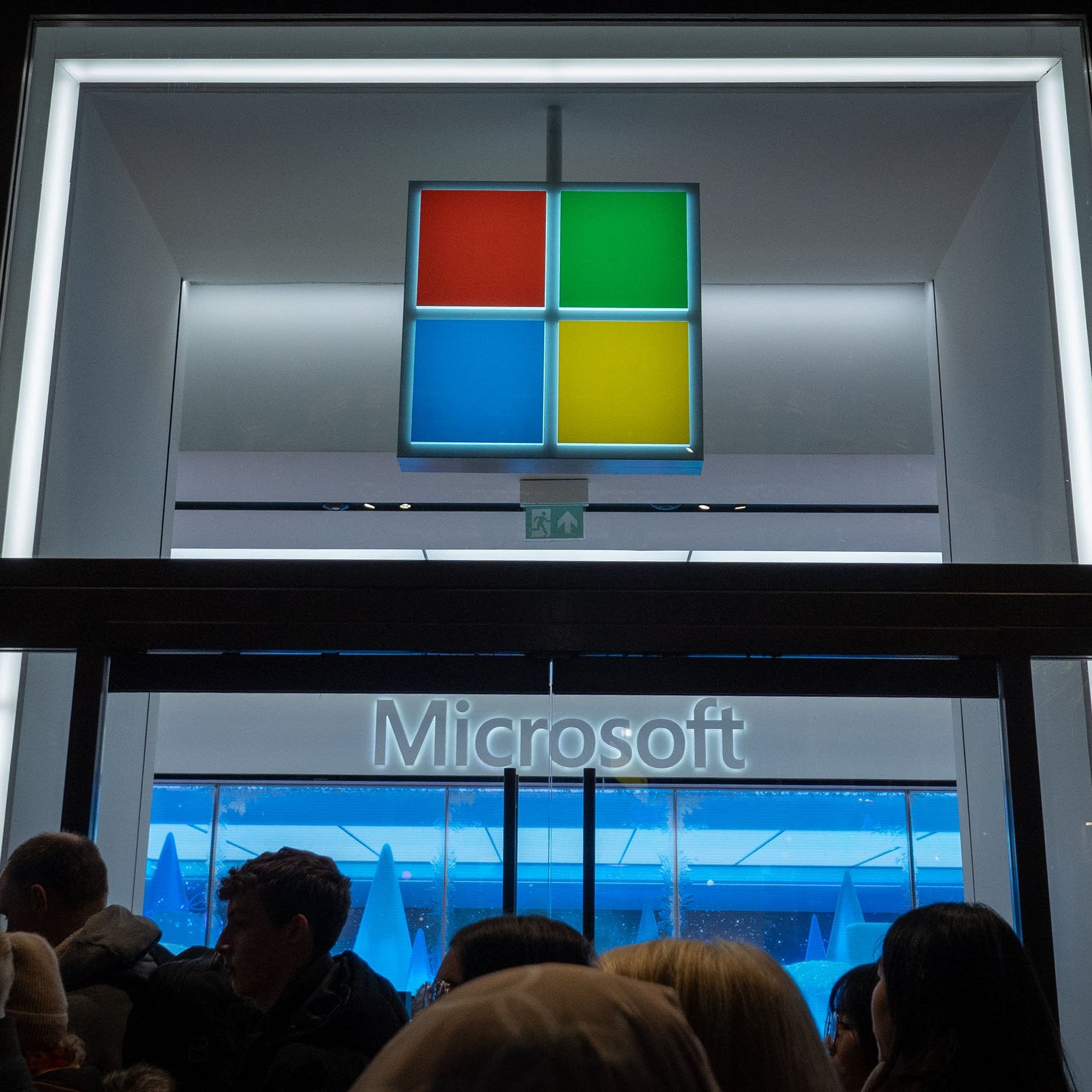
Microsoft says it will foot the bill for extra data center electricity costs from Marketplace, I'm Sabri Ben, ashore in for David Brancaccio. The data centers needed to power AI are controversial in many communities. People are worried that the extra demand will drive up their electricity bills, which already are up 7% in a year on average, according to yesterday's inflation report. In response to this backlash, Microsoft is pledging to pay extra for electricity to power its data centers so regular people's electric bills don't get driven up. The tech giant also says it'll work to prevent water resources from being drained by giant server farms. Marketplace's Nova Safo has more.
- [01:09]
Nova Safo
Microsoft's announcement comes amid growing public backlash against data centers. That backlash has led to tens of billions of dollars in projects being delayed or canceled in recent months.
- [01:20]
Andrew Campbell / Chris Borreck / Rima Aligh (various experts)
Communities are asking us hard and pointed questions about the impact of data centers.
- [01:25]
Nova Safo
Rima Aligh heads Microsoft's Infrastructure Legal affairs team.
- [01:29]
Andrew Campbell / Chris Borreck / Rima Aligh (various experts)
Data centers are growing at a rapid scale, and it's something that is really new for communities to have to grapple with.
- [01:37]
Nova Safo
The biggest concerns have been rising electricity costs and the large amounts of water many data centers consume for cooling. Microsoft is promising, among other things, to pay the full cost of the electricity it consumes and to replenish more water than it uses.
- [01:53]
Andrew Campbell / Chris Borreck / Rima Aligh (various experts)
When I look at the Microsoft plan, it almost aligns perfectly with the arguments that are often made against DAC centers and communities in Pennsylvania.
- [02:04]
Nova Safo
Chris Borreck has seen the angry town hall meetings in his state from his perch as director of the Muhlenberg College Institute of Public Opinion.
- [02:12]
Andrew Campbell / Chris Borreck / Rima Aligh (various experts)
If there's one particular aspect right now of where the issue is connecting to individuals, it's through their electricity prices.
- [02:21]
Nova Safo
President Trump highlighted Microsoft's electricity commitment and said his administration is talking to other data center builders to do the same. I'm novasafa for Marketplace.
- [02:32]
Sabri Benishore
Congress, under the Constitution, has the power to control the country's finances, and some lawmakers are trying to use that power to prevent the Trump administration from invading Greenland. Democratic Senator Gene Shaheen of New Hampshire and Republican Lisa Murkowski of Alaska have introduced legislation to bar the Pentagon and Department of State from using funds appropriated by Congress to, quote, blockade, Occupy Annex, conduct military operations against or otherwise assert control over the territory of a NATO member state.
- [03:21]
Podcast Announcer
This marketplace podcast is supported by Viking, committed to exploring the world in comfort. Journey through the heart of Europe on an elegant Viking longship with thoughtful service, destination focused dining and cultural enrichment on board and onshore. And every Viking voyage is all inclusive with no children and no casinos. Discover more@viking.com.
- [03:44]
Sabri Benishore
Venezuela's state owned energy company has reportedly started to ramp up oil production again as exports of crude restart under U.S. supervision. That oil production had fallen close to zero after the US Imposed a blockade on oil shipments from the country. So what does a Venezuelan oil industry under US Control look like? And what does the oil market look like in that situation? So we put that question to Andrew Campbell. He's Executive Director at the Energy Institute at Haas at University of California, Berkeley. Welcome.
- [04:17]
Andrew Campbell / Chris Borreck / Rima Aligh (various experts)
Thank you.
- [04:18]
Sabri Benishore
So President Trump declared that the US Would control indefinitely Venezuela's oil production.
- [04:24]
Nova Safo
Oil.
- [04:25]
Sabri Benishore
What would that actually mean given the current market environment for oil?
- [04:31]
Andrew Campbell / Chris Borreck / Rima Aligh (various experts)
Well, that's the piece where it's a very questionable whether this would be a good idea for the United States or any international oil companies. I mean, the global oil market right now is very well supplied. That's good for consumers, good for oil consumers. The prices are modest. But for a country like Venezuela, whose oil reserves are some of the lowest quality oil reserves in the world, that's a really bad thing. Just even just producing it is very expensive due to the poor quality oil.
- [05:00]
Sabri Benishore
Yeah. I mean, in one post to social media, the President said a big factor in the US Involvement in Venezuela is the, quote, reduction of oil prices for the American people. Would that actually lower gas prices for people?
- [05:13]
Andrew Campbell / Chris Borreck / Rima Aligh (various experts)
I mean, not anytime soon. I mean, there's a little bit of kind of a grain of an idea there, which is the Gulf coast in the United States has tremendous refining capacity. Much of that capacity was built and expanded to process oil coming from Venezuela. So the refineries are able to produce gasoline, get it into the market, lower prices for consumers. But there are many other sources of oil too, and the biggest source actually is US Domestic oil. And that is why prices, in part are low right now. It's hard to see how Venezuela really would have any impact on that even if oil production increased substantially.
- [05:52]
Sabri Benishore
The President met with oil executives last week. ExxonMobil, ConocoPhillips. They have outstanding debts in Venezuela. At least One of the CEOs called Venezuela uninvestable. What would make Venezuela a profitable investment? What would make it investable?
- [06:09]
Andrew Campbell / Chris Borreck / Rima Aligh (various experts)
So thinking back to the Venezuela of The past, the 1990s, Venezuela was highly investable. There were many US oil companies, other foreign companies operating very profitably in the country at that time. There were stable institutions. There were stable understandable courts. So there was a whole framework that was basically friendly to international investment. That system is long gone, and it would take decades to probably put that back together.
- [06:38]
Sabri Benishore
President Trump said that Venezuela and the unlocking of its oil would create massive wealth, lower taxes, and create a lot of jobs for Americans and Venezuelans. What do you make of that?
- [06:51]
Andrew Campbell / Chris Borreck / Rima Aligh (various experts)
You know, again, there's a little bit of something there. I mean, the Venezuelan oil industry had historically employed many, you know, tens of thousands of Venezuelans. So, yeah, certainly a revitalized industry, if that were possible, would create jobs there in Venezuela. I don't really see how it would create jobs in the United States. The oil industry is not really a labor intensive industry. It's a capital intensive industry. It's really about making money for companies, for investors. It's not a big source of employment.
- [07:19]
Sabri Benishore
Andrew Campbell is executive director at the Energy Institute at Haas. Thank you so much.
- [07:25]
Andrew Campbell / Chris Borreck / Rima Aligh (various experts)
Thank you.
- [07:26]
Sabri Benishore
In New York, I'm Sabri Benishore with the Marketplace Morning Report. From APM American Public Media.
- [07:43]
Maria
Hey, everyone. You already listened to Marketplace podcasts, so you know that it's important to understand how economic forces shape our lives. And that feels especially important now as we're all trying to make sense of the latest headlines. I'm Maria, host of Marketplaces. This is Uncomfortable, a show that explores how money bumps up against our relationships, our choices in the parts of life we don't always say aloud. And starting January 15th, we are back every single week. New stories, new questions, and the kind of conversations that make you feel less alone in this quickly changing economy. We're tackling questions like should I turn my hobby into a money making side hustle? How do I deal with layoff anxiety? Or what do we owe our parents financially? Don't miss an episode. Subscribe to this is Uncomfortable from Marketplace. Wherever you get your podcasts.