Loading summary
Transcript1 lines
- [00:00]
A
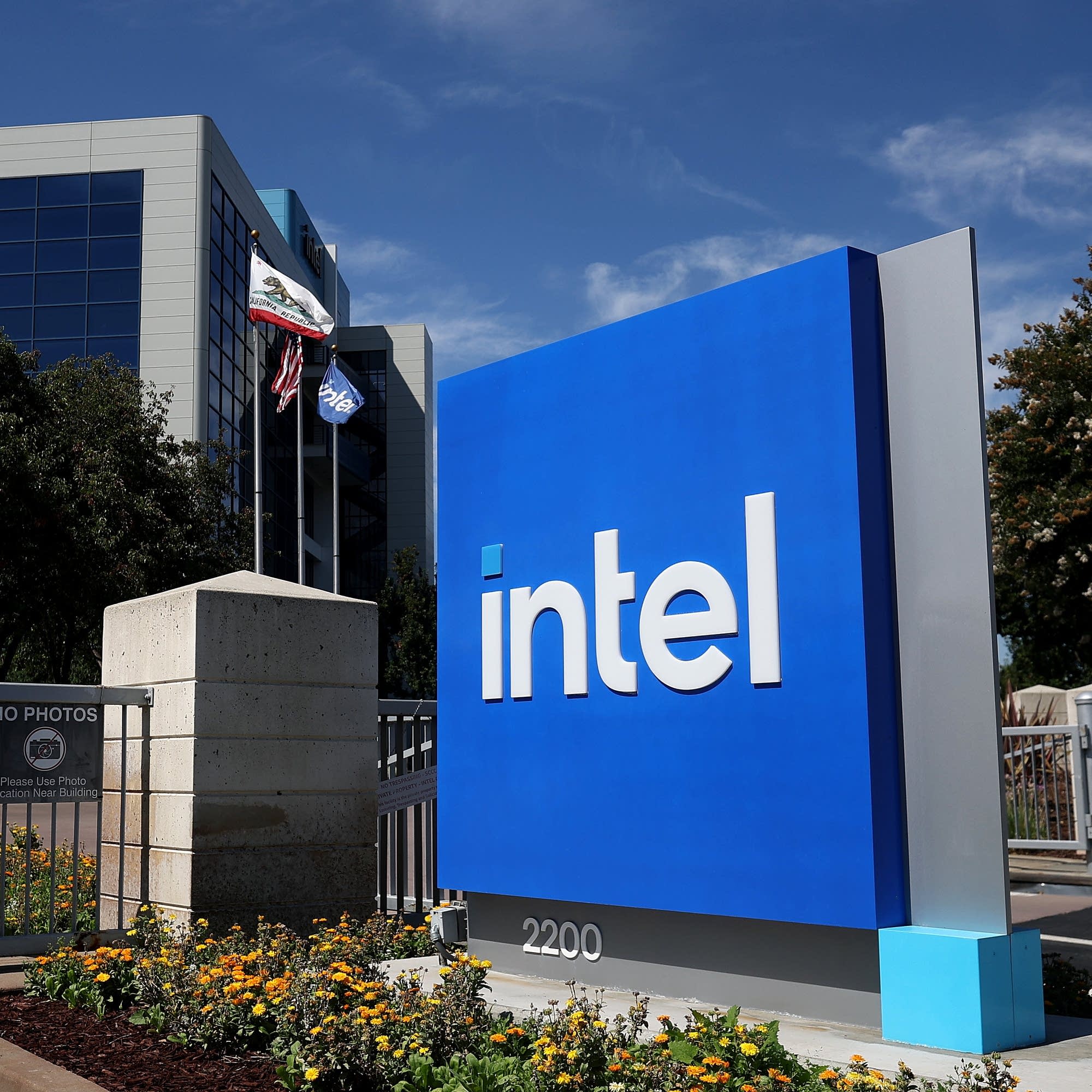
You're a professional web creator who needs a platform that works as hard as you do. Wix Studio is built for you whether you're a designer, developer or marketer ready to amplify your impact. Build intuitively with advanced design features and AI powered tools. Manage your clients and projects efficiently from one workspace scale with dynamic systems and fully managed infrastructure. Create exceptional websites with hyper efficiency on WIX Studio My uncontrollable movements called TD tardive dyskinesia felt embarrassing. I felt like disconnecting. I asked my doctor about treating my TD and learned about in a prescription medicine clinically proven for reducing TD in adults. That's always one capsule once daily and number one prescribed. People taking in can stay on most mental health meds in can cause depression, suicidal thoughts or actions in patients with Huntington's disease. Call your doctor if you become depressed, have sudden behavior or mood changes or suicidal thoughts. Don't take in serious side effect. Side effects may include allergic reactions like sudden, potentially fatal swelling in hives, sleepiness, the most common side effect, and heart rhythm problems. Know how in grezza affects you. Before operating a car or dangerous machinery, report fever, stiff muscles or problems thinking as these might be life threatening. Shaking, stiffness, drooling and trouble with moving or balance may occur. Take control by asking your doctor about Ingrezza. Learn more@ingrezza.com that's ING R E Z Z A dot com in Grezza more details are coming in about the Trump administration's plans to purchase a portion of the struggling chip maker Intel. I'm David Brancaccio in Los Angeles. Commerce Secretary Howard Lutnick has confirmed that the Trump administration is looking at the purchase of part of a big American corporation. The US Stake in Intel would be unusual, but not unprecedented. As Marketplace's Nancy Marshall Genzer explains, Intel was already getting a federal grant under the Chips and Science act, which was approved during the Biden administration yesterday. Commerce Secretary Howard Lutnick told cnbc the US should get something for that money. Why are we giving a company worth $100 billion this kind of money? What is in it for the American taxpayer? And the answer Donald Trump has is we should get an equity stake for our money. Lutnick says this would be a non voting stake so the Trump administration wouldn't have a say in how intel was run. The US government has done this before. It spent about $50 billion to bail out General Motors in 2008 during the Great Recession. But these types of deals can be risky for taxpayers. The government lost about $11 billion on its GM investment. I'm Nancy Marshall Genser for Marketplace. More now on how the global artificial intelligence arms race could disrupt the job market. Today, a dispatch from the annual World AI Conference in Shanghai. China's government is pushing businesses to integrate the powerful tech across industries there. The tech can be a tool to make people more productive, but it can also be a tool for businesses to use fewer workers. Marketplace's China correspondent Jennifer Pak attended that conference in Shanghai. Walking past is visitor Mao Ziheng. I've not seen anything impressive of this AI show. And he's also not worried about being replaced by AI. I mean, food delivery and autonomous cars aren't even allowed in most places in China. How can they replace US delivery guys? Not likely in the short term, but no, jobs last forever, says Cheng Si Rui. He's the co founder of Fingerdance, an AI sign languages interpreter. Yes, AI will reduce the number of jobs like in customer service, But I think AI can solve 80% of the trivial work and we as humans can focus on the key jobs like software engineering and there will be new jobs for humans, says Mao Shuhan, co founder of robotics firm fibot. For example, in our research and development of robots, we need humans to do robot testing and safety checks. Later, a young AI worker told me off mic that AI is evolving fast. He's got to learn to work with it or be replaced by it. Marketplaces China correspondent Jennifer Pack there contributing to our tech program. You can stream that full report from our homepage now. This podcast is supported by Odoo. Some say Odoo business management software is like fertilizer for businesses because the simple, efficient software promotes growth. Others say Odoo is like a Magic Beanstalk because it scales with you and is magically affordable. And some describe Odoo's programs for manufacturing, accounting and more as building blocks for creating a custom software suite. So Odoo is Fertilizer Magic Beanstalk Building blocks for Business Odoo exactly what businesses need. Sign up@odoo.com that's o d o o.com this Marketplace podcast is supported by Yubico, makers of the Yubikey, protecting the personal and business applications and accounts that people and companies rely on every day. The Yubikey stops AI powered cyber attacks, online identity scams, fraud and account takeovers. It provides powerful protection and it's easy to use. Simply tap your Yubikey to log in securely to everything from email to finance to productivity applications across all of your devices. Yubikey still undefeated the original PassKey. More@yubico.com Starting soon when you search for a gadget or gizmo@bestbuy.com, some of the items will not be from Best Buy. Third party sellers are being added Amazon and Walmart Style reporter Daniel Ackerman looks at pluses and minuses. Amazon has a third party marketplace. So does Walmart and Lowe's and Nordstrom, Kohl's, Macy's and Target. So if anything, Best Buy is late to the party with this launch, but it's still an appealing move for a retailer who wants to seem like it offers anything you could ever want, says Anthony Cicumba, a consumer sector analyst at Loop Capital Markets. So it gives Best Buy much more of an endless aisle as compared to all the products that they currently stock and sell themselves. And the best part of that endless aisle is it doesn't require an endless warehouse. Usually Best Buy will not stock the product because I just don't think it's going to sell frequently enough to justify having it in their assortment. And since retailers like Best Buy already have websites to sell their own stuff, it doesn't take much investment to open the gates to other sellers. Michael Baker, a senior research analyst at D.A. davidson, says it's kind of like free money. Those third party marketplaces have very strong margins because you're basically just taking a royalty. But one risk of turning yourself into a marketplace, you could be giving your competitors a boost, says Neil Saunders, a retail analyst at Global Data. If there is overlap with the core categories Best Buy sells, there can be cannibalization. People could buy a marketplace product rather than a Best Buy product, and that can be problematic. But Sanders says the bigger risk is reputational. If a customer buys a TV from a third party and that TV arrives two weeks late or in two pieces, guess who the customer blames? It's Best Buy, because that's the name that's on the header of the website. And even though they might be dealing with a third party, the customer still sees this as a Best Buy problem. There are ways retailers can manage this reputational risk, says Tony Moreno of Harvard Business School. For one, they can vet anyone who wants to sell through their site. There are marketplaces that are more open, like Amazon, for example, like many vendors can list on Amazon. But companies like Best Buy can be selective about which vendors they want to bring to the platform. And once they have vendors on board, retailers can sell them other services like advertising and logistics. Walmart is now doing a lot of advertising and a lot of fulfillment so part of the money that they make on the marketplace is from selling services to vendors that use Walmart infrastructure, moreno says. When you step back and blur your eyes a little, a lot of these retailers are starting to look like tech companies. I'm Daniel Ackerman for Marketplace and After a shipment of frozen shrimp bound for Walmart set off radiation detectors at US Ports, the FDA is telling people to watch out for the Great Value brand. Three lots of the frozen shrimp from one supplier in Indonesia have low levels of radioactive cesium137, byproduct of nuclear reactors and medical equipment. The FDA says this does not pose an acute health hazard, but it is not good. The FDA alert says if you have one of the lots from Walmart, throw it away online. The search words FDA advises shrimp will get you the specific lot numbers. It's not clear how the shrimp got exposed to the radioactivity. I'm David Brancaccio, Marketplace Morning Report from APM American Public Media. Poetry has the power to connect our inner universe and the outer world. I'm Maggie Smith, poet and host of the Slowdown, a podcast from American Public Media. Each weekday find time to take a breather from your to do list, or doom scrolling for that matter, and take in a moment of reflection with a hand picked poem. Listen to the Slowdown wherever you get podcasts.