Loading summary
Transcript28 lines
- [00:00]
Venmo Stash Advertiser
With Venmo Stash. A tag on one hand and ordering a ride in the other means you're stacking cash back with Venmo Stash. Get up to 5% cash back when you pick a bundle of your favorite brands. Earn more cash when you do more with Stash. Venmo Stash terms and exclusions apply. Match $100 cash back per month. See terms of Venmo Me Stashterms.
- [00:15]
Capella University Advertiser
Is it time to reimagine your future? The right business skills may make a difference in your career. At Capella University, we offer a relevant education that's designed to focus on what you need to know in the business world. We'll teach professional skills to help you pursue your goals, like business management, strategic planning and effective communication. And you can apply these skills right away. A different future is closer than you think with Capella University. Learn more at Capella. Edu.
- [00:46]
David Brancaccio
Can a Hollywood studio get too big?
- [00:51]
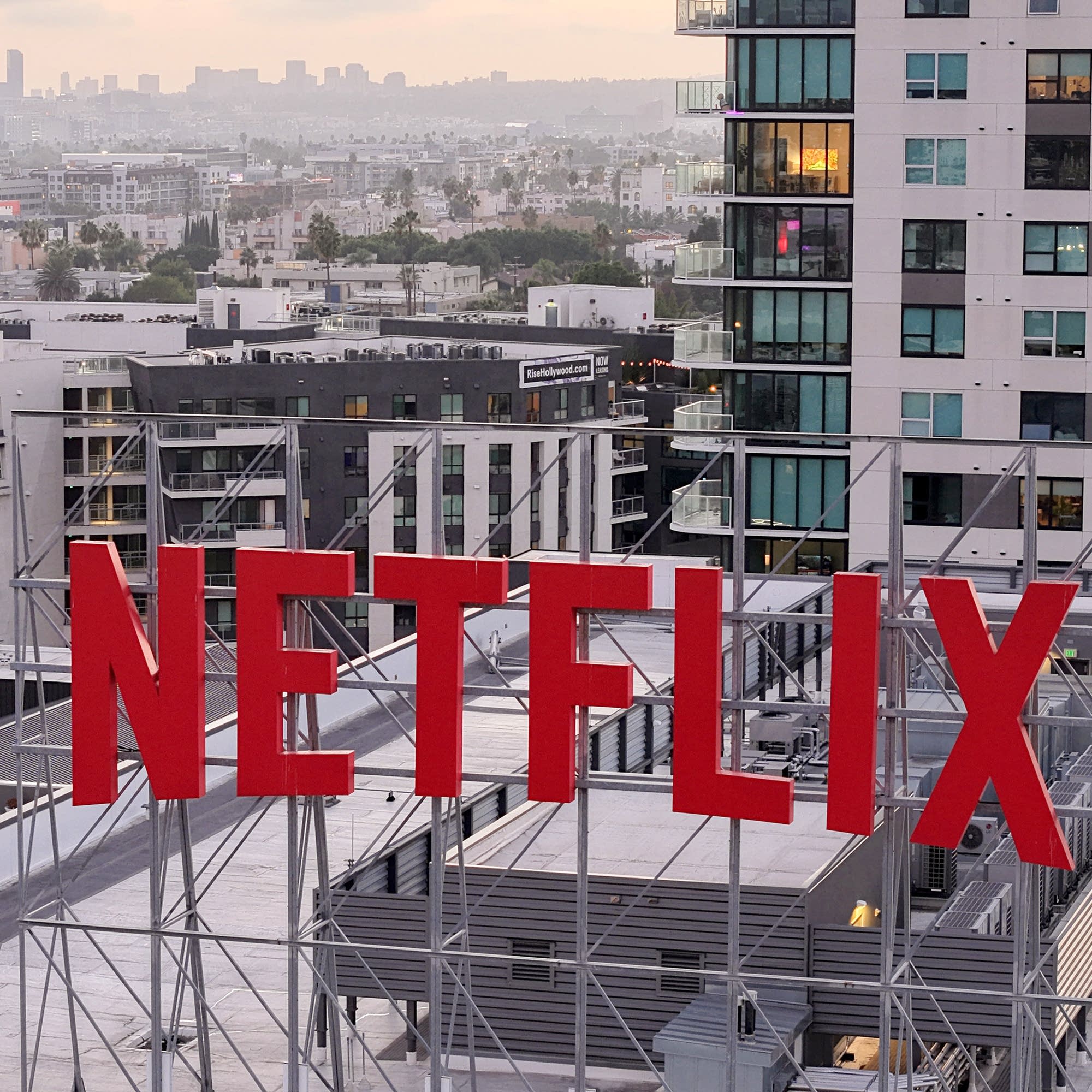
I'm David Brancaccio in Los Angeles. A bidding war over Warner Brothers Discovery is heating up. One suitor, Netflix, appears to be pulling ahead of the rest. But the deal is not sealed. Marketplace's Nancy Marshall Genzer reports Warner Bros.
- [01:05]
Nancy Marshall Genzer
Discovery is apparently in exclusive talks with Netflix. This was first reported by Bloomberg, which says Warner Brothers would sell its film and TV studios and HBO Max streaming service to Netflix and spin off its cable channels, including cnn, before the deal closed. Comcast and Paramount also won by Warner Bros. Paramount is calling the bidding process tainted and says Warner Brothers is favoring Netflix. Any deal Warner Brothers makes has to be approved by regulators. Some lawmakers are already raising antitrust concerns. Republican Congressman Darrell Issa of California wrote a letter to the Justice Department. He says if Netflix and Warner Brothers combined, they'd control More than 30% of the streaming market. A threshold he says is quote, unquote, traditionally viewed as presumptively problematic under antitrust law. I'm Nancy Marshall Genser for Marketplace.
- [02:02]
David Brancaccio
This morning we'll get a reading on inflation. The go to number for the guardians of interest rates at the Federal Reserve. Personal consumption expenditures has that price increase information, but the data we get today is kind of moldy cheese. It's September's data delayed by the government shutdown. The the Fed is expected to lower interest rates slightly next week at a time that it's especially hard to tell if it's inflation or a flagging job market that's the most pressing problem.
- [02:50]
Grainger Advertiser
If you're an H Vac technician and a call comes in, Grainger knows that you need a partner that helps you find the right product fast and hassle free. And you know that when the first problem of the day is a clanking blower motor, there's no need to break a sweat. With Grainger's easy to use website and product details, you're confident you'll soon have everything humming right along. Call 1-800-GRAINGER clickgranger.com or just stop by Grainger for the ones who get it done.
- [03:19]
Superhuman Advertiser
This Marketplace podcast is supported by Superhuman. The world is buzzing with AI tools, but instead of making things easier, they've made your workflow overwhelming. You're stuck copying and pasting context switching and juggling too many apps. There's now a better way that outsmarts the work chaos. Meet Superhuman, the AI productivity suite that gives you superpowers everywhere you work with Grammarly, mail and coda. Working together, you get proactive help across your workflow, from writing to preparing for meetings, presentations, and so much more. Think of Superhuman as your AI dream team, proactively helping you go from to do to done faster. Superhuman knows what you might need and offers suggestions. Whether you're drafting emails, creating documents, or more, it guides you in the moment so you can sound like your best self and stay focused on what matters. There are even specialized agents designed to collaborate seamlessly and amplify your impact. Unleash your Superhuman potential today. Learn more@superhuman.com podcast that's superhuman.com podcast Orlando.
- [04:20]
David Brancaccio
Few weeks ago, the Economist magazine people convened what was called the Space Economy Summit in Houston. A few weeks earlier, it was the Lunar and Mars Economy Summit. There's no economy on the Moon now, but governments and private companies are hard at work to change that. This week on this program, we're looking at opportunities on the Moon and potential costs. We've heard from a Moon economist and two companies laying the plumbing for a lunar economy. But what should be the guardrails? Mary Jane Rubenstein is dean of Social Sciences and a professor of Religion and Science and Technology Studies at Wesleyan University. Welcome.
- [04:57]
Mary Jane Rubenstein
Thank you so much for having me.
- [04:58]
Interviewer
You know, I was going to ask, when we think about an emerging lunar economy, you know who owns the moon. But then you know I found the 1967 Outer Space Treaty, which seems to ban private ownership of celestial bodies. Is it a settled matter?
- [05:14]
Mary Jane Rubenstein
Well, it is settled, and it is not settled. It is settled insofar as over a hundred major nations have signed on to the Outer Space Treaty, which dictates, as you've said, that nobody can own part or all of a planetary body. It is not settled insofar as the US recently in 2015 in particular, has passed legislation arguing that some citizens, by which they mean corporations, can in fact own the materials that they recover from a lunar body. So you can't own part of the moon, but you can own the stuff that the moon contains.
- [05:51]
Interviewer
All right, well, that brings us right to mining and the rules that might apply if they find something of value that they would like to extract on the moon. What protocols might guide that.
- [06:03]
Mary Jane Rubenstein
It's actually not clear whether or not ownership is guaranteed or protected. And so that is going to be worked out in the courts and it'll be worked out on the lunar surface.
- [06:14]
Nancy Marshall Genzer
Really?
- [06:14]
Interviewer
Yeah. And that gets us to, you know, who would get to do that that would be the fastest and the mightiest? The country or group or interest that gets there first and can defend the perimeter.
- [06:26]
Mary Jane Rubenstein
That's right. So there are plenty of nations that object to the way that the US and some of the other larger nations have gone about making unilateral legislation on these matters. But those tend to be non space faring nations. And the rules, it seems, are going to be set by those nations that can make it up there and set policy as they go.
- [06:47]
Interviewer
You could just imagine a private interest wanting to build a big structure on the lunar surface that would be visible from Earth, like a perpetual piece of advertising. Someone might object to that a couple.
- [07:04]
Mary Jane Rubenstein
Of years ago when a mission, a privately funded mission intended to deposit human remains on the lunar surface in a kind of ritual burial and the Navajo Nation objected to this and said, you can't just do whatever you want on the surface of the moon. And these corporations said, yes, we absolutely can. And the Navajo Nation appealed to NASA and NASA said, we don't have any control over private corporations. So we are in this age where private actors, in a fairly unregulated fashion, are able to pursue all kinds of interests without much oversight and over the objections of many other actors, as humans.
- [07:46]
Interviewer
Map out what the rules might be for using the Moon. I mean, as you think about the ethics of answering that question, I mean, one thing that would come to mind would be, one hopes it's a transparent process.
- [08:00]
Mary Jane Rubenstein
I think one of the major impediments to that openness is that there is no operative relationship between the US And China when it comes to space matters. It's almost seen as an imperative to maintain some kind of secrecy in order to rival China, to make sure that the US Gets there in order to set the rules before China does.
- [08:21]
David Brancaccio
Mary J. Rubenstein is dean of Social.
- [08:23]
Interviewer
Sciences and professor of Religion and Science and Technology Studies at Wesleyan University in Connecticut.
- [08:29]
David Brancaccio
Thank you so much.
- [08:30]
Mary Jane Rubenstein
Of course. Thank you so much for having me.
- [08:32]
David Brancaccio
Marketplace.org has more of our Moon Economy series, and when we say Moon, some think rockets. As a certified Level two amateur rocketeer, I see lessons for stock market investing in the glorious successes and ignominious failures of my own launches. That video is streamable from TikTok, Facebook or Instagram, where Marketplace APM is the way to find us. Our executive producer is Nancy Fargali. Our digital team includes Antoinette Brock, Emily McCune and Dylan Mietanen. Our engineers are Rachel Brees and Tessa Block. In Los Angeles, I'm David Brancaccio. This is the Marketplace Morning Report.
- [09:16]
From apm, American Public Media.
- [09:20]
Million Bazillion Narrator
Sometimes kids ask questions that reveal just how much adults still need to learn. Like can you explain what causes an economic bubble? And why are things so expensive at the airport? Or how much national debt might be too much? Fear not. Million Bazillion is back with a new season to help you and your kids become pros at understanding how money shapes the answers to all those questions and more. Listen to the latest season of Million Bazillion on your favorite podcast. Apparently.