Loading summary
Transcript20 lines
- [00:02]
Sarah Rogers
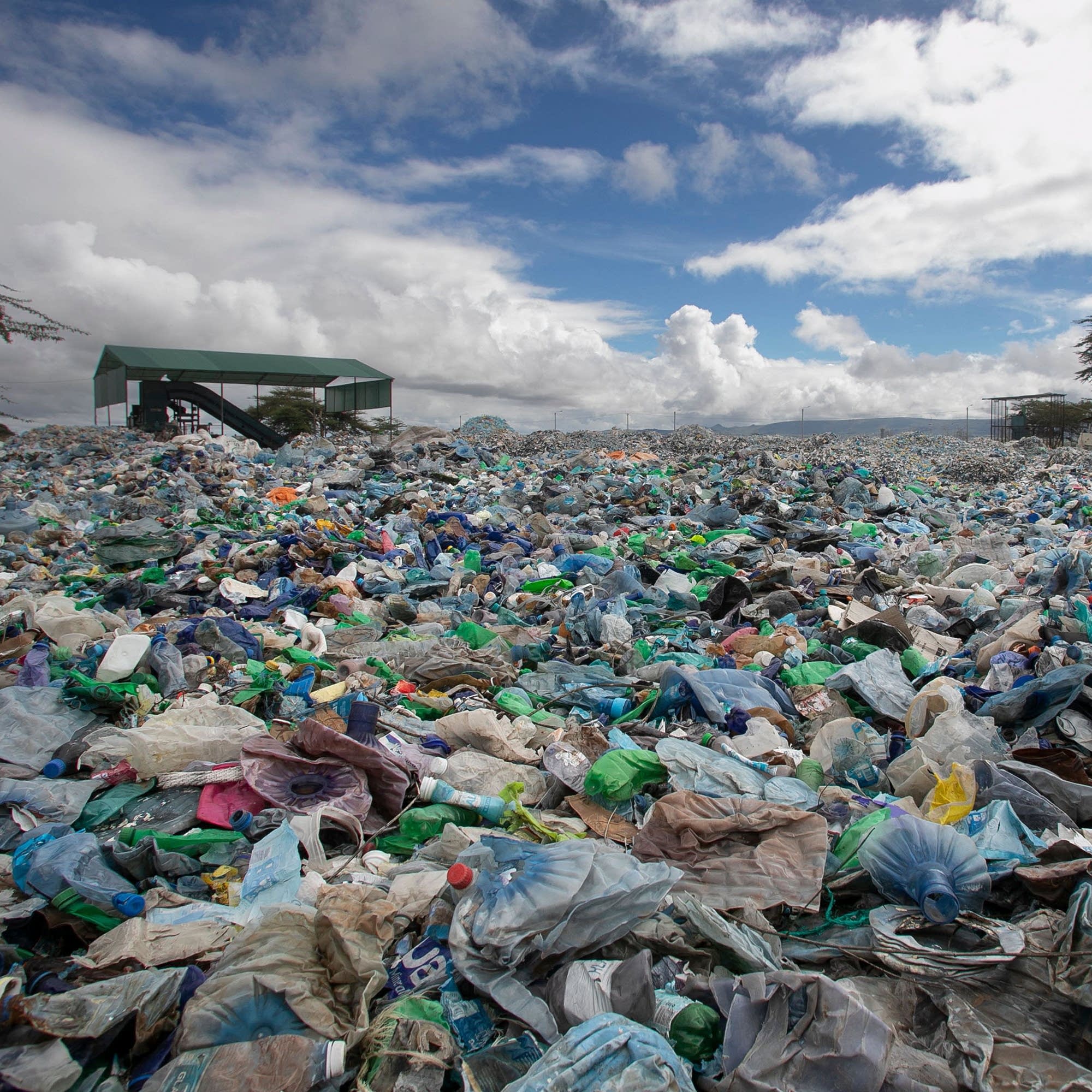
Trash talkers. Global negotiations on how to deal with the world's plastic problems stall. Live from the UK this is the Marketplace Morning Report. From the BBC World Service, I'm Sarah Rogers. Talks on the world's first legally binding treaty to end plastic pollution are coming to an end and so far there's no deal. More than 100 countries gathered under UN framework have rejected the latest draft. Plastic is a multi billion dollar industry which has revolutionized global commerce, left a costly environmental footprint. The BBC's Katie Silver joins me on Marketplace. Hi, Katie.
- [00:39]
Katie Silver
Hi.
- [00:40]
Sarah Rogers
So these talks, they've been going on for two weeks, but there have been talks way before this and still no sign of an agreement. What are the sticking points here?
- [00:48]
Katie Silver
Two weeks this time around, but it's the fifth time that they've spoken and failed to reach an agreement. Countries are divided between the majority who want to cap what's known as virgin plastic production. So that's plastic production that's fueled by petrol, coal and gas as opposed to other countries like the US and companies that produce petrochemicals. So there's a group of oil producing states that include the likes of Saudi Arabia and Russia who want a lighter touch regulation. They have called themselves the like minded group. And Kuwait, for example, who spoke for it, said that this text that was proposed went behind the group's red lines.
- [01:25]
Sarah Rogers
And the US has previously urged some countries to reject some key parts of this treaty as well. I mean, what are the chances of reaching any kind of agreement on the last day?
- [01:36]
Katie Silver
Things aren't looking good. There was a lot of mud throwing when it came to, for example, smaller countries saying that it lacked ambition, that it was not going to be legally binding, that it would basically one country said that it would make the treaty a toothless waste management agreement. Another said that they had just gone for the lowest common denominator.
- [01:55]
Sarah Rogers
So, so at the end of these talks, if there's no deal, what next?
- [02:00]
Katie Silver
It's going to be challenging to watch. I mean, whether or not they choose to hold these talks again and hope to make some level of progress, perhaps an ability to get it across the line. So far, for example, the OECD is estimating that if there is no intervention, plastic production is going to triple by 2060 and as I say, have that flow on impact to ocean life, human health and indeed accelerate climate change. So many of the smaller countries saying now is the time to act as the last chance to act to be able to mitigate some of these really drastic issues.
- [02:32]
Sarah Rogers
Okay, Katie Silver, thanks so much for joining us on Marketplace.
- [02:36]
Katie Silver
Thanks for having me.
- [02:37]
Sarah Rogers
Ok, let's see the numbers. Cryptocurrency Bitcoin hit a new all time high during early Asian trading, briefly topping $124,000 before retreating. It follows recent changes in regulation by US President Trump and the world's third biggest brewer, Carlsberg, saw shares fall 6% after missing its half year profit and volume forecasts. Dairy farmers the UK are warning that a chronic labor shortage is now threatening the country's food security. Danish multinational cooperative Arla Foods, behind brands like Lurpac, surveyed almost 2,000 British farmers and found eight in 10 struggled to find adequate staff. Dairy farmer Katie Hoare.
- [03:16]
Katie Hoare
You can't push production if you don't have the manpower there to help you. You know, I'd love to increase my cows and have a bigger unit and produce more milk and, but I can't do that on my own. Me and my husband are only capable of doing so many hours in a day. We do, you know, I'm up at sort of half four and I don't go to bed until nine, half nine, you know, I do quite a few hours as it is trying to get other people to come and, you know, share the load if you like. It's really difficult.
- [03:40]
Sarah Rogers
That from Katie Hoare and the survey also suggested half of farmers who can get staff said it's been harder to keep them since the COVID 19 pandemic and after Britain left the European Union. Now, every day, tens of millions of gamers log on to Fortnite to fight huge battles in a virtual world. But here in the real world, its developers, Epic Games, have been fighting battles of their own and they've just scored another victory in a court in Australia. The BBC's Will Chalk has the story.
- [04:08]
Will Chalk
Fortnite fans from around the world, wherever you are watching from, welcome.
- [04:14]
Joost van Drunen
Since its launch in 2017, Fortnite has become less a game, more a huge ecosystem.
- [04:19]
Will Chalk
We got fans up in the building, we got the players on site.
- [04:24]
Joost van Drunen
But back in 2020, its dominance was put under threat. Now bad news. If you like playing Fortnite on your phone. The game has been removed from Google and Apple's app stor in a row over money. Both Google and Apple booted the app off their stores, meaning it could no longer be played on phones or iPads. Why? Well, Fortnite is free to download and play, but makes its money by selling different appearances for people's in game avatars. Usually when you buy something on an app on your phone, that payment will go through Apple or Google who take a commission. Five years ago, Fortnite tried to bypass this and let people buy content cheaper direct from them. Fortnite have said that they will sue the phone makers, and sue they did. For five years now, Epic Games has been fighting legal battles against Apple and Google around the world, arguing the phone companies were misusing their market power, which lessened competition in app development. And they've been winning. Last year the game made it back onto the App Store in the eu. Earlier this year it was reinstated in the us and now it's won a partial court victory that looks set to pave the way for the same thing to happen in Australia. Joost van Drunen is a games business professor at NYU Stern School of Business in the us.
- [05:34]
Will Chalk
They are, in fact, in a David versus Goliath kind of battle, because even though epic makes about $5 billion a year, that's a drop in the bucket for Apple, that's a drop in the bucket for Google. What they do is extract rent and it makes it very difficult for any company, including the Robloxes and the Microsofts that sit in these ecosystems, to have any kind of leverage.
- [05:57]
Joost van Drunen
We've got no word yet on exactly when the game is likely to return to app stores in Australia, but it's unlikely to be soon. The judgment, which hasn't been fully released yet, ran to 2,000 pages, and on many of the charges, Epic weren't successful. In statements, Apple welcomed that some of the charges were rejected while disagreeing on the ones that were successful, while Google said it will assess its next steps once it's read the full decision. Still, Epic Games has described the ruling as a win for developers and consumers in Australia. And as any gamer knows, you've got to take the wins when you can get them.
- [06:35]
Sarah Rogers
That from Will Chalk and it's game over. For this Marketplace morning report from the BBC World Service in the uk, I'm Sarah Rogers.