Loading summary
Transcript29 lines
- [00:00]
Dell Advertiser
Introducing your new Dell PC with the Intel Core Ultra processor. It helps you handle a lot, even when your holiday to do list gets to be a lot like organizing your holiday shopping and searching for great holiday deals and customer questions and customers requesting custom things. Plus planning the perfect holiday dinner for vegans, vegetarians, pescatarians and Uncle Mike's carnivore diet. Luckily you can get a PC with all day battery life to help you get it all done. That's the power of a Dell PC with Intel inside, backed by Dell's price match guarantee. Get yours today@dell.com holiday terms and conditions apply. See dell.com for details.
- [00:30]
Odoo Advertiser
This podcast is supported by Odoo. Some say Odoo business management software is like fertilizer for businesses because the simple, efficient software promotes growth. Others say Odoo is like a magic beanstalk because it scales with you and is magically affordable. And some describe Odoo's programs for manufacturing, accounting and more as building blocks for creating a custom software suite. So Odoo is fertilizer Magic Beanstalk building blocks for business Odoo exactly what businesses need. Sign up@odoo.com that's O D O O.com.
- [01:02]
David Brancaccio
Movement in Congress to end the government shutdown doesn't help air travel on this Tuesday. I'm David Brancaccio in Los Angeles. Good morning to you. The Senate passed a bill last night to try to end the government shutdown and sent it on to the House for a vote. But in the meantime, more flights are being canceled. There are more than 1200 US cancellations so far, with dawn breaking in the east, according to the tracking site FlightAware. Marketplace's Nancy Marshall Genser has more Airlines.
- [01:30]
Nancy Marshall Genser
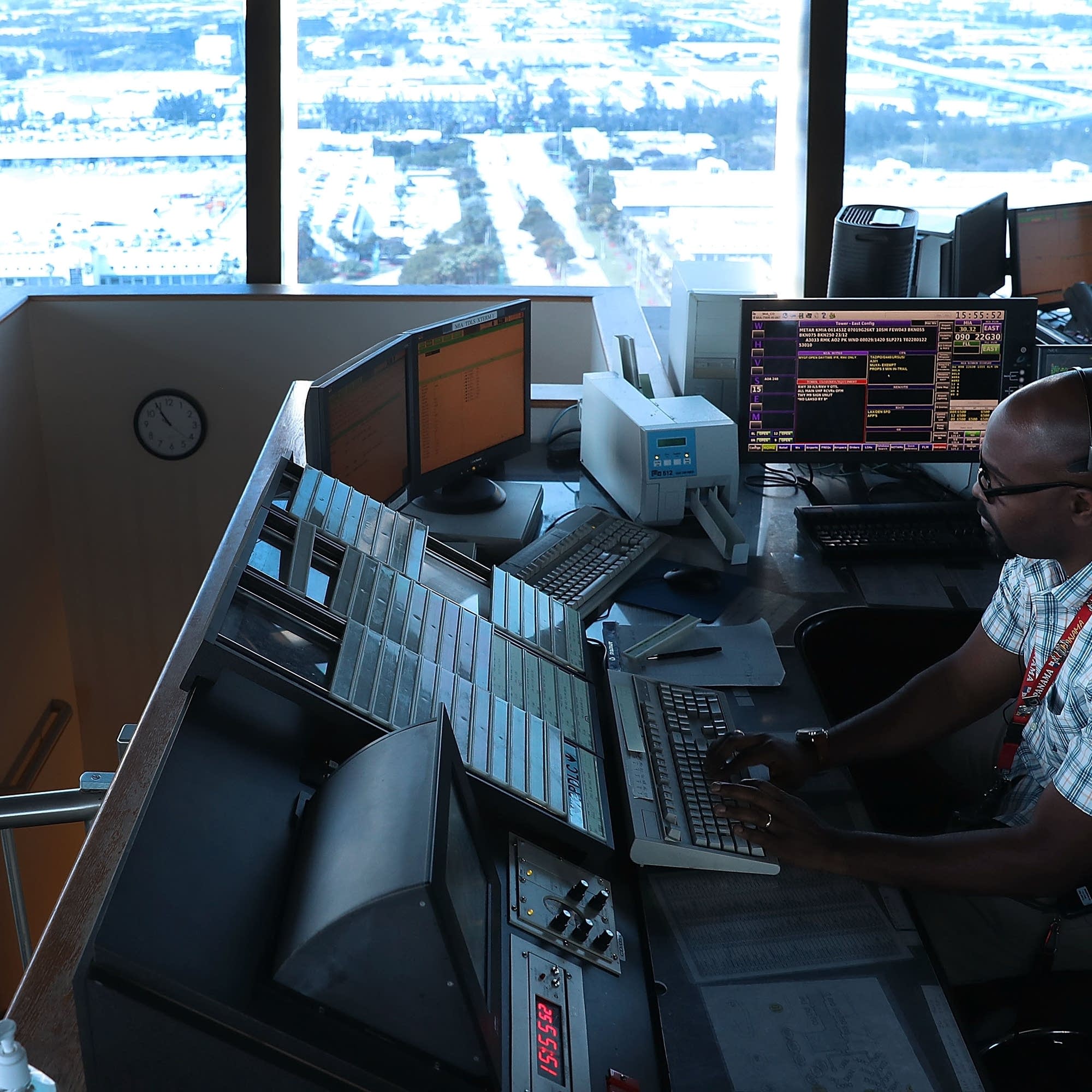
Have to reduce flights at the nation's 40 busiest airports by 6% today, part of an order from the FAA that ratchets up to 10% on Friday. The agency is trying to ease strain in the system caused by stressed out air traffic controllers who are working without pay during the government shutdown. Nick Daniels is president of their union, the National Air Traffic Controllers Association.
- [01:53]
Dell Promotions Announcer
The added stress leads to fatigue. The fatigue has led to the erosion of safety and the increased risk every day that this shutdown drags on.
- [02:04]
Nancy Marshall Genser
Daniel says it's hard for the controllers to concentrate when they're worried about paying for childcare, gas and groceries. He says some have taken second jobs.
- [02:13]
Dell Advertiser
To pay the bills, even though that.
- [02:15]
Dell Promotions Announcer
There is a new light at the end of the tunnel. We'll call it that every single day. An air traffic controller is still facing the issues that they had yesterday and they're getting worse every single day.
- [02:28]
Nancy Marshall Genser
And Daniels says controllers are very aware that the stopgap spending legislation the Senate passed only runs through January 30th. So they could be in the same position working without pay during a shutdown in just a few months if Congress can't agree on a long term funding bill. I'm Nancy Marshall Genzer for Marketplace.
- [03:07]
Range Rover Advertiser
The adage says it isn't what you say, it's how you say it. And when you lead with power, poise and performance, you're making an impact from the start. Introducing the Range Rover Sport designed to set an example with its assertive stance and refined drive, it blends dynamic elegance with agile precision. Whether you're navigating city streets or conquering rugged terrain. Its cutting edge innovations including a cabin air purification system and active noise cancellation, offer unrivaled comfort, control and peace of mind. Seven terrain modes Check A choice of powerful engines including a plug in hybrid with a 48 mile range. Absolutely take on anything with the Range Rover Sport. Build yours today@range rover.com USSport Explore the Range Rover Sport@range rover.com US Sport it's.
- [04:03]
Dell Promotions Announcer
Time for Black Friday Dell Technologies biggest sale of the year.
- [04:06]
Dell Advertiser
That's right.
- [04:07]
Dell Promotions Announcer
You'll find huge savings on select Dell PCs like the Delve 16 plus with Intel Core Ultra processors and with built in advanced AI features. Features. It's the PC that helps you do more faster. From smarter multitasking to extended battery life, these PCs get the busy work done so you can focus on what matters most to you, plus earn Dell rewards and enjoy many other benefits like free shipping, expert support, price match guarantee and flexible financing options. They also have the biggest deals on accessories that pair perfectly with your Dell PC, improving the way you work, play and connect. Whether you just started holiday shopping or you're finishing up, these PCs and accessories make perfect gifts for everyone on your list. Shop now@dell.com deals and don't miss out. That's Dell.com deals.
- [04:52]
David Brancaccio
At a time of stress. Sometimes it helps to close your eyes and visualize a quiet forest or field of wildflowers at a time of economic stress. Don't close your eyes if you're driving. It may help to visualize the capital letter K. It's supposed to symbolize an economy that's going up for some and down for others. Now to an economist credited with getting the K shaped economy into the national discourse. Peter Atwater researches behavioral economics and teaches at the College of William and Mary.
- [05:20]
Peter Atwater
Welcome great to Be here, David, thank you.
- [05:22]
David Brancaccio
I mean, it's radio, so we don't have a big letter K as a prop right in front of us. But if we place a K in our mind's eye, you hope the metaphor of K helps us see a kind of graph. Explain the metaphor.
- [05:36]
Odoo Advertiser
Yeah.
- [05:36]
Peter Atwater
I think when most people think of the letter K and the K shaped economy, they think of it in financial terms. But its genesis really had to do with a divergence in confidence that I first saw during COVID where those who could work from home, principally white collar workers, their confidence quickly recovered. Meanwhile, blue collar workers, hospital workers, those whose jobs required that they be out in the real world and they're the arm of the K. I could watch as their confidence continued to decline. And from that, because I believe economic activity follows how we feel. I anticipated that the economy would begin to bifurcate, that there would be two tracks, one for those at the top, one for those at the bottom.
- [06:24]
David Brancaccio
Yeah, we just switched from COVID times to contemporary times. It does make sense to you, Peter, here in late 2025 that your K metaphor is back in force.
- [06:34]
Peter Atwater
Yeah, it matters to me in two directions. One, we've seen extraordinary financial market performance. We've seen the value of homes remain robust and grow. For those with investable assets, their trajectory has continued upward. Meanwhile, we're seeing for those at the bottom of the economy, deterioration. They're later in their payments to their landlord, and they've experienced enormous food inflation. That the cost of living for those at the bottom has added additional weight. I think of those at the bottom as experiencing this heavy stack of vulnerability where they feel uncertain and powerless in multiple dimensions at once today.
- [07:21]
David Brancaccio
Must drive you crazy when you see people spend too much time obsessing over the latest change in gross domestic product or where the stock market went over the last month. That's not necessarily capturing the reality of a portion of people in this country.
- [07:40]
Peter Atwater
No, it's not. And it's an increasingly large portion, if we think about 1 in 8Americans is reliant on snap payments. I think we should all be concerned about this divide that is now so obvious and transparent and extreme that those at the bottom are intensely aware of the overabundance that exists above them. And I'm not sure those above really have any appreciation for what's happening below the surface.
- [08:16]
David Brancaccio
Peter Atwater studies behavioral economics and teaches at the College of William and Mary. He's also author of the book the Confidence Map. Peter, thank you.
- [08:25]
Peter Atwater
Thank you very much, David.
- [08:27]
David Brancaccio
And the Financial Times is reporting today that a pioneer of artificial intelligence, Turing Award winner Yann Lecun, is leaving Meta Facebook, where he was the chief AI scientist. The paper says he plans to found his own AI startup. Lacuna is on the record as skeptical AI can learn to reason like a human. Earlier this year, Meta paid $14 billion to attract 28 year old AI expert Alexander Wang to head up a superintelligence team. There's Our producers are Tamar Fagan, Ashley Rodriguez, Arianna Rosas and Erica Soderstrom. Our senior producer is Alex Schroeder. Our supervising senior producer is Meredith Garrettson. Morby In Los Angeles, I'm David Brancaccio. Marketplace Morning report from apm American Public Media.
- [09:12]
Amy Scott
Imagine a future where chocolate and coffee are rare and expensive, where cheap nutritional staples like corn and wheat are threatened. Sounds unpleasant, doesn't it? Well, we could be heading there if we don't recognize that the climate crisis is also a food crisis.
- [09:31]
David Brancaccio
I've seen yields drop because of drought, and believe me, boy, have I seen them drop. We have had dry spells that have lasted years.
- [09:42]
Amy Scott
I'm Amy Scott. This season on How We Survive. We investigate how the climate crisis is threatening our most vital food systems and how scientists are racing to develop alternatives that will shape the future of food. Listen to this season of How We Survive on your favorite podcast.
- [10:01]
Peter Atwater
Apparently.