← Marketplace Morning Report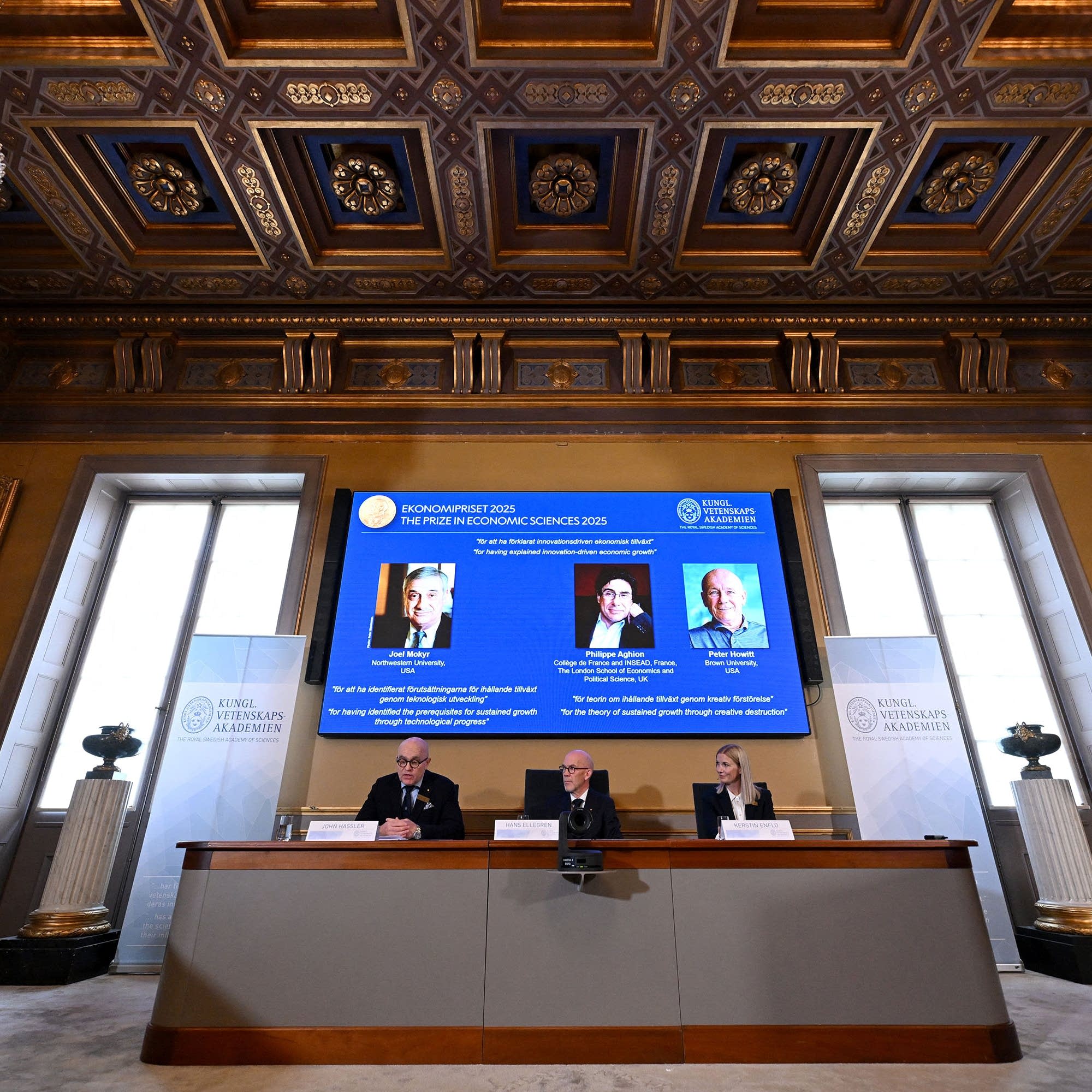
Loading summary
Transcript30 lines
- [00:00]
Dell Commercial Voice
Introducing your new Dell PC with the Intel Core Ultra processor. It helps you handle a lot, even when your holiday to do list gets to be a lot like organizing your holiday shopping and searching for great holiday deals and customer questions and customers requesting custom things. Plus planning the perfect holiday dinner for vegans, vegetarians, pescatarians and Uncle Mike's carnivore diet. Luckily you can get a PC with all day battery life to help you get it all done. That's the power of a Dell PC with Intel inside backed by Dell's price match guarantee. Get yours today@dell.com holiday terms and conditions apply. See dell.com for details.
- [00:30]
LHH Recruitment Voice
Recruitment for many it could be cold, functional, lacking that personal touch. But LHH believes it should be more by connecting people to opportunity, not just skills to roles. Beautiful things happen at work. A leader inspires, a team grows. The people you hire develop into the people you admire. Making 90,000 hours of work in a lifetime. Time well spent recruitment development, career transition LHH a beautiful working world. Discover recruitment solutions@lhh.com beautiful There are three.
- [01:08]
David Brancaccio
Winners of today's Nobel Economics Prize. And looking at their work, the two syllables AI come quickly to mind. I'm David Brancaccio in Los Angeles. There's word in the last hour that three professors who look at how innovation, including technology, drives economic growth will share the Nobel Economics Prize. It's Joel Machier of Northwestern University, Philippe Aguillon of France, who teaches in Paris in London, and Peter Howitt, a Canadian who works at Brown University in Providence. Their work also serves as a warning that history shows that growth is not inevitable and has to be nurtured. Marketplace's senior economics contributor Chris Farrell joins us now. Morning, Chris.
- [01:48]
Chris Farrell
Good morning, David.
- [01:49]
David Brancaccio
You've actually followed the work of at least one of these winners. Welcome.
- [01:53]
Chris Farrell
Why'd they win these three essentially economic historians, I mean, they have delved deep into the most important question in economics. What makes economies grow? What's behind technological change and innovation? What leads to long term sustained economic growth?
- [02:10]
David Brancaccio
Right. I mean, it's the most important economic question if this leads to bringing prosperity to actual human beings. Now, Joel Mockyer is a scholar that you've actually read into prior to this announcement.
- [02:24]
Chris Farrell
Oh, and I would recommend for anybody to read his books, Leaver Riches, a collection of essays, the Gifts of Athena. He's just a brilliant economic historian. And what he's delved into, David, is he looks at behind growth. It's not coal or capital, you know, money. It's when you look at the Industrial Revolution, it's a society that valued curiosity, experimentation, practical problem solving. Inventors and scientists were celebrated. It's about the importance of ideas in those institutions that support the ideas and the network effect of people exchanging ideas in their experiments.
- [03:05]
David Brancaccio
When you look at the work of these three scholars, Joel Makier, Philippe Aguillen of France and Peter Howitt at Brown, you know, the person I think of is Joseph Schumpeter, the Austrian economist, the creative destruction guy, thought a lot about, for instance, entrepreneurship and how it plays into economic growth, Right.
- [03:23]
Chris Farrell
And this is absolutely critical. Growth is not steady. I mean, when you look and you've looked at those charts, David, right, over 200 years where you can barely see the Great Depression in there, right? It looks remarkably smooth. But the closer you get to history and economic history, the more you realize, you know, new companies rise, old ones fall, entire industries are reshaped. And so Agyan, one of the things that he's well known for, is looking about, you know, policy around education, competition, finance, how, how these affect whether societies get the kind of innovation that you want, the kind of innovation that leads to economic growth, or it may lead to economic destruction.
- [04:03]
David Brancaccio
And Peter Howitt, I mean, he really also takes a very close look at economic history, focusing on the UK Industrial Revolution.
- [04:12]
Chris Farrell
Yes, he's largely focused on Britain. And it's about, you know, you look over the past two centuries or so, you know, how do economies adapt to shocks, wars, new technologies? And one of the things that the Nobel Committee committee made very clear is one of the reasons why they awarded the prize to these economists at this particular point in time is largely the rise of AI and all the disruptions that AI may have for our society and what the impact may be on economic growth. So although these are economic historians, this is really a prize about a society and an economy of AI Marketplace's senior.
- [04:51]
David Brancaccio
Economics contributor, Chris Farrell, thank you very much.
- [04:54]
Chris Farrell
Thanks a lot.
- [04:55]
David Brancaccio
Joel Machier gets half the Nobel Prize money. Philippe Aguillon and Peter Howitt split the other half markets after stock prices collapsed on Friday, after China tightened up controls on rare earth exports and President Trump escalated rhetoric about the U.S. china trade war. The S&P fell 2.7%. The Nasdaq closed down 3.6%. The Dow on Friday closed down 878 points, or 1.9%. Then over the weekend, Trump posted that the U.S. and China will work things out. And S and P Futures are up 1.4% now. Nasdaq futures are up about 2%. About two and a half hours here before the opening bell on Wall Street. So we're back to the condition when the whole market seems to turn on a few syllables this way or that on the Truth social platform. The bond market is closed today for Columbus Day. Indigenous Peoples Day.
- [06:07]
Dell Commercial Voice 2
Introducing your new Dell PC. Powered by the Intel Core Ultra processor, it helps you handle a lot, even when your holiday to do list gets to be a lot because it's built with an all day battery plus powerful AI features that help you do it all with ease, from editing images to drafting emails to summarizing large documents to multitasking. So you can organize your holiday shopping and make custom holiday decor and search for great holiday deals and respond to holiday requests and customer questions and customers requesting custom things. And plan the perfect holiday dinner for vegans, vegetarians, pescatarians and Uncle Mike's carnivore diet. Luckily, you can get a PC that helps you do it all faster so that you can get it all done. That's the power of a Dell PC with Intel inside, backed by Dell's price match guarantee. Get yours today@dell.com deals, terms and conditions apply. See Dell.com for details.
- [07:08]
David Brancaccio
During unsettled economic times, there are programs that can immediately help individuals cover necessary costs, at least some of them. Economists call these program automatic stabilizers. Unemployment insurance is one example. So is Medicaid. And then there's the Supplemental Nutrition Assistance Program, also known as SNAP or indeed food stamps as Marketplaces. Carla Javier reports that program is about to undergo some big changes that'll change who is able it is able to support.
- [07:36]
Carla Javier
Imagine a family, a parent loses their job, they go to the grocery store less. Diane Schanzenbach of Georgetown and Brookings says.
- [07:45]
Colleen Heflin
Grocery stores see less demand and so they have to do things like, you know, lay off a bag boy. And so those families, their incomes go.
- [07:53]
Ryan (Million Bazillion Podcast Host)
Down at the same time with snap.
- [07:56]
Carla Javier
That first family buys those groceries and the bagger keeps their job. Earlier this month, the USDA notified states they need to make big changes to SNAP eligibility, work requirements and who's covering costs soon. Colleen Heflin at Syracuse University says normally changes like these are rolled out with a lot of guidance over time.
- [08:17]
Colleen Heflin
But telling states October 3rd, you have to be in compliance November 1st is impossible.
- [08:24]
Carla Javier
She says mistakes are going to be made, whether it's people losing benefits or just confusion.
- [08:29]
Colleen Heflin
And the administrative costs are going to go way up.
- [08:33]
Carla Javier
We reached out to the USDA for comment and it did not respond. I'm Carla Javier from Marketplace and in.
- [08:40]
David Brancaccio
Los Angeles, I'm David Brancaccio. You're listening to the Marketplace morning report from APM American Public Media.
- [08:48]
Ryan (Million Bazillion Podcast Host)
This week on Million Bazillion. Ryan and I are off to a sleepaway camp for podcasters where we meet up with some other podcast friends for a very special episode about animals and money. Together, we're going to tackle some very important questions, like what animal should be in charge of the economy?
- [09:04]
Million Bazillion Co-host
Well, like I said, there's plenty of crossover between the animal kingdom and your world of money.
- [09:11]
Ryan (Million Bazillion Podcast Host)
Don't miss this special episode. Listen a million Bazillion on your favorite podcast.
- [09:15]
Announcer
Apparently.