Loading summary
Transcript22 lines
- [00:01]
Strayer University Announcer
At Strayer University, we help students like you. Go from Will I To why not? For over 130 years, we've been innovating higher education to make it more affordable, accessible and attainable so you can reach your goals. Go from thinking can I? To Yes I Can and keep striving. Visit strayer. Edu to learn more. Strayer University is certified to operate in Virginia by CHEV and its many campuses, including at 2121 15th Street north in Arlington, Virginia.
- [00:31]
Instacart Advertiser
We all prefer things a certain way, like groceries. If you want groceries just how you like them, you gotta try Instacart. They have a new preference picker that lets you pick how ripe or unripe you want your bananas. Shoppers can see your preferences upfront, helping guide their choices. Because when it comes to groceries, the details matter. Instacart get groceries just how you like.
- [00:53]
Sabri Benishour
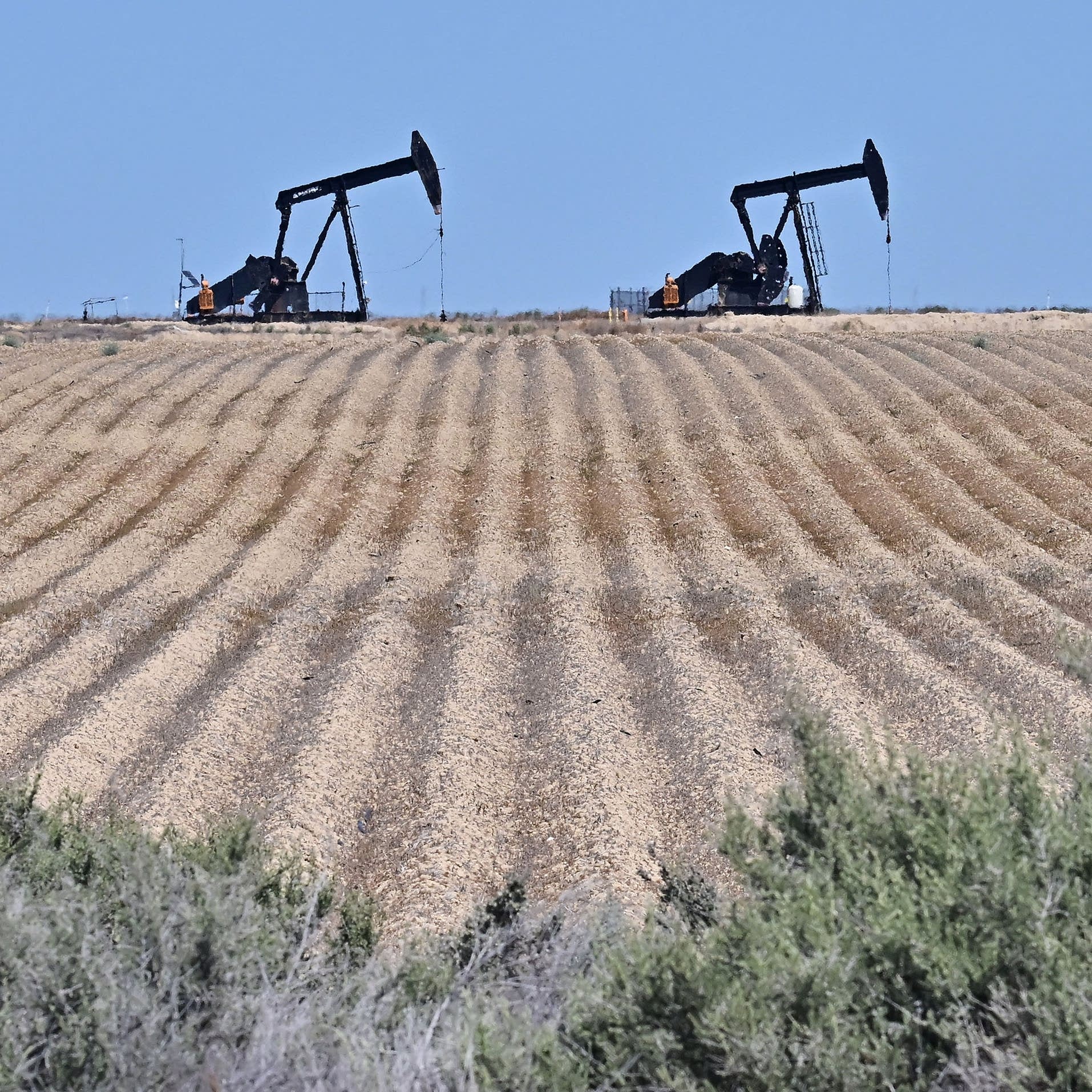
As oil prices rise, countries may turn to reserves. From Marketplace, I'm Sabri Benishour in for David Brancaccio or Oil prices came close to hitting $120 a barrel yesterday. This morning they've come back down a little, but they are still just above $100 a barrel. Gas prices have also wasted no time in rising. The average price of a gallon of regular gasoline is now $3.25 a gallon, according to AAA, up 27 cents in a week. Julia Coronado is here to talk about it. She's founder and president of Macro Policy Perspectives and a professor at the University of Texas, Austin. Hi Julia.
- [01:31]
Julia Coronado
Good morning.
- [01:32]
Sabri Benishour
So oil prices went a little nuts. In a truth social post yesterday, President Trump said that $100 barrel of oil, at least short term, is a very small price to pay. Is that a small price to pay
- [01:45]
Julia Coronado
for the average consumer? It's going to mean substantially higher gasoline prices. And so that's something most people have to buy every week and that is going to crimp the rest of their budget. The purchasing power for other things and so really depends on how important getting around is to you. But for a lot of people it's going to be a pretty big bite.
- [02:10]
Sabri Benishour
How much might this add to overall inflation and potentially drag down economic growth? One reason I ask is because some folks are making the argument that, you know, the US Economy isn't as oil sensitive as it used to be. Maybe this won't be so bad.
- [02:23]
Julia Coronado
What do you think for consumers, if there's a substantial rise in gasoline prices, we do tend to see an effect on consumer spending. And I think certainly the oil prices we're looking at right now reach that threshold. So we would expect to see some hit to consumer spending just from the budget bite that higher gas prices bring.
- [02:49]
Sabri Benishour
Julia Coronado is founder and president of Macro Policy Perspectives. Thank you as always.
- [02:54]
Julia Coronado
My pleasure.
- [02:55]
Sabri Benishour
In response to surging oil and gas prices, Canada, France, Germany, Italy, Japan, the UK and the US Are having an emergency meeting this morning to talk about possibly releasing oil reserves from their strategic stockpiles to soften this oil price spike. Marketplace's Nancy Marshall Genser has more.
- [03:12]
Nancy Marshall Genser
Any release of stockpiled oil would be coordinated by the International Energy Agency, which works to ensure steady oil supplies during energy shocks. The idea is to increase the supply and pressure oil prices down. The Financial Times reports that some U.S. officials are talking about a coordinated release of 300 to 400 million barrels of oil. That would be 25 to 30% of the total oil reserve. There have been five collective oil releases since the International Energy Agency was founded in 1974 in response to the Arab oil embargo. The last two releases were meant to tamp down prices after Russia's invasion of Ukraine. In a social media post yesterday, President Trump said short term oil prices were a very small price to pay for, quote, world safety and Peace. I'm Nancy Marshall Genser for Marketplace.
- [04:20]
Strayer University Announcer
At Strayer University. We help students like you go from is it possible To Anything is possible by offering access to up to 10 no cost gen ed courses so you can reach your goals affordably and fast. Visit strayer.edu to learn more. No cost gen eds provided by strayer university affiliate sofia. Eligibility rules apply. Connect with us for details. Strayer University is certified to operate in Virginia by Shep in as many campuses, including at 2121 15th Street north in Arlington, Virginia.
- [04:50]
Sabri Benishour
Heads up some of the descriptions in the next story are kind of gross. We're going to hear about a flesh eating parasite. The New World Screw Worm has been eradicated from the US for some 60 plus years, but in recent months it has been detected as close as 70 miles from the US Mexico border and it has been causing some serious concern across the state of Texas for what it could mean for the cattle industry. Carlos Morales reports.
- [05:14]
Carlos Morales
As a kid growing up in far West Texas, Joe Williams would have to look over the family's livestock to make sure they weren't infected with screwworm larvae. If you come up on one that has been flystruck, you know it immediately. You can smell it. At the time, the New World Screwworm was a common and devastating reality of ranching. The parasites, named for the way its larva Dig or screw into the living flesh of warm blooded animals, causing nasty, painful lesions. It's putrid. I mean, super putrid. While the days of monitoring livestock and treating them for screwworm have been over for decades, now a possible return is making folks in the cattle industry anxious. The Department of Agriculture says an outbreak today could deal a $1.8 billion blow to the Texas economy.
- [06:01]
Julia Coronado
Worst case scenario, you lose all your cattle.
- [06:05]
Carlos Morales
Jana Stubbs runs a cow calf operation with her husband just outside of Alpine, Texas.
- [06:10]
Julia Coronado
Absolute worst case scenario, you go out
- [06:12]
Strayer University Announcer
of business and you can't afford to get back into the business.
- [06:17]
Carlos Morales
The Stubbs, like so many other ranchers, have weathered droughts and rising production costs. And now they're thinking about what to do if a screwworm outbreak were to happen. And for the last year, so is the usda. The parasite has infected thousands of cattle in Mexico, and in early February, it was detected in a Mexican state bordering Texas. Concern over the parasite spreading led the US to stop importing cattle and livestock from Mexico. Typically a million cross every year. Philip Kaufman is a professor at Texas A and M University. It by no means is doomsday. I am cautiously optimistic. Kaufman's an entomologist and is part of the team assembled to figure out the state's response to the new World screwworm. He says to eradicate the fly, the US is doing what it did back in the 60s. Engineer sterile male screwworms to mate with females that'll lay unfertilized eggs that won't hatch. The plan eventually is to be producing 500 million sterile flies per week. Ultimately, the population should die out. USDA has already opened a new sterile fly facility in South Texas and plans to open another. Kaufman says it's the state's and country's biggest asset against the screwworm. In Alpine Texas, I'm Carlos Morales for
- [07:35]
Sabri Benishour
Marketplace, and in New York, I'm Sabree Benishore with the Marketplace morning Report from 8pm American Public Media.
- [07:46]
David Brancaccio
Hey, David Brancaccio here. I hope you're well and that your passport is up to date because I am hosting a trip to Italy this fall and you, you are invited. Stay at a world class Tuscan villa and step into the world of the Medici, the formidable family whose influence and power helped give rise to the renaissance and the art we still celebrate today, not to mention the banking system. We're going to visit the world's oldest bank, swim in the thermal spa waters in Montecatini, and take in the art of the Uffizi. All of this, and then we'll try to put it all into context with great conversation over even better meals and wine tasting. Please join me and know this Buying into this trip will provide essential support for public media. Discover more about this fall's tuscany adventure@marketplace.org travel to reserve your spot today, that's marketplace.org travel.