← Marketplace Morning Report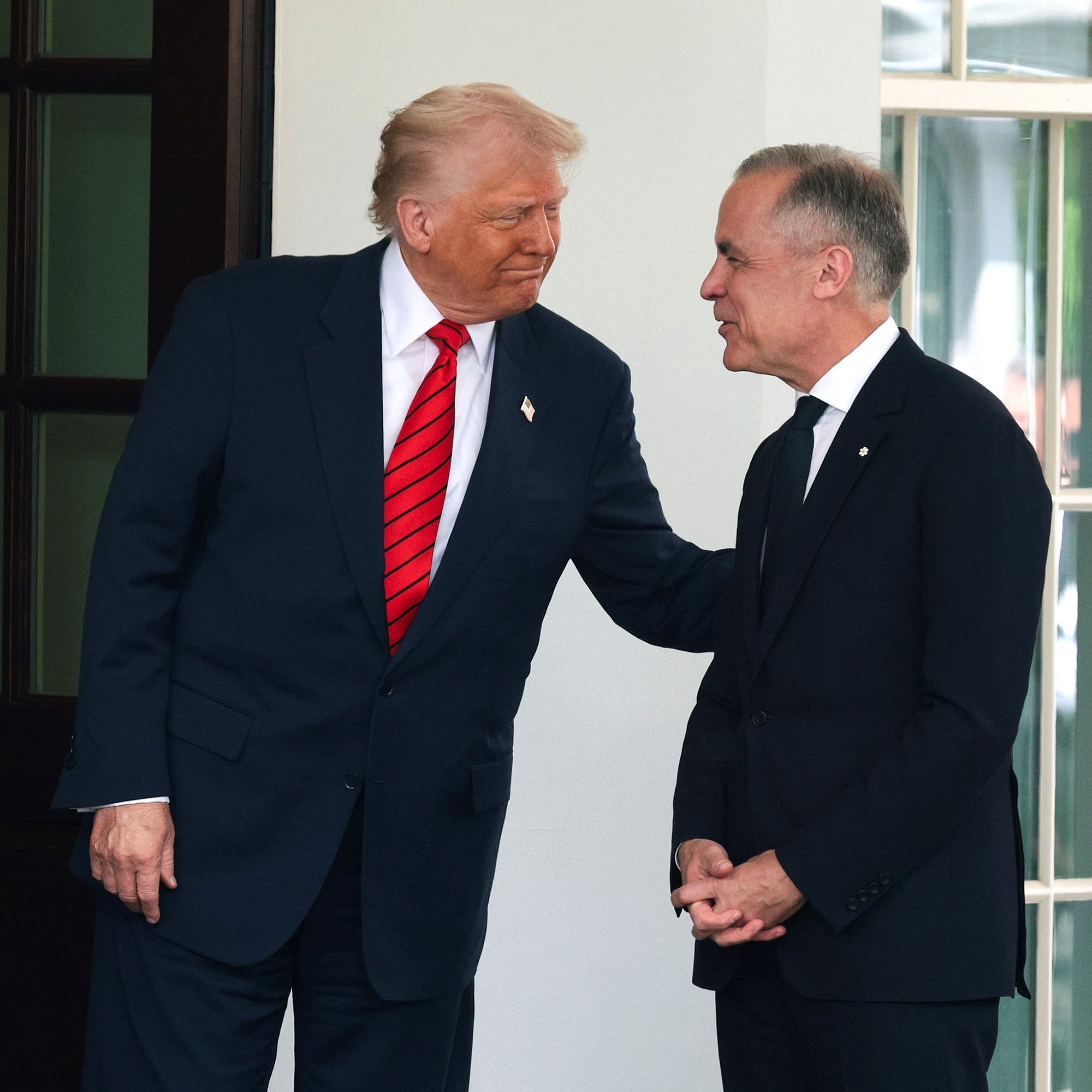
Loading summary
Transcript14 lines
- [00:01]
Wix Advertiser
Running a business can be exhausting. Building your website shouldn't be. With wix, you can express your ideas, give direction, then leave the heavy lifting to AI, from site creation to branded content and images. Have fun with the details, customize what you want the way you want, and manage your whole business from a centralized dashboard with expert AI tools. Build, scale and enjoy the incredible results. You can do it all yourself on Wix.
- [00:31]
WhatsApp Advertiser
On WhatsApp, no one can see or hear your personal messages. Whether it's a voice call message or sending a password to WhatsApp, it's all just this. So whether you're sharing the streaming password in the family chat or trading those late night voice messages, that could basically become a podcast, your personal messages stay between you, your friends and your family. No one else, not even us. WhatsApp message privately.
- [01:03]
Liana Byrne
Old allies, new Tariffs Canada is back in the crosshairs. Live from the UK this is the Marketplace Morning Report from the BBC World Service. I'm Liana Byrne. Good morning. So what's Marketplace Morning Report without a tariffs story? President Trump has announced a new 35% tariff on Canadian imports due to start next month. In a letter to Canada's prime minister, Mark Carney, Mr. Trump blamed the move on two issues, the fentanyl crisis and what he calls unfair barriers to US Dairy exports. He warned that any retaliation from Canada will be met with an equivalent hike in US tariffs. The BBC's Katie Silver says this is another shift in relationship between the neighbors.
- [01:45]
Katie Silver
They had, of course, had a very successful, very productive trading relationship, a free trade agreement. In fact, as a result of this, we have seen, for example, Canada, for its part, sells a huge, huge amount of its good it's a makes up. The US Is a huge trading partner for it. So no doubt that 35%, it's a very significant figure. They'll be looking at that with quite a lot of concern. Canada, we've also heard, for example, it's going to come into effect on August the first. And saying that it's not just fentanyl, according to President Trump, saying that there's lots of trade and tariff barriers in place.
- [02:16]
Liana Byrne
Katie Silver there. Goldie Hyder, president and CEO of the Business Council of Canada, says it's vital that both sides find a way to resolve their differences quickly.
- [02:25]
Goldie Hyder
On the one hand it's obviously unfortunate, but on the other hand it's not really that much of a surprise because it's an ongoing tactic that has been utilized and continues to be utilized by the president on not just Canada. And we're not, we're certainly not the only country that's affected by these letters that are, you know, being kind of sent out every other day here. I think we should monitor what those letters say for not just Canada, but for other countries and put things into context. So don't panic, I guess, is part of the message. Stay focused and stay engaged.
- [02:51]
Liana Byrne
Goldie Heider speaking there. Well, U.S. tariffs are also a hot topic beyond North America. They're dominating talks at the ASEAN summit in Malaysia. That's the association of Southeast Asian nations, and many of its attendees could face import taxes of up to 50%. The US Secretary of State, Marco Rubio has spent much of his time at the meeting trying to reassure them that better deals are possible. Here's the BBC's Jonathan Marco Rubio did.
- [03:18]
Jonathan Marco Rubio
Show up and people often say that's, that's half of the success of being involved in asean, just showing up at meetings. But he had absolutely nothing to offer on, on tariffs. And that's the main concern. President Trump's tariff war, which really what it is for these countries that are so export dependent, has completely overshadowed this ASEAN summit. There's enormous frustration about how erratic they are, how damaging they are.
- [03:41]
Liana Byrne
Jonathan Head there. Now let's do the numbers. Global stocks are mixed as President Trump's latest tariff threats cooled hopes of new trade deals. Europe's Stoxx 600 is trading down 8.10of a percent. And Hong Kong's Hang Seng closed up 4/10 of a percent. Now a recent peace deal between the Democratic Republic of Congo and Rwanda was meant to raise hopes of ending decades of conflict in Eastern D Or sea. But many remain skeptical that lasting peace is within reach. Millions have died as rival armed groups continue to fight for control over areas rich and valuable minerals. Now the US which brokered the deal, has signaled it wants a stake in those resources too. The BBC's Paul Yingjai has gained rare access to the Robea mining site in eastern Congo, where coal town and other minerals could soon become the focus of US interest.
- [04:34]
Paul Yingjai
I'm on a commercial motorbike and we're taking a bumpy ride on the hill headed to the Rubaya mining site. After the long road journey, I finally make it to the mining site nestled in the lush hills of Masisi. I'm in awe of what I see. It's a vast expanse of territory. Mine workers like Peter Rosiase owe their entire lives to the mines. Mining has really helped me. It paid for my wife's dowry when I was getting married. This is how I earn my living. Thousands risk their lives here almost every day scooping coal tan, which is essential in producing electronics. Peter knows all too well the dangers of digging minerals in the deep dark mining tunnels. Whenever we're in the mines, temperatures are very high. When they exceed normal averages, cold air is pumped inside so that we can continue working. Thousands of miles away from the mines. Congolese and Rwandan officials who had been accusing each other of fueling a decades long deadly conflict in eastern drc, finally signed a peace deal at the White House in June. US President Donald Trump wants America to get a piece of Congo's mineral resources as part of Washington's mediation. But Congolese analysts like Akram Tum Sifu, based in Goma, say more work still needs to be done, especially involving one of the most active armed groups in the area. Today, the M23. DRC says Rwanda is supporting these rebels despite it repeatedly denying this. The deal signed between the DRC and Rwanda is good for peace between both countries, but it's far from resolving internal crises. For peace to return, the negotiation and talks between the Congolese government and M23 must be successful. Rubaiya, which is now under the control of the M23, holds one of the world's richest coltan deposits. It's reportedly on the radar of U.S. investors. Patrice Moussafiri, who manages the Rubaya site, has a clear message about any possible takeover.
- [07:02]
Patrice Moussafiri
Any foreign investor can come here as long as they come with development for our people and increase daily wages for the miners. We don't know whether the presence of industries will increase or or reduce jobs, or whether they will build schools, hospitals and roads. Above all, if our economies improve, we will have no problems.
- [07:22]
Paul Yingjai
Patrice's call echoes the sentiment of the residents of Rubaiya mining town who live in extreme poverty despite their abundant mineral wealth. Now many are unsure whether their livelihoods will be affected by this deal, which is designed to bring peace, but may very well also bring much uncertainty.
- [07:44]
Liana Byrne
That was the BBC's Paul Ingjai reporting and I'm Lianna Byrne with the Marketplace morning report from the BBC World Service.
- [07:55]
Million Bazillion Host
Summer's here and it's time for your kids to have fun in the sun. But it's also a great time to nurture growing minds. Million Bazillion, a podcast from Marketplace, teaches your kids about something that impacts all of us money. From a fun explainer on tariffs, yes, it's possible to why some athletes make so much money. Million Bazillion tackles big questions with easy to understand answers. Listen to Million Bazillion all summer long, available wherever you get your podcasts.