← Marketplace Morning Report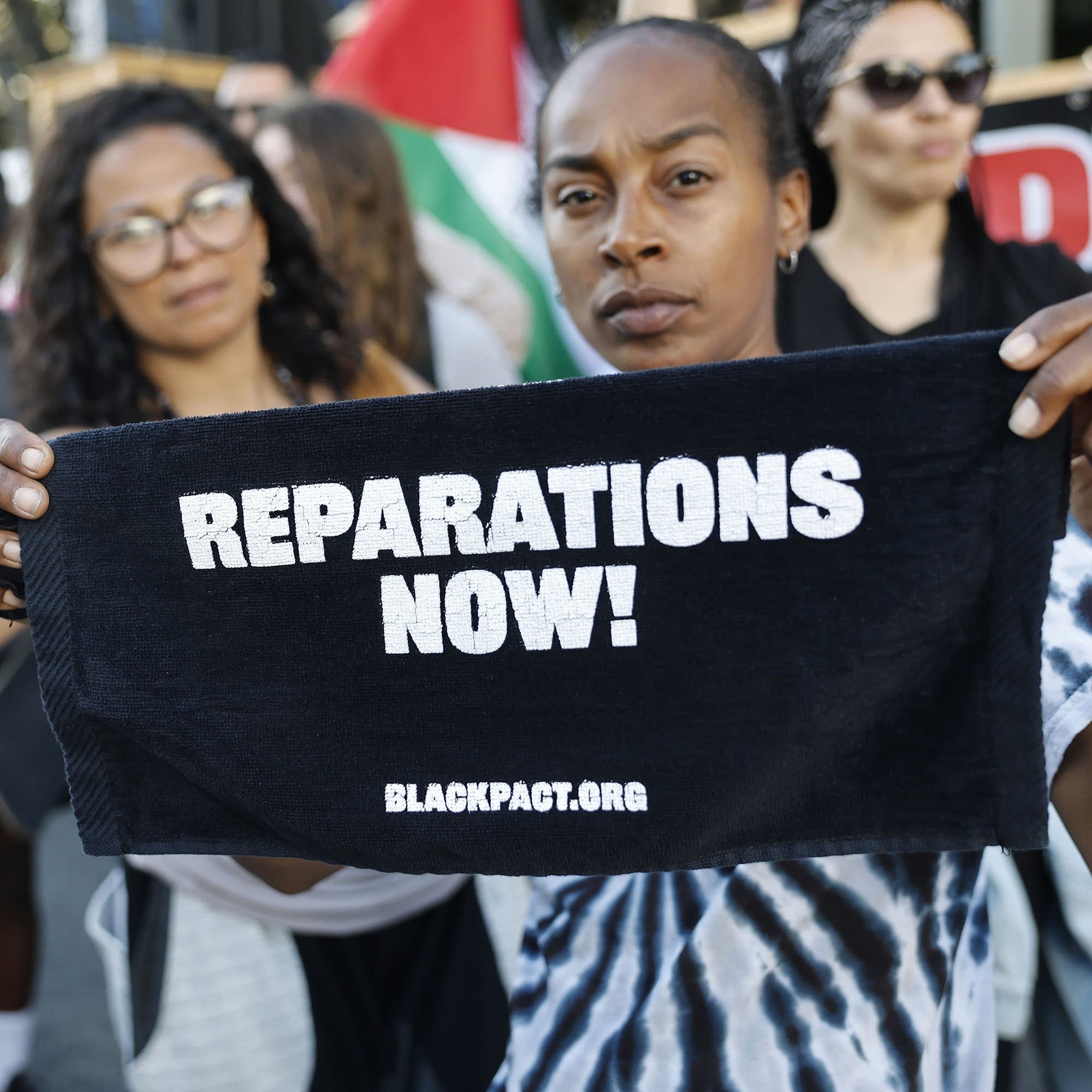
Loading summary
Transcript34 lines
- [00:00]
Richard Karn
Hi, I'm Richard Karn and you may have seen me on TV talking about the world's number one expandable garden hose. Well, the brand new Pocket Hose Copperhead with Pocket Pivot is here and it's a total game changer. Old fashioned hoses get kinks and creases at the spigot, but the Copperhead's pocket pivot swivels 360 degrees for full water flow and freedom to water with ease all around your home. When you're all done, this rust proof anti burst hose shrinks back down to pocket size for effortless handling and tidy storage. Plus your super light and ultra durable pocket hose Copperhead is backed with a 10 year warranty. What could be better than that? I'll tell you what an exciting exclusive offer just for you for a limited time. You can get a free pocket pivot and their 10 pattern sprayer with the purchase of any size Copperhead hose. Just text water to 64,000. That's water to 64,000 for your two free gifts with purchase W A T E R to 64,000. By texting 64,000 you agree to receive recurring automated marketing messages from Pocket Hose. Message and data rates may apply. No purchase required. Terms apply.
- [00:59]
WhatsApp
Available@pocket hose.com terms on WhatsApp, your personal messages stay private between you and whoever you send them to. So things like the passport numbers for your honeymoon stay between you and your fiance. And that video call for your gran's 80th stays in the family. Even your streaming password stays between you and your college roommates who still ask for it every week in your group chat. Because on WhatsApp, your personal messages are yours. No one else can see or hear them, not even us. WhatsApp message privately.
- [01:33]
David Brancaccio
How to tell if factories are navigating the tariff turns I'm David Brancaccio in Los Angeles. We're going to get a couple of updates on the manufacturing sector in the coming days. Factories here often rely on inputs from over there imports, which means even US Manufacturing can be on the receiving end of the trade war. Marketplace's Justin Ho looked into how that sector has been reacting so far this year.
- [01:59]
Lyman Munson
S.L. munson & Co. Is a manufacturer in Columbia, South Carolina that makes precision tools for other manufacturers. Company President Lyman Munson says the company imports components from Europe, which means he has to pay a 10% tariff on those imports.
- [02:13]
Susan Spence
We're writing a check every week now on shipments coming in.
- [02:17]
Lyman Munson
Munson says the company can't absorb that 10% tariff, but passing that cost along to his customers hasn't exactly been easy.
- [02:25]
Susan Spence
We're getting some pushback. Some companies are offering to negotiate. We have another customer who today said we're not going to pay any tariffs.
- [02:35]
Lyman Munson
Last month, manufacturers surveyed by the Institute for Supply Management said demand for manufactured goods contracted.
- [02:41]
Mitchell Hartman
And if you look at the comments, 86% of our panelists this past month have cited tariffs.
- [02:49]
Lyman Munson
That's ISM's Susan Spence. Manufacturers also said they're reducing production and employment.
- [02:55]
Mitchell Hartman
People were saying we're not backfilling, we're not replacing people. And a fair number of the comments were around we continue to do layoffs.
- [03:03]
Lyman Munson
That said, we haven't seen any mass layoffs happen in the sector so far this year, says Scott Paul, president of the alliance for American Manufacturing. He says that's because businesses are reluctant to make any big decisions since the president's tariff policies have changed so much.
- [03:18]
Richard Karn
Uncertainty is the enemy of making capital investments, of making permanent hiring and of.
- [03:27]
Lyman Munson
Making plans for growth in the future, paul says. We still don't know what tariff policy is going to look like a month from now. And until we do, he says, the manufacturing sector is going to keep postponing those kinds of decisions. I'm Justin Ho for Marketplace.
- [03:42]
David Brancaccio
US Stock and bond markets are closed today to honor the Juneteenth holiday and will reopen tomorrow morning.
- [04:05]
Kristen Mullen
Stop by Sherwin Williams and get 30% off select paints and stains June 13th through the 23rd. It's the perfect time to transform your space with color. Refresh your home inside and out with colors that make every space feel brand new. From cozy interiors to stunning exteriors. We've got the perfect shade for your next project. Shop the sale online or visit your neighborhood Sherwin Williams store. Click the banner to learn more. Retail sales Only some exclusions apply. See Store for details.
- [04:34]
MultiCare
Our state has changed a lot in the last 140 years. We know because MultiCare has been here guided by a single making our communities healthier. That comes from making courageous decisions, partnering with local communities to grow programs and services, and expanding health care access to those who need it most. Together, we're building a healthier future. Learn more@ multicare.org.
- [05:06]
David Brancaccio
Juneteenth is a day that commemorates the formal emancipation of enslaved people in Texas by a union general who took control of Galveston on June 19, 1865. Among the many legacies of the long history of inequality, According to the Pew Research center, the median white household in the US has about a quarter million dollars in wealth, versus $27,000 for the typical black household. Marketplace's Mitchell Hartman joins me now. He's been reporting for us on the racial wealth gap through the lens of Tulsa, Oklahoma, once home to black Wall street, once one of the most prosperous black communities in America, then devastated by an armed white mob in the Tulsa race massacre of. Mitchell, hello.
- [05:52]
Mitchell Hartman
Good to be here.
- [05:53]
David Brancaccio
We wanted to spend some time talking about ways to reduce the persistent racial wealth gap in America.
- [06:00]
Mitchell Hartman
Well, let's start with Tulsa. So after decades of efforts to obtain reparations for the hundreds of deaths, the homes and businesses that were destroyed in that 1921 massacre, there was no government or insurance compensation afterward. Just this month, Tulsa's mayor announced a reparations plan. It's a $105 million private fund that is more than advocates expected by quite a lot. It'll pay for affordable housing, education, small business development for Tulsa's black community. You know, there have been efforts to provide reparations in other places. You've heard of Evanston, Illinois, for housing. Asheville, North Carolina, Amherst, Massachusetts, steps toward reparations.
- [06:44]
David Brancaccio
These are local, regional efforts. Right. It's not really addressing the racial wealth gap at a national scale.
- [06:52]
Mitchell Hartman
No. A lot of advocates for reparations for African Americans say it doesn't do that. Here's Kristen Mullen. She's co author of From Here to Equality. Reparations for Black Americans in the 21st century.
- [07:04]
Kristen Mullen
We think of reparations as a federal project that has as its major focus the elimination of the racial wealth gap. They are the only entity that can possibly pay these funds and eliminate the racial wealth gap. It's a tremendous sum.
- [07:19]
David Brancaccio
And Mitchell, from your interviews and conversations, how do advocates of reparations think about how much is owed to black Americans today?
- [07:27]
Mitchell Hartman
So calculations of this often start with the moment of emancipation. Most enslaved people, you know, were sent into freedom without any resources or compensation. Reconstruction was eventually abandoned. Jim Crow segregation, lynchings and massacres like the one in Tulsa just kept on destroying black intergenerational wealth. Meanwhile, as Mullins co author Duke Public policy professor William Dougherty points out, white Americans get to homestead out on the prairie. They get free land, they put down roots, and they build wealth.
- [07:59]
Susan Spence
And so whites are given an enormous largesse as the nation completes its colonial settler project in the west, while blacks who are newly emancipated are not even given the land that they formerly tilled for their slave masters.
- [08:16]
Mitchell Hartman
And, you know, Darity says it continues right through the 20th century. You have federal housing assistance for white veterans after World War II that mostly excludes black veterans and redlines black neighborhoods the list just goes on. All told, Darity estimates redressing the racial wealth gap now through reparations would cost the federal government $16 trillion.
- [08:37]
David Brancaccio
$16 trillion here in June 2025. Mitchell where does the effort for reparations stand and at the national level?
- [08:47]
Mitchell Hartman
There's a House bill, HR 40, that has been introduced in every Congress since 1989. It would start a process to study reparations for slavery at the federal level. That is not likely to go anywhere in this Congress. Overall, support for reparations for African Americans is a minority view. Pew Research center finds that about 30% of Americans approve of the idea, 70% don't. Among blacks, more than 75% approve, while white approval is below 20%.
- [09:18]
David Brancaccio
Marketplace's Mitchell Hartman has been reporting on this. Mitchell, thanks.
- [09:22]
Mitchell Hartman
You're welcome.
- [09:23]
David Brancaccio
It's the Marketplace Morning Report. We're from apm, American Public Media.
- [09:30]
Marie Mejres
Personal finance isn't just about spreadsheets and investing. It's emotional. Talking to your partner about money, negotiating a raise. Even the smallest decisions, like splitting a bill, can bring up feelings of shame or anxiety. I'm Marie Mejres, host of this Is Uncomfortable, a podcast from Marketplace about life and how money matters messes with it. In this season, we get into topics like workplace drama, tough financial trade offs, and the quiet tension that builds when love and finances collide. Listen to this Is Uncomfortable. Wherever you get your podcast.