← Marketplace Morning Report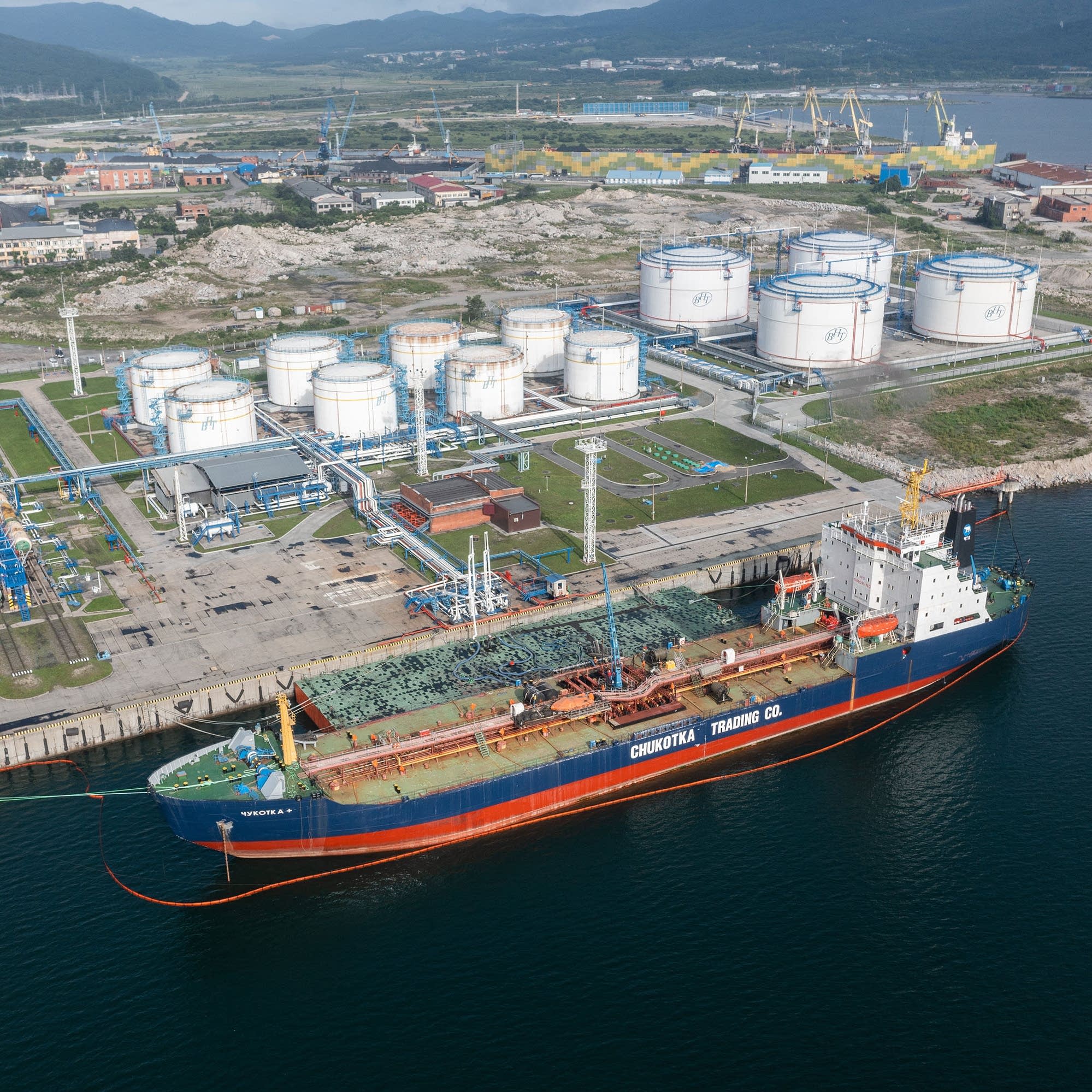
Loading summary
Transcript25 lines
- [00:00]
Odoo Advertiser
This podcast is supported by Odoo. Some say Odoo business management software is like fertilizer for businesses because the simple, efficient software promotes growth. Others say Odoo is like a magic beanstalk because it scales with you and is magically affordable. And some describe Odoo's programs for manufacturing, accounting and more as building blocks for creating a custom software suite. So Odoo is fertilizer magic Beanstalk building blocks for business Odoo exactly what businesses need. Sign up@odoo.com that's O D O O.com.
- [00:30]
Dell Advertiser
Introducing your new Dell PC with the Intel Core Ultra processor. It helps you handle a lot, even when your holiday to do list gets to be a lot like organizing your holiday shopping and searching for great holiday deals and customer questions and customers requesting custom things. Plus planning the perfect holiday dinner for vegans, vegetarians, pescatarians and Uncle Mike's carnivore diet. Luckily you can get a PC with all day battery life to help you get it all done. That's the power of a Dell PC with Intel inside backed by Dell's price match guarantee. Get yours today@dell.com holiday terms and conditions apply. See dell.com for detail.
- [01:02]
William Lee Adams
The US put sanctions on Russian Oil suppliers and the effects flow to India Live from the uk, this is the Marketplace Morning Report from the BBC World Service. I'm William Lee Adams. Good morning. New US Sanctions on Russian oil are sending shockwaves across to two of its top buyers. The sanctions effectively blacklist two of Russia's biggest exporters, and that has big implications for both India and China, who rely heavily on Russian oil imports. The BBC's Davina Gupta joins me with a view from from India. Davina Hai, hi there. How reliant is India on Russian oil?
- [01:38]
Davina Gupta
India is the world's third largest oil importer and it relies heavily on its imported fuels. About 90% of its fuel needs is met by oil from outside. So after the war in Ukraine began in 2022 and Western sanctions were pushed on Russia, the country started to offer its crude at deep discounts. And that's where India stepped in to cash in, essentially. And in just two years, Russia has now become India's top supplier. So simply put, last year alone, India bought just over about $50 billion worth of Russian crude. That's nearly 37% of its total oil bill.
- [02:20]
William Lee Adams
So what are the alternatives for India?
- [02:23]
Davina Gupta
So for India, the alternatives would be its traditional suppliers, which are from the Middle east, particularly Iraq and Saudi Arabia and the ua. And depending on these global prices it could mean that the days of heavy discounts with Russia could end soon. And if these global prices go up, India also loses that huge cost advantage and will end up paying more for its oil.
- [02:46]
William Lee Adams
Are the markets reacting?
- [02:48]
Davina Gupta
Consumers are certainly reacting because this kind of imported oil means that the fuel prices are still cheaper for Indian consumers. But once they start going up, it'll have a ripple effect on budgets for many families. It also translates into a higher inflation costs because most of the goods across India are transported through trucks which run on diesels. As far as the markets are concerned, they're pretty much flat. Today. They haven't seen much of a reaction from this news because Indian refineries are yet to comment. They are still trying to see if they can use certain alternatives as we spoke about. And we will see markets reacting once those decisions are factored in and once these oil refineries give a clearer picture.
- [03:30]
William Lee Adams
Davina, thanks for joining us on Marketplace.
- [03:33]
Davina Gupta
Thank you.
- [03:34]
William Lee Adams
Let's do the numbers on the global stage. Oil rose more than 3% after the US announced those sanctions on Russian suppliers. Brent crude was up 3.4%, a jump of more than $2 per barrel. Elsewhere, shares in Stockholm listed Volvo are up more than 30%. That's after it reported better than expected profit in the third quarter. And Nokia stock rose 12% before falling back slightly as demand for AI and cloud services helped push up operating profits. Efforts to green the shipping industry hit a setback as the latest International Maritime Organization meeting ended without a net zero deal. But pressure remains to cut emissions and one hope is climate friendly fuels. But supply is Limited. The BBC's Adrienne Murray reports from Kasu in Denmark, home to Europe's first commercial plant making low carbon green methanol.
- [04:25]
Adrienne Murray
Field at a field A sea of solar panels surrounds this brand new plant and its maze of silver pipes and towers. Operated by Danish firm European energy. Around 42,000 metric tons of green methanol will be produced here each year. It's a fuel with a low net carbon footprint and also an ingredient for plastics. Knut Erik Anderson is the firm's CEO.
- [04:51]
Knut Erik Anderson
So we replace a fossil CO2 footprint with a CO2 neutral product. We have a number of customers within the chemical industry and also within the transport.
- [05:05]
Adrienne Murray
Shipping joint Maersk is among the buyers, while toymaker Lego will produce plastic bricks and drug maker Novo Nordisk will use it for injection pens. Methanol is already widely used, but until now it's been made with fossil fuels. But here energy is supplied from a 3,300 hectares solar farm. The Biggest in northern Europe.
- [05:27]
Knut Erik Anderson
This is where the power comes in from our solar facility. We have the first building here. Let's take a look.
- [05:33]
Adrienne Murray
And that renewable electricity is used to split water into oxygen and hydrogen and the result is a clear liquid fuel.
- [05:43]
Knut Erik Anderson
This is the first produced pure methanol. We are going to do 42,000 ton. So this is a small drop.
- [05:51]
Adrienne Murray
This green methanol plant is a major milestone, but skeptics say it's only a drop in the ocean. Tobias Johan Srensson is a senior analyst at environmental think tank Conceito.
- [06:04]
Tobias Johan Srensson
It's around four or five times more expensive than the fossil fuel equivalent today. You would need new build ships to replace the old ones when you go to the E methanol route. So it will take decades to decrease emissions.
- [06:19]
Adrienne Murray
As the industry comes under pressure to eliminate carbon emissions, cleaner fuels are in high demand and short supply. However, Maersk, which has invested in a fleet of 25 new container vessels that will run on methanol, expects volumes to ramp up from next year at its headquarters in Copenhagen. I spoke to Emma Mazarin, who's Maersk's head of energy markets.
- [06:45]
Emma Mazarin
So we can see that we're on the early journey, but we can see that scale is really coming this decade and beyond. Next year we take delivery of a large offtake agreement we have signed with Goldwyn. This is for half a million tonnes of methanol per year.
- [06:59]
Adrienne Murray
Plants developing greener fuels are coming up in Europe, China and the us. But to supply the thousands of ships supply the world's seas, they'll be needed on an unprecedented scale. I'm the BBC's Adrienne Murray for Marketplace.
- [07:16]
William Lee Adams
And in the UK, I'm William Lee Adams with the Marketplace morning report from the BBC World Service. Y' all have a great day.
- [07:32]
Kimberly Adams
I'm Kimberly Adams, host of Make Me Smart, a podcast from Marketplace that makes today make sense. Join me throughout the week as I dig into the biggest stories in tech culture and the economy. Whether it's a vibe check on the job market or the latest on China US relations, Make Me Smart helps you understand how the headlines actually impact your daily life. Listen to Make Me Smart on your favorite podcast.
- [07:58]
Unknown Speaker
Apparently.