← Marketplace Morning Report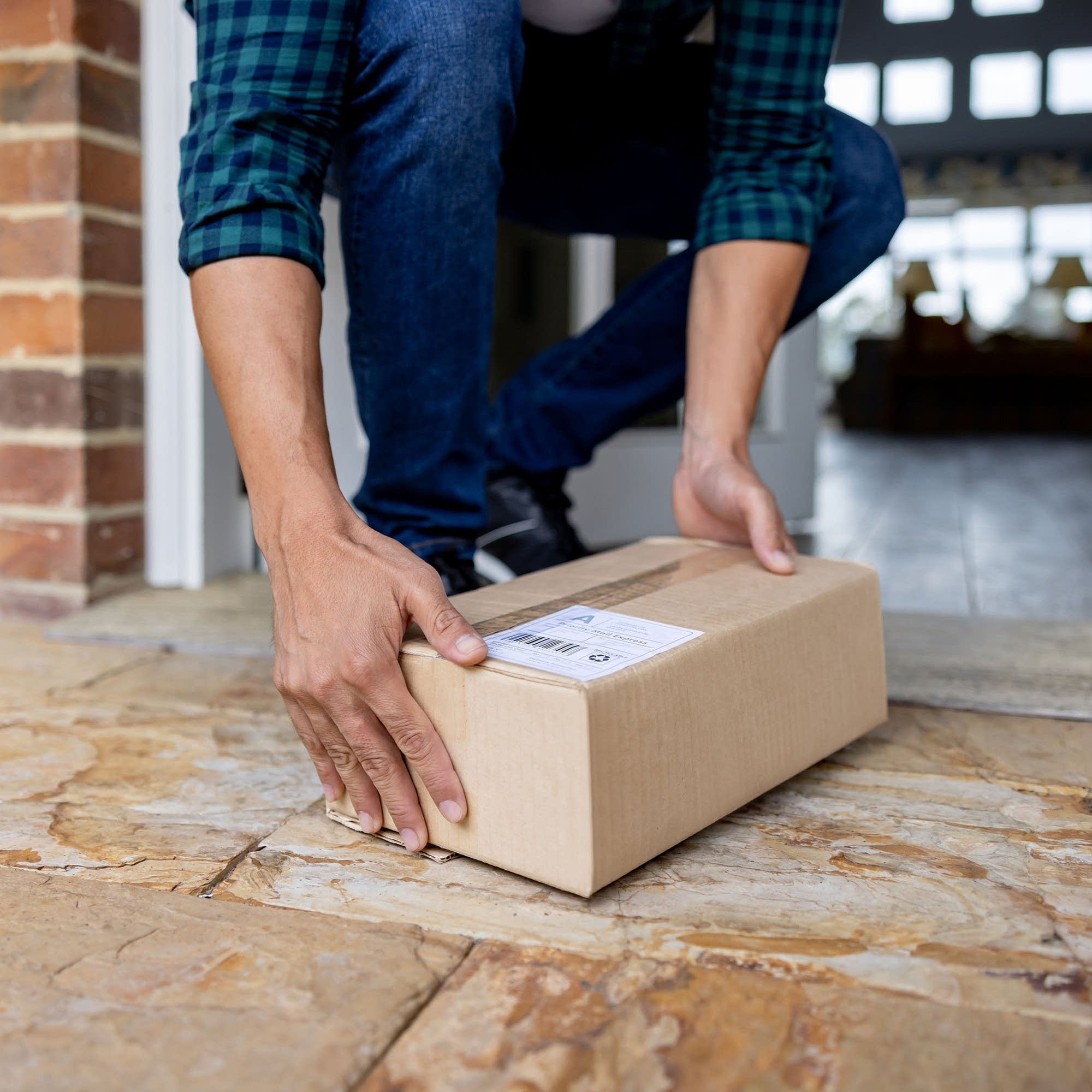
Marketplace Morning Report
Postal services around the world hit pause on shipments to the U.S.
00:06:44
Loading summary
Transcript23 lines
- [00:00]
Wix Advertiser
No one knows your business better than you, so who better to create your website than, well, you? Wix's website builder puts it all in your hands. Create a beautiful website just by talking with AI or choosing from thousands of templates. Customize every detail with simple drag and drop tools and get everything you need to start running business your way. Build more, think bigger, and do it all yourself on wix.
- [00:28]
Odoo Advertiser
This podcast is supported by Odoo. Some say Odoo business management software is like fertilizer for businesses because the simple, efficient software promotes growth. Others say Odoo is like a magic beanstalk because it scales with you and is magically affordable. And some describe Odoo's programs for manufacturing, accounting and more as building blocks for creating a custom software suite. So Odoo is fertilizer Magic Beanstalk building blocks for business Odoo exactly what businesses need. Sign up@odoo.com that's o d o o.com.
- [00:59]
Nick Qureshi
More countries are pressing pause on postal shipments to the US over tariff uncertainty live from the UK this is the Marketplace Morning report from the BBC World Service. Hello, I'm Nick Qureshi, in for Liana Byrne. Japan and Australia are among the latest countries suspending some postal deliveries to the United States, and it's all down to confusion over tariffs. Price President Trump signed an executive order last month ending the global import tax exemption on small packages worth under $800 entering the US duty free. That is due to take effect on Friday, but letters will continue to be accepted. The White House says some shippers have abused that exemption by sending illicit drugs. Australian jewelry maker Jess Van Den says around a third of her business is.
- [01:43]
Jess Van Den
In the US for the next six months. I've suspended shipping to the US Completely because it's so up in the air and we really don't know exactly, exactly what is going to happen. Apparently the US Customs Service has asked that external shipping companies collect the tariff and remit it on their behalf. Australia Post doesn't have anything set up to do that yet, so we literally can't follow those directives at this time. It's a huge worry. 30 to 40% of my jewelry business was in the US and now I've had to stop that entire part of my business. And I'm not the only one. There's so many people who have even higher percentages. 80, 90% of their business was shipping to the US and now it's basically shut down their business overnight.
- [02:28]
Nick Qureshi
That was Jess Van Den. US Aviation giant Boeing and Korean Air have announced a multibillion dollar deal for more than 100 planes as president Trump presses trading partners to do more business with American firms. The head of Korean Air says the agreement, announced after the South Korean president Lee Jam Young met Trump in Washington to discuss tariffs, is a pivotal moment for the carrier. The BBC's Asia business correspondent Suranjana Tiwari has more.
- [02:57]
Suranjana Tiwari
So Korean Air announcing it will make a $50 billion order for 103 Boeing airplanes and GE Aerospace engines and servicing is also included in this. And this is the largest in the Korean air carrier's history. It includes a mix of 787- Triple- Sevens and 737 worth about 36 billion. And the GE deal is for engines and that's valued at about $13.7 billion.
- [03:31]
Nick Qureshi
Suranjana Tiwari there. Right, let's do some numbers. France's Main stock index fell 2% on opening and bonds tumbled. All this amid speculation the minority government could be ousted over plans for sweeping budget cuts. Analysts think Sweden's central bank could cut its benchmark interest rate by half a percentage point this year to kick start a delayed recovery. And shares in the world's biggest offshore wind farm developer closed down more than 16% after President Trump ordered Danish company Orsted to stop work on a site off Rhode island. In the U.S. now, Brazil is one of the countries facing steep 50% tariffs on U.S. imports. While the U.S. government says the so called reciprocal tariffs will help boost domestic production, not everything can be homegrown. That means businesses are feeling the pinch. The the BBC's Erin Delmore reports.
- [04:25]
Peter Longo
This is a bag of 50 pounds of Brazilian French Roast. It would have been 1:47.50 before the tariff and 359.50 after the tariff.
- [04:40]
Erin Delmore
Peter Longo's Puerto Rico Importing Company has been a staple on New York City's bleecker Street since 1907. A best seller is Cafe Blend. It's reliant on Brazilian beans. They're now subject to a 50% import tax thanks to President Trump's tariffs.
- [04:57]
Peter Longo
The amount of the tariff is so large that it's going to really affect the price of the coffee. So for instance, if we're selling coffee for $15.99 and there's a 50% tariff, that coffee is going to go up another $8. That's going to be in the 20s. That's crazy. People won't buy it, you know, $30 a pound. That's ridiculous. That's going to kill the market for Brazilian coffee, which is I guess the purpose. They want to punish Brazil, for whatever reason. So they're putting a draconian tariff on it. More production at home will mean stronger competition and lower prices for consumers.
- [05:39]
Erin Delmore
President Trump is remaking the global trade world order through tariffs, charging importers like Peter a fee to bring products in from other countries. The goal is to get foreign countries to lower trade barriers and to make foreign made products more expensive so that American made products are more competitive and eventually preferred. That, in turn would spur more manufacturing and production of goods right here in the usa. But coffee isn't really grown in the us it can't be. It's a tropical fruit that grows in a narrow strip of land around the equator. It does grow in some parts of Hawaii and Puerto Rico and a tiny slice of Southern California or. But that's not enough to supply the 450 million cups of coffee Americans drink every day. And so virtually all of it has to be imported. That's why tariffs on coffee producing countries, and especially those 50% tariffs on Brazil, which provides around a third of all coffee consumed in the US is making life hard for importers and sellers like Peter.
- [06:38]
Peter Longo
Horribly stressed. Horribly stressed. It keeps me up at night because you have to try to figure out a way to manage your cash flow to anticipate what's coming.
- [06:49]
Erin Delmore
The stakes were high before tariffs were even announced. Back in February, the global price of arabica coffee hit its highest point on record. Even though that's come down a bit, roasted coffee cost consumers 15% more last month than it did a year prior. All of that puts pressure on sellers like Peter.
- [07:05]
Peter Longo
This is how I make my living, you know, so, you know, if we have to shrink, we'll shrink. And if we have to shrink to the point where we go out of business, there's nothing I can do about it. And we'll do the best we can.
- [07:18]
Erin Delmore
But he's betting that that morning cup of joe is something people will keep shelling out for, even if it costs them more. I'm the BBC's Erin Delmore for Marketplace.
- [07:28]
Nick Qureshi
And in the United Kingdom, I'm Nick Qureshi with the Marketplace morning report from the BBC World Service. Back same time tomorrow. Thanks for listening.
- [07:42]
Emily Hanford
The Trump administration is making deep cuts to education research.
- [07:46]
Erin Delmore
The cancellation notices started coming when the contract cut.
- [07:49]
Nick Qureshi
The study just dies.
- [07:50]
Emily Hanford
It's all happening. Just as schools are trying to make use of research to improve reading instruction.
- [07:56]
Peter Longo
There would not have been a Science.
- [07:58]
Nick Qureshi
Of Reading without the federal funding. It wouldn't have happened.
- [08:02]
Emily Hanford
I'm Emily Hanford. On our new episode of Sold A what the Trump cuts mean for the science of reading, Go to your podcast app and follow Sold a story.