Loading summary
Transcript32 lines
- [00:00]
A
USAA knows dynamic duos can save the day like superheroes and sidekicks or auto and home insurance. With usaa, you can bundle your auto and home and save up to 10%. Tap the banner to learn more and get a'@usaa.com bundle restrictions apply explaining the money burning a hole in your pocket effect. I'm David Brancaccio in Los Angeles. First, 2025 was a tough year for home buyers. Now that said, sales for used houses and apartments jumped toward the end of last year. Marketplace's Nancy Marshall Genzer is here. Nancy, what are some of the forces at work?
- [00:35]
B
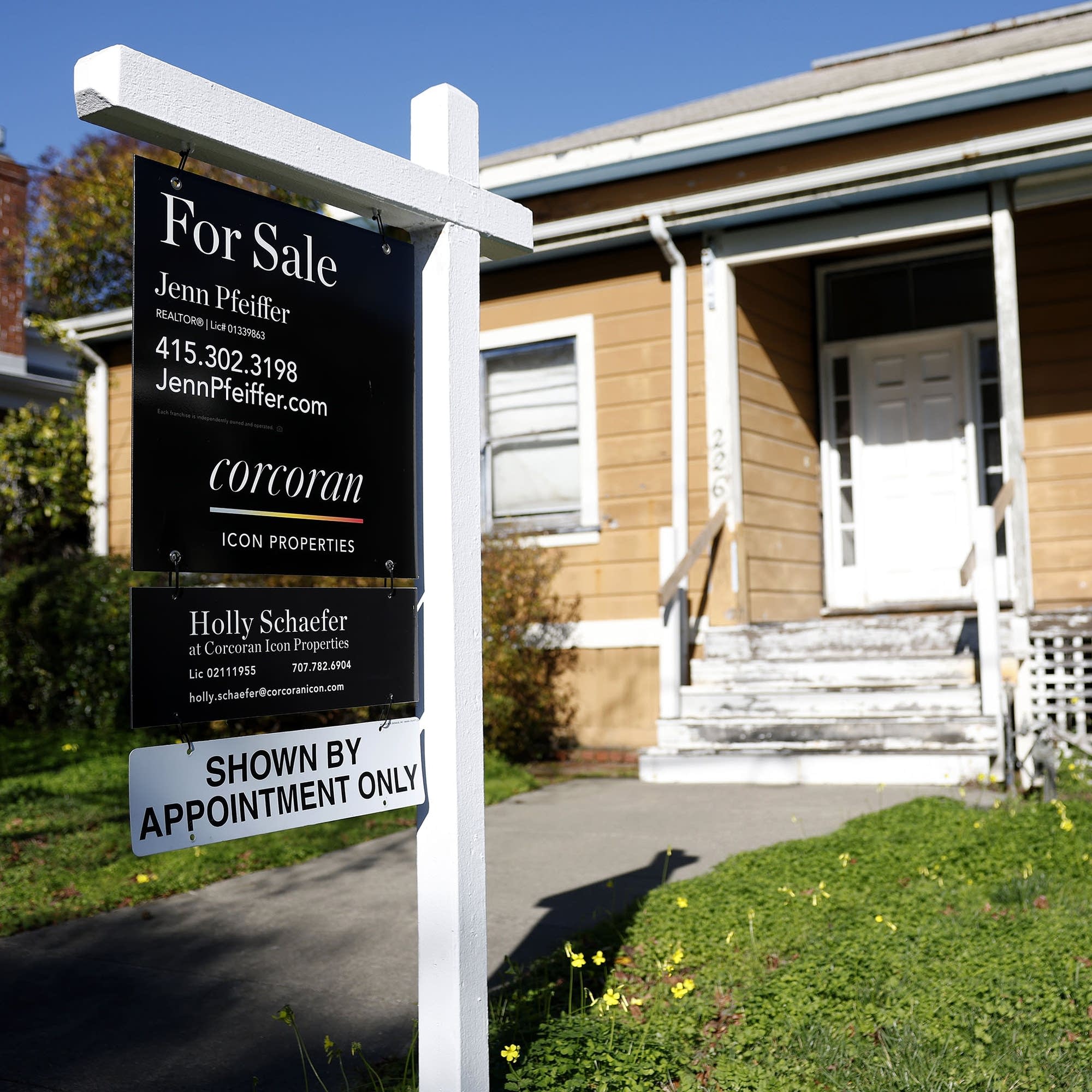
Well, David, two things happened over the last three months of 2025 that helped people trying to buy a home. Housing prices grew more slowly and mortgage rates fell. According to Freddie Mac, the average 30 year fixed rate mortgage in December was 6.19%. A year ago was closer to 7%.
- [00:56]
A
And home buyers were paying attention. As I say, the fresh existing home sales look stronger.
- [01:02]
C
Yeah.
- [01:02]
B
The national association of Realtors says existing home sales were up by about 5% last month. After you adjust for seasonal factors. The association says December sales were the strongest in almost three years. They increased month over month in all parts of the country. And there was a year over year increase in the South. New home sales in October edged down, but they were still higher than over the summer.
- [01:26]
A
President Trump, Nancy, has been trying to take the edge off the high cost of buying a place to live. He ordered we reported on this Fannie Mae and Freddie Mac to buy up to $200 billion in mortgage bonds. Will that help?
- [01:39]
B
It should. Fannie and Freddie will be pushing up demand for these bonds. And of course, when demand rises, investors have to accept a lower yield or interest rates. Now Trump also announced he's going to ban large institutional investors from buying more single family homes. But he would need Congress to law he could enforce on that. Trump says he'll talk more about this at the World Economic Forum next week in Davos, Switzerland.
- [02:06]
A
All right. The benchmark 10 year interest rate is up just slightly, 4.15%. The average 30 year fixed rate mortgage is not down. In the wake of word earlier this week that the Justice Department has a criminal investigation going into the chair of the Federal Reserve amid questions about a construction project at Fed headquarters. How have financial market players been reacting to what some see as pressure to get the Fed to lower interest rates? Economist Diane Swonk has been watching bond market reaction.
- [02:34]
D
Well, what's been really fascinating is even as equity market volatility picked up and market showed some jitters we've seen the markets stayed at the same pricing they had on a little over two rate cuts this year and not pricing in more rate cuts due to shifts in Fed independence. And I think that's important as financial markets think things will stay as they are with the Fed sort of lockstep in a deep debate about what they should do with rate cuts going right.
- [03:03]
A
So they're not saying themselves, oh, we're going to get an extra rate cut now. They're saying, well, it's probably still what we had expected just a couple weeks earlier.
- [03:11]
D
Exactly. And I think that's very important for the moment. That is keeping financial markets from being more volatile. And that is an important thing right now given how much we are dependent upon financial market strength and the US Economy are so intertwined. Of course it's not overall economic growth does not equal the stock market, but unfortunately, because affluent households are propelling growth so much, it's very important for the overall economy to avoid recession.
- [03:41]
A
Speaking to Reuters yesterday, President Trump says he has no plans to fire Jerome Powell. Foreign this Marketplace podcast is supported by Wealth Enhancement, who ask, do you have a blueprint for your money? Wealth Enhancement can help you build the right blueprint for investing, retirement, tax and more. With offices nationwide, there's an advisor who's ready to listen and craft a blueprint for your future. Find out more@wealthenhancement.com Build.
- [04:22]
C
This Podcast is supported by Odoo. Some say Odoo business management software is like fertilizer for businesses because the simple, efficient software promotes growth. Others say Odoo is like a magic beanstalk because it scales with you and is magically affordable. And some describe Odoo's programs for manufacturing, accounting and more as building blocks for creating a custom software suite. So Odoo is fertilizer Magic Beanstalk building blocks for business Odoo. Exactly what businesses need. Sign up@odoo.com that's o d o o.com.
- [04:52]
A
Regular and lower income people are being careful in an economy where many companies are choosing not to hire. This is in contrast to higher income people who have been out there and online spending time for a teachable moment on what's called the wealth effect. Here's Marketplace's Justin Ho.
- [05:09]
E
The wealth effect is all about the assets that wealthy people own. Stocks, homes, savings accounts, crypto. Those assets can literally allow people to spend more money. For instance, you can borrow against your home equity. And just owning assets can have a psychological effect on people.
- [05:24]
A
They certainly can feel more confident to go out and spend more.
- [05:28]
E
That's Gabriel Chodoro Reich, an economics professor at Harvard who studied the wealth effect.
- [05:33]
A
Stock market goes up and people make additions to their houses, but also spending on consumer services goods.
- [05:40]
E
Chodoro Reich says that kind of spending can have ripple effects. He found that in times when stocks are rising, local employment tends to pick up in wealthier regions, especially at businesses where wealthy people spend money.
- [05:52]
A
Restaurant spending is by definition local, and it's going to show up in more employment at local restaurants.
- [06:00]
E
The wealth effect has been propping up consumer spending over the past year, says Shannon Grine, senior economist at Wells Fargo.
- [06:06]
F
When you look at equity values or the fact that homeowners own a near record share of equity in their homes today, I do think these type of wealth factors are allowing your middle to upper income consumer to still have enough behind their balance sheet to keep spending.
- [06:22]
E
The risk here, Grind says, is the wealth effect propping up the economy over the long run.
- [06:27]
F
This is just not a position that you want your economic system to be in in general, right? You want everyone to be contributing to growth and spending and having that discretionary income to do so.
- [06:37]
E
For now, at least, most people seem to. The wealth effect is not propping up the economy.
- [06:42]
G
Wealthy households are not responsible for all of consumer spending. They're not even responsible for half of it.
- [06:48]
E
That's George Perks, macro strategist at Bespoke Investment Group. He says even though the labor market has cooled, people with lower incomes are still spending plenty of money.
- [06:57]
G
We haven't seen job losses. We've just seen slowdowns in hiring and a modest rise in the unemployment rate. And as a result, we haven't seen the sorts of spending slowdowns you would worry about if lots of people were losing their jobs.
- [07:10]
E
And Perk says if the labor market heats up and wage growth picks up, people with lower incomes are going to spend even more.
- [07:16]
G
They tend to see the strongest wage gains, strongest employment gains during hotter labor markets that can then restart their consumer spending and even out the distribution of where consumer spending has fallen throughout this year.
- [07:29]
E
Which would mean the wealth effect would play a smaller role in this economy. I'm Justin Howe for Marketplace and Defense.
- [07:36]
A
Secretary Pete Hegseth has directed the Pentagon to embrace Elon Musk's controversial artificial intelligence system called Grok, which will now join Google's AI inside the Pentagon's classified computer networks. Hegseth says he wants AI at work that's not woke and as much appropriate military info as possible to be integrated into AI tech. Among concerns about rock is the way it creates deep, fake, sexualized images of people, including children. In Los Angeles, I'm David Brancaccio, Marketplace Morning Report from APM American Public Media. Hey, it's David Brancaccio, host of the Marketplace Morning Report. It has been one year since the costliest set of wildfires in California history, U.S. history, and by at least one calculation, the history of the world. 16,000 structures were destroyed, most of them homes. I can quote your figures about insured versus uninsured losses measured in billions of. But as people in the fire zones face year two, we go from macro to micro. I'm checking in with the neighbors on one street in Altadena where 15 homes were destroyed on a single block. These are my own neighbors. I lost a home on that street, too. Join us for on the ground reporting as we hear from people still dealing with insurance, getting permits, finding contractors. One guy had to go through 30 contractors to find one with the right skills he could afford. Plus, for most, rebuilding is taking years. How do people find the money to live elsewhere? Listen to the Marketplace Morning Report using your favorite podcast, Applied.