Loading summary
Transcript23 lines
- [00:00]
A
Introducing your new Dell PC with the Intel Core Ultra processor. It helps you handle a lot, even when your holiday to do list gets to be a lot like organizing your holiday shopping and searching for great holiday deals and customer questions and customers requesting custom things. Plus planning the perfect holiday dinner for vegans, vegetarians, pescatarians and Uncle Mike's carnivore diet. Luckily you can get a PC with all day battery life to help you get it all done. That's the power of a Dell PC with Intel inside backed by Dell's price match guarantee. Get yours today@dell.com holiday terms and conditions apply. See dell.com for details.
- [00:30]
B
This podcast is supported by Odoo. Some say Odoo business management software is like fertilizer for businesses because the simple, efficient software promotes growth. Others say Odoo is like a magic beanstalk because it scales with you and is magically affordable. And some describe Odoo's programs for manufacturing, accounting and more as building blocks for creating a custom software suite. So Odoo is fertilizer Magic Beanstalk building blocks for business Odoo exactly what businesses need. Sign up@odoo.com that's o d o o.com.
- [01:01]
C
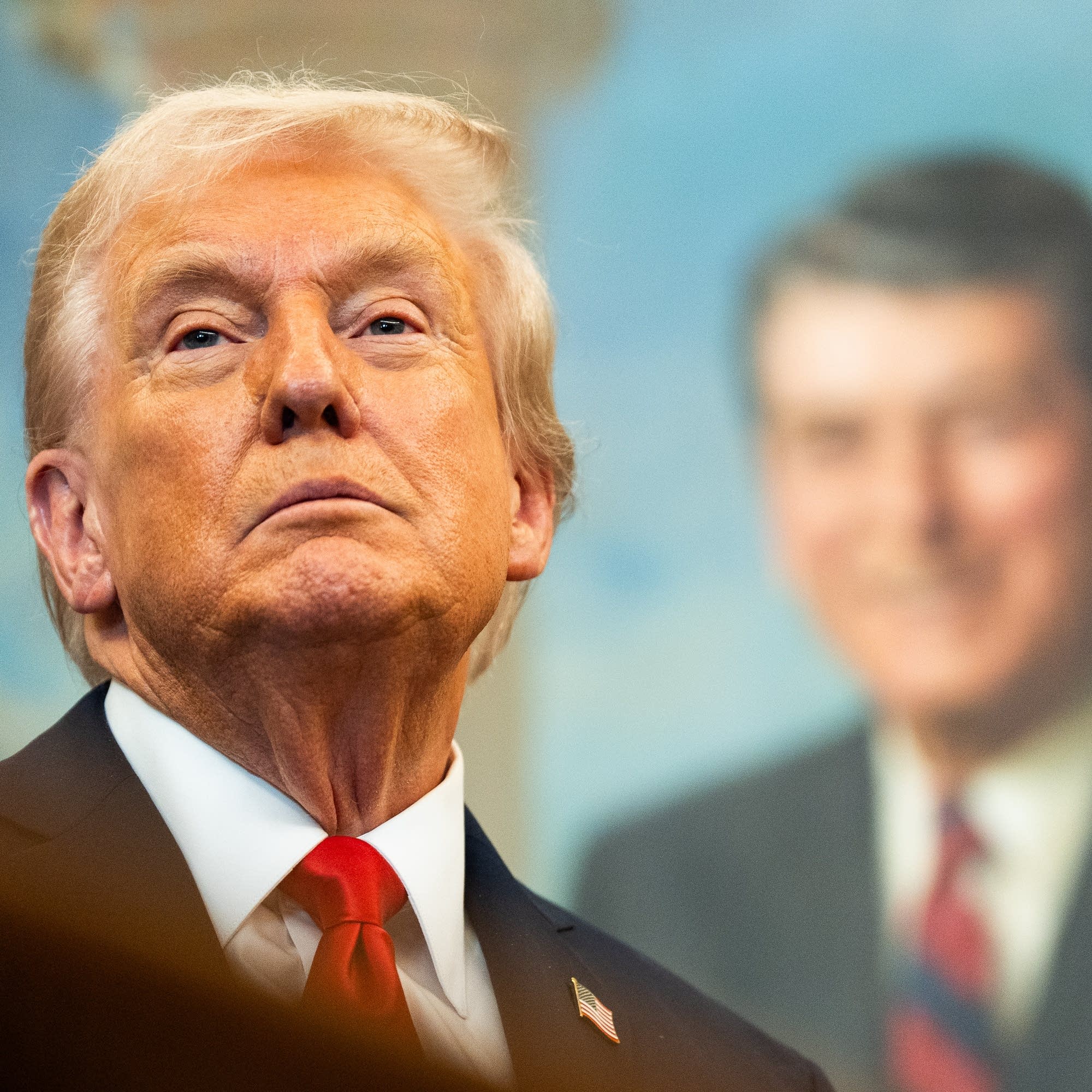
Canada feels Trump's wrath after the President terminates trade negotiations Live from the UK this is the Marketplace Morning Report from the BBC World Service. I'm William Lee Adams. Good morning. Canada is waking up to some difficult news. President Trump has abruptly cut off all trade talks with its northern neighbor. Mr. Trump was responding to an anti tariff ad paid for by the province of Ontario, which featured a clip of former American President Ronald Reagan speaking negatively. Tariffs about three quarters of Canada's exports go to the U.S. many now face a 35% levy. Here's our business reporter Nick Marsh.
- [01:39]
D
It's a vital economic relationship. Canada's America's second largest trading partner after Mexico, Canada buys more American goods than any other country in the world. There used to be lots of free trade agreements. Donald Trump's been looking to reverse that to a certain extent. He's put big tariffs on things like cars, aluminium, steel. So there's tension there already. We don't really know how much progress was being made on those trade talks. There's a long list of countries that the United States is having talks with, but for now they are not happening.
- [02:11]
C
So how is this sometimes erratic approach to trade negotiations by President Trump working for the US and its relations with the rest of the trading world? Gillian Tett is provost of King's College at Cambridge University and a Financial Times.
- [02:25]
E
COLUMNIST well, what's clear is two things are happening because of tariffs. Firstly, the US treasury is collecting more income tariffs and that's playing a small part in cutting the deficit at the moment. And that's pretty important in terms of keeping bond markets calm. Secondly, there are signs that a number of companies are moving operations to America or building factories in America. So that's the good news for President Trump. The bad news, of course, is that it's been incredibly disruptive. It smashed trust in America around the world and we're likely to see an inflationary impact.
- [03:00]
C
Gillian Tet Gold reached a record high of more than $4,300 earlier this week, only to plunge by more than 6% a day later, its biggest drop since 2013. It's now on course to snap a nine week winning streak, dropping by more than 3% for the week. So what does the rollercoaster pricing tell us about the precious metal and the world economy? Ola Hanson from Saxo bank in Denmark joins me now. Ola, hi.
- [03:27]
F
Hi. Good morning.
- [03:28]
C
Gold broke record after record week on week. But now we've got this sharp correction. Why the sudden drop?
- [03:35]
F
Since August, we've had a non stop nine week rally, both gold, silver and some of the other investment metals. And something had to give sooner or later. And what really gave this week was the beginning of the Diwali festive season in India and across Asia. We've seen a phenomenal strong amount of demand for physical gold and silver in the run up to this festival. And as that now got into the swing, we saw that demand taper off, just simply a market that had run out of buyers and in desperate in need of a consolidation.
- [04:05]
C
And what does this turbulence, this turnaround tell us about the global economy?
- [04:10]
F
Well, I suppose it tells us a little bit about hope that the upcoming negotiations between the US And China may yield some kind of a breakthrough. It's also, I think, a reflection of the fact that the rally we've seen in precious metals has basically touched the nerve across the world in recent months. So everyone by now is really fully aware that we've had a phenomenal run this year in gold, up more than 50%. And that does obviously highlight an unstable world we live in right now. Geopolitical risks, debt levels going through the roof. And right now we have probably central banks less focused on inflation, which potentially also could add some support to precious metals.
- [04:51]
C
We often talk about gold as a safe haven. Do you think in the future gold will remain that safe? Haven't?
- [04:57]
F
Oh, absolutely. I would still call it the ultimate safe haven. There has been a lot of focus in recent years about the emergence of cryptocurrencies and their ability to do the same. But I think also the last couple of weeks have shown us that when we do see a wobble in some of the other financial markets, especially the stock market and cryptos tends to be just another financial product. It has proven its worth for hundreds, if not thousands of years as a store of wealth. And the importance of that has gained even more traction in recent years.
- [05:26]
C
Ola, thanks for joining us on Marketplace.
- [05:28]
F
My pleasure. Thanks very much.
- [05:30]
C
Let's do the numbers. Intel shares rose 7% in after hours trading. The chip maker beat third quarter profit expectations amid major cost cutting measures. Shares in the French drug maker Sanufi jumped as much as 5.2%, driven by demand for its skin and asthma drug. And aluminum hit its highest level in more than three years. And finally, something else that's been hitting records. It's K Pop Demon Hunters, the most watched film on Netflix, Netflix ever. And it's now being turned into toys. The streaming platform has signed what it's called an industry first deal. Mattel and Hasbro have been named as global co master licensees for the film which follows a K pop girl group that secretly hunts demons. Darren Garnham is CEO of Toy Kido, which creates toys and collectibles for some of the world's biggest franchises.
- [06:20]
G
It's a cracking deal for both companies. It is rare for both to have a global master toy. It's also rare the speed it's happened in the industry for everyone be jumping on something that's blown up so quickly. It's pretty unprecedented. So it sort of hats off to everybody involved to get it to the table and signed and announced. The challenge they're going to have now is just the production cycles and getting things to market as quickly as they can. This is a great example of a breakout brand new IP in the industry is always exciting. And the other piece is is this is a breakout family entertainment success for Netflix and it really for me solidifies them up along the majors.
- [07:00]
C
Now Darren Garnham, that is all for today. On behalf of the entire team, thank you for joining us in the UK And Demon Free. I'm William Lee Adams with the Marketplace morning report from the BBC World Service.
- [07:24]
H
Hey everyone, it's Bridget, host of Million Bazillion, a podcast from Marketplace. You've probably heard about the government shutdown, but if you're anything like our young caller Esme, whose dad is a federal worker, you might still have questions.
- [07:38]
G
I've noticed that my dad hasn't been going to work and I don't know when the government shutdown will stop and my dad can go back to work.
- [07:47]
H
We can help tune into our recent episode where we explain what you and the young ones in your life need to know about government shutdowns. Listen to Million Bazillion on your favorite podcast.
- [07:57]
G
Apparently.