Loading summary
Transcript26 lines
- [00:00]
A
Say what you want about AI, but it's here and it's helping businesses get more done in a day. Wix's website builder is infused with AI so you can stay ahead. Create a beautiful, functional website just by describing your idea. Track how your site appears in AI search results, create custom images on demand, or launch an entire campaign in a matter of minutes. WIX gives you AI wherever you need it. Try it now for free@wix.com.
- [00:30]
B
Are you ready to get spicy?
- [00:33]
A
These Doritos Golden Sriracha aren't that spicy.
- [00:37]
B
Sriracha sounds pretty spicy to me. Um, a little spicy, but also tangy and sweet. Maybe it's time to turn up the heat or turn it down. It's time for something that's not too spicy. Try Doritos Golden Sriracha spicy but not too spicy.
- [01:00]
C
Partners to rivals India and America's trade war ramps up Good morning. This is the Marketplace Morning Report and we're live from the BBC World Service. I'm Liana Byrne. So it's a tough day for India. From today, most of its exports to the United states face a 50% tariff. It's a major shift in relations between the two countries. Not so long ago, they were partners, especially in tech and defense. Washington says the tariffs are in part punishment because India is buying Russian oil. But Anup Wadahan, former commerce secretary to India's government, says that's not fair.
- [01:36]
D
Why should only a developing country with a per capita income of $2,500 have to, you know, face the crunch of unilateral sanctions? I don't think it's reasonable, reasonable to expect India to stop buying oil from Russia and we should not stop buying.
- [01:50]
C
It on the ground. Impact is already being felt from Tiruppor City in the south, the garment hub supplying global brands like Zara, H and M and Walmart to Mumbai's bustling diamond workshops. Panic is rippling through India's factories as US buyers pause buying. The BBC's Archana Shukla reports.
- [02:11]
B
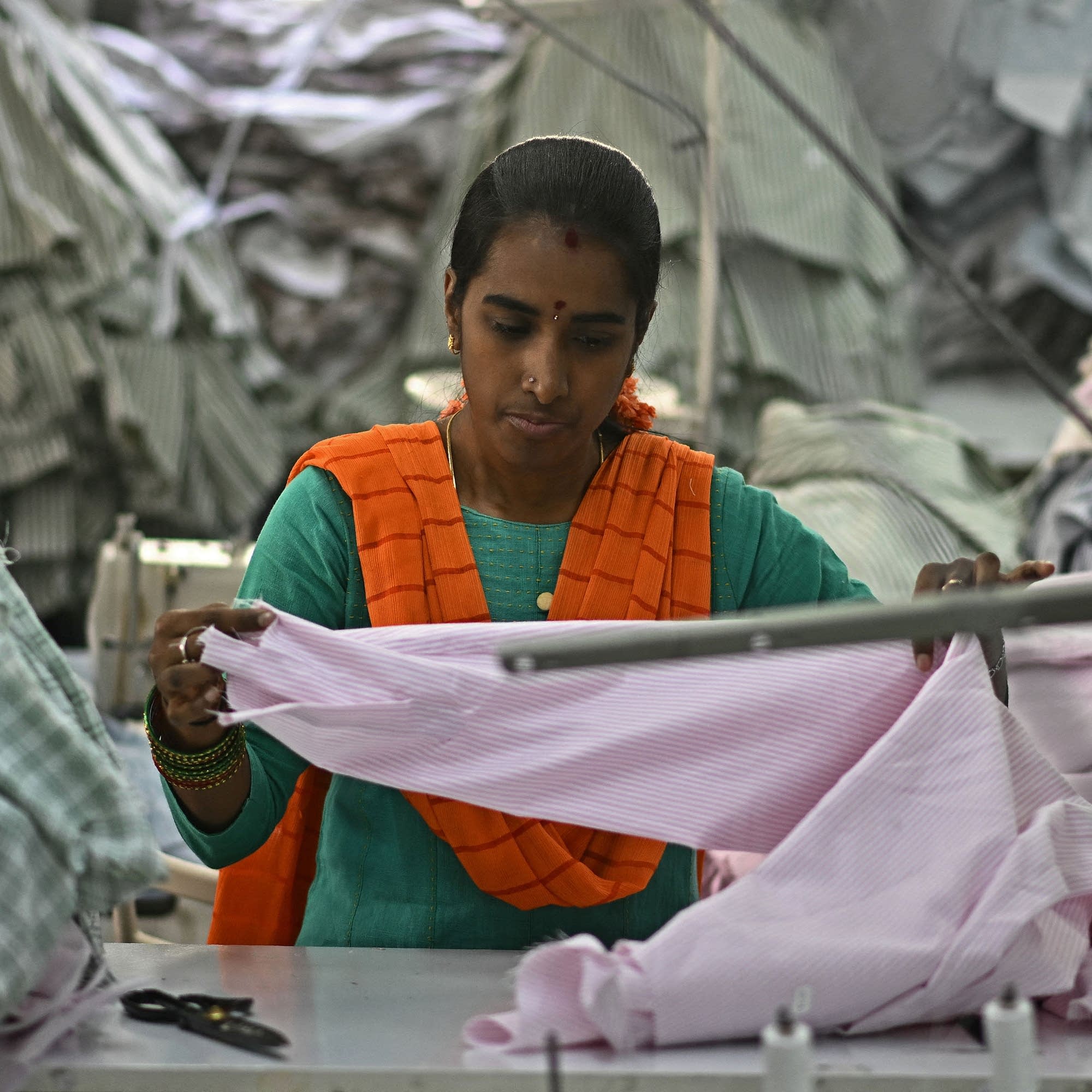
What you hear is the whirs and hums of sewing machines. I'm in a garment factory in the small town of Turkey in southern India. This town is an export powerhouse. It makes up for over a third of India's 16 billion dollar garment exports. And for them, US is their biggest market. So this town matters. But the Trump administration tariffs has had businesses here worried.
- [02:36]
D
At the moment, everything is suck up.
- [02:39]
B
Siva Subramaniam's US Clients. Some of the big retail chains have halted orders, fearing a 50% tariff, forcing him to cut production by half.
- [02:49]
D
These products are for the Indian market and the European market.
- [02:53]
B
Even at the current 25% tariff, the US market is slipping away. So all this is ready for shipment?
- [02:59]
D
Yes, ready for shipment.
- [03:00]
B
Siva walked me over to show piles of finished garments unsold and gathering dust. A 25% tariff was already tough. Doubling it as a penalty for buying Russian oil is crushing. Weeks ago, these factories were scaling up production. India was seen among the biggest beneficiaries of Trump's trade policies. What's at stake is India's manufacturing ambitions and millions of jobs. And it isn't just textiles. It's furniture, shrimps, it's diamonds industries where the US buys half, sometimes all of what's made. Hundreds of miles away at a busy workshop in Mumbai, diamonds catch the light as workers polish and set them into gold rings and bangles. India's 10 billion dollar gem trade with the US is on the line and with it thousands of jobs.
- [03:55]
D
Substantial amount of working capital is locked in.
- [03:57]
B
Adil Kothwal, a second generation jeweller, an owner of Creation Jewelry Style, sells 70% of his designs to the US.
- [04:05]
D
This is peak period of our time. You know, we make money in September, October. In these two months I would imagine at least 3 to 4 billion dollars of exports will take place which will not. So that's a big loss. It takes years to build in a certain market. So it's not that from USA you suddenly go into Europe or Australia and start selling there. It just doesn't work that.
- [04:28]
B
In a speech on Independence Day last week, Prime Minister Narendra Modi called for self reliance even as New Delhi races to find a diplomatic fix. But back in the factories, exporters are hoping for a deal that secures the future of their factories and the jobs of thousands working here. I am the BBC's Archna Shukla for Marketplace.
- [04:52]
C
Alright, let's to the numbers. The Japanese automaker Mitsubishi Motors cut its operating profit forecast for the current fiscal year by 30%, citing the impact of U.S. import tariffs, weaker sales expectations and rising selling costs. And the Danish toy maker Lego saw its first half sales jump 12% to a record $5.4 billion as partnerships with other major brands like Formula One and Jurassic park helped it outperform its competitors. Meanwhile, European carmakers are claiming that hitting the EU's 2035 CO2 emissions target is no longer realistic. The CEO of Mercedes Benz signed a letter from manufact manufacturers and suppliers associations to the European Commission President Ursula von der Leyen. It warns against plans that would require a 100% cut in car emissions by then. They insist they're still committed to the EU's wider net zero target for 2050, but point to major hurdles including heavy reliance on batteries made in Asia, patchy charging infrastructure and fresh U.S. tariffs. The animated musical K Pop Demon Hunters, about a South Korean girl band, has become the most watched movie on Netflix. The American made film has now been reviewed more than 230 million times and it's proving to be a box office hit too. After a special sing along version was released to movie theaters, the BBC's Kalpana Badu went to down to one of the screenings and asked some excited fans about their favorite songs.
- [06:20]
E
Bit crazy. Why was it crazy? Because you're loads of people dressed, dressed as hundreds. We're going yeah, yeah, yeah. They were screaming. Each other's lives did feel really different.
- [06:33]
B
To a normal cinema.
- [06:35]
E
Everyone was singing I know what's your favorite song? Maybe Soda Pop or Take down because I kind of like the rhythm and the beat. I think. Golden or free. Golden Free and Take Down. I was the queen that I'm empty.
- [06:52]
C
Aw, they're just so cute. The phenomenon has been bringing in millions of dollars to the cinema industry. Alex Jones Jones as operations manager at the UK chain Merlin Cinemas.
- [07:01]
F
I just wish we'd had it as a cinema film all summer long because I think it would have done fantastic business and then gone to streaming rather than the other way around. Somebody decided in in Sony and Netflix, let's make a bit of extra money and release it to the cinemas just at the end of its run before the kids go back to school. So I'm glad we had it.
- [07:19]
C
Alex Jones there and I'm Liana Byrne with the Marketplace Morning report from the BBC World Service.
- [07:28]
G
Poetry has the power to connect our inner universe and the outer world. I'm Maggie Smith, poet and host of the Slowdown, a podcast from American Public Media. Each weekday find time to take a breather from your to do list or doom scrolling for that matter, and take in a moment of reflection with a hand picked poem. Listen to the Slowdown wherever you get podcasts.