Loading summary
Transcript15 lines
- [00:00]
A
This holiday, Verizon is giving you incredible gifts and savings you'll enjoy all year. When you Switch, you'll get four new iPhone 17 Pros. No trade in needed. That's right, get four lines for just 25 a line and the amazing iPhone 17 Pro for everyone. Save big this holiday. Visit Verizon today. 20 monthly promo credits applied to account over 35 months with a new line on unlimited welcome. In times of congestion, unlimited 5G and 4G LTE may be temporarily slower than other traffic. Domestic data roaming at 2G speeds. Additional terms apply for phone offer. See verizon.com for details.
- [00:32]
B
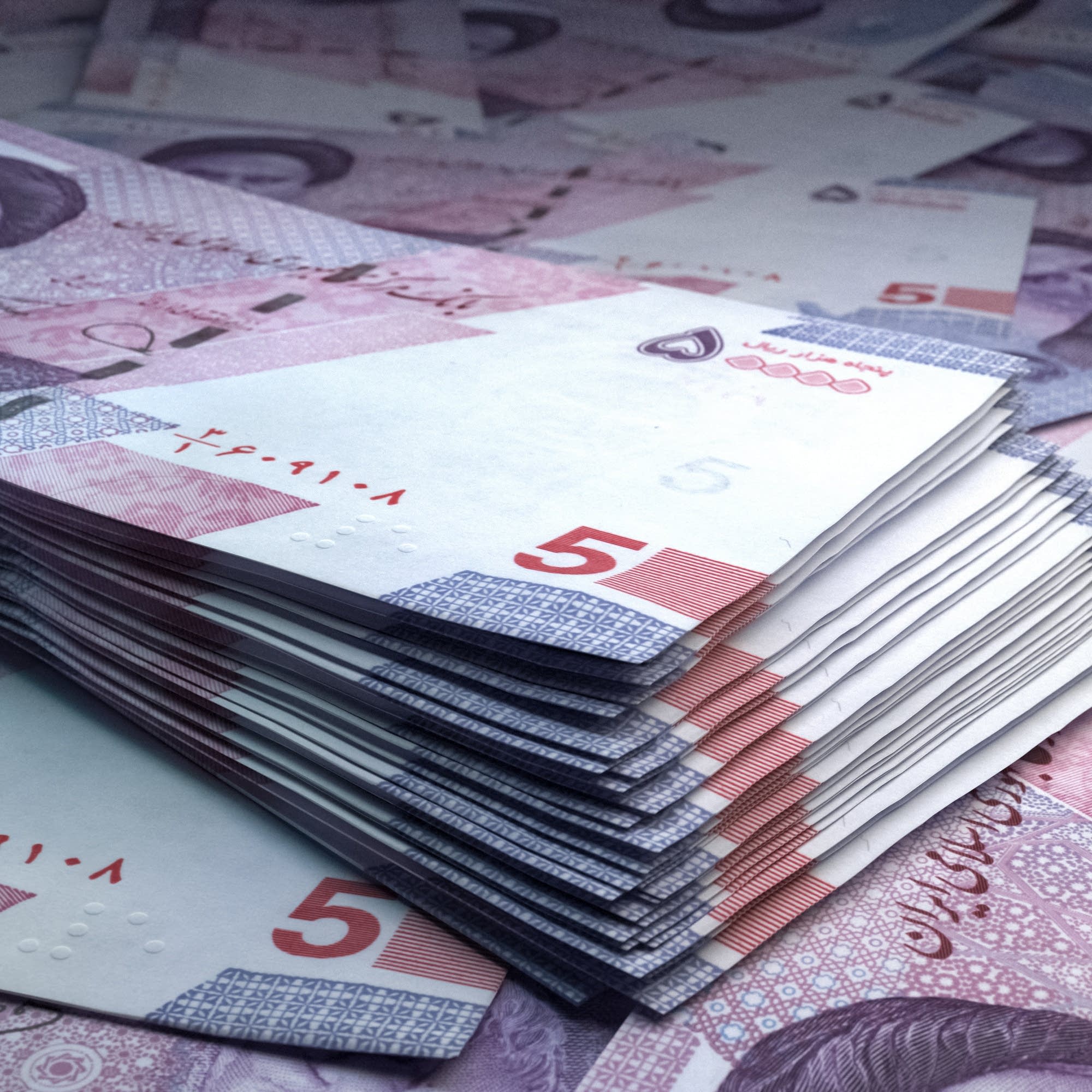
Protests over the economy in Iran turned violent Live from the uk this is the Marketplace Morning Report from the BBC World Service. I'm Guy Kilty. Good morning. Authorities in Iran say at least six people were killed during clashes between security forces and protesters on Thursday, the fifth day of demonstrations against the government's economic policies. Protests began on Sunday after shopkeepers in Tehran went on strike over rising prices due to the weakness of Iran's currency. Unrest has since spread to other cities across the country. Mehran Kamvara is an Iranian analyst and professor of government at Georgetown University in Qatar. He told me more about the economic factors behind the protests.
- [01:16]
C
Well, they're about the dire economic circumstances in which Iranians find themselves. The national currency, the rial, is plummeting and inflation officially is at 42%. Unofficially, it's significantly higher.
- [01:33]
B
You say Iran's currency is plummeting. Just paint us a picture about how things have changed in the country in recent months and perhaps years.
- [01:40]
C
Well, the government has really declared itself unable to do anything about economic circumstances. It's really unwilling to do anything about economic circumstances. There are unofficial rates of dollar to the rial, and so many government entities, many individuals who are well connected, are getting favorable government rates in currency convers. The average person doesn't have access to many basic goods. Price of eggs, milk, chicken, basic foodstuff keeps rising. And so the middle classes are finding themselves really slipping in terms of their purchasing power. And all of this has finally prompted people to come into the streets. I think the trigger really was the government's proposed budget, in which the government really cut the budget of many religious institutions. And although technically that's only 2.3percent of the total budget of the state, that resulted in mass anger translating into protests in the streets. What we have seen over the last several years is that these mass protests that often turn violent have become a routine part of Iran's political life. There's always a potential that they could get out of hand and the government cannot contain them. But for the time being, they haven't reached that tipping point yet.
- [03:17]
B
Mehran Kamvara There, let's do the numbers. London's FTSE 100 index broke the 10,000 points mark for the first time on Friday. The new high was reached within the first half an hour of trading this year. And China's BYD is set to overtake Elon Musk's Tesla as the world's biggest seller of electric vehicles. BYD said it sold more than two and a quarter million battery powered cars last year, a rise of almost 28%. Italy's Foreign Ministry says the U.S. department of Commerce has decided to reduce controversial anti dumping tariffs on some Italian pasta brands which were accused of selling their products in the US at artificially low prices. Previously, tariffs were set to jump to almost 92% but will now be between 2 and 14%. Now the digital age has upended mass media, providing new opportunities for some as well as threats to others. One casualty is the role of film critic, with many being made redundant, especially in the US Moviegoers are making their decisions on what films to see based on what they read on social media and elsewhere rather than in newspapers and magazines. The BBC's Tom Brooke reports from New York.
- [04:31]
D
Back in analog times, it was newsprint and the sacred words that film critics wrote which held sway and guided moviegoers. But that has changed. Now full time critics in newspapers and other media outlets face possible extinction. There's talk of an escalating crisis confronting traditional film critics. Alyssa Wilkinson at the New York Times is one of America's top film critics. This year has been pretty rough on the full time film critics. In America in particular, a lot of people have lost their job. A lot of companies have been laying off their film critics or reducing the size of the budgets that they have to pay freelance film critics. New York's Museum of the Moving Image recently held a special panel discussion on the so called film criticism crisis. Participating were top critics who recently lost their jobs. One of them, Richard Lawson from Vanity Fair, was chief film critic for 12 years. His concern for the future of film critics everywhere it's a really big problem. I think there was something important about people being able to make a living doing it because that means they can see more, they have more time to really devote their passion to it, which helps everyone. So I'm nervous. I don't see a lot of the jobs that are going away coming back. But does this reduction in the number of professional Film critics really matter. Is the film going public somehow worse off because they're no longer relying so much on the expertise of critics to guide them in their movie choices? Outside this New York cinema, filmgoers don't appear that concerned. Many don't read traditional film reviews, relying instead on TikTok and different social media and other sources to determine what films they will go and see people's recommendations.
- [06:20]
C
Online, like Instagram reviews and stuff like that.
- [06:24]
D
I think critics just have a lot less influence than they do in general in all fields. But Michael Koresky, senior curator of film at the Museum of the Moving Image, who brought the panel discussion together, fervently believes film criticism is a vital and necessary art. I think good art criticism is so.
- [06:43]
E
Essential to understanding and appreciating art one.
- [06:46]
D
Can'T really live without the other. Filmmakers, too, are alarmed by the thinning ranks of critics. A few years ago, a low budget documentary, Detropia, portraying the decline of the city of Detroit, got a lot of recognition. One of its co directors, Heidi Ewing, claims that only happened because of a film critic.
- [07:04]
F
Our film Detropia only got a big profile because a critic in the New Yorker decided that he loved the film and it really was our springboard. And I love film criticism. I don't like being on the negative end of film criticism, but that's part of the game. Sometimes they don't like your work, so I do worry about it. And there's a lot of sort of like faux fake critics, influencers that don't really have the training or the verbiage or anything to be talking about our films. And I think that's a shame.
- [07:33]
D
Now the faithful are saying they just can't imagine a world where there is film without film criticism. But the stark reality is that the traditional film critic in many countries has now become an endangered species.
- [07:49]
B
In the uk I'm Guy Kilty with the Marketplace morning report from the BBC World Service.
- [07:57]
E
Hey, everyone. You already listen to Marketplace podcasts, so you know that it's important to understand how economic forces shape our lives. And that feels especially important now as we're all trying to make sense of the latest headlines. I'm Maria, host of Marketplace's this is Uncomfortable, a show that explores how money bumps up against our relationships, our choices in the parts of life we don't always say aloud. And starting January 15th, we are back every single week. New stories, new questions, and the kind of conversations that make you feel less alone in this quickly changing economy. We're tackling questions like, should I turn my hobby into a money making side hustle. How do I deal with layoff anxiety? Or what do we owe our parents financially? Don't miss an episode. Subscribe to this is Uncomfortable from Marketplace. Wherever you get your podcasts.