← Marketplace Morning Report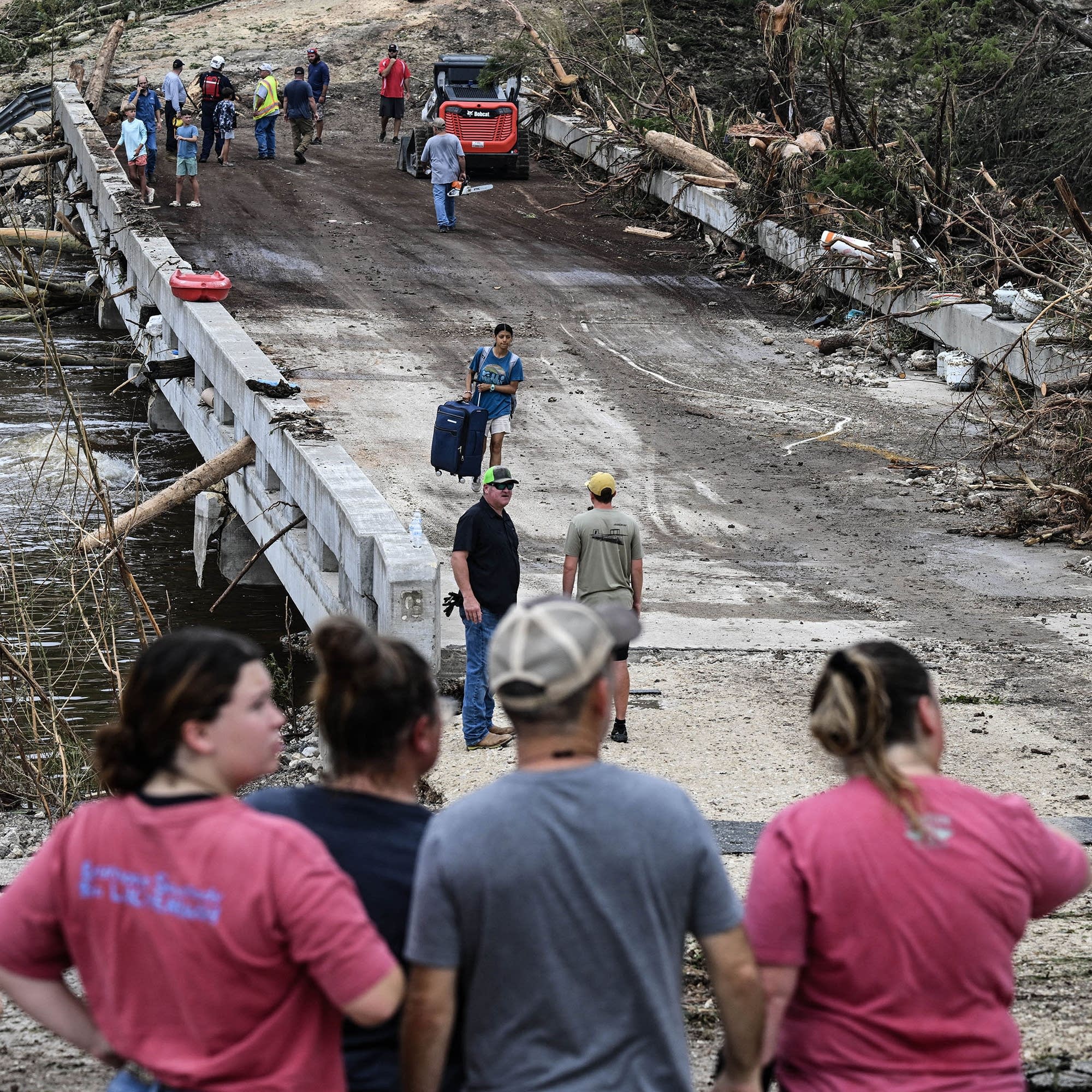
Loading summary
Transcript35 lines
- [00:00]
Podcast Host
This Marketplace podcast is supported by Palo Alto Networks. Listen to threatvector, the Palo Alto Networks podcast, for in depth discussions with industry leaders and experts providing crucial insights for security decision makers. Whether you're looking to stay ahead of the curve with innovative solutions or understand the evolving cybersecurity landscape, ThreatVector equips you with the knowledge needed to safeguard your organization. Tune in and subscribe to threatvector wherever you get your podcasts.
- [00:29]
LHH Representative
Recruitment for many, it could be cold, functional, lacking that personal touch. But LHH believes it should be more by connecting people to opportunity, not just skills to roles. Beautiful things happen at work. A leader inspires, a team grows. The people you hire develop into the people you admire, making 90,000 hours of work in a lifetime. Time well spent Recruitment development career transition LHH a beautiful working world discover recruitment solutions@lhh.com beautiful a disaster focuses attention on.
- [01:08]
David Brancaccio
Investments in public infrastructure I'm David Brancaccio in Los Angeles. More now on flood warning systems with more than 100 people dead and 170 still missing in Texas, experts say the world can expect more catastrophic flooding at a time of human made climate change. And there's evidence shortages at the National Weather Service may have made it harder to coordinate a response when the Guadalupe river rose more than 30ft in five hours. And although there had been flooding before, there was no on the ground alarm system in place, Houston Public Media's Andrew Schneider reports.
- [01:44]
Legislative Analyst
During Texas regular legislative session, which ended in June, lawmakers considered but failed to pass a bill that would have invested at least half a billion dollars to improve emergency communications infrastructure. That would have included outdoor sirens similar to those used to warn people in parts of Texas of approaching tornadoes. Governor Greg Abbott says lawmakers will take the issue up again in a special session of the Legislature.
- [02:09]
David Brancaccio
The way to respond to like what happened in Kerrville is going to be a topic for the special session to address.
- [02:16]
Legislative Analyst
Lt. Gov. Dan Patrick, who leads the Texas Senate, says he's ready to support efforts to improve emergency communications infrastructure. Speaking on Fox News, he calls for flood warning sirens along the Guadalupe river.
- [02:29]
David Brancaccio
So if the city can't afford it, then the state will step up and we need to have these in place by the next summer. When the next season comes, this could.
- [02:40]
Legislative Analyst
Be an important shift. The emergency communications bill previously passed the Texas House but failed in the Senate, possibly because of the half billion dollar price tag. That's on top of money lawmakers had already spent on other disaster response equipment. Still, Kerry Stevens, an expert on emergency communications at the University of Texas at Austin warns against relying heavily on one fix.
- [03:05]
Emergency Management Expert
Technology is not necessarily the only thing we need to solve the problem.
- [03:09]
Legislative Analyst
Stevens says that notifying people in rural areas of oncoming disasters like flash floods is often a very costly and labor intensive process.
- [03:18]
Emergency Management Expert
There are ways to communicate that reach a lot of people at once. Some emergency management coordinators directly contact major businesses and organizations who take care of others with emergency updates. Those organizations can reach a lot of people and they're often trusted.
- [03:34]
Legislative Analyst
It's worth noting that while Texas and other states are considering upgrades to their emergency communications infrastructure, President Donald Trump said last month that he wants to phase out the Federal Emergency Management Agency and shift its responsibilities to the states. In Houston, I'm Andrew Schneider for Marketplace Stock Index.
- [03:54]
David Brancaccio
Futures are up in the one to two tenths of a percent range now, and the price of the essential metal copper hit an all time high in the last day, the biggest spike in 36 years. This with the Trump administration raising the tax to 50% on copper imports. If you think all your saved pennies can really help with your college fund, think again. Pennies turned out are 97.5% zinc.
- [04:38]
Podcast Host
This marketplace podcast is supported by Palo Alto Networks. Listen to Threat Vector, the Palo Alto Networks podcast, for in depth discussions with industry leaders and experts providing crucial insights for security decision makers. Whether you're looking to stay ahead of the curve with innovative solutions or understand the evolving cybersecurity landscape, ThreatVector equips you with the knowledge needed to safeguard your organization. Tune in and subscribe to threatvector wherever you get your podcasts.
- [05:07]
Dell Representative
This Marketplace podcast is supported by Dell. The Black Friday in July event from Dell Technologies is here. There's never been a better time to upgrade. Now's your chance for great offers on popular trusted technology. You'll also discover huge deals on exciting new AI ready laptops like the Dell 14 plus, featuring Intel Core Ultra processors starting at $699.99. Don't forget to explore big savings on top electronics and accessories. Plus enjoy fast free shipping and other exclusive benefits like Dell Rewards Premium support and DellCare Premium, which provides 24. 7 support with no hidden fees or deductibles. Upgrade for a limited time only@dell.com deals that's Dell.com deals.
- [05:58]
David Brancaccio
Six months since the start of one of the massive Southern California wildfires. Let's return again to rebuilding with wildfire and climate change in mind. Statistics show newer houses are less likely to burn in wildfires and among the more resistant options framing not with wood studs but with steel. Yet at A time so many are planning to rebuild. Steel prices are up. With the US tariff now at 50%. All metal framing in Orange County, California plans and fabricates the steel sections to build houses. Michael Ferlaino as founder joins us now. Welcome.
- [06:32]
Michael Ferlano
Ah, thank you very much. How are you doing today?
- [06:34]
David Brancaccio
I'm alright. One way to take some of the flammable wooden sticks out of rebuilding after a fire is to use what you use. Steel. Mr. Ferlane, are you seeing interest in using steel?
- [06:46]
Michael Ferlano
As soon as the fire started, we started having people reach out to us. And in the very beginning it was primarily structural engineers and architects. And it was due to the homeowners contacting their development teams and looking for a faster fireproof solution.
- [07:01]
David Brancaccio
But you're seeing plans now come across your desk for rebuilding residences, single family residences, using steel.
- [07:08]
Michael Ferlano
Oh, absolutely. All steel framing and all completely panelized.
- [07:12]
David Brancaccio
So there's a prefab play here. But there's also a fire resistance aspect to this. Right. Nothing's fireproof, but steel can be more fire resistant.
- [07:23]
Michael Ferlano
The studs themselves don't really have a flash point. So the only way that you start to see the fires actually expand is if the exterior of the house is wrapped in something that's flammable or you end up getting so much heat through the studs that you hit the flash point of the materials on the inside. But the studs themselves, yeah, no, they're completely fire resistant.
- [07:44]
David Brancaccio
Let's talk a little bit about the economics of this. First of all, before the wildfires six months ago, was it cost effective to build a house using this steel approach?
- [07:55]
Michael Ferlano
Traditionally, steel framing is more expensive than timber framing on average. In Orange county, it has a tendency to land all in at right around $75 a square foot, where wood traditionally is going to land right around $65 a square foot. The thing that separates us from those numbers is our approach. Because we're manufacturing every stud for where it goes. We don't have waste or droppage. So in traditional framing, you would average anywhere between 10 and 15% material loss just because sticks are coming in a 10 foot section. The ceiling height is eight feet. So we're cutting two feet off of every piece. Where for us we're starting with this 5,000 foot long coil and then that's continuously running through the machines and, and that's what's giving us every stud. So because of that we're at a sub 1% loss, which makes it so we're hyper competitive with wood.
- [08:45]
David Brancaccio
It's fascinating, but even now with all this demand from the fires. And early last month, the import tax on steel doubled to 50%.
- [08:55]
Michael Ferlano
Oh, yeah, no, we've definitely been feeling that. We had our last steel order came in in December before the fire started, and we were paying right around 62 to 68 cents a pound, depending on what size we were bringing in and what the quantity was. We're right now paying 91 cents a pound. Fortunately for us, the cost of steel is about 30% of the actual total pricing. So we've seen about a 40% increase in a 30% line item. So it hasn't been too bad.
- [09:26]
David Brancaccio
Michael Ferlano, founder of All Metal Framing in Orange County, California, thank you very much.
- [09:32]
Michael Ferlano
Absolutely. Thank you so much. I really appreciate it.
- [09:36]
David Brancaccio
And in Los Angeles, I'm David Brancaccio. Marketplace Morning report from APM American Public Media.
- [09:44]
Podcast Host
This Old House Radio hour is your new home improvement podcast. In each episode, we answer your questions. Whether you're fixing a leak, refinishing a floor, or restoring a century old house, our roster of experts have the answers to help you get the job done right.
- [09:59]
Emergency Management Expert
I never thought I'd be saying this, a bunch of people I'm just meeting, but I have a stinky house.
- [10:04]
Legislative Analyst
Tell us more.
- [10:05]
Michael Ferlano
I want the details.
- [10:07]
Podcast Host
Find this Old House Radio Hour in your favorite podcast. Applause.