Loading summary
Transcript29 lines
- [00:00]
A
This Marketplace podcast is supported by Yubico, makers of the Yubikey. Protecting the personal and business applications and accounts that people and companies rely on every day. The Yubikey stops AI powered cyber attacks, online identity scams, fraud and account takeovers. It provides powerful protection and it's easy to use. Simply tap your Yubikey to log in securely to everything from from email to finance to productivity applications across all of your devices. Yubikey still undefeated. The original PassKey.
- [00:36]
B
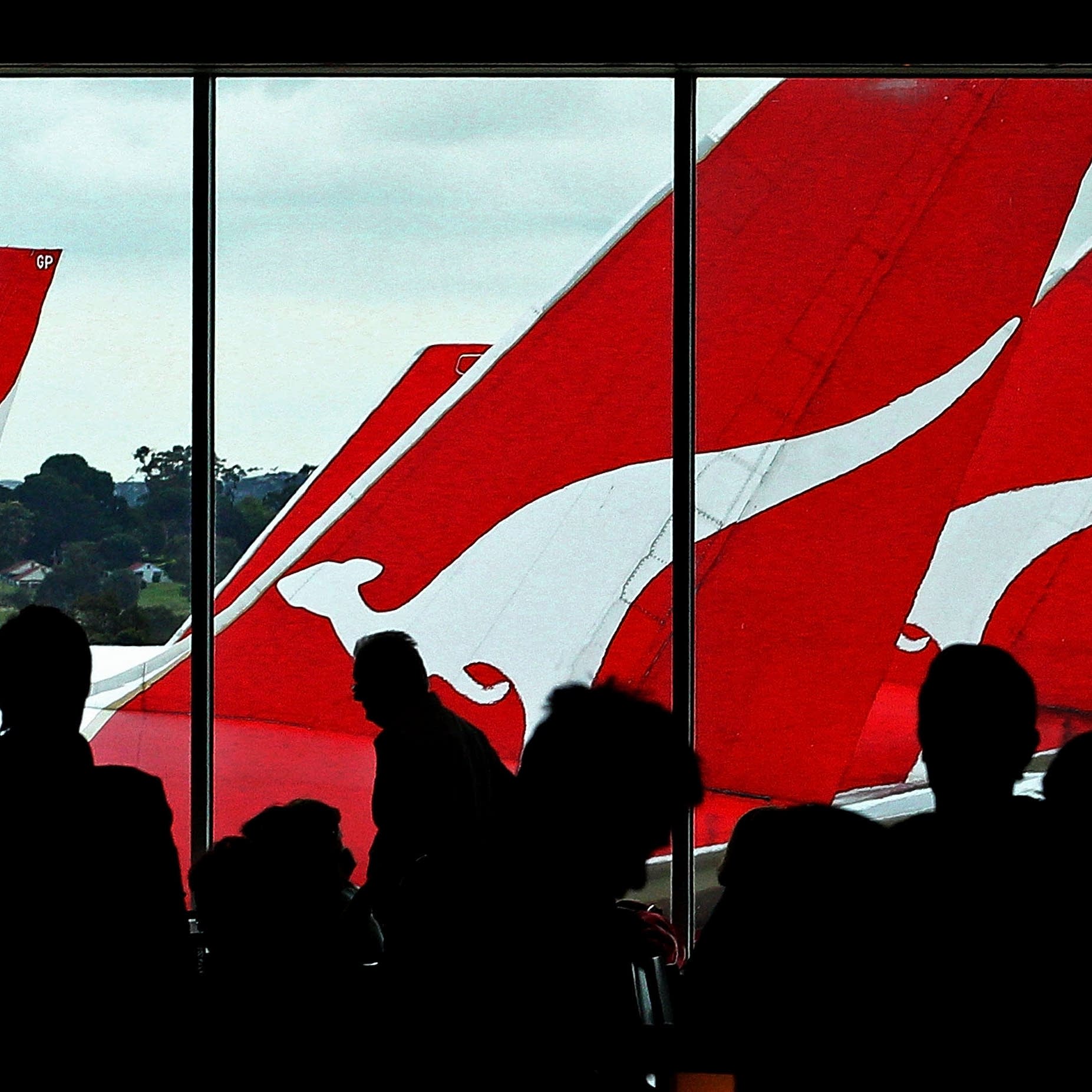
More@ubico.com A major airline has been hit with a record fine for firing staff during the pandemic. Hello, this is the Marketplace Morning Report and we're live from the BBC World Service. I'm Liana Byrne. Good morning. So let's start start down under where a court in Australia has handed national airline Qantas a record fine, just under US$59 million for illegally laying off 1,800 ground staff during the COVID pandemic. The BBC's film Mercer reports from Sydney.
- [01:07]
C
The decision to dismiss hundreds of baggage handlers and ground staff has cost Qantas a small fortune. The $58 million fine imposed by Australia's federal court comes on top of $78 million the airline must pay in compensation to workers. The company had apologized for the mass sackings during the pandemic, but a judge said he didn't believe its contrition was genuine. Lawyers who represented Australia's Transport Workers Union said the multimillion dollar fine was the darkest day in Qantas 105 year history.
- [01:45]
B
Bill Mercer reporting to India now, where the government is rolling out a series of tax reforms to boost the economy as it grapples with the fallout from President Trump's trade war. The BBC's Divina Gupta is in Delhi. Hi, Davina.
- [01:58]
D
Hi, Liana. How are you?
- [01:59]
B
Good. Davina, tell us, what are these tax reforms that are going to be coming in?
- [02:05]
D
So we are looking at indirect taxes, Liana. So these are taxes that one would pay while purchasing daily used goods, for example, groceries or even luxury items like cars and current. Currently, India has four major tax slabs. So different goods fall into the category of say a 5% tax, a 12% tax, 18% or 28%, depending on what you're buying. Now, what the government is saying is that we want to reduce these tax slabs. We just want to have two slabs which is at 5% and 18%. And for luxury goods, we'll have a 40% tax slab. So this makes it simple, simpler in a way for them to also put different goods in different categories and different services in different categories. But more importantly, it's going to reduce costs of a lot of items. And the Indian government is hoping that because of that, it will incentivize people to spend more.
- [03:01]
B
And this is all in response to U.S. tariffs. So, Davina, do we think this is going to work?
- [03:06]
D
The Indian government is hoping by giving this kind of extra incentive, it can help these businesses to create a market domestically. How much will it help is the big question, because there are also critics who have said it's not actually addressing the issue of structural reforms which is required in India, like addressing unemployment so that people have more wages and they can spend more. And also exporters bank largely on markets to generate billions of dollars. And this might not be the right answer for now.
- [03:39]
B
And we'll have to check back in with you, Davina, to see how that goes. Okay? The BBC's Divina Gupta, thank you so much for joining us on Marketplace.
- [03:46]
D
Thank you, Liana.
- [03:47]
B
All right, let's do the numbers. India's main stock index, the BSC 30, jumped more than 1% after the government proposed those major tax reforms. And generally global markets were mixed today as investors looked ahead to a big week for US Interest rate policy. With Europe flat, Asia hitting fresh highs and and oil up around 7/10 of a percent, the root vegetable cassava is one of the world's most versatile crops and a critical source of food security. Global demand is rising fast. Nigeria is the world's largest producer, but exports are tiny. The country is even importing cassava that competes with the indigenous crop. The BBC's Laura Hytengins reports.
- [04:29]
E
This is Peckham, Southeast London, also known as Little Lagos for its big British Nigerian community. I'm heading to BIM's African Food Store, a local institution. Five, six, seven different cassava products. Cassava can be processed into a wide range of products, including starch and a dough called fufu, as well as ethanol and even glue.
- [04:58]
F
Thank you so much.
- [04:59]
E
Lovely to meet you. Thank you. Professor Latif Sani is a world leading expert on the crop in sub Saharan.
- [05:06]
F
Africa developing countries, lot of people eat cassava.
- [05:10]
E
If you took cassava away, how would it affect population?
- [05:15]
F
I must tell you, if you take cassava away, it's like a third world.
- [05:20]
E
War, World War Three in terms of.
- [05:23]
F
Survival, it's going to be tough.
- [05:25]
E
Defending against this kind of devastation is Nigeria's army of smallholder farmers. Mrs. Kemi uses a machete on her cassava farm in Ogun State, southwestern Nigeria.
- [05:38]
F
We labor a lot, even at times we might not be able to complete the planting because of the stress and the hard labor. If we use machine planting work, agriculture will be very, very easy. But I don't have enough money to afford it because we cannot apply our whole capital on machine alone.
- [05:58]
E
The global cassava export industry is worth about $3.5 billion, but Nigeria accounts for only about $1 million of that. Dr. Mustafa Bacano, head of the Nigeria Cassava Growers association, wants to turn things around.
- [06:15]
F
We first need to know who are the farmers. By the time we're able to identify their farmlands, we are able to know what exactly is it they need and what exactly is the challenges.
- [06:24]
E
His plan is to organize all smallholder farmers into clusters through which they can access bank loans to buy processing machinery, which they can later pay off due to their increased yields. But aggregating millions of farmers is a gargantuan task. Professor Latif Sani is optimistic it can.
- [06:43]
F
Be done if everybody work together, are assured that they will have opportunity of making more money from cassava and enhancing their livelihood.
- [06:53]
E
The potential of cassava isn't in dispute. If successfully harnessed, it could transform the Nigerian economy. I'm the BBC's Laura Heightingens for Marketplace.
- [07:04]
B
And I'm Lianna Byrne with the Marketplace morning report from the BBC World Service.
- [07:17]
G
And now a next level moment from AT&T business. Say you've sent out a gigantic shipment of pillows and they need to be there in time for International Sleep day. You've got AT and T5G so you're fully confident, but the vendor isn't responding. And International Sleep Day is tomorrow. Luckily, AT&T 5G lets you deal with any issues with ease. So the pillows will get delivered and everyone can sleep soundly, especially you. AT&T 5G requires a compatible plan and device. Coverage not available everywhere. Learn more@att.com 5G Network.