Loading summary
Transcript30 lines
- [00:00]
VRBO Advertiser
Imagine being on a vacation for a very long time. Now imagine saving money nightly while you do it. Sounds pretty great, right? With vrbo's long stay discounts, you can stay longer and save more. Our customers save an average of 10% when they book select properties for a week or longer. Just in case you needed another reason to extend that vacation book the perfect summer getaway today with VRBO Private Vacation Rentals. Your future self will thank you later.
- [00:32]
David Brancaccio
The word from the Wyoming Mountains on Interest Rates I'm David Brancaccio in Los Angeles. It is like a summertime super bowl for people focused on the economy. The big meeting of central bankers kicks off today in Jackson Hole, Wyoming. Federal Reserve chair Jerome Powell is set to speak tomorrow and will be watching for hints about borrowing jobs and inflation marketplaces. Mitchell Hartman has this look at one tricky part of that equation, the cost of rent.
- [00:59]
Mitchell Hartman
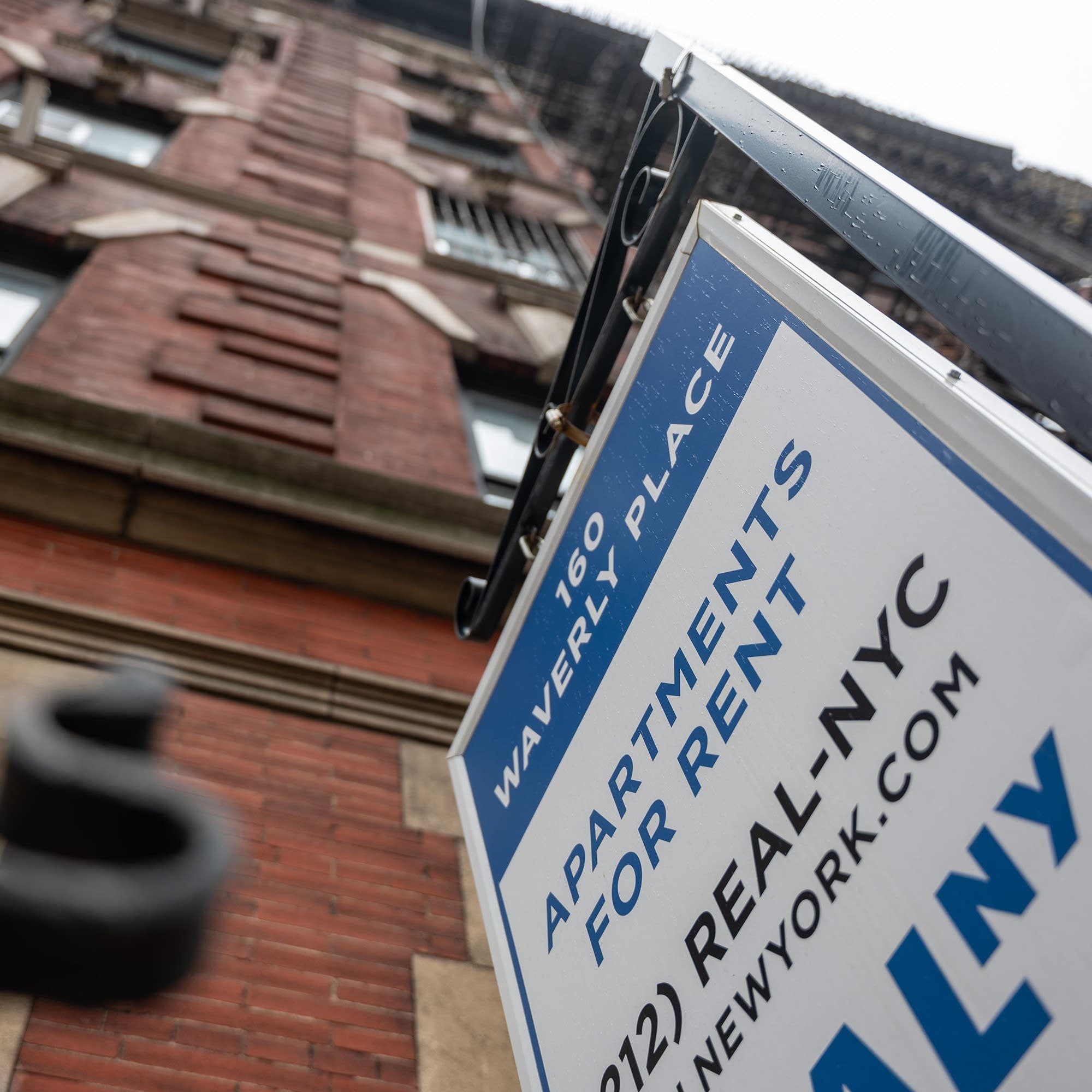
When prices started shooting up in the pandemic, rents followed suit, peaking at nearly 9% inflation year over year. Rent increases have moderated since then, but less than prices overall. Higher interest rates should have suppressed demand for goods and services, keeping a lid on rent increases. Columbia Business School finance professor Boaz Abramson went looking for a reason rent inflation was so stubbornly high. And here's what he Higher interest rates.
- [01:29]
David Brancaccio
Get reflected in higher mortgage costs and.
- [01:32]
Mitchell Hartman
That prevents people from becoming homeowners. Those folks stay in rental housing competing with other renters, low income households.
- [01:41]
David Brancaccio
They are impacted by the fact that.
- [01:43]
Mitchell Hartman
First time buyers remain in the rental.
- [01:45]
David Brancaccio
Market and overall increased demand.
- [01:47]
Mitchell Hartman
Bottom line, higher interest rates pushed rents higher, but now interest rates have dropped.
- [01:54]
David Brancaccio
A bit and we do see that rent inflation has somewhat dropped.
- [01:59]
Mitchell Hartman
Online housing site Zumper tracks rents currently being asked in the market and as of July, says Tongi Luluwarn, its national rental index showed year over year, both.
- [02:10]
David Brancaccio
One and two bed rents were down, the first time since February 2016 we've been flat or declining across the board.
- [02:18]
Mitchell Hartman
And he says the fall in average nationwide rents accelerated this month. I'm Mitchell Hartman for Marketplace.
- [02:25]
David Brancaccio
We're also covering President Trump's latest salvo aimed at a member of the Federal Reserve. He's called for Fed Governor Lisa Cook to resign, pointing to something about a mortgage she once took out. Cook has now responded, quote, I have no intention of being bullied to step down from my position because of some questions raised in a tweet. She said she's gonna gather accurate information on her financial history to answer any legit more in the Morning Report podcast feed if you miss it on the air.
- [03:07]
Kyle Rysdal
And now A next level moment from ATT Business say you've sent out a gigantic shipment of pillows and they need to be there in time for International Sleep day. You've got AT and T5G so you're fully confident, but the vendor isn't responding and International Sleep Day is tomorrow. Luckily, AT&AT and T5G lets you deal with any issues with ease, so the pillows will get delivered and everyone can sleep soundly, especially you. AT&T 5G requires a compatible plan and device coverage not available everywhere. Learn more@att.com 5G Network.
- [03:37]
VRBO Advertiser
Imagine being on a vacation for a very long time. Now imagine saving money nightly while you do it. Sounds pretty great, right? With vrbo's long stay discounts, you can stay longer and save more. Our customers save an average of 10% when they book select properties for a week or longer. Just in case you needed another reason to extend that vacation book the perfect Summer Getaway today with VRBO Private Vacation Rentals. Your future self will thank you later.
- [04:09]
David Brancaccio
Given Crypto Friendly Washington, the biggest of US banks are considering ways you might be able to put a crypto contraption called stablecoin in next to your checking or savings account. But does the word stable mean stable? As part of our ongoing coverage of the crypto shift emerging, let's turn to Stacey Marie Ishmael, Executive Editor of Crypto and Digital Payments at Bloomberg News. Great to have you back.
- [04:33]
Stacey Marie Ishmael
A pleasure to be here.
- [04:34]
David Brancaccio
So stablecoin. It's a genre of cryptocurrency that's hard pegged to the dollar. Not supposed to fluctuate other than sounding crypto cool, this is gonna be a hard question. Stacey Marie does stablecoin do anything for anyone?
- [04:51]
Stacey Marie Ishmael
Well, the clue is in what you said about it being pegged to the US dollar. A lot of other cryptocurrencies, famously Bitcoin for example, move a lot 5%, 8%, 10% in a day. Stablecoins are designed to stay steady at a given level. And for people who for example want to avoid currency fluctuations or who want to have access to the US dollar, this is really attractive. So right now I would say the most popular consumer facing real world use case is things like rem. So for folks who want to send money overseas, that's a big use case for stablecoins right now.
- [05:29]
David Brancaccio
Well, let me just put it another way. If you want to buy an egg salad sandwich, you could use four dollar bills. But why stablecoins at all? Let's say you wanted to do a remittance from a foreign country just use a dollar.
- [05:41]
Stacey Marie Ishmael
Well, not everybody has easy access to dollars. And the argument made by some of the folks that are trying to, I would say, innovate within stablecoins and remittances is one that the fees are a lot lower if you do it via stablecoin, that it's increasingly integrated into popular apps. So in the US for example, PayPal has its own version of a stablecoin and it's pretty quick. In some cases it's instantaneous, whereas for more traditional forms of remittances, you can be looking at like, you know, 48 hours to up to five days in some cases.
- [06:15]
David Brancaccio
Now, you and I are talking at a moment when the biggest banks in the universe, including bank of America, Citigroup, among others, based on changes brought about by the crypto friendly Trump administration, are thinking about allowing stablecoin into regular accounts. Like part of your regular bank account might include stablecoin.
- [06:36]
Stacey Marie Ishmael
The keyword there is might. Nobody is doing that at the moment, but it's certainly one of the things being discussed because again, the idea, you know, being pitched by these crypto companies is that they want this to be another accessible form of money in the same way that the dollar is. And for that to actually be true, you do need a way in the like, retail branch banking or online banking context to have this show up next to your accounts. And there is quite a lot of lobbying happening by various, you know, bank lobby groups to help make this possible.
- [07:10]
David Brancaccio
We should be clear. Do you imagine a universe in the United States where federal deposit insur would cover a crypto account?
- [07:19]
Stacey Marie Ishmael
That is one of the more, I would say, contentious discussions now. I mean, we are actively in a regulatory environment in which you're getting the feedback that, you know, crypto should be showing up in people's retirement accounts. And it's something that everybody should be exposed to and investing in, but the regulators themselves are, you know, looking at the risks because this is unlike the US Dollar general, generally a more risky asset. And so saying that the US Government will bail you out if something terrible happens to your crypto account is for a lot of people, something they're still trying to get their heads around about how that would work mechanically.
- [07:56]
David Brancaccio
Stacey Marie Ishmael is executive editor of Crypto and Digital Payments at Bloomberg News. Thank you so much for the briefing.
- [08:02]
Stacey Marie Ishmael
Thanks for having me.
- [08:04]
David Brancaccio
And in Los Angeles, I'm David Brancaccio. This is the Marketplace Morning Report from APM American Public Media.
- [08:14]
Kyle Rysdal
Hey everybody, I'm Kyle Rysdal, the host of Marketplace. I'M going to join Amy Scott on September 9th. She's the host of How We Survive and also science writer Elizabeth Kolber for a conversation about the economic consequences of our climate crisis. We're going to break down how the acceleration of climate change is going to disrupt jobs and entire industries, even our daily lives. But it's not all doom and gloom. We're also going to dive into the solutions that are giving us hope right now. Thanks so much to Odoo for sponsoring this free webinar, and you can sign up today@marketplace.org climate.