Loading summary
Transcript27 lines
- [00:00]
Commercial Narrator
Skipping cold and flu season is Plan A, but if you do get sick, be prepared for Plan B with Kleenex lotion tissues. Kleenex lotion tissues moisturize skin, helping prevent the added discomfort of red, irritated skin on top of your cold and flu symptoms. So this cold and flu season, grab Kleenex lotion tissues. Visit kleenex.com to learn more, and buy now for whatever happens next. Grab Kleenex.
- [00:24]
Marketplace Reporter Henry Epp
Drafty Windows Sky High Energy Bills Tired of the hassle of constant repairs? This holiday season? Renewal by Andersen helps you slay the savings. Buy one window or door and get one 40% off, plus take $200 off your entire purchase with a minimum of four. And with special financing available, replacing those old, inefficient windows has never been easier. Don't let drafty, worn out windows crash your holiday cheer. Visit renewalbyanderson.com today to schedule your free consultation.
- [00:55]
Marketplace Host Novasafo
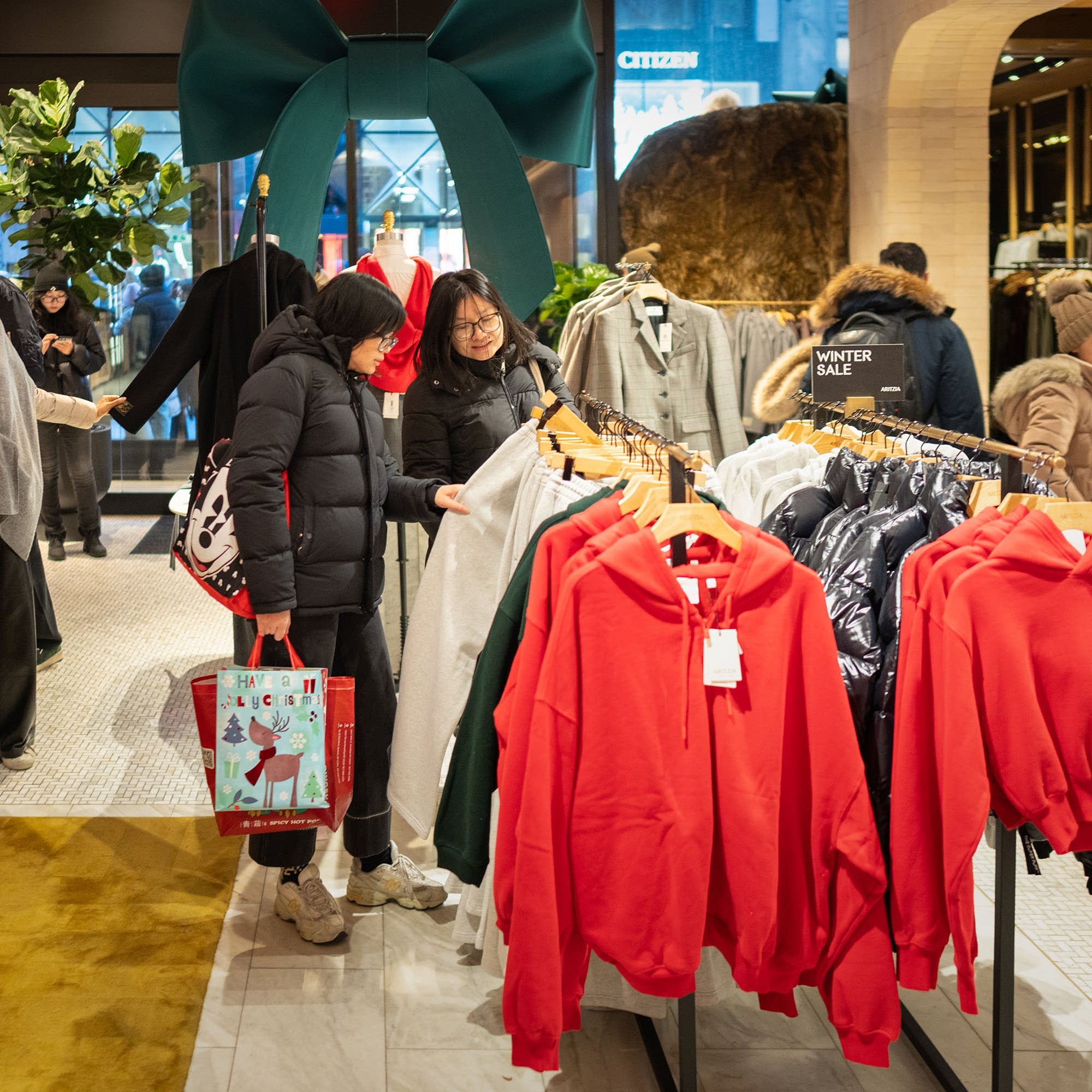
If you're heading out to return some Christmas gifts, stay tuned For Marketplace, I'm novasafo and for Brancaccio. Now that Christmas presents are unwrapped, many of you and you know who you are are going to be heading to stores to return gifts and get what you actually want. But increasingly, retailers are charging for those returns. According to the National Retail Federation, 72% will do so this holiday. Marketplace's Henry Epp explains why.
- [01:22]
Marketplace Reporter Henry Epp
With online shopping, we've gotten pretty used to the idea that you can return stuff for free, and because of that, a lot of shoppers do this thing called bracketing, says Edgar Dworski, founder of ConsumerWorld.org they will get, let's say, pants three different sizes and colors of pants. Not knowing which one they're going to want to keep, they'll keep one item and return the other two. Nice for the customer, but for the retailer, those returns add up. The postage costs a lot of money. The processing of those returns costs money. So you begin to see some companies saying enough. And they're slapping a fee on returns, especially returns by mail, Dworski says. The risk for companies is that customers don't like being charged fees, says David Sobey, CEO of the logistics company Happy Returns. It may turn shoppers off altogether and have them say, gosh, you know, I'm just not willing to buy from this merchant anymore. One way around this Returning things to a physical store rather than through the mail. That's usually free, sobey says. It's also cheaper for the retailer, and shoppers might be tempted to buy something else while they're in the store. I'm Henry Epp for Marketplace.
- [02:33]
Marketplace Host Novasafo
Precious metals are having a moment. New record spot prices today for gold, silver and platinum. This is in part because investors are looking ahead to next year and possible interest rate moves at the Federal Reserve. Uncertainty also tends to lift gold prices, which are on track for their biggest annual increase since 1979. A couple of months ago, more than 5 million shoppers embraced the We Ain't Buying it campaign. That's a boycott of three major retailers, Amazon, Home Depot and Target. Usually when we talk boycotts, the focus is on their effect on a company's bottom line. But there's also an impact on shoppers. Rima Krais, host of Marketplaces podcast this is Uncomfortable, takes a look at that aspect of the story.
- [03:16]
Rima Krais
When I walked the streets of Portland, Oregon, asking people about boycotts, most people mentioned at least one company they've been trying to avoid. McDonald's, Target, pretty good about keeping off.
- [03:26]
Marketplace Host Novasafo
Amazon, Chick Fil A and Hobby Lobby. I'm definitely avoiding Starbucks.
- [03:30]
Rima Krais
Why are you boycotting these things? Because I don't like the way that they use their money to influence our politics.
- [03:37]
Suyash Pazi
I don't support their business practices because they're expensive.
- [03:41]
Rima Krais
But I also heard people say, I want to boycott, but sometimes I feel like if only I'm contributing to it.
- [03:49]
Suyash Pazi
Then what change will happen? But I guess that's a sheep mentality.
- [03:54]
Rima Krais
Financial therapist Lindsey Brian Podvin says she's been hearing similar things from her clients lately. More lots of second guessing.
- [04:01]
Lindsey Brian Podvin
This anxiety around how do I boycott the right way, how do I do it right? How do I not mess up?
- [04:08]
Rima Krais
Brian Podvin says consumer boycotts can tap into our underlying anxieties.
- [04:12]
Lindsey Brian Podvin
This fear of doing it wrong is not just a boycott thing, it is a personal finance thing.
- [04:20]
Rima Krais
Boycotts can intensify that feeling of self doubt, she says, because they turn everyday purchases into moral decisions, which can lead to decision fatigue.
- [04:29]
Lindsey Brian Podvin
Like, what do I do if the only diapers I can buy that don't give my baby a rash come from Target? And I'm trying to avoid it, but I can't put my child in something that they have a reaction to, Brian.
- [04:43]
Rima Krais
Podvin tells her clients. If it's important to you, just do what you can with the time, money and access that you have. Where people tend to get stuck, she says, is when guilt turns into shame.
- [04:53]
Lindsey Brian Podvin
Guilt and shame are different. Guilt is external. I did something bad. I made a mistake. Shame is internal. I'm bad. I'm not good at this. I don't understand, she says.
- [05:05]
Rima Krais
Part of what makes boycotts so stressful is that they ask individuals to carry responsibility for solving problems that are actually systemic. But she also says participating in them can have real psychological upsides.
- [05:16]
Lindsey Brian Podvin
When you have the opportunity to move your dollars in a way that feels better to you and spend and save and invest in alignment with your values general, then you can just feel better about the way that you're using your dollars.
- [05:29]
Rima Krais
And she says it can be empowering, especially these days when so much feels out of our control. I'm Rima Reis for Marketplace.
- [05:54]
Commercial Narrator
You've got a big day, so you use unstoppable scent boosters to give your laundry non stop freshness. So no matter how long the day goes, you can't stop this power. This walk, this pose, this strut, this look, this talk. Your clothes will be so fresh you can confidently strut into that end of the day meeting like a boss. Boss, boss, boss, boss boss bosses. Let's talk business in my office. Add new Unstoppables beads to your wash for 24 hour non stop freshness so you can smell unstoppable.
- [06:23]
Marketplace Host Novasafo
This podcast is supported by Odoo. Some say Odoo business management software is like fertilizer for businesses because the simple, efficient software promotes growth. Others say Odoo is like a magic beanstalk because it scales with you and is magically affordable. And some describe Odoo's programs for manufacturing, accounting, and more as building blocks for creating a custom software suite. So Odoo is fertilizer magic beanstalk building blocks for business Odoo exactly what businesses need. Sign up@odoo.com that's o d o o.com Business leaders often ingratiate themselves with those in power in Washington in order to get a better operating environment. But in the first year of Trump 2.0, we saw leaders in the tech industry go out of their way to align themselves with the new administration. Suyash Pazi is research analyst and editor at the nonprofit Human Rights Research Center. He spoke about the phenomenon with our sister program Marketplace Tech.
- [07:19]
Suyash Pazi
I think the broad consensus is that the tech leaders sort of need to be more agreeable to the government, to the federal government than ever than they have been in the past. Even a couple of months ago, you saw people like Bill Gates having dinner and other tech leaders having dinner with Trump. I believe that was mostly because he wanted to sort of push for some form of rollback on the US Aid cuts. So I think a lot of tech leaders, I think, recognize the only way they can get something out of the administration, it seems like at the moment is to placate the administration. I think for AI companies, though, there has been an immediate benefit. You can see sort of greater deregulation. But the broader culture, I think, is more about agreeing with what the administration is saying more so than administrations in the past.
- [08:23]
Marketplace Host Novasafo
That was Suyesh Paze of the Human Rights Research Center. You can find the full conversation with him@marketplacetech.org I'm Novosafo with the Marketplace Morning Report. From apm American Public Media.
- [08:41]
Commercial Narrator
You know that big bargain detergent jug is 80% water, right? It doesn't clean as well. 80% water. I thought I was getting a better deal because it's so big. If you want a better clean, tide pods are only 12% water. The rest is pure, concentrated cleaning ingredients. Oh, let me make an announcement. Attention shoppers, if you want a real deal, Tronk Tide pods, stop paying for watered down detergents. Pay for clean. If it's got to be clean, it's got to be tide pods. Water content based on the leading bargain liquid detergent.