← Marketplace Morning Report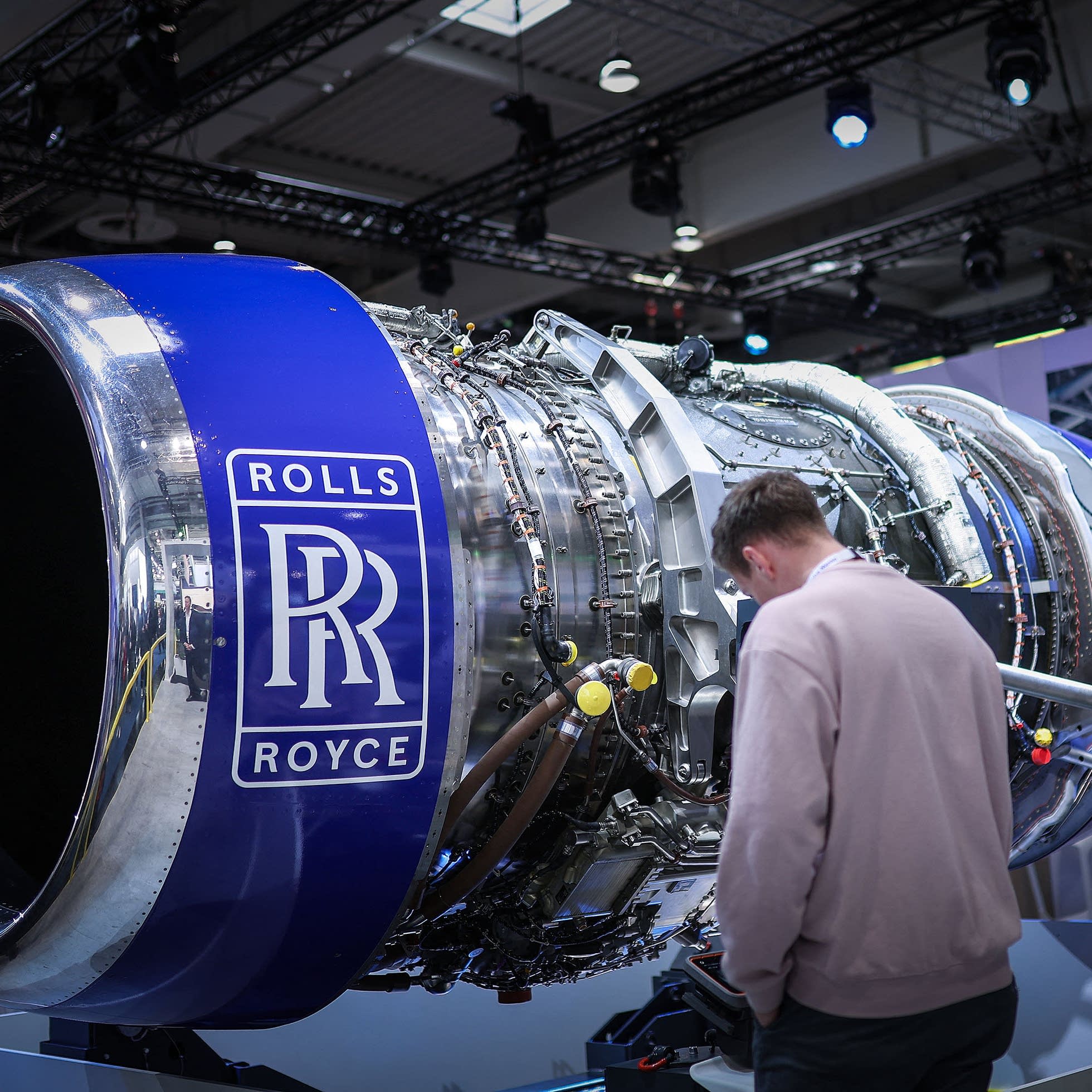
Loading summary
Transcript24 lines
- [00:02]
Nick Qureshi
Could Rolls Royce become the UK's most valuable company? Its CEO thinks so. Live from the uk, this is the Marketplace morning report from the BBC World Service. Hello, I'm Nick Qureshi in for Liana Byrne. UK engineering giant Rolls Royce first made its name in luxury cars, but after selling its motor business nearly 30 years ago, is now known for its aircraft engines and defense manufacturing. And after recovering from some difficult years, it says the ever increasing demand for AI will drive the business forward. Speaking exclusively to the B, the CEO Tuvan Ergen Bilgic said it has the potential to become the UK's highest valued company by powering artificial intelligence with its nuclear reactors. But he has ruled out Rolls Royce listing its shares. In New York, the BBC's Simon Jack has been talking to him. Hi, Simon.
- [00:48]
Simon Jack
Hi, Nick.
- [00:49]
Tuvan Ergen Bilgic
Pretty bold claim here, isn't it, from the head of Rolls Royce.
- [00:54]
Simon Jack
It's a pretty remarkable turnaround. Rolls Royce was really not in a good place about two and a half years ago. The shares are trading about for $1.30 each and now they're sort of 13 do and above. So you're talking about a thousand percent or a tenfold increase. Now one of the things that has got people excited is small modular reactors. Now Rolls Royce already provides the nuclear reactors for dozens of nuclear submarines. And the idea is you just literally drag them out of the water and stick them on land and plug them into either the grid or into AI data centers. And to fan oak. And Bilgic is pretty excited about it too.
- [01:30]
Tuvan Ergen Bilgic
There is no private company in the world with nuclear capab that we have. If we are not market leader globally, we did something wrong.
- [01:41]
So is Rolls Royce now an AI play? In a way, yes.
- [01:45]
I mean we are, but we are.
- [01:47]
Already is my point, he has got big ambitions. Ruling out though the idea of Rolls Royce seeking to list its shares in New York like the likes of Shell and AstraZeneca have considered in the search for higher valuations. Do you think he really believes his company could overtake the likes of Shell?
- [02:07]
I think he really does.
- [02:08]
Simon Jack
I think that basically the excitement about small modular reactors and their application in data centers we've talked about. And also he wants to break into the $1.6 trillion narrow bodied planes. That's their main business, selling aircraft engines. If those two things together can actually see Rolls Royce become the most economically important company in the uk and he.
- [02:33]
Tuvan Ergen Bilgic
Doesn'T think that go to the US to do it.
- [02:35]
Thank you so much for joining us on Marketplace, Simon.
- [02:38]
Simon Jack
Pleasure, Nick.
- [02:39]
Nick Qureshi
Okay, let's do Some numbers. Japan's Nikkei share index passed the 43,000 mark for the first time, driven by Wall street gains and tech stock rallies. While Brazil's president says his country will provide five and a half billion dollars to help exporters affected by steeper tariffs from the us A number of European countries have increased arms production since the Russian invasion of Ukraine and have made further commitments. Defence spending. Since President Trump returned to office, France, the world's second biggest arms exporter, has set out to double its military spending to three and a half percent of GDP by 2027. Well, now a number of civilian factories, often poorly performing ones, are being retooled to make weapons and munitions. Here's the BBC's John Laurenson.
- [03:30]
John Laurenson
In a factory in Normandy, a worker called Celine peers into a microscope.
- [03:37]
Celine
I'm controlling visually all my components one by one to see exactly where everything's been set and check the quality of my soldering. If there is a component that's not quite set right, it's me who replaces it.
- [03:54]
John Laurenson
This factory owned by the Thales company makes hand finished printed circuit boards for Rafale fighter planes, enabling them to detect an enemy, jam its radar and destroy it. This production line started up in January. Until then, the jobs of Celine and the other 300 employees at this factory were in jeopardy. The switch to military saved them. As site manager Thierry Charlot explains, historically.
- [04:19]
Thierry Charlot
This site has been producing SIM cards, telecoms, SIM cards. This industry is declining over long term and so we are now in this plant making a conversion towards this new.
- [04:34]
John Laurenson
Activity, part of which is being transferred to France from Southeast Asia. Other companies are carrying out similar conversions. Two munitions factories that went civilian have now switched back to military. For example, the owner of the second is buying a car part factory in Brittany to start Shellcase production there. Another factory owned by Renault has switched from making car dashboards to military aircraft. Calcul Renault is also planning to start drone production, although that would be in Ukraine. Capacity is rising at existing facilities too. Thales director of strategy is Philippe Querer.
- [05:13]
Philippe Querer
We have hired 9,000 people over the last three years in defence capabilities in France just to take that country. If you look to the investments for production, we have invested around 750 million euros of capex capital investments for our factories for defence in France over the last three years. And this was before any new stance in Europe about what is happening in the world and how we need to somehow rearm Europe.
- [05:49]
John Laurenson
Other companies have been doing the same. Boris Cauchet is associate director of the Silad business consultancy that advises companies in the defence sector on how to improve profitability.
- [06:01]
Boris Cauchet
So I will take three examples. The first one is the production of the Caesar cannon. It's a mobile cannon that is produced by KNDS France. The initial production rate, let's say 2023, was around 2, and now they are producing up to 12, if we take MBDA, French production of Aster missiles. In fact, they are reducing the lead time to produce one unit from 42 months to 18 months. And we can take examples of smaller companies like Tergis and Gaia, that are accelerating the tempo for the development, especially for drones.
- [06:45]
John Laurenson
Back in the Thales facility in Normandy, a second production line is due to start up at the end of the year. In Pont Audomair, France, I'm the BBC's John Lawrenceon for Marketplace.
- [06:56]
Nick Qureshi
And in the UK, I'm Nick Qureshi with the Marketplace morning Report from the BBC World Service. Thanks for listening.