← Marketplace Morning Report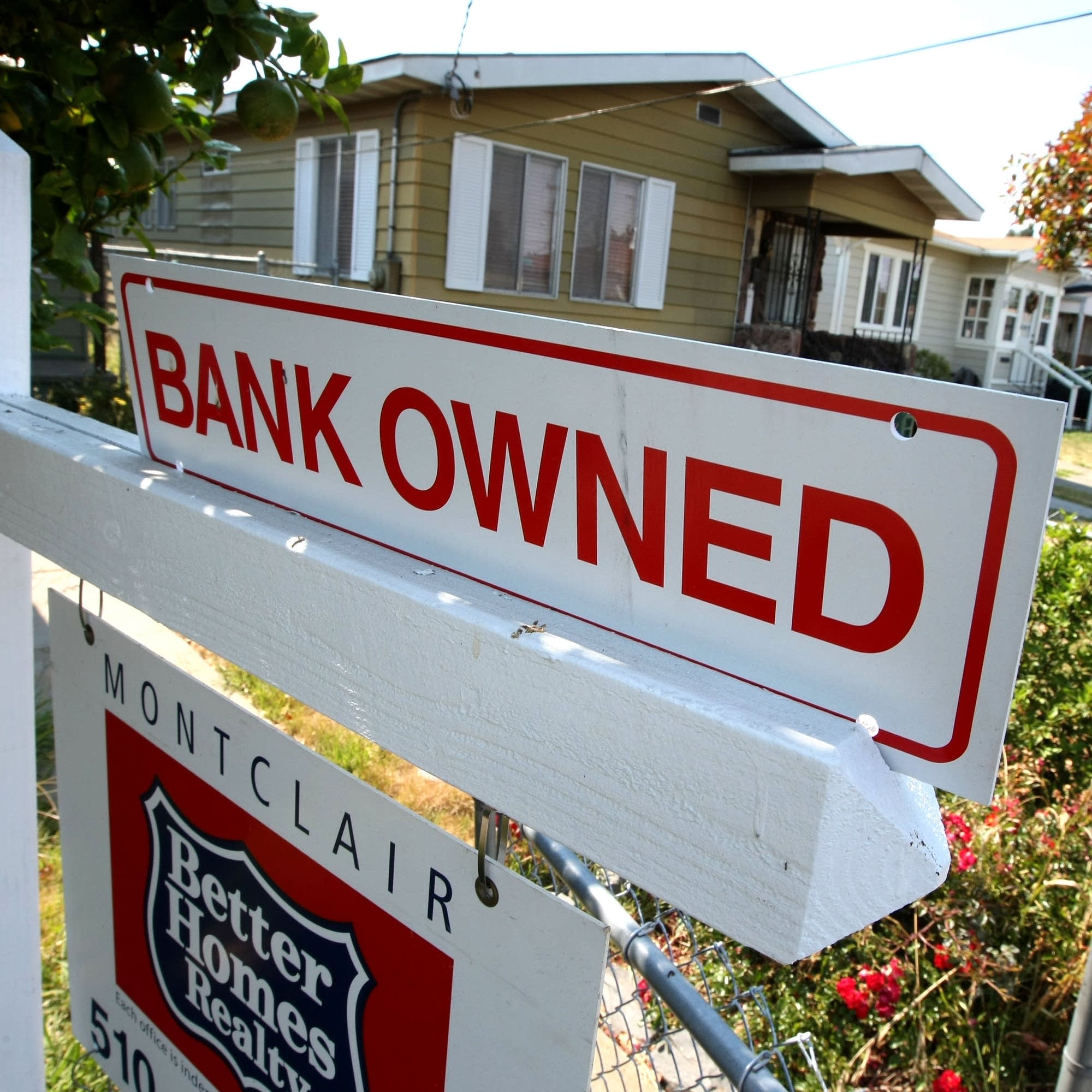
Loading summary
Transcript28 lines
- [00:00]
Base44 Representative
Picture the app you've been dreaming about. Now imagine it's real and ready to launch before today's over. Meet base 44 the fastest way to bring your ideas to life without writing a single line of code. Just describe what you want to create and watch it take shape instantly. The design comes together, the features are built, and the backend is ready to go. No technical setup, no juggling tools, no waiting on anyone. A real product, fully working, ready to share, test or from idea to live app Fast Start building today@base44.com.
- [00:35]
Michelle Polizzi
Quilted Northern.
- [00:36]
David Brancaccio
Is quilted with three cushy layers for your comfort. Keep it quilted with Quilted Northern Concern outside the cities and the burbs when it comes to this year's rapid changes to federal policy David I'm David Brancaccio in Los Angeles. First, an update on reports hundreds of South Korean workers detained in a Georgia immigration raid last week will be flown home after negotiations involving officials in Seoul and Washington. Marketplace's Nancy Marshall Genzer has the latest.
- [01:10]
Nancy Marshall Genzer
South Korea's Yonhap news agency says Seoul will charter a plane to bring the detained workers home, and South Korea's foreign minister is flying to the US today to ensure that no unexpected issues arise. About 300 South Korean employees were detained in last week's raid at a Hyundai LG Energy Solution car battery plant in Georgia. The facility is under construction. The immigration raid comes at a delicate time. Washington and Seoul are trying to finalize a trade deal they announced over the summer. Seoul had pledged billions of dollars in funding for South Korean firms to do business in the U.S. in a statement on its website, Hyundai says it's aware of the immigration enforcement action at the plant and is closely monitoring the situation. The company' says none of the detainees were directly employed by Hyundai, and it's committed to full compliance with all laws and regulations, including employment verification requirements and immigration laws. And it expects the same commitment from its partners and subcontractors. In a social media post, President Trump says foreign companies investing in the US should respect immigration laws and bring technical talent in legally, while also hiring and training American workers. I'm Nancy Marshall Genser for Marketplace.
- [02:30]
David Brancaccio
The administration's immigration czar, Tom Homan, warns the government will target other businesses for immigration raids. Meanwhile, President Trump posted last evening about making the US Welcoming to foreign businesses that want to bring in workers through legal means. Numbers mixed to start the Dow down 83 points, 2. 10%, but the S&P is up 2. 10% and the Nasdaq is up 8. 10%. Dick's Sports, Sporting Goods and Foot Locker are now one acquisition complete, $2.4 billion and one more number, $1.5 billion. That is the amount artificial intelligence company Anthropic will pay to authors for inputting their books to improve their AI models. $3,000 per book to half a million Authors is the biggest such settlement. It involves pirated works that were downloaded from sites that didn't have permission to have them under copyright law.
- [03:42]
Odoo Sponsor
This podcast is supported by Odoo. Some say Odoo business management software is like fertilizer for businesses because the simple, efficient software promotes growth. Others say Odoo is like a magic beanstalk because it scales with you and is magically affordable. And some describe Odoo's programs for manufacturing, accounting and more as building blocks for creating a custom software suite. So Odoo is fertilizer Magic Beanstalk building blocks for business Odoo exactly what businesses need sign up@odoo.com that's o d o.
- [04:11]
Base44 Representative
O.Com think about the app you've been wanting to build, sell something you've created, run your community, manage your business, or launch your next idea. Now imagine it's live before Today's over, meet base 44, the fastest way to turn any idea into a fully functional app. No code, no waiting. Just describe what you want and watch it come together. Backend design and all in minutes. A real product ready to share. From idea to live app Fast start building today@base44.com.
- [04:43]
David Brancaccio
A regular feature here Taking the Marketplace Economic Pulse Views on the economy from a wider range of perspectives today. Changing federal policy and r Rural America. Let's turn to journalist Michelle Polizzi. She grew up in rural New York State and has a new piece for the Economic Hardship Reporting Project comparing current program cuts to the trauma of the 2008 mortgage crisis. Ms. Polizzi, welcome.
- [05:09]
Michelle Polizzi
Thanks for having me out in the country.
- [05:12]
David Brancaccio
Rural areas, what are you seeing right now in terms of economic security and insecurity?
- [05:19]
Michelle Polizzi
Recent cuts to programs like SNAP and Medicaid really make it harder for rural Americans to get by day to day. So I think there's a lot of uncertainty about what's to come. With people worried about are they now going to have to pay for a life saving medication out of pocket? Do they have a large family and their grocery bill is going to be a lot higher? This leaves less money each month to pay for other things, important things like rent and mortgages. So although SNAP and Medicaid are not housing specific policies, I believe their cuts really exacerbate rural housing securities in more hidden ways.
- [05:56]
David Brancaccio
So a connection between a safety net program to give people medical care and what happens with their ability to put a roof over their heads?
- [06:08]
Michelle Polizzi
Yes, exactly. And there were some proposed changes in the 2026 budget also that threatened housing directly. So. So programs that provide loans to low income people, like the Section 502 lending program, which is administered by the USDA to promote economic prosperity in rural areas. This is one of the oldest low income housing programs in the United States, and it's helped more than 2 million rural people become homeowners. For the majority of those families, Section 502 was their only available path to home ownership. The Senate has rejected the majority of these cuts in their budget revision, but ultimately Congress will decide when the budget is finalized by October 1st.
- [06:50]
David Brancaccio
Is what you're talking about about stress in rural America something that is projected? It's policy experts worrying about. People are going to start feeling this. Are you talking to people who are worried about it currently?
- [07:03]
Michelle Polizzi
I think both, I think, speaking from personal experience. You know, my family lost their home to foreclosure in 2009 during the Great Recession in upstate New York. And essentially we were already struggling, as many rural people were during that time. But things really took a turn when my parents were lent a predatory second mortgage that they couldn't afford to pay back. So then that loan went into default and we lost our home. And I was just a senior in high school at the time.
- [07:34]
David Brancaccio
What did your parents do?
- [07:36]
Michelle Polizzi
Well, I can say without a doubt that our foreclosure changed our lives forever. The loss really shifted our family unit. My parents got divorced. It thrust each one of us into poverty. When I try to answer the question, what did they do? It's like, well, everything kind of fell apart. We became one of the 10 million families who lost their homes during that period. So I think there's a lot of people who are still reeling from that economic uncertainty. Maybe people's credit scores were completely wiped during that time. They had to declare bankruptcy. So I think a lot of rural people are really worried, okay, I went through this already and what if that happens again? Or what if this happens to my Loved ones or my neighbors and so on.
- [08:20]
David Brancaccio
Michelle Polizzi has written a piece about this for the Economic Hardship Reporting Project. It's titled Will Cuts in Rural Programs Leave the Same Lasting wounds as the 2008 financial crisis? Thank you very much.
- [08:33]
Michelle Polizzi
Thank you.
- [08:35]
David Brancaccio
Taking the Marketplace Economic Pulse takes on the economy from a range of perspectives Here in Los Angeles, I'M David Brancaccio with our morning report from APM American Public Media.
- [08:46]
Emily Hanford
The Trump administration is making deep cuts to education research.
- [08:51]
Michelle Polizzi
The cancellation notices started coming.
- [08:52]
David Brancaccio
When the contract is cut, the study just dies.
- [08:55]
Emily Hanford
It's all happening. Just as schools are trying to make use of research to improve reading instruction.
- [09:00]
David Brancaccio
There would not have been a Science.
- [09:03]
Michelle Polizzi
Of Reading without the federal funding.
- [09:05]
Nancy Marshall Genzer
It wouldn't have happened.
- [09:07]
Emily Hanford
I'm Emily Hanford. On our new episode of Sold a Story, what the Trump Cuts mean for the Science of Reading. Go to your podcast app and follow Sold a Story.