Loading summary
Transcript36 lines
- [00:00]
Odoo Advertiser
Running a business is hard enough, so why make it harder with a dozen different apps that don't talk to each other? Introducing Odoo, the only business software you'll ever need. It's an all in one fully integrated platform that makes your work easier. From CRM, accounting, inventory, e commerce, and more. And the best part, Odoo replaces multiple expensive platforms for a fraction of the cost. This is why over thousands of businesses have made the switch. So why not you try Odoo for free@odoo.com that's o d o o.com are
- [00:31]
Assured Guaranty Advertiser
you looking to invest in municipal bonds? For extra protection? Buy bonds insured by Assured guaranty. It guarantees 100% of your principal and interest will be paid when due. Assured Guaranty has demonstrated its reliability and financial strength for nearly four decades. That's why the bonds they back are one of the safest investments you can make. Visit assuredguarantee.com assured guarantee a Stronger Bond
- [00:59]
David Brancaccio
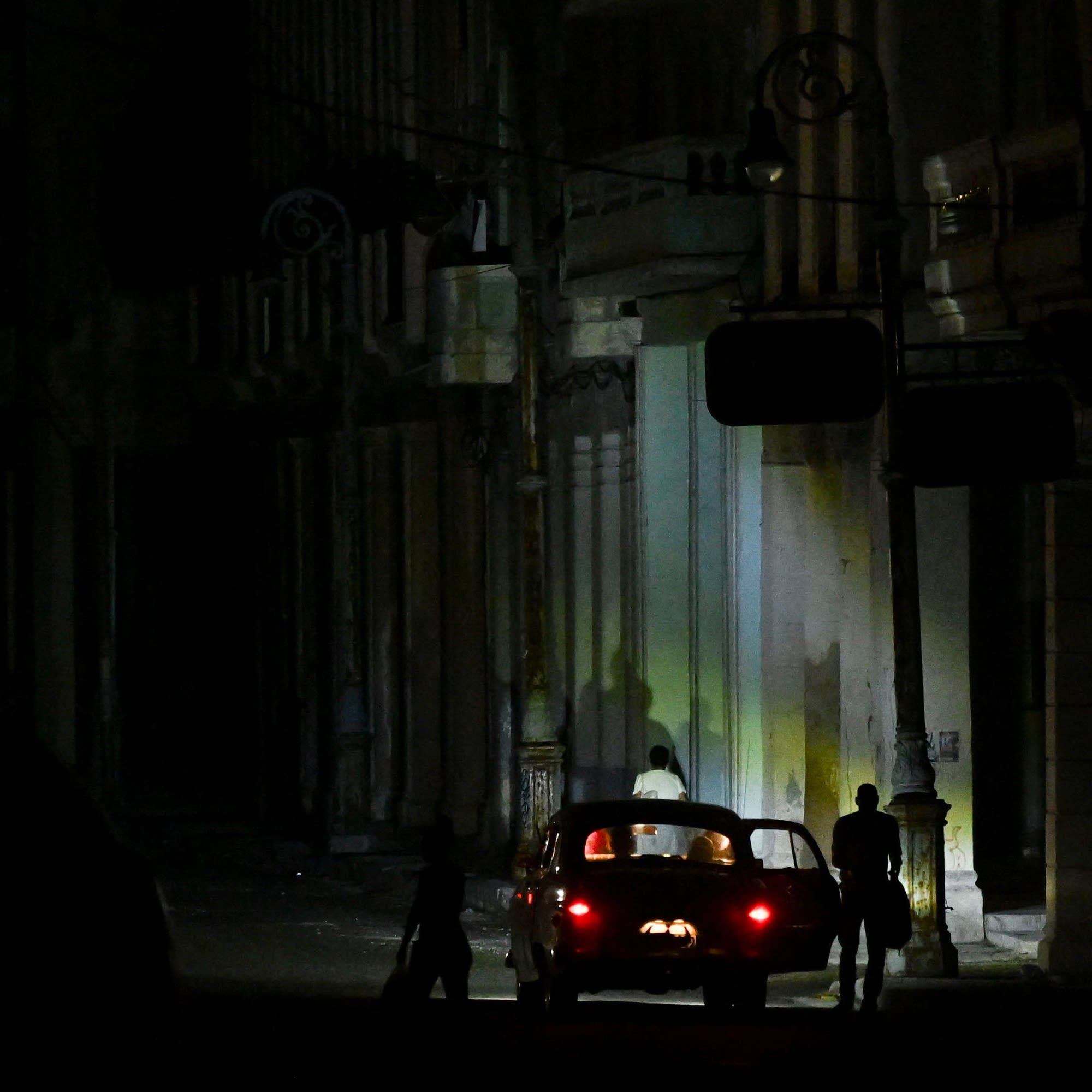
Russian Oil is giving a Lifeline to Cuba From Marketplace I'm Sabri Ben ashore in for David Brancaccio. The US is allowing Russian oil to be delivered to Cuba after months of what has basically been an energy blockade imposed by the U.S. a tanker carrying 100,000 metric tons of oil arrived yesterday. The U.S. blockade has caused nationwide blackouts, severe fuel shortages and shutdowns of schools and non essential businesses in Cuba. Will Grant is the BBC's Mexico, Central America and Cuba correspondent. He's been traveling to Cuba regularly for years and he's here to share what he's been seeing. Will, good morning.
- [01:39]
Will Grant
Good morning. It's nice to be with you again.
- [01:41]
David Brancaccio
You just got back from Cuba. What did you see?
- [01:44]
Will Grant
I've been going quite often this year and I've just seen the situation on the island get progressively worse with each trip. And on this latest one, I was there during an island wide black out where there was genuinely no power anywhere on the island. Now that's one moment. But neighborhoods go regularly, 18, 20, you know, 15 hours a day without power. It is deeply frustrating.
- [02:10]
David Brancaccio
What about hospitals? What about the food supply? How is this blockade affecting all of that?
- [02:15]
Will Grant
I did actually go into a hospital. In fact, I've been into two hospitals since the oil blockade was put in place. One was a maternity hospital and the government showed us around. They were very, you know, willing to show us that space because they'd kept the lights on. But the truth is that most hospitals are struggling. One of the other clinics I went to was 90% in darkness while I was down. They Were only receiving emergency cases.
- [02:43]
David Brancaccio
There's this oil coming from Russia, something like 730,000 barrels. Will that make any difference?
- [02:51]
Will Grant
Yes, in the sense that it is a lifeline, but it's not making any lasting dent. So if we estimate that, you know, 730,000 barrels would be a week's worth, of course, in these current restrictions that they're putting on and how much fuel you can pump at the petrol pumps, so on and so forth, they can eke that out to well beyond a week. But it's not the answer. It is a short term fix.
- [03:14]
David Brancaccio
Cuba does produce a small amount of energy domestically. Is there any way it could ramp that up?
- [03:21]
Will Grant
Not in terms of the fossil fuels, I don't think, really, because the energy infrastructure is so dilapidated, what they produce is limited. What I think it could do and what in fact it is doing using Chinese technology is really ramping up the solar power.
- [03:36]
David Brancaccio
Now President Trump has made comments about, quote, taking Cuba, referring to regime change. What do Cubans want?
- [03:42]
Will Grant
Cubans are very, very frustrated and angry at their own authorities for the state of the economy, for the state of the country. But also, of course, there is anger at the Trump administration. The imposition of a complete fuel blockade still touches that nationalist nerve among Cubans. Nevertheless, I think the the clamor for change has reached a point where I'm hearing people say to me on camera things like, I'd be happy now for Trump to come in and take this, which is an extraordinary thing to see people so exhausted that they're no longer, you know, concerned about the consequences of speaking out.
- [04:18]
David Brancaccio
Will Grant is the BBC's Mexico, Central America and Cuba correspondent. Will, thank you so much.
- [04:23]
Will Grant
It's always an absolute pleasure.
- [04:42]
USAA Advertiser
USAA knows dynamic duos can save the day, like superheroes and sidekicks or auto and home insurance. With usaa, you can bundle your auto and home and save up to 10%. Tap the banner to learn more and get a'@usaa.com bundle. Restrictions apply.
- [04:57]
Indeed Advertiser
Hiring isn't just filling a role. It's about finding people who can drive results. Indeed. Sponsored Jobs helps you match with the right candid target candidates by skills, certifications or location. Join the 3.3 million employers worldwide that use indeed to connect with quality talent that fits their needs. And listeners of this show will get a $75 sponsored job credit to help get your job the premium status it deserves. Indeed.com podcast. Terms and conditions apply. Hiring do it the right way with Indeed.
- [05:28]
David Brancaccio
There are some things they just do not teach you in college or in high school. How to restore an 18th century Georgian home, for example, or rebuild a grand piano or craft a violin from scratch. These are all things that need to be done somewhere, somehow in this economy. So where do you go to learn that? For 162 students in Boston, the answer is one of America's oldest trade schools. Marissa Mazria Katz reports on why a school teaching centuries old traditional crafts has a wait list.
- [05:59]
Marissa Mazria Katz
It's almost final season at Boston's North Bennett Street School and the piano technology students are honing a new skill, how to tune the 88 key instrument in under three hours.
- [06:11]
David Brancaccio
Listen to the way that the tone
- [06:12]
USAA Advertiser
starts to like sparkle and break up
- [06:14]
David Brancaccio
as you go into that higher section.
- [06:17]
Marissa Mazria Katz
That's Alex lacava, a teacher at the school who's worked in the field since they were about 18. The median pay for this kind of work in the Boston area is around $63,000, according to the Bureau of Labor Statistics. Lacava tells me a lot of their students get job offers before graduation.
- [06:34]
David Brancaccio
I am not only teaching how to be a piano technician, I'm teaching how to make a living as a piano technician.
- [06:40]
Marissa Mazria Katz
The school's department head of carpentry, Peter Smith, says that's just what students are looking for.
- [06:46]
USAA Advertiser
It's really important to understand that we're not here to teach do it yourselfers. We're not here to teach hobbyists. We're here to teach students who want a career and not just a job.
- [06:59]
Marissa Mazria Katz
The school runs nine professional training programs. Tuition costs can range from around $23,000 for their nine month locksmithing program to $85,000 for the three year one. Like violin making, 70% of the school's qualified students have their tuition offset through financial aid. For many here, the sticker price is well worth it, especially if you consider how AI has the potential to reshape the labor market, says Robert Schwartz, senior advisor to the Project on Workforce at Harvard.
- [07:29]
David Brancaccio
Technical jobs, technician level jobs, and particularly the traditional trades and crafts, they're not going anywhere. They're not going to be replaced.
- [07:36]
Marissa Mazria Katz
On a nearby job site with an 18th century house, alum Ivan Ibarca Torres tells me he left a job in academia to learn carpentry at North Bennett Street School and is passionate about his new career.
- [07:49]
Will Grant
When you connect your mind, your heart and your hands to do meaningful things, it gives you something very deep.
- [07:59]
Marissa Mazria Katz
In Boston, I'm Marissa Masria Katz for Marketplace.
- [08:03]
David Brancaccio
This is the Marketplace Morning Report
- [08:09]
Will Grant
from
- [08:09]
David Brancaccio
APM American Public Media.
- [08:12]
USAA Advertiser
Hey, David Brancaccio here. I hope you're well and that your passport is up to date. Because I am hosting a trip to Italy this fall and you, you are invited stay at a world class Tuscan villa and step into the world of the Medici, the formidable family whose influence and power helped give rise to the Renaissance and the art we still celebrate today. And not to mention the banking system. We're going to visit the world's oldest bank, swim in the thermal spa waters in Montecatini, and take in the art of the Uffizi. All of this. And then we'll try to put it all into context with great conversation over even better meals and wine tasting. Please join me and know this Buying into this trip will provide essential support for public media. Discover more about this fall's tuscany adventure@marketplace.org travel to reserve your spot today, that's marketplace.org travel.