← Marketplace Morning Report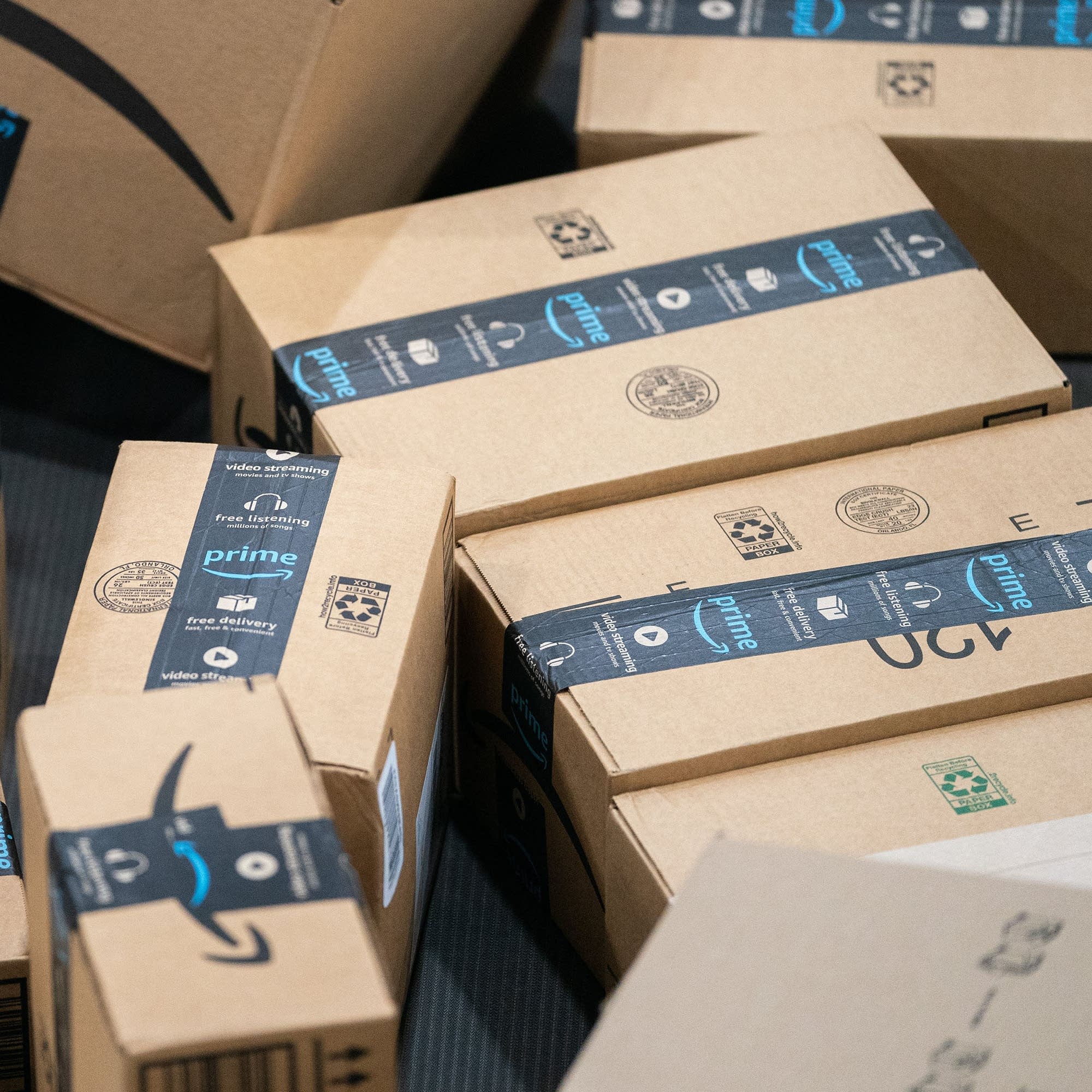
Loading summary
Transcript35 lines
- [00:00]
Host
This Marketplace podcast is supported by commvault.
- [00:03]
David Brancaccio
Businesses can recover data as well as cloud applications and platforms after a cyberattack in just minutes with Commvault so they.
- [00:10]
Host
Can become a continuous business.
- [00:13]
David Brancaccio
Transparency, politics, and what goes into the prices you pay on Amazon? I'm David Brancaccio in Los Angeles. After a published report that Amazon was planning to break out for customers how much tariffs were raising prices on individual items, there was sharp pushback from the White House. A spokesperson called this, quote, a hostile and political act. Amazon says that plan is now off the table. Other companies are displaying this in their pricing. TEMU is listing import charges at checkout. Volkswagen said earlier this month it would display an import fee. Marketplace's Samantha Fields reports.
- [00:50]
Samantha Fields
These days, Mark Cohen, the recently retired director of retail studies at Columbia Business School, is getting a lot of phone calls from people he knows in the fashion business.
- [00:58]
Host
They're calling me looking for an opinion as to whether they should mark their prices as being tariff driven. And my answer is yes, you bet.
- [01:08]
Samantha Fields
Because if you're a customer and you go to a store to buy something you're used to getting for $100 and it's suddenly 150, I think you deserve an explanation. But Cohen says businesses are torn between wanting to give that explanation and being concerned it might not go over well. Nitin Jan at AlixPartners says they have reason to be because of the backlash.
- [01:29]
Nova Safo
That many retailers have seen in the recent past. Retailers are conscious about not taking a.
- [01:35]
Samantha Fields
Political view, but just increasing prices may cause its own backlash. Arun Sundaram at CFRA Research says some businesses may have no choice, but others, like big box retailers, are looking to avoid it.
- [01:47]
Joda Levine
They're trying to move sourcing out of China, for example, or work with different suppliers. A lot of them have also been buying inventory in advance to keep prices.
- [01:56]
Samantha Fields
Down, at least for now. I'm Samantha Fields for Marketplace.
- [02:01]
David Brancaccio
Later this morning we'll get an early calculation of economic growth or contraction in America. Gross domestic product for January through March. This figure could be distorted by companies doing extra importing ahead of tariffs, and forecasts range from slowing growth to negative growth. We'll see. What we do know at this hour is that factory activity in China fell for the month that is just ending. The BBC's Nick Marsh has that the.
- [02:28]
Nick Marsh
Extent of this drop is down in part to a flurry of exports last month as manufacturers rushed to ship out goods just before the tariffs kicked in. But even so, China has been hurt by the enormous 145% levies imposed by the United States. Neither side so far has made the first move towards negotiations in this trade war, which China's leadership has vowed to fight until the bitter end if necessary.
- [03:14]
David Brancaccio
The 100 days of President Trump's second term are in part defined by sweeping interventions in the economy. Here's Marketplaces nova safo On January 20th.
- [03:24]
Nova Safo
Of this year, the US economy was on solid footing.
- [03:28]
Host
President Trump inherited an economy that was firing on most, but not all, cylinders.
- [03:34]
Nova Safo
Ryan Sweet, chief US economist at Oxford Economics, says 100 days into the Trump administration, the the outlook has changed dramatically.
- [03:43]
Host
In any given year, the probability of a recession is around 15% now. It's essentially a flip of the coin whether or not we have a recession this year.
- [03:54]
Nova Safo
Sweet points to two culprits, tariffs and the uncertainty surrounding them. Small businesses in particular have raised alarms, and a few have sued the Trump administration. Still, the hard data for now shows.
- [04:08]
Jay Bryson
The economy continues to do fairly well.
- [04:12]
Nova Safo
Jay Bryson, chief economist at Wells Fargo, says that's because consumers who power the US Economy have been trying to get ahead of tariffs.
- [04:20]
Jay Bryson
If you think tariffs are going to go into effect, if you think the prices of things that you're going to buy are going to be higher in a few months than they are now, you have a real incentive to go out there and buy them.
- [04:29]
Nova Safo
Today, retailers plan to head to Joda Levine of the global freight booking platform freightos says volumes from China and elsewhere to the US Skyrocketed in March.
- [04:41]
Joda Levine
So because a lot of importers have brought in a lot of goods ahead of time, they're going to rely on the inventory surplus for now and basically wait as long as they can before they have to restock.
- [04:51]
Nova Safo
The actions so far from importers and consumers mean there is a lag time between when tariffs are imposed and their effects clearly showing up in the real economy. Looking ahead, Jay Bryson of Wells Fargo will be paying close attention to jobless claims data for signs that the tariffs could be pushing the economy into recession.
- [05:11]
Jay Bryson
The labor market is a very coincident indicator of what's going on in the economy. If the labor market is holding up pretty well, then the economy is holding up pretty well.
- [05:22]
Nova Safo
Some damage is already done, though. The International Monetary Fund updated its outlook now expecting a half a percentage point drop this year in global economic growth. And growth in the US Is expected to shrink as well.
- [05:36]
David Beary
A year ago we were talking about when is that soft landing happening?
- [05:39]
Nova Safo
That's David Beary, associate professor of public policy at Virginia Tech. Soft landing, as in the concept of lowering inflation while keeping the labor market healthy.
- [05:49]
David Beary
One thing that we can say for sure, we are not in the period of looking for a soft landing in the next six to 12 months.
- [05:56]
Nova Safo
The rest, Bieri says, is harder to predict because of the magnitude of the shakeup of the global economic order that President Trump has imposed in his first 100 days in office.
- [06:07]
David Beary
Because it is so unprecedented and the government is at the source of most of the uncertainty, and there is no way that we can protect ourselves from that.
- [06:18]
Nova Safo
Beary takes comfort in one precedent, though. Covid, he says, proved the US Economy is very resilient and over time can withstand strong shocks. I'm Nova Safo for Marketplace, and a.
- [06:32]
David Brancaccio
Media watchdog working with Stanford researchers is warning today that young people, including teenagers and children, should not use artificial intelligence apps with digital characters that act as companions. Common Sense Media is a nonprofit. Its report warns these systems can interact with sexual content or encourage self harm. Some of the apps, including Gnome or Replica, are supposed to be adults only. In Los Angeles, I'm David Brancaccio. It's the Marketplace Morning Report from APM American Public Media.
- [07:08]
Janelli Espinal
If there's one thing we know about social media, it's that misinformation is everywhere, especially when it comes to personal finance. Financially Inclined from Marketplace is a podcast you can trust to help you get serious about your money so you can build a life you've always dreamed of. I'm the host, Janelli Espinal, and each week I ask experts important money questions like how to negotiate job offers, how to choose a college that you can afford, and how to talk about money with friends and family. Listen to Financially Inclined wherever you get your podcasts.