Loading summary
Transcript58 lines
- [00:01]
McDonald's Narrator
Our HBCUs have a legacy that's straight up golden, and McDonald's is proud to help keep it that way. Since 2021, the Golden Arches has connected with the Thurgood Marshall College fund to provide $1 million in scholarships for students headed to our HBCUs. That kind of cash helps keep bright minds on the yard dreams within reach and the future golden. Learn more about McDonald's Black and Positively Golden Scholarships at mcdblackscholars.com LifeLock how can I help?
- [00:32]
Identity Theft Victim
The IRS said I filed my return,
- [00:34]
LifeLock Representative
but I haven't One in four tax paying Americans has paid the price of identity fraud.
- [00:39]
Identity Theft Victim
What do I do?
- [00:39]
Marketplace Host Nancy Marshall Genser
My refund though. I'm freaking out.
- [00:41]
LifeLock Support Agent
Don't worry, I can fix this.
- [00:43]
LifeLock Representative
LifeLock fixes identity theft guaranteed and gets your money back with up to $3 million in coverage.
- [00:48]
Identity Theft Victim
I'm so relieved.
- [00:49]
LifeLock Representative
No problem.
- [00:49]
LifeLock Assistant
I'll be with you every step of the way.
- [00:51]
LifeLock Representative
One in four was a fraud paying American not anymore. Save up to 40% your first year. Visit lifelock.com Specialoffer terms apply should we
- [01:02]
Marketplace Host Nancy Marshall Genser
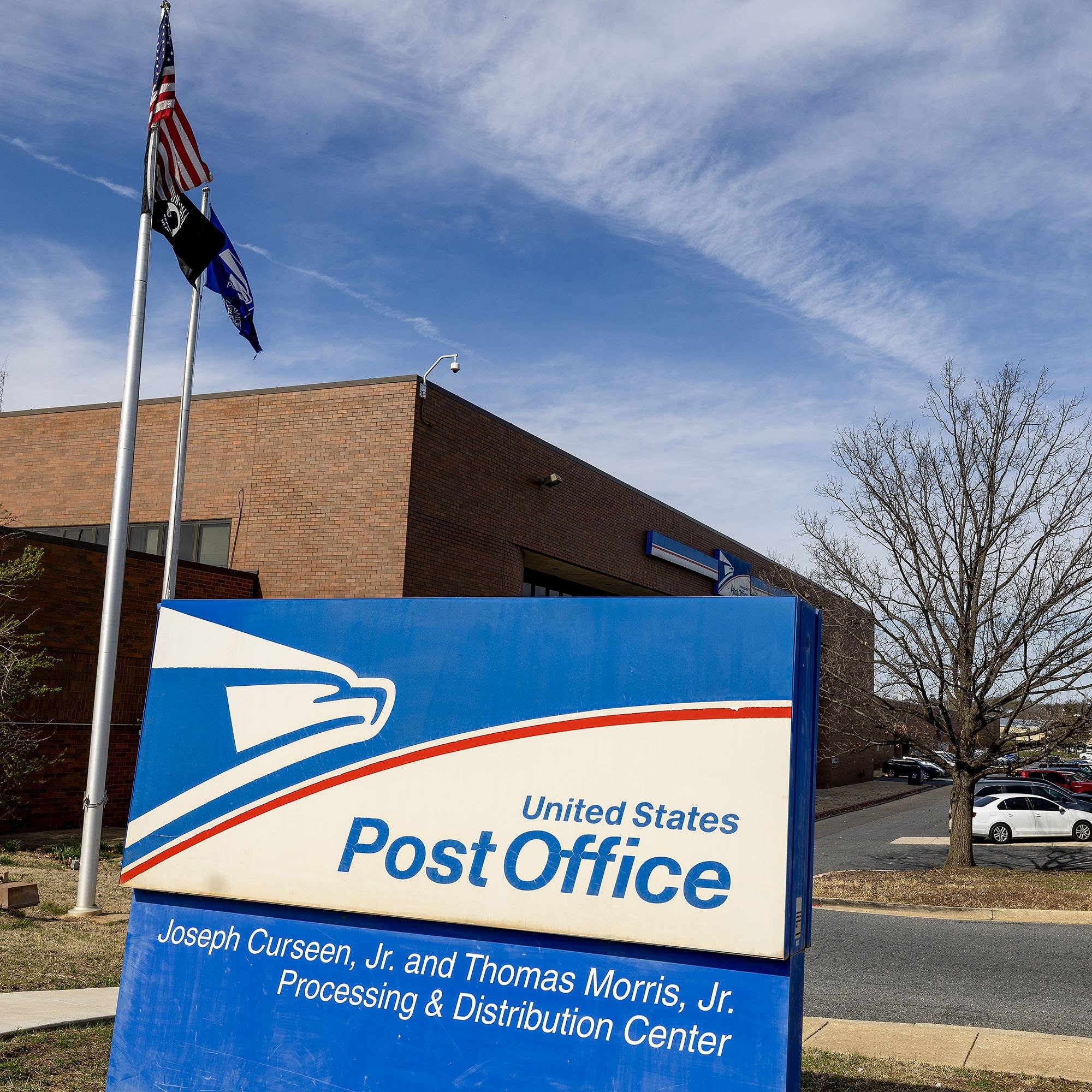
expect the Postal Service to make money? From Marketplace I'm Nancy Marshall Genser in for David Brancaccio. The Postal Service says it's facing a severe financial crisis. Postmaster General David Steiner testified before a House subcommittee this week. He said the USPS was struggling and could be out of cash in less than 12 months unless something changes. Marketplace's Carla Javier has more.
- [01:27]
Marketplace Reporter Carla Javier
The USPS says it lost $9 billion last fiscal year.
- [01:32]
Rick Geddes / Jim Campbell / James O'Rourke (Experts)
I remember when the Average losses were 4.5 or 5 billion, but now the losses are increasing over time.
- [01:39]
Marketplace Reporter Carla Javier
That's Rick Geddes at Cornell. On the cost side, he says USPS has a universal service obligation.
- [01:46]
Rick Geddes / Jim Campbell / James O'Rourke (Experts)
It's basically to deliver the mail to every address it can six days a week.
- [01:52]
Marketplace Reporter Carla Javier
And that can get expensive to have
- [01:55]
Rick Geddes / Jim Campbell / James O'Rourke (Experts)
all the trucks run six days a week to have the carriers who walk their routes.
- [02:00]
Marketplace Reporter Carla Javier
On the revenue side, lawyer and consultant Jim Campbell says letter volume has gone down precipitously and legislation limits the Postal Service's ability to raise prices.
- [02:11]
Rick Geddes / Jim Campbell / James O'Rourke (Experts)
So a combination of the price cap and the declining volumes hit the Post Office quite hard.
- [02:16]
Marketplace Reporter Carla Javier
The postmaster general said Congress and the USPS could consider reducing the days of delivery, closing offices in rural or remote areas, raising stamp prices to a dollar or more, or significant financial reforms. But with revenues unlikely to exceed costs. James o' Rourke at Notre Dame says Congress has to decide if it wants a Postal Service at all.
- [02:38]
James O'Rourke (Notre Dame Expert)
We don't ask the Forest Service or the weather Service to make money. They are a service to the people of the United States. It would be nice if the Postal Service could break even or at least come close.
- [02:53]
Marketplace Reporter Carla Javier
But that, o' Rourke says, would take some heavy lifting on Congress's part. I'm Carla Javier from Marketplace the Education
- [03:01]
Marketplace Host Nancy Marshall Genser
Department is offloading part of its student loan portfolio. The Treasury Department will take over management of defaulted student loans where borrowers are months behind on their payments. It's the Education Department's first step towards shedding management of all all federal student loans. The Trump administration plans to shutter the agency.
- [03:38]
LifeLock Assistant
LifeLock how can I help?
- [03:40]
Identity Theft Victim
The IRS said I filed my return,
- [03:42]
LifeLock Representative
but I haven't 1 in 4 tax paying Americans has paid the price of identity fraud.
- [03:46]
Identity Theft Victim
But what do I do?
- [03:47]
Marketplace Host Nancy Marshall Genser
My refund though. I'm freaking out.
- [03:49]
LifeLock Support Agent
Don't worry, I can fix this.
- [03:50]
LifeLock Representative
LifeLock fixes identity theft guaranteed and gets your money back with up to $3 million in coverage.
- [03:55]
Identity Theft Victim
I'm so relieved.
- [03:56]
LifeLock Representative
No problem.
- [03:57]
LifeLock Assistant
I'll be with you every step of the way.
- [03:59]
LifeLock Representative
One in four was a fraud paying American. Not anymore. Save up to 40% your first year. Visit lifelock.com Specialoffer terms apply when you
- [04:08]
Identity Theft Victim
manage procurement for multiple facilities. Every order matters, but when it's for a hospital system, they matter even more. Grainger gets it and knows there's no time for managing multiple suppliers and no room for shipping delays. That's why Grainger offers millions of products in fast, dependable delivery so you can keep your facility stocked, safe and running smoothly. Call 1-800-GRAINGER Click grainger.com or just stop by Grainger for the ones who get it done.
- [04:39]
Marketplace Host Nancy Marshall Genser
The war in the Middle east is taking an economic toll on Americans. That includes the American farmer who's dealing with higher diesel and fertil. Marketplace's Elizabeth Troval has more on how the war is affecting agriculture.
- [04:53]
Marketplace Reporter Elizabeth Trovall
It's planting season for a lot of American farmers, which often brings renewed optimism about the upcoming year's harvest. But when I asked rice farmer Casey Smith about his outlook for this year,
- [05:06]
LifeLock Assistant
honestly, I don't feel very positive about it.
- [05:10]
Marketplace Reporter Elizabeth Trovall
We're standing in his newly planted rice crop in Brazoria county, south of Houston. The green blades of the rice plant are about 3 inches high in straight rows across the dirt.
- [05:21]
LifeLock Assistant
It's honestly nerve wracking. We put a very large sum of our own money into the crop last year and we didn't get any nickel of it back, so it's very concerning.
- [05:31]
Marketplace Reporter Elizabeth Trovall
He worries about the tens of thousands of extra dollars he's likely going to have to spend on his farm with the 25% or so jump in his fertilizer price and diesel prices surpassing $5 a G since the war started less than three weeks ago.
- [05:47]
LifeLock Assistant
We already had this planted when that happened, you know, it happened afterwards. So what do you do now? You know, it's out of our control. We have zero control and there's zero chance that our yield will make up that extra expense. There's zero chance.
- [06:02]
Marketplace Reporter Elizabeth Trovall
Further north, in the Texas panhandle, D. Vaughn grows corn, grain, sorghum, wheat and cotton.
- [06:08]
Rick Geddes / Jim Campbell / James O'Rourke (Experts)
We are second generation Texas farmers. My grandparents farmed in Oklahoma.
- [06:14]
Marketplace Reporter Elizabeth Trovall
He'll plant his corn, cotton and grain sorghum later this spring. He's also concerned about how the increased cost of fertilizer and diesel will hit his bottom line.
- [06:24]
Rick Geddes / Jim Campbell / James O'Rourke (Experts)
I have no way of passing the cost off. Our corn is priced in a global marketplace. I just have to take it on the chin that way.
- [06:32]
Marketplace Reporter Elizabeth Trovall
He says he may cut back on using fertilizer or delay repairing or replacing some of his equipment.
- [06:38]
Rick Geddes / Jim Campbell / James O'Rourke (Experts)
You just have to kind of roll with the punches.
- [06:40]
Marketplace Reporter Elizabeth Trovall
He says he's better situated financially to weather this storm. But he wonders about the younger generation of farmers.
- [06:48]
Rick Geddes / Jim Campbell / James O'Rourke (Experts)
Some of them may not make it. And those of us that are, you know, 60 plus that are looking at, you know, well, who's going to farm this ground when we're gone? That's, that's what we have to be concerned about.
- [06:59]
Marketplace Reporter Elizabeth Trovall
Around the world, farmers are feeling the impacts of the war. The Middle east is a major fertilizer producing region. According to Julia Meehan with icis.
- [07:09]
Rick Geddes / Jim Campbell / James O'Rourke (Experts)
There is a huge volume that's not making it through to the customer. And this is all of a time when we are in peak season for application for the US For Europe, India.
- [07:23]
Marketplace Reporter Elizabeth Trovall
And she says this could ultimately reduce demand for fertilizer.
- [07:28]
Rick Geddes / Jim Campbell / James O'Rourke (Experts)
If this conflict continues in the Middle East, I think these prices will go higher. But to what point will then the farmer say, enough is enough, we can't afford this anymore.
- [07:38]
Marketplace Reporter Elizabeth Trovall
Cutting down on fertilizer would hurt crop yields, and that could eventually trickle down to higher food prices for consumers. I'm Elizabeth Trovall for Marketplace.
- [07:51]
Marketplace Host Nancy Marshall Genser
Marketplace exists to help you stay informed about the economy. And you can put that knowledge to the test. Every Friday, we publish a news quiz online. Find it on our website marketplace.org quiz our executive producer is Nancy Fargali. Our digital team includes Antoinette Brock, Emily McCune and Dylan Mietanen. Our engineers are Tessa Block and David Schreck. In Washington, I'm Nancy Marshall Genzer with the Marketplace morning report from APM American public media.
- [08:25]
LifeLock Support Agent
When we get big news overnight and the economy turns on a dime, Marketplace Morning Report is there to get you up to speed. Speed as you start your day. And listener support keeps this fast, smart global reporting available to everyone not stuck behind a paywall. We cannot do it without you. So if you rely on Marketplace Morning Report to make sense of the day ahead, invest in our independent and accessible journalism. Donate now@marketplace.org or click the link in the show Notes.