← Marketplace Morning Report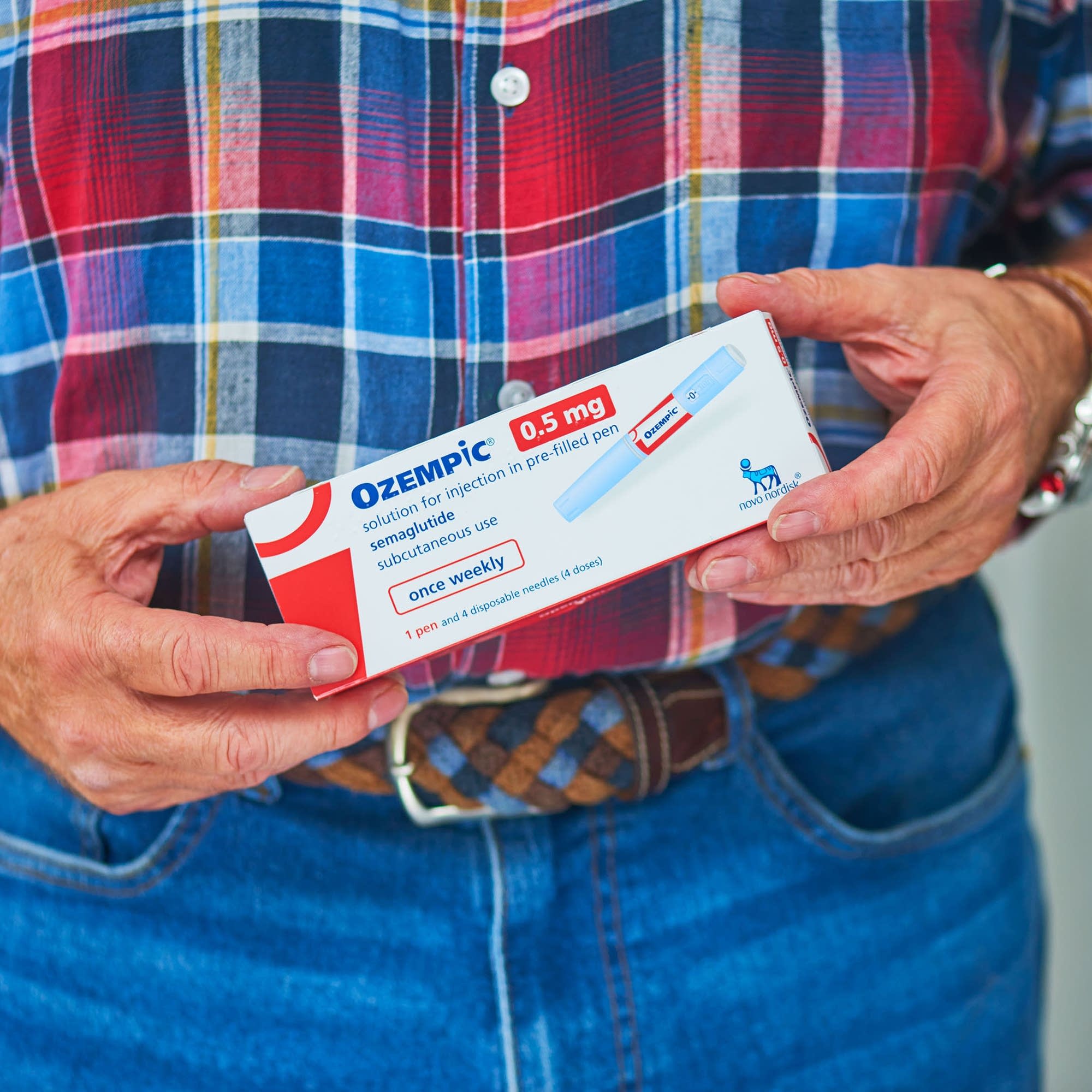
Loading summary
Transcript29 lines
- [00:01]
Grainger Custodial Supervisor (Narrator)
This is the story of the One As a custodial supervisor at a high school, he knows that during cold and flu season, germs spread fast. It's why he partners with Grainger to stay fully stocked on the products and supplies he needs, from tissues to disinfectants to floor scrubbers, all so that he can help students, staff and teachers stay healthy and focused. Call 1-800-GRAINGER, click grainger.com or just stop by Granger for the ones who get it done.
- [00:30]
Dell PC Advertiser
Introducing your new Dell PC with the Intel Core Ultra processor, it helps you handle a lot, even when your holiday to do list gets to be a lot like organizing your holiday shopping and searching for great holiday deals and customer questions and customers requesting custom things. Plus planning the perfect holiday dinner for vegans, vegetarians, pescatarians and Uncle Mike's carnivore diet. Luckily you can get a PC with all day battery life to help you get it all done. That's the power of a Dell PC with Intel inside backed by Dell's price match guarantee. Get yours at the best price of the year by visiting Dell.com Holiday terms and conditions apply. See Dell.com for details.
- [01:14]
David Brancaccio
The Medicare System and patients on Medicare will get a discount on some popular drugs that treat diabetes and obesity. I'm David Brancaccio in Los Angeles. We're leading with a follow up move by the Trump administration aimed at lowering the prices of weight loss drugs including ozempic and WeGovy. Marketplace's Henry Epp is here. Live with more.
- [01:35]
Henry Epp
Henry yeah, Medicare will get a 71% discount off the list price of Ozempic and wegovy starting in 2027 and that'll bring the monthly costs of those drugs down from nearly $1,000 to $274. Novo Nordisk, the maker of these drugs, recently also lowered the monthly price for existing patients who pay out of po. And the Trump administration also announced earlier this month that some future obesity drugs from Novo Nordisk and Eli Lilly will be available for lower prices through a government run website. And the administration has said that site will launch early next year. And these aren't the only drugs that'll be discounted. The Centers for Medicare and Medicaid Services announced price reductions for 14 other drugs also starting in 2027.
- [02:18]
David Brancaccio
And how did this Medicare Services outfit pull off these discounts?
- [02:22]
Henry Epp
Henry yeah, so they can negotiate some drug prices because of this bill that was signed by former President Joe Biden back in 2022. That was the Inflation Reduction Act. That bill allowed CMS to negotiate the price of 15 drugs per year with pharmaceutical companies for the first time. But the law didn't allow those negotiated prices to take effect until 2026. So we're about to see the first batch of them in January. And these are lower prices for certain diabetes drugs and also a popular blood thinner the Biden administration negotiate last year. And then we'll see the next round of negotiated prices in 2027 for Ozempic and Wegovy and some others.
- [03:02]
David Brancaccio
Henry, thank you for this. From ordering up government stakes in publicly held companies such as microchip maker intel to telling Cracker Barrel to go back to its original logo, President Trump often works to mix government into the private sector. Now there are reports that the studio Paramount Skydance may revive a dormant movie franchise, Rush Hour, at the urging of the president. Trump is a booster of the franchise's director, Brent Ratner, whose career slowed after allegations of sexual misconduct, which he denies. Ratner is now working with Amazon on a documentary about first lady Melania Trump. Meanwhile, Paramount is among bidders for another studio, Warner Brothers, that could face federal antitrust scrutiny whichever company wins that bid.
- [04:03]
Grainger Custodial Supervisor (Narrator)
This is the story of the One As a custodial supervisor at a high school, he knows that during cold and flu season, germs spread fast. It's why he partners with Granger to stay fully stocked on the products and supplies he needs, from tissues to disinfectants to floor scrubbers, all so that he can help score students, staff and teachers stay healthy and focused. Call 1-800-GRAINGER Click grainger.com or just stop by Grainger for the ones who get it done.
- [04:32]
Range Rover Advertiser
The adage says it isn't what you say, it's how you say it. And when you lead with power, poise and performance, you're making an impact from the start. Introducing the Range Rover Sport. Designed to set an example with its assertive stance and refined drive, it blends dynamic elegance with agile precision. Whether you're navigating city streets or conquering rugged terrain, its cutting edge innovations, including a cabin air purification system and active noise cancellation, offer unrivaled comfort, control and peace of mind. Seven terrain modes Check A choice of powerful engines, including a plug in hybrid with a 48 mile range. Absolutely take on anything with a Range Rover Sport. Build yours today@range rover.com USSport Explore the Range Rover Sport@range rover.com US Sport Feeding.
- [05:30]
David Brancaccio
America is the largest nonprofit tackling hunger in the country. It distributes billions of pounds of food each year from 200 food banks. Feeding America used to Employ an algorithm to sort out those complicated logistics. It generated a list of food banks based on need and. And when a shipment of food became available, Feeding America then called the food bank at the top of the list. But if a food bank didn't need or want that donation for any reason, that presented a problem, a solution. Good old market economics. Harshan Rattenpaul reports from Missouri.
- [06:02]
Harshawn Rattenpaul
Just about every morning when Darrell Bascom gets to the office, he logs onto his computer and immediately starts bidding online.
- [06:10]
Darrell Bascom
It's kind of fun to go out and shop each day.
- [06:13]
Harshawn Rattenpaul
We're not talking about ebay here. Bascom works at a food bank in Columbia, Missouri, and he's bidding on truckloads of food.
- [06:21]
Darrell Bascom
We have a bid coming up at noon. I found a snack load on there. Had some Slim Jims. It has some Angies Popcorn.
- [06:29]
Harshawn Rattenpaul
But what Bascom really wants today is a truck of baby formula. The government shutdown affected some programs that usually provide formula to families who need it.
- [06:39]
Darrell Bascom
All the food banks have been scrambling, trying to figure out how can we get baby formula into the network.
- [06:43]
Harshawn Rattenpaul
But to get the formula, you'll have to outbid hundreds of food banks on this choice system, Feeding America's method of deciding who gets what. If a food bank really wants a certain truckload, they can place a high bid. Whoever bids the most wins that truckload every day. Currency, sort of like digital fake cash, is redistributed among the food banks. It's the brainchild of Canis Prendergast, an economist at the University of Chicago. When he started working on this, he remembers talking to a man named Roger about the old system.
- [07:17]
Canis Prendergast
And Roger says, I'm sick of them giving me potatoes.
- [07:21]
Harshawn Rattenpaul
Roger was a food bank director in Idaho.
- [07:24]
Canis Prendergast
I have so many potatoes here already, I have a warehouse full of potatoes.
- [07:29]
Harshawn Rattenpaul
The problem was, Feeding America had no way to know that one food bank might be overflowing with potatoes and and another might desperately want some. So Prendergast proposed this market economy, where food banks use fake cash to indicate they don't want potatoes but would love baby formula. He tried to make the system efficient and equitable.
- [07:51]
Canis Prendergast
There's an inherent fairness in it.
- [07:53]
Harshawn Rattenpaul
For example, food banks in areas with higher poverty get more points to spend. And it's working. Prendergast says food banks value the donations through the choice system much more than before.
- [08:05]
Canis Prendergast
In a world where people want very different things, but you're not sure exactly what they want, Sometimes markets, if they're designed well, can facilitate choice in that way.
- [08:16]
Harshawn Rattenpaul
But markets can't solve scarcity. Back in Missouri, it's now noon, and Darrell Bascom with the Food bank is seeing how he fared with the bid system. He did win that truck of snacks for 3,000 points, but what did that.
- [08:31]
Darrell Bascom
Load of baby formula go for in the end? It went for 40,000 points.
- [08:38]
Harshawn Rattenpaul
He lost to a food bank in New York that spent more shares on formula that day than Bascom had in his whole account. In any economy, you can't always get what you want. In Missouri, I'm Harshawn Rat and Paul.
- [08:52]
David Brancaccio
For Marketplace, but you can get this if you want. Our free Daily Wrap newsletter brings you the day's news on money markets, innovation, workplace culture straight to your inbox. Weekday evenings, our crew puts out a tight, sparkling read. I would say sign up for the Marketplace daily wrap. Free marketplace.org subscribe in Los Angeles, I'm David Brancaccio with our Morning Report. We're from APM American Public Media.
- [09:21]
Million Bazillion Narrator
Sometimes kids ask questions that reveal just how much adults still need to learn. Like can you explain what causes an economic bubble? And why are things so expensive at the airport? Or how much national debt might be too much? Fear not. Million Bazillion is back with a new season to help you and your kids become pros at understanding how money shapes the answers to all those questions and more. Listen to the latest season of Million Bazillion on your favorite podcast. Apparently.