← Marketplace Morning Report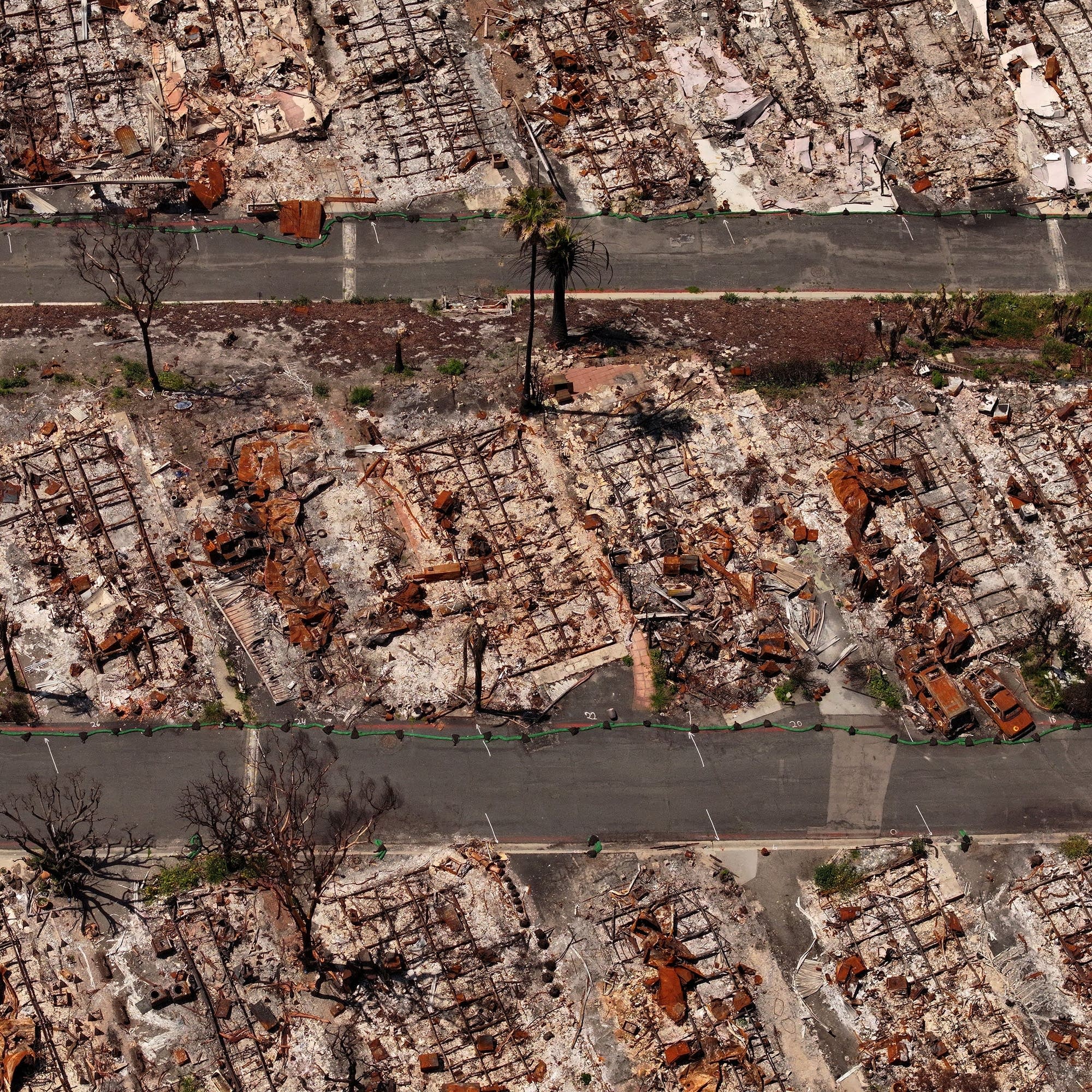
Marketplace Morning Report
So your house burned in the wildfires. Would you rebuild with wood?
00:06:52
Loading summary
Transcript35 lines
- [00:00]
Wix Representative
Your business is one of a kind.
- [00:02]
So your website should be too. With wix, it's easy, almost too easy to create a website that's perfectly yours. Just tell AI what kind of site you want to build or choose from thousands of templates, change whatever you want whenever you want and get everything you need to start running your business your way. No matter what you sell or what you aspire to be, you can do it all yourself on wix.
- [00:28]
David Brancaccio
Imagine using wood to rebuild after wildfire. Some are I'm David Brancaccio in Los Angeles. 1st New York's Attorney General is suing the company that runs the Zelle payment platform, alleging its customers were left open to fraudsters who stole millions. Nancy Marshall Genzer reports.
- [00:47]
Nancy Marshall Genzer
New York Attorney General Letitia James sued Early Warning Services. The company that developed and operates Zelle Early Warning Services is owned by some of the biggest banks in the country. James James says Zelle was hastily launched to compete with other payment apps like PayPal and didn't have critical safety features. The Attorney General says Zelle had a simple registration process that didn't have important verification steps. James says scammers took advantage of that, accessing users Zelle accounts and making unauthorized transfers were tricking consumers into sending money for non existent goods or services. The Attorney General says scammers stole more than a billion dollars from Zelle users from 2017-20. In a statement to Reuters, Zell says more than 99% of the transactions on its platform are now completed without reported fraud, calling the lawsuit a political stunt. I'm Nancy Marshall Genser for Marketplace.
- [01:45]
David Brancaccio
Kodak is saying it's optimistic about the future, is not fixing to go out of business, and is not burning through cash. This after several media outlets noticed what the company calls a technical warning in an official Kodak filing raising the issue of going out of business. Kodak still makes film for the movie industry, has a chemical and commercial printing business, and gets mileage from its iconic brand. In this digital camera phone era, it has less than 5,000 employees, down from 145,000 in 1988. The Cool Kids have come back to analog using silver halide film cameras that once made Kodak so rich.
- [02:32]
Grainger Representative
Foreign.
- [02:38]
Wix Representative
No one knows your business better than you, so who better to create your website than, well, you? Wix's website builder puts it all in your hands. Create a beautiful website just by talking with AI or choosing from thousands of templates. Customize every detail with simple drag and drop tools and get everything you need to start running business your way. Build more Think bigger and do it all yourself on Wix.
- [03:07]
Grainger Representative
If you're alignment in charge of keeping the lights on, Grainger understands that you go to great lengths and sometimes heights to ensure the power is always flowing. Which is why you can count on Grainger for professional grade products and next day delivery. So you have everything you need to get the job done. Call 1-800-granger click grainger.com or just stop by Granger for the ones who get it done.
- [03:36]
David Brancaccio
For many people like me who lost a house in the California wildfires this year, the most pressing question is do we have the money to rebuild? But today, a second key question.
- [03:47]
Mark Fretz
How to rebuild in an environmentally friendly.
- [03:49]
David Brancaccio
Way that might also stand up to the next fire. Some are thinking about plastic insulation sandwiched between concrete. Some like frames of stone steel. I've also been looking at get this wood. Even after the fire in Altadena turned all the wood in my old stick n stud house into gray ash.
- [04:07]
Grainger Representative
Brrr brrr.
- [04:10]
Mark Fretz
That's me turning into a four year old given a toy sized 3D printed truck. Here at a University of Oregon lab, architecture professor Mark Fretz shows me the real attraction. A stack of scale model wood panels on the truck ready for hoisting.
- [04:27]
David Brancaccio
I don't see any two by fours.
- [04:29]
Mark Fretz
Where are your studs my friend?
- [04:31]
Maurice Romming
Yeah, no studs in this house. This is all a flat panel.
- [04:35]
Mark Fretz
Scaled full size, the panels can be tipped up onto a foundation to make a house.
- [04:40]
Maurice Romming
A house that's similar to an Ikea dresser that you can take apart and.
- [04:43]
Mark Fretz
Flat pack and bring home, but not Ikea particleboard. These panels can be made from what's called cross laminated timber. So CLT lots of small boards glued together in crisscross layers for strength. In places like Oregon, they see gold in this engineered spruce, pine or fir.
- [05:03]
Judith Schein
To revive the timber economy is through the use of mass timber is exciting to everybody.
- [05:07]
Mark Fretz
Judith Schein is director of design at the Tallwood Design Institute and a University of Oregon architecture professor.
- [05:15]
Judith Schein
There's the idea of sustainable forest management and carbon sequestration which interests people.
- [05:20]
Mark Fretz
Why would a person who just saw their house burned down want to rebuild with wood?
- [05:26]
Judith Schein
It would be reasonable to ask that question because it's been compared to building with kindling. It's a big thick material that does not burn easily.
- [05:35]
Mark Fretz
Exposed to fire, mass timber turns black and that sooty layer stops the fire from eating through the rest of the wood. CLT panels can be made from younger farmed trees or spindly ones culled from forests to lower the risk of wildfire and to allow the big trees to thrive. And remember, trees capture climate altering carbon.
- [05:56]
Judith Schein
And if you can keep that carbon in a building material, you can sequester that carbon for hundreds of years.
- [06:02]
Mark Fretz
A government study found a mass timber commercial building would have a nearly 70% smaller carbon footprint than an equivalent reinforced concrete one. So come for the fire and green benefits, but stay for the design. If you like the look of natural.
- [06:17]
Grainger Representative
Wood over drywall, it's really it warms the space.
- [06:22]
Mark Fretz
Maurice Romming with o' Neill Construction Group is an Oregon contractor who's worked with mass timber, including a piece of PDX Portland's Wood Forward Airport Terminal.
- [06:32]
Grainger Representative
Especially on single family, but also on multi family homes. It's going to be mostly all prefabricated to engineer specifications a lot quicker, easier.
- [06:44]
Mark Fretz
That said, CLT panels are more expensive than studs and thin plywood. The hope is you save money on labor at the job site, where a single family house can be boxed up in a week or so. Apartment complexes and commercial buildings made of mass timber are springing up across the country, up to 18 stories tall. But in the US only about 100 single family homes use the stuff. Steve Marshall runs the consultancy Mass Timber Strategy after a long career in the US Forest Service. Old stick and frame habits die hard, he says, and you need smaller mills to customize the panels for the small jobs. He's now working on mass timber microfactories.
- [07:25]
Steve Marshall
Buying blank panels from the large manufacturers and then providing them to these cutting centers where the unique cutting of the panels will be done for specific buildings. And a lot of that target will be multi family, but it will include single family homes as well.
- [07:42]
David Brancaccio
I'll report more on what we decide to use for our rebuild. Cost is always a factor and I appreciate that. The most sustainable approach would be for us to turn our burned little plot of land in Altadena into a forever meadow and to move into an existing dwelling with maybe our kids. But our children don't have the room. And leaving the one real estate asset we own undeveloped seems like bad personal finance. In Los Angeles, I'm David Brancaccio Marketplace Morning report from APM American Public Media.
- [08:16]
Wix Representative
Your business is one of a kind.
- [08:19]
So your website should be too. With wix, it's easy, almost too easy to create a website that's perfectly yours. Just tell AI what kind of site you want to build or choose from thousands of templates, change whatever you want whenever you want and get everything you need to start running your business your way. No matter what you sell or what you aspire to be, you can do it all yourself on wix.