Loading summary
Transcript26 lines
- [00:00]
Dell Advertisement
This Marketplace podcast is supported by Dell. Introducing the new Dell AI PC. Powered by Intel Core Ultra processor. It helps do your busy work for you so you can fast forward through editing images, designing presentations, generating code, debugging code, summarizing meeting notes, finding files, managing your schedule, responding to long emails, leaving all the time in the world for the things you actually want to do. Get a new Dell AI PC starting at $699.99 at Dell.com AI PC how those ahead? Stay ahead.
- [00:33]
David Brancaccio
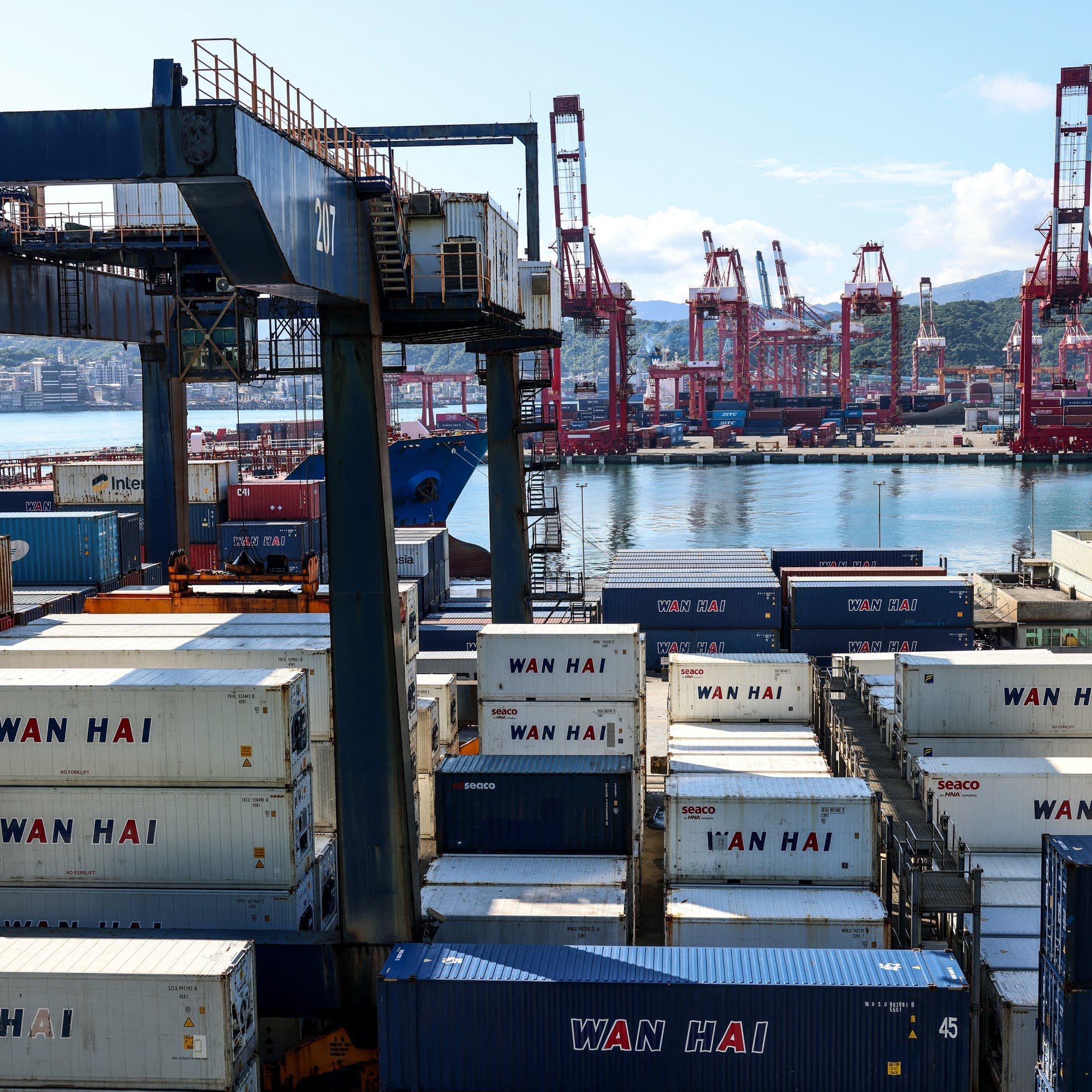
Although tariffs can shift with the winds, the news this morning is that products from some close U.S. trading partners are getting hit with high import taxes. I'm David Brancaccio in Los Angeles. The administration is saying it's about trading away some efficiency in commerce for a new trade system that's, quote, fair and balanced. Mentioned less often is that tariffs are also about raising taxes to fund government spending. There's no deal with Canada, which for now at least will get an especially high tariff. Taiwan, with all its semiconductor exports will get a 20% tariff. Marketplace's Nancy Marshall Genzer joins us here with more.
- [01:10]
Nancy Marshall Genzer
Well, David, the Trump administration had set today as the deadline for countries to negotiate new trade agreements with the U.S. some did meet the deadline, but Trump sent letters setting tariff rates to the other countries that didn't reach deals.
- [01:25]
David Brancaccio
Now our neighbors, Canada and Mexico, Canadian goods get 35%.
- [01:31]
Blake Gopnik
Yeah.
- [01:32]
Nancy Marshall Genzer
Although there is an exception for products that comply with the United States Mexico Canada trade agreement. Now Canadian Prime Minister Mark Carney points out that other Canadian exports are covered by separate tariffs on goods like steel, aluminum, lumber and cars. Mexico got a bit of a reprieve in a social media post. Trump gave Mexico a 90 day extension.
- [01:56]
David Brancaccio
All right. But many other countries now have rates under this new trading system. South Korea tariff 15%. Taiwan with all its strategically important computer chips sent to the U.S. theirs is higher.
- [02:09]
Nancy Marshall Genzer
Yeah. Taiwan will be paying a 20% tariff, but Taiwan's president called that temporary and is hoping for a lower rate after more talks with the Trump administration. India will be paying 25%. Pakistan's rate was slashed to 19%. Now there is no agreement with China. US and Chinese negotiators met earlier this week in Stockholm. They failed to reach a deal. The deadline there is August 12th.
- [02:35]
David Brancaccio
All right, Marketplace's Nancy Marshall Genser, thank you. Higher tariffs could dig into corporate profits and higher prices could discourage consumers from spending. Stock index futures are pointing down at the moment. Dow futures down 444 points, about 1%. S&P futures also down 1%. Nasdaq futures down 1.2%. Now, the big hiring and unemployment reports are due in about an hour and a half, with forecasters expecting hiring in July. A little bit less of it, but less of it compared to June.
- [03:25]
Blake Gopnik
Foreign.
- [03:30]
David Brancaccio
If the stock market today isn't your cup of tea, the high end art market isn't a happier place. But there's a difference between fine art and the art market. Money isn't everything. Let's consult art critic Blake Gopnik, a regular contributor to the New York Times. Blake, welcome back.
- [03:46]
Blake Gopnik
Always a pleasure to be on the show.
- [03:47]
David Brancaccio
David, where are we these months later? High end art market still a mess.
- [03:53]
Blake Gopnik
Yeah, it seems as though it's even bigger mess than usual. In 2024, auction sales for works over $10 million, and that's. Those are some pretty valuable works, were apparently down 44%. There were 44% fewer sales of those high end objects, according to the Wall Street Journal, at least than there had been the previous year. So that trophy inventory isn't moving even at the art fair is where you expect to move that kind of stuff. And it's worth pointing out that in the decade or so before, those same works had gone up 700%. So after this insane climb, there was this insane tumble.
- [04:29]
David Brancaccio
Okay, hit me with your radical claim, Blake.
- [04:33]
Blake Gopnik
Well, I think that when those kind of big ticket paintings are put up for sale, they're actually not works of art at all. So that, of course, that's what the bidders, the buyers, are looking to buy. I think they've become purely financial objects. They're a different kind of object altogether. And I have to admit I'm riffing here on some work by a Berkeley philosopher named Alvin Noe, that in fact, objects are only art when we use them as art. When we admire their aesthetics or we think about what they mean, or we argue about whether they're good or bad, that's when they're works of art. If you use it as a financial instrument, if you use it as an investment, it's not functioning as art. You could say the Mona Lisa barely functions as art anymore because 99% of the time it's just background for a selfie. And that's true also of when works of art are just financial instruments.
- [05:25]
David Brancaccio
All right, so to pick up on that theme, you and I can workshop a New Yorker cartoon together, right? It's sort of like the fancy pants person invites his guest into his nice salon to show him, framed on the wall, objects that he says, may I show you my collection of stores of value Right. That's what you're saying.
- [05:45]
Blake Gopnik
Exactly. And of course, that relates to my hero Andy Warhol, who actually presented silkscreen paintings of dollar signs as works of art. And that's, of course, the comment that he was making.
- [05:56]
David Brancaccio
Yeah. And the more you think about, let's say, a painting or a sculpture as a store of value, then other investment vehicles compete with for your dollars, in other words. Well, I'm not interested in that art store value. I might be interested in putting my money into bonds because interest rates stayed higher.
- [06:15]
Blake Gopnik
Exactly. And you know, investing in art is the weirdest darn thing because it has no obvious value. I mean, we've said this before on the show. It's just a bunch of oil paint on a piece of canvas. So it's completely arbitrary what it's worth. But in theory, at least, it's supposed to be worth something because it matters to the culture as art. And if things are getting in the way of that, then its investment value should drop as well. So there are all sorts of factors that are helping. Thank God, the art market tumble.
- [06:47]
David Brancaccio
Art critic Blake Gopnik. His most recent book is a biography of the Philadelphia collector Albert Barnes.
- [06:53]
Blake, always good to catch up.
- [06:56]
Blake Gopnik
A treat.
- [06:56]
David Brancaccio
David Back to our lead this morning.
- [06:59]
About higher U.S. tariffs on a wide range of countries, including Mexico. We also have coverage of a court hearing yesterday challenging President Trump's authority to change tariffs without Congress by asserting an emergency. That'll also be in the Marketplace Morning podcast later. Our executive producer is Nancy Fargali. Our digital team includes Antoinette Brock, Emily McCune, and Dylan Miettinen. Our engineers are Brian Allison and Rachel Breese. In Los Angeles, I'm David Brancacciotes. The Marketplace Morning Report from APM American Public Media.
- [07:37]
Marketplace Kids
Summer's here and it's time for your kids to have fun in the sun. But it's also a great time to nurture growing minds. Million Bazillion, a podcast from Marketplace, teaches your kids about something that impacts all of US money. From a fun explainer on tariffs, yes, it's possible to why some athletes make so much money. Million Bazillion tackles big questions with easy to understand answers. Listen to Million Bazillion all summer long. Available wherever you get your podcasts.