← Marketplace Morning Report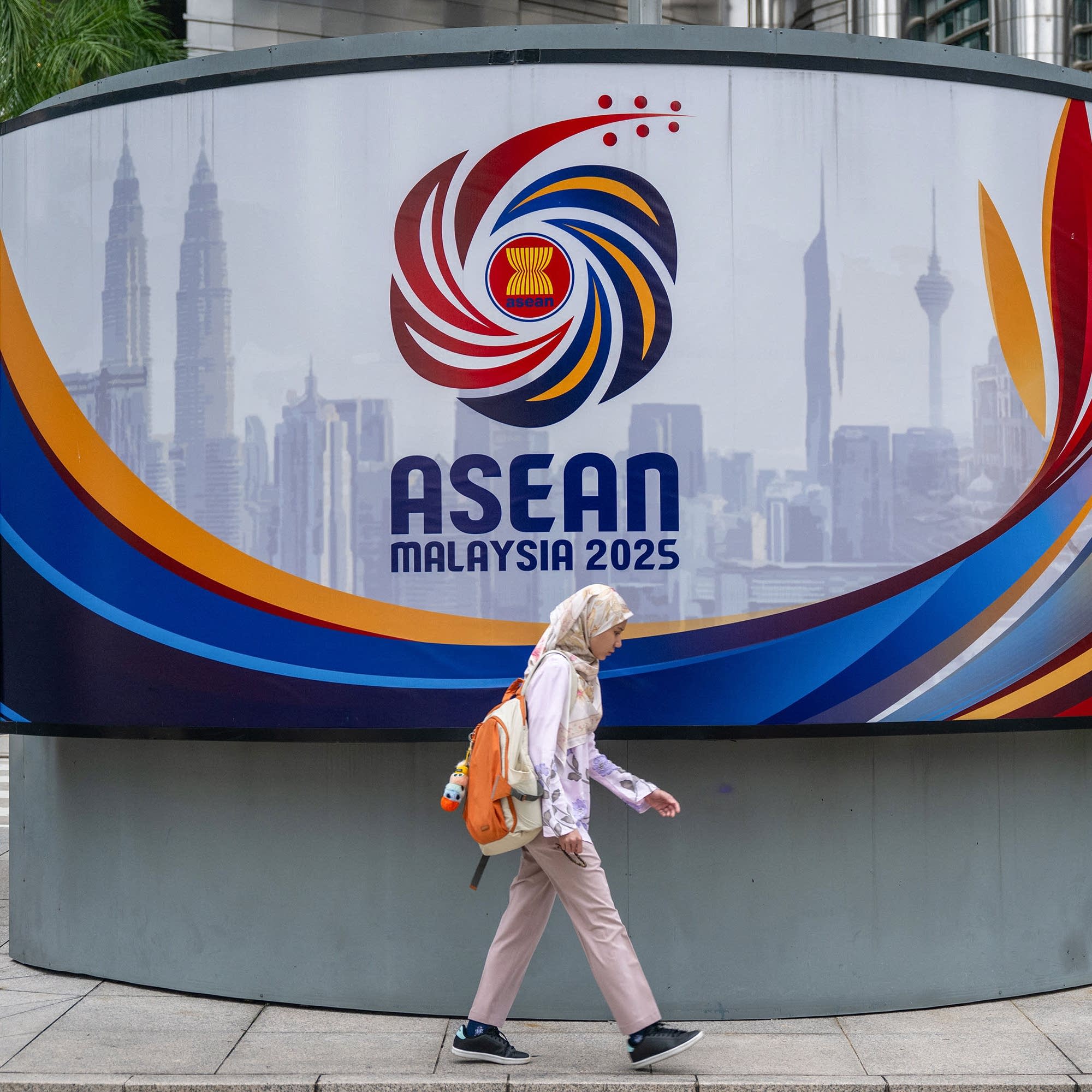
Loading summary
Transcript32 lines
- [00:00]
Dell Advertiser
Introducing your new Dell PC with the Intel Core Ultra processor. It helps you handle a lot, even when your holiday to do list gets to be a lot like organizing your holiday shopping and searching for great holiday deals and customer questions and customers requesting custom things. Plus planning the perfect holiday dinner for vegans, vegetarians, pescatarians and Uncle Mike's carnivore diet. Luckily you can get a PC with all day battery life to help you get it all done. That's the power of a Dell PC with Intel inside backed by Dell's price match guarantee. Get yours today@dell.com holiday terms and conditions apply. See dell.com for details.
- [00:30]
Odoo Advertiser
This podcast is supported by Odoo. Some say Odoo business management software is like fertilizer for businesses because the simple, efficient software promotes growth. Others say Odoo is like a magic beanstalk because it scales with you and is magically affordable. And some describe Odoo's programs for manufacturing, accounting and more as building blocks for creating a custom software suite. So Odoo is fertilizer Magic Beanstalk building blocks for business Odoo exactly what businesses need. Sign up@odoo.com that's o d o o.com.
- [01:01]
William Lee Adams
Southeast Asian countries Strike a Series of Trade Deals with President Trump Live from the uk, this is the Marketplace Morning Report from the BBC World Service. I'm William Lee Adams. Good morning. Let's start in Malaysia's capital, Kuala Lumpur, which has been hosting the summit of the association of Southeast Asian nations, or ASEAN for short. The countries including Thailand, Cambodia, Vietnam and Malaysia struck a series of trade deals and agreements with President Trump at the meeting. He's now continuing Asia trip in Japan. But talk about those deals and what they might mean for other negotiations continue. Deborah Elms is a trade policy expert at the Heinrich foundation in Singapore. It's a research organization that promotes global trade. Deborah Hai hi. Let's zoom in on Malaysia. Has Malaysia gained from these negotiations?
- [01:49]
Deborah Elms
Well, I think that is the great question. I think Malaysia had hoped to have more clarity around the tariff policies, and while they got a 19% tariff confirmed in place for the moment, they didn't get what they wanted on semiconductors, pharmaceuticals and other cases going forward.
- [02:06]
William Lee Adams
Is this a blueprint for how Trump's going to continue negotiations with other countries?
- [02:11]
Deborah Elms
I'm sure that the US Will try to use this as a blueprint and you can see there's parallels between what the US did with Malaysia and what the US did with Cambodia, for example. But I think every country has a different set of concerns and many would be less likely to sign on to the kind of deal that Malaysia just did. The US Is either less an important market for them or they may be more tied to other markets outside of the US or even outside of China. For example, there's some restrictions in this agreement that will make it difficult to sign deals in the future with the European Union.
- [02:43]
William Lee Adams
What's the United States walking away with? Will they be happy with the result?
- [02:47]
Deborah Elms
Well, I assume that they're going to be quite happy with the result because they were able to basically get Malaysia to do looks like almost everything that they wanted, including follow US Policy.
- [02:57]
William Lee Adams
Are there dangers or warnings that emerge from this deal for other countries?
- [03:03]
Deborah Elms
I would say there's a few things to be concerned about. So the big one is what happens if the Supreme Court strikes down the legislation that the US Used to impose these original tariffs? That's unclear in these documents. Are you then stuck with the 19% in this case forever? There's also nothing in there about other tariff policies that the United States might pursue, and I think that's going to become an increasingly important issue. There are some discussions about the expansion of these trade disputes into new areas like digital policy or environment and labor rights, which could also again prove problematic for Malaysia's domestic economy moving forward.
- [03:41]
William Lee Adams
Deborah, thanks for joining us on Marketplace.
- [03:44]
Deborah Elms
Thanks for having me.
- [03:45]
William Lee Adams
Let's do the numbers. President Trump's various trade deals have boosted Asian stocks. Japan's Nikkei 225 jumped 2.46% to close above 50,000 for the first time. And Thailand's exports rose 19% year on year in September, beating forecasts with its biggest jump in more than three years. Argentina's President Javier Milei has said he'll press ahead with more free market reforms after his party saw a landslide victory in midterm elections. The result will make it easier to pass his radical spending cuts despite discontent with the austerity measures Milei has imposed. The BBC's Ione Wells reports from Buenos Aires.
- [04:21]
Ione Wells
Javier Milei was elected on a platform to slash the state, which he represented by bringing a chainsaw with him to campaign rallies. He has since introduced widespread cuts to infrastructure, pensions, education, health and subsidies. His supporters praise him for cutting inflation and the deficit. But his critics say this has come at a great social cost and caused a recession. Having a minority in Congress had led to some political hurdles. Now passing further reforms will become a lot easier.
- [04:48]
William Lee Adams
To Canada now, where preparations for next summer's FIFA World cup are well underway. The country will jointly host the tournament along with Mexico and the U.S. soccer's global governing body expects around 6.5 million fans to attend the expanded tournament. But how will they navigate across the 16 host cities in the world's third largest continent? The BBC's Megan Lawton explains, okay, I'll.
- [05:11]
Megan Lawton
Just wait for this helicopter to pass on by who's trying to catch a view before it all begins. In the stands of the Toronto soccer stadium, Sharon Bolenbach, who oversees World cup planning for the city, explains how it plans to Transport an estimated 300,000 fans across the city.
- [05:29]
Sharon Bolenbach
Traffic is something that's top of mind for people here in the city and when people come to visit. So probably outside of any operational element, we started work on our mobility plan sort of earlier than anything else.
- [05:43]
Megan Lawton
A city known for its traffic, Toronto will host six games across the tournament, including Canada's opening fixture.
- [05:51]
Sharon Bolenbach
We're working with all public transit agencies to provide additional service, additional access capacity, extending length of time that cars and transit are operating.
- [06:06]
Megan Lawton
The city of Vancouver, 4,300 km across Canada, will host seven matches. Deloitte Sports events expert Jeff Harris explains how fans will navigate the distance between.
- [06:19]
Jeff Harris
The cities where I'm based. It would take me similar ish time to fly to London, England, as it would to Vancouver. So the way that at least the tournament in the earlier stages of the group phase is is actually going to be organized not so much east west, but north south. So to limit the duration that you might have to be on a train or a plane or in an automobile.
- [06:39]
Megan Lawton
Jeff says this will make the tournament a better experience for both fans and players with less time traveling and hopefully less jet lag.
- [06:48]
Jeff Harris
There's going to be a west zone, a central zone and an eastern zone and that the 16 different hosts are going to be dispersed among those three zones. So at least for those who are visiting for two weeks and won't be seeing their countries proceed any further to the knockout stage, it'll be starting with more of that north south clustering to help to minimize the time that individuals are spent traveling and to maximize the time that they're in the host cities having a great time.
- [07:15]
Megan Lawton
Meanwhile, in the U.S. lobbyists in Washington, D.C. are pushing for new provisions to make it easier for players and fans to arrive from countries that are not part of the visa waiver program. American travel expert Tory Barnes explains, we.
- [07:30]
Tori Barnes
Do have very long visa wait times to get into the US So if you're coming from a visa waiver program country, you would be fine, right? But many countries that have teams that would qualify for the World cup, like most in South America, will require a visa for visitors to come here.
- [07:47]
Megan Lawton
Tori says she would also like to see more efforts put into reducing queue times at airports, ensuring fans get to games.
- [07:55]
Tori Barnes
The connectivity we have is really strong within the United States, but some of the challenges that we have when you come into the country so custom wait times, for example, we should have a global entry like process for all Americans so that our CBP officers can really focus on those international visitors to get those wait times down.
- [08:16]
Megan Lawton
Back at the Toronto soccer stadium, Sharon Bolenbach says despite any concerns about hosting, she's excited to be welcoming fans to the country.
- [08:25]
Sharon Bolenbach
What I want people to come here is to come and experience Canada and its people. I mean, as I say, I'm a very proud Canadian and I think most Canadians are very proud with where we live and what we have to offer as a country and as a city.
- [08:40]
Megan Lawton
For now, the focus is less on the soccer and more on making sure fans can actually get to the games. In Toronto, I'm the BBC's Megan Lawton for Marketplace, and in the UK I'm.
- [08:52]
William Lee Adams
William Lee Adams with the Marketplace Morning Report from the BBC World Service.
- [09:02]
Million Bazillion Narrator
Sometimes kids ask questions that reveal just how much adults still need to learn, like can you explain what causes an economic bubble? And why are things so expensive at the airport? Or how much national debt might be too much? Fear not. Million Bazillion is back with a new season to help you and your kids become pros at understanding how money shapes the answers to all those questions and more. Listen to the latest season of Million Bazillion on your favorite podcast. Apparently.