Loading summary
Transcript36 lines
- [00:00]
Dell Commercial Announcer
Introducing your new Dell PC with the Intel Core Ultra processor. It helps you handle a lot, even when your holiday to do list gets to be a lot like organizing your holiday shopping and searching for great holiday deals and customer questions and customers requesting custom things. Plus planning the perfect holiday dinner for vegans, vegetarians, pescatarians and Uncle Mike's carnivore diet. Luckily you can get a PC with all day battery life to help you get it all done. That's the power of a Dell PC with Intel inside backed by Dell's price match guarantee. Get yours today@dell.com holiday terms and conditions apply. See dell.com for details.
- [00:32]
David Brancaccio
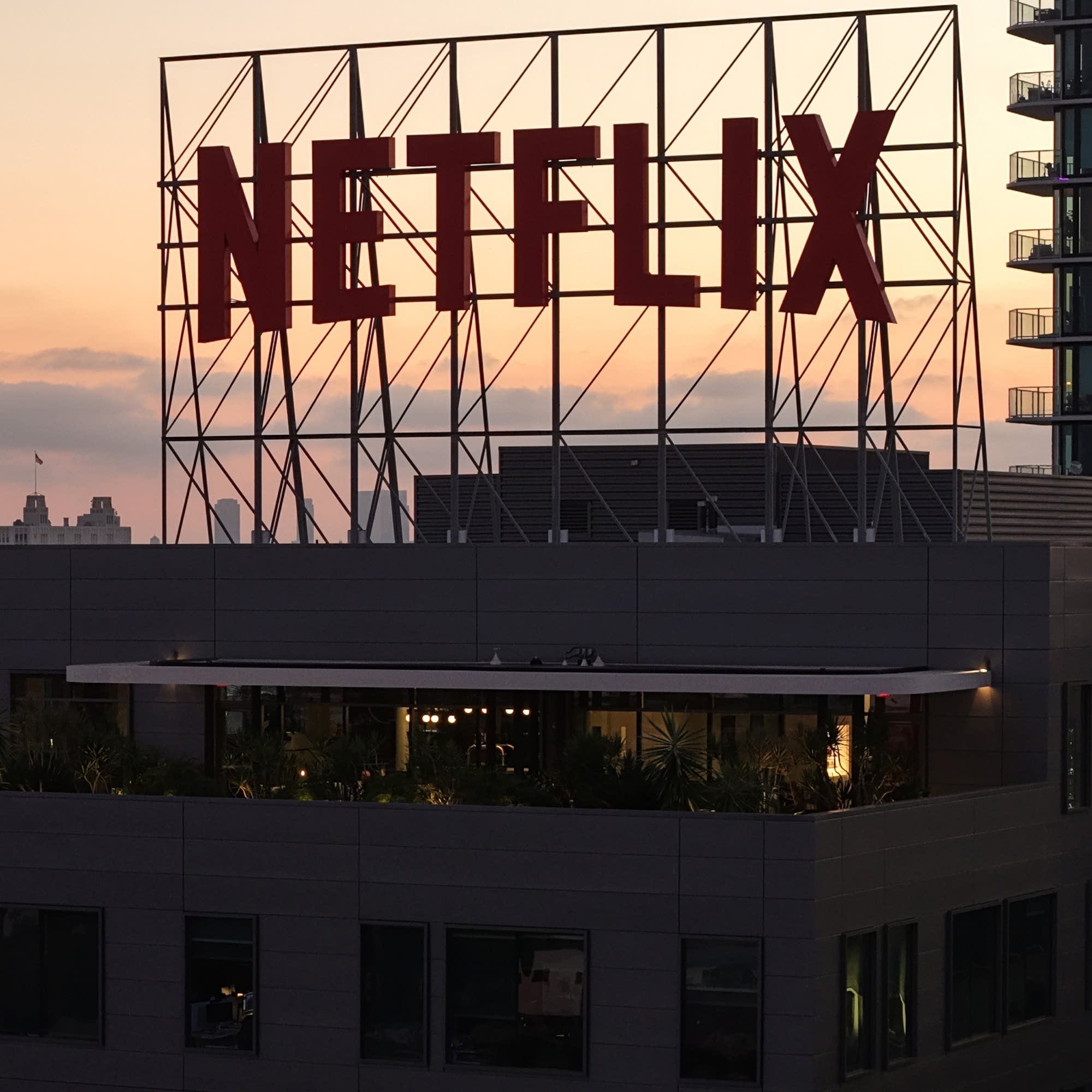
Big old screen bowl of popcorn. Gather round for a podcast. I'm David Brancaccio in Los Angeles. The largest entertainment company in the world is Netflix. If you rank it by stock price times the number of stocks, by that measure, the company is worth 6% less overnight after quarterly results that fell short. Now Netflix blames Brazil, a tax dispute there. Beyond the realm of accountants and back into the world of content, Netflix is trying a new strategy to make more worked out a deal to stream some podcasts from Spotify, several sports talk shows, some true crime pop culture too, shows that are both audio and video. What's the point of Netflix meets Spotify? Carnegie Mellon's Michael D. Smith joins us now. Professor, welcome David.
- [01:19]
Michael D. Smith
It's great to be here.
- [01:20]
David Brancaccio
Help me understand this. This is more about Netflix becoming a distribution system for podcasts that in many cases already do video.
- [01:28]
Michael D. Smith
I think this is a great deal for both Spotify and Netflix. There's value here on both sides. So Spotify has these podcasts that also have a video component. And guess what? Netflix has a great video platform that a lot of people use to discover new content.
- [01:47]
David Brancaccio
I see. Let me understand what Netflix gets out of this in your view.
- [01:51]
Michael D. Smith
Well, Netflix gets new content and if you look at the sort of shows they're getting, what I see is new content that is going to tell Netflix a lot about the user. So you know people who watch the Bill Simmons podcast giants was the best.
- [02:08]
Dell Commercial Announcer
Game of the year.
- [02:09]
Michael D. Smith
Just an unbelievable comeback by the Broncos, an unbelievable loss. Netflix is going to is going to know something about them and is going to be able to promote content to them versus the Rewatchables, versus Recipe Club, versus Serial Killers. When they see me watching that, those shows, they're going to know a little bit about me and are going to be able to promote content to me much, much more easily than they otherwise could.
- [02:33]
David Brancaccio
Aha. Our consumer data is at Play here. Spotify. What do they get out of this? I mean, you know, their niche is audio, I guess.
- [02:43]
Michael D. Smith
Honestly, when I go to Spotify, I'm going to listen to stuff, and when I go to Netflix, I'm going to watch stuff. So I think what Spotify gets out of this is, is access to a new audience on a platform where people are there to watch video. The other thing I think Spotify gets out of this is the potential to keep Netflix out of the podcast game.
- [03:03]
David Brancaccio
There's a brand we haven't mentioned here. You get the feeling that both Netflix and Spotify are looking over their shoulder. It begins with a why. What brand might I be thinking about?
- [03:14]
Michael D. Smith
Yeah, I'm just guessing. YouTube.
- [03:17]
David Brancaccio
Yeah.
- [03:17]
Michael D. Smith
So let's address the elephant in the room here. They both get out of this the possibility of doing a better job of competing with YouTube. So I think when they look at each other in this deal, they say, you know what the enemy of my enemy is, my friend? Let's create something where we both can do a better job of competing against YouTube.
- [03:40]
David Brancaccio
Is it fair to say that Netflix has a better heeled audience than, say, YouTube?
- [03:46]
Michael D. Smith
That's my sense. Right. Is by doing this, they're going after the top end of the market and we'll let YouTube keep the bottom end of the market.
- [03:55]
David Brancaccio
Audio with pictures. I look forward to the time when they have a camera up my nose. Trust me, I'm a handsome fellow at 2:15am Pacific Time. But there's no way to stop it, right? I mean, people just want video with their content. That's what people are used to.
- [04:10]
Michael D. Smith
That's what we seem to be finding is we started with these podcasts as audio and people discover actually it's a whole lot more fun to watch Conan o' Brien and Sona with video. So I think that's where it's moving. And I think this Spotify Netflix deal has a lot of value for both sides.
- [04:28]
David Brancaccio
Michael D. Smith is a professor of information technology and public policy at Carnegie Mellon University. Thank you so much.
- [04:35]
Michael D. Smith
My pleasure, David.
- [04:37]
David Brancaccio
Now, once a skeptic, America's central bank is warming to crypto. The Federal Reserve yesterday hosted a conference on innovations in paying for things with discussions on digital concoctions like stablecoins and ways to link traditional finance and digital marketplace's Nancy Marshall Genzer reports.
- [04:54]
Nancy Marshall Genzer
Fed Governor Christopher Waller kicked things off by saying the Fed is embracing new financial technology, not looking at it with suspicion or scorn.
- [05:03]
Fed Governor Christopher Waller
This is an acknowledgment. The distributed ledgers and crypto assets are no longer on the fringes but are increasingly woven into the fabric of the payment and financial system.
- [05:13]
Nancy Marshall Genzer
U.S. regulators have been skeptical and cautious toward digital currencies. But now, Waller says the central bank might create a new type of Fed account for fintech firms. It would give them access to Fed infrastructure for moving money around. These accounts wouldn't pay interest and could be capped, but they're a start, waller says.
- [05:32]
Fed Governor Christopher Waller
Payment innovation moves fast, and the Federal Reserve needs to keep up.
- [05:36]
Nancy Marshall Genzer
This would be a major benefit for crypto firms. Right now they have to rely on third parties like banks that have full fledged Fed accounts to make transactions. I'm Nancy Marshall Genzer for Marketplace.
- [06:09]
Capital One Commercial Announcer
If you love to travel, Capital One has a rewards credit card that's perfect for you. With the Capital One Venture X card, you earn unlimited double miles on everything you buy. Plus you get premium benefits at a collection of luxury hotels when you book on Capital One Travel. And with Venture X, you get access to over 1,000 airport lounges worldwide. Open up a world of travel possibilities with a Capital One Venture X card. What's in your wallet?
- [06:35]
David Brancaccio
Terms apply.
- [06:35]
Dell Commercial Announcer
Lounge access is subject to change. See capital1.com for details.
- [06:40]
David Brancaccio
OpenAI, the maker of ChatGPT, has launched not a Web page but a whole Web browser with artificial intelligence built in. Atlas is a rival to Google's Chrome and will be a way to scroll, with ChatGPT always at hand. The BBC's North America technology correspondent Lily.
- [06:57]
Lily Jamali
Jamali has more OpenAI boss Sam Altman says Atlas will be powered by artificial intelligence. Paying subscribers can set up ChatGPT to conduct searches on its own in what it calls agent mode. The challenge to Google comes a year after the search giant was declared an illegal monopolist in online search. But the company has not been ordered to spin off its Chrome browser as an antitrust remedy, as US Government lawyers had requested. Google is also heavily invested in AI, and for the last year has been able to show users AI generated answers in its search results.
- [07:34]
David Brancaccio
That's the BBC's Lilly Jamali also, Bloomberg is reporting that Google and Anthropic are in discussions about a deal that could bring in a lot more computing power to Anthropic's AI system called Claude, which doesn't work as a name on the radio here because you might be thinking C L O D, as in blockhead. It's Claude, like the French name, like composer Claude Debussy or Claude Shannon, the father of information theory. In Los Angeles, I'm David Brancaccio. Marketplace Morning report from APM American Public Media.
- [08:07]
Bridget
Hey, everyone, it's Bridget, host of Million Bazillion, a podcast from Marketplace. You've probably heard about the government shutdown, but if you're anything like our young caller Esme, whose dad is a federal worker, you might still have questions.
- [08:20]
Lily Jamali
I've noticed that my dad hasn't been going to work, and I don't know when the government shutdown will stop and my dad can go back to work.
- [08:29]
Bridget
We can help tune into our recent episode where we explain what you and the young ones in your life need to know about government shutdowns. Listen to Million Bazillion on your favorite podcast app.