Loading summary
Transcript39 lines
- [00:00]
Wealth Enhancement Sponsor
This Marketplace podcast is supported by Wealth Enhancement, who understand that dreams don't happen by chance. It takes a plan. They're ready to build your wealth. Blueprint for retirement, investing taxes and everything else your financial life brings. It reveals gaps and highlights opportunities you may have missed at no cost to you. Find out more at wealthenhancement.com Blueprint.
- [00:29]
Stuart Clarkson
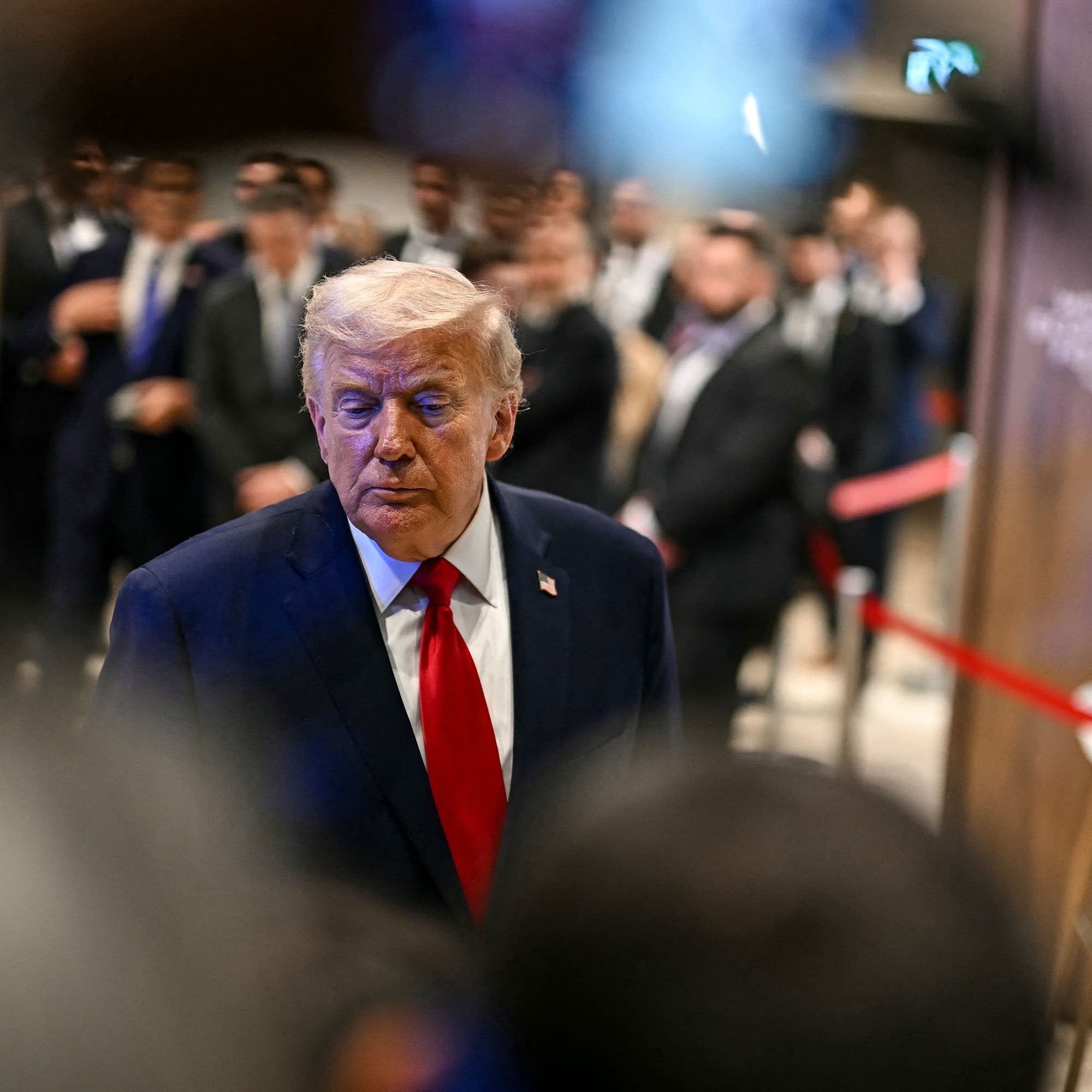
Stocks rally in Europe as relations thaw in Davos. Live from the UK this is the Marketplace Morning Report from the BBC World Service. I'm Stuart Clarkson. Good morning. So the world has been reacting to Donald Trump's announcement on an agreement for the future of Greenland. The president said the US Will now not impose tariffs on eight NATO countries. Here's how some people in Greenland have responded.
- [00:53]
Greenland Resident 1
Very thrilled to hear that. First of all, because he has been saying a lot of stuff about taking Greenland with forest, like he'll do it the hard way, which is so scary to hear.
- [01:04]
Greenland Resident 2
You know, it doesn't feel like everything is over just because a statement like that is out. So I still feel like everything can happen. So time will tell what happens.
- [01:15]
Stuart Clarkson
That's what some Greenlanders think. What about the markets here in Europe this morning? We've seen rises of around 1% on the main indices. Let's talk to Fiona Cincotta, who's a senior analyst at Stonex. Hi, Fiona.
- [01:27]
Fiona Cincotta
Hello.
- [01:28]
Stuart Clarkson
Thanks for being with us on Marketplace. So talk us through how the markets in Europe have responded after what we heard yesterday.
- [01:33]
Geert Roanhorst
Yes.
- [01:34]
Fiona Cincotta
So we've seen a real change in sentiment. We've seen European markets have set off the day significantly stronger as risk sentiment returns. And investors are more optimistic about the outlook as President Trump announced that he will be withdrawing tariff threats. So, you know, those concerns that had been over sort of potential impact to corporate earnings, to broader economic growth and to inflation have all calmed down. And as a result, we're seeing investors buying into equities once again. And we're also seeing those safe havens so like gold and silver coming off as investors feel more optimistic about the outlook.
- [02:16]
Geert Roanhorst
Yeah.
- [02:16]
Stuart Clarkson
And I mean obviously follows the drops when he threatened the tariffs. Why do markets react so much to comments from President Trump given that so many times now we've seen him make threats and then row back again.
- [02:27]
Fiona Cincotta
That's right, the so called taco trade. Right. Trump always chickens out. It seems to be becoming a bit of a trend. I think the thing is with Trump is he's so unpredictable. It's always difficult to know whether he will actually go ahead with those threats or not. Obviously, if he does go ahead with those threats such as trade tariffs. These are big moves that he's threatening that would have a large impact on corporations earnings, on global growth, on the inflation in several countries. So that's why the market is nervous when he makes those threats. But then we do see, and we have been seeing this tendency for Trump to then rein in or row back on those threats. And then we see this recovery and a rebound in market sentiment.
- [03:14]
Stuart Clarkson
Do you think that drop and rise will become a smaller thing the more this goes on?
- [03:19]
Fiona Cincotta
I mean, there is a sense, right. If we think back to sort of a liberation day, I mean, the move that we saw in the markets, obviously that was a much larger scale than what we've seen from Trump, just with the tariff threats on eight countries. But I think we are seeing a slightly lesser reaction as he sort of continually applies the same process. So I think there is a sense that the market is becoming a little bit savvy to his processes here. But I think there is always going to be that sense of. But what if, what if he does go ahead with it?
- [03:50]
Stuart Clarkson
Okay, thanks so much for joining us on marketplace, Fiona.
- [03:53]
Fiona Cincotta
Thank you.
- [03:54]
Stuart Clarkson
Let's do the numbers now. And as Fiona mentioned, those safe havens have been doing well. Platinum hit a record high of just over two and a half thousand dollars per oun, up at $4,800 now with the latest forecast from Goldman Sachs, a target of 5,400 by the end of the year. And the Chinese carmaker Geely, which owns Volvo, says it's targeting global sales of more than six and a half million vehicles by 2030 with revenue of $143 billion. You might think of corporate bonds as relatively modern, but companies have actually been issuing them since at least the 17th century. The BBC's Rob Young's been taking a look at one of the oldest bonds still in existence.
- [04:34]
Rob Young
Let me take you back to 1648. Picture this. A water company in the famously wet Netherlands needs cash to build a levy. It doesn't raise taxes. It borrows money by issuing bonds. And the IOU isn't written on paper, but on vellum goatskin. Almost four centuries on, one of those original bonds survives, and it's still collecting interest. The bondholder is Yale University in the United States.
- [05:04]
Interviewer
Hi, Geert. How are you doing?
- [05:05]
Geert Roanhorst
Very well, thank you.
- [05:07]
Rob Young
Geert Roanhorst, a Dutch professor of finance at Yale, showed me his prized possession over a video link.
- [05:14]
Geert Roanhorst
Can you press the button?
- [05:15]
Rob Young
It's history you can hold in your hands and proof that bonds aren't just about money. They contain stories that stretch across centuries.
- [05:24]
Geert Roanhorst
It's a manuscript bond, which means it's sort of written on vellum, actually, at that time. And what's unusual about this bond is that it still pays interest.
- [05:35]
Interviewer
Can you read what it says? The writing looks incredibly old.
- [05:38]
Geert Roanhorst
It is old, and if you just looked at it first, it just looks like an old manuscript. Although I'm Dutch myself, it wouldn't occur to me at a first look that this is actually a Dutch bogged. The language itself was quite different from the way we sort of write and construct sentences today. So. So it is actually hard to read. When we acquired the bond, I actually contacted somebody with the knowledge of medieval Dutch to kind of decipher what the bond was really about. It's an obligation to pay interest over the equivalent of 1,000 Carolus guilders, which was the currency in the mid 17th century in the Netherlands.
- [06:18]
Interviewer
And what was the original loan for? Why were these bonds issued?
- [06:22]
Geert Roanhorst
The organization that issued it is a water board, or water authority. Their objective was to help defend the country against the water. You know, if there weren't any system of levees in the Netherlands, half of it would be, you know, underwater and a big floodplain. So these water authorities were these semi, you know, governmental organizations that were set up to kind of organize people to join forces to combat the waters.
- [06:49]
Interviewer
And so you are still collecting interest on this almost 400 years after it was first issued. Which is incredible, isn't it, given that presumably most bonds aren't around for anything near that length of time.
- [07:00]
Geert Roanhorst
So there's a number of reasons why it's incredible. The first is that the instrument has survived. If we would have lost this bond, the physical document, there'd be nothing to present to collect the interest. So in some sense that's a miracle. The second thing is that many of the perpetual bonds that were issued had call provisions, which means that the issuer could at some point raise their hand and says, you know, enough already. I'm going to just repay my obligations. Although they were issued in perpetuity, I have the right to basically repay these bonds early. But this one is actually. Is not callable. That's unusual about this.
- [07:38]
Interviewer
So your university then will continue to be entitled to annual interest payments forever.
- [07:45]
Geert Roanhorst
Forever. Now, it's not going to be, you know, a huge amount. As we said, it was 50k. Of course, Karolish guilders don't exist anymore. We collect the equivalent of about, you know, €11. And I have it here in front of me. It's €11 and 35 cents on this bond, about $13. So every so many years we collect annual interest on this bond.
- [08:08]
Interviewer
I imagine the flight costs considerably more than the interest payment you collected.
- [08:13]
Geert Roanhorst
I was actually visiting family, so kind of all worked out.
- [08:17]
Interviewer
And how long do you think you'll be able to store it for before it, oh, I think disintegrates in some way?
- [08:24]
Geert Roanhorst
Vellum is just incredibly sturdy. This could live for another thousand years, no problem.
- [08:30]
Stuart Clarkson
That's Git Rowanhurst ending that report from the BBC's Rob Young. Thanks for listening today in the UK I'm Stuart Clarkson with the Marketplace morning report from the BBC World Service.
- [08:47]
Rima Reis
I'm Rima Reis. And this week on this is Uncomfortable, fellow podcaster and host of Scamfluencers, Sarah Hagie joins me to sort out your work drama. We answer your questions about scammy bosses, managing workplace friendships and co workers who push the boundaries a little too far. I'm going to stay at your place for a bit while I'm breaking up and obviously I'll need a key and that is how you get a squatter. Listen to this is Uncomfortable on your favorite podcast.
- [09:17]
Sarah Hagie
Apparently.