Loading summary
Transcript36 lines
- [00:00]
Dell Advertisement
This Marketplace podcast is supported by Dell introducing the new Dell AI PC powered by Intel Core Ultra processor. It helps do your busy work for you so you can fast forward through editing images, designing presentations, generating code, debugging code, summarizing meeting notes, finding files, managing your schedule, responding to long emails, leaving all the time in the world for the things you actually want to do. Get a new Dell AI PC starting at $699.99 at Dell.com AI PC how those ahead Stay ahead.
- [00:31]
Palo Alto Networks Advertisement
This Marketplace podcast is supported by Palo Alto Networks. Enterprises are deploying and experimenting with AI apps and agents, often without the right security in place. Leverage the power of a comprehensive AI platform to secure AI at every step from apps, agents, models and data. Deploy AI bravely with Prisma airs more at Palo Alto networks.com PAL T -.
- [01:00]
Sabri Ben Ashore
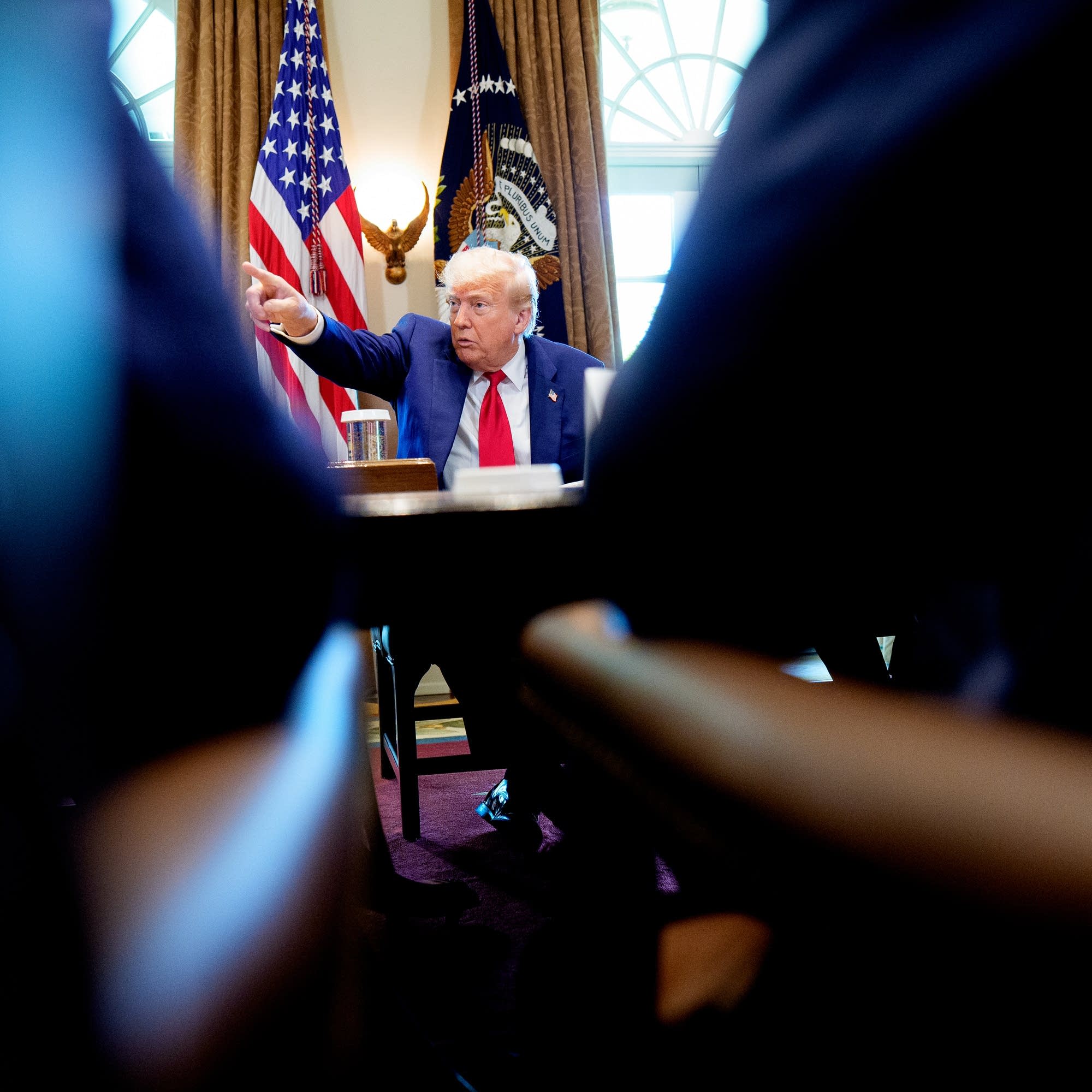
Two days until we get Trade deals, Higher tariffs, or both or neither from Marketplace I'm Sabri Ben ashore in for David Brancaccio. The deadline for countries the world over to agree to trade deals with the US Is Wednesday. Or maybe not. Sky high tariffs announced and delayed in April could come roaring back on Wednesday. Or maybe not. President Trump and his advisors are issuing mixed messages Marketplaces Nova Sappho sorts it out for us.
- [01:29]
Nova Safo
90 deals in 90 days was the promise almost 90 days ago when President Trump paused so called reciprocal tariffs, the initial imposition of which sent stock and bond markets plummeting. Well, the 90 days are up this Wednesday and the administration has announced two limited deals, one with the uk, the other with Vietnam. So now as that deadline approaches, there are a number of new developments. For one, officials say more deals could come within days. In the meantime, they appear to be buying themselves more time delaying the imposition of higher tariffs until August 1st. The president said his administration will send out letters to an unspecified number of countries as soon as noon Eastern today, apparently regarding either new tariff rates or new deals. The president also threatened new 10% tariffs on nations aligned with the BRICS group of developing countries, which includes Brazil, Brazil, Russia and China. That group over the weekend issued a statement criticizing tariffs without specifically naming the U.S. i'm Novas Safo for Marketplace.
- [02:34]
Sabri Ben Ashore
Tomorrow the Federal Reserve bank of New York is going to give us an update on how we consumers feel about inflation, specifically what we think is going to happen to prices in the future. Inflation expectations have been rising over the past six months. A survey in June from the University of Michigan found that even though actual inflation right now is around 2.4%, we can consumers think it'll get up to 5% a year from now. This is something economists track because the thing about inflation is that it can be as much about psychology as it is about prices. What we think inflation's gonna do can affect what inflation actually ends up doing. Marketplace's Matt Levin has that.
- [03:15]
Matt Levin
So if you think the price of a car or washing machine is gonna be a lot higher a year from now, the economically rational thing to do would be to buy said car or washing machine right now. And while you're at it, maybe think about asking for a raise. Brian Colton is an economist with Fitch Ratings.
- [03:33]
Sabri Ben Ashore
Inflation expectations matter because they affect people's behavior, so they will affect the willingness.
- [03:40]
Palo Alto Networks Advertisement
Of workers to carry on working with.
- [03:43]
Kristen Schwab
A given level of wages.
- [03:44]
Matt Levin
Higher consumer demand plus higher wages could lead businesses to charge higher prices, a self fulfilling inflationary nightmare for the Fed. Oddly, this year inflation expectations have been rising while actual inflation readings have been pretty stable. Economist Yuri Gorodnichenko at UC Berkeley says tariffs and even short lived jumps in oil prices are triggering post Covid inflation memories.
- [04:10]
Nova Safo
Everybody was scarred by recent inflation surge.
- [04:14]
Matt Levin
They think high inflation can happen. It's a realistic scenario even if we haven't seen tariffs really impact prices all that much. At least not yet. Hi, I'm Matt Levin for Marketplace.
- [04:47]
Palo Alto Networks Advertisement
This Marketplace podcast is supported by Dell. The Black Friday in July event from Dell Technologies is here. There's never been a better time to upgrade. Now's your chance for great offers on popular trusted technology. You'll also discover huge deals on exciting new AI ready laptops like the Dell 14 plus featuring Intel Core Ultra processors starting at $699.99. Don't forget to explore big savings on top electronics and accessories. Plus enjoy fast free shipping and and other exclusive benefits like Dell Rewards Premium Support and Dell care premium which provides 24. 7 support with no hidden fees or deductibles. Upgrade for a limited time only@dell.com deals that's Dell.com deals.
- [05:38]
This Marketplace podcast is supported by Palo Alto Networks. Listen to Threatvector, the Palo Alto Networks podcast for in depth discussions with industry leaders and experts providing crucial insights for security decision makers. Whether you're looking to stay ahead of the curve with innovative solutions or understand the evolving cybersecurity landscape, ThreatVector equips you with the knowledge needed to safeguard your organization. Tune in and subscribe to threatvector wherever you get your podcasts.
- [06:07]
Sabri Ben Ashore
What's the line between a brand following a trend and outright copying a design? That is the question behind a Lululemon lawsuit against Costco. The ATHLEISURE brand says the discount warehouse ripped off designs of its popular SWE shirt and pants. Marketplaces Kristen Schwab takes a look at how successful these kinds of design lawsuits generally are.
- [06:28]
Kristen Schwab
Dupe culture has taken over social media dupe fragrances that you can wear every day.
- [06:34]
Christopher Durham
This tank is a skims dupe, but better.
- [06:37]
Kristen Schwab
This is your sign to save yourself.
- [06:38]
Christopher Durham
Some money and get some dupes.
- [06:40]
Kristen Schwab
Call it a dupe, a copycat or a knockoff. Though the trending term has changed over the years, the idea has been around for a long time, as long as people have been making some stuff. Sarah Fakrell is a law professor at Illinois Tech.
- [06:54]
Christopher Durham
This is nothing new. This is one reason why we even have design patents in the first place.
- [06:59]
Kristen Schwab
Design patents protect, well, the design of a product, its shape, pattern and overall appearance. But getting a court to side with a patent owner to say yes, Lululemon Costco has copied your design. That is a difficult bar to pass.
- [07:15]
Christopher Durham
So you got to prove that someone's going to look at that jacket and think that it was made or sponsored or approved by Lululemon to just on how it looks.
- [07:22]
Kristen Schwab
That's pretty subjective. Plus, once you open this can of worms, the lawsuit possibilities become endless. Is the Ford Bronco a dupe for a Jeep? Is Pepsi a dupe for Coke? What is the difference between inspiration and outright copying? Christopher Durham is president of the Velocity Institute, which does private label consulting.
- [07:43]
Sabri Ben Ashore
If you look across all of retail, 95% of all things are duplicates. 5% are innovation.
- [07:49]
Kristen Schwab
Durham says this is how trends work and that competition is good for consumers because it means more selection and lower prices. Private labels have become so popular that consumers, once embarrassed by being seen with off brand cereal, now seek dupes out. Think Costco's Kirkland, Sephora's, Sephora Collection and Target's Good and gather.
- [08:12]
Sabri Ben Ashore
Trader Joe's has been making JoJo's for 50 years. That recipe is just different enough that they don't get sued. And honestly, a lot of people think the JoJo's are better than the Oreos.
- [08:24]
Kristen Schwab
With the rising popularity of private labels and copycat culture, Jan Benedik Steenkamp, a marketing professor at UNC Chapel Hill, thinks we'll see more brands take legal action.
- [08:35]
Matt Levin
Every percentage point market share that you.
- [08:38]
Kristen Schwab
Lose to a private label, it really.
- [08:39]
Nova Safo
Bites into your bottom line.
- [08:41]
Kristen Schwab
These lawsuits can be beneficial for plaintiffs.
- [08:45]
Nova Safo
Not because they necessarily will win them.
- [08:47]
Kristen Schwab
All, but because enough legal action can scare other copycatters away, making everyone more likely to copycat something else. I'm Kristen Schwab for Marketplace.
- [08:59]
Sabri Ben Ashore
And in New York, I'm Sabri Benishore with the Marketplace Morning Report from APM American Public Media.
- [09:09]
Christopher Durham
From Emmy award winning series this Old House comes a new podcast, this Old House Radio Hour. We tell stories of the artisans, builders and visionaries that keep the spirit of craftsmanship alive. We also uncover America's forgotten homes with cheap old houses hosts Elizabeth and Ethan Finkelstein. Places with history, soul and price tags that seem too good to be true. Listen and follow this Old House Radio Hour from LA Studios and American Public Media. Wherever you get your podcasts.