Loading summary
Transcript26 lines
- [00:00]
Oregon Lottery Representative
In the summer, all of Oregon is our playground thanks to our incredible park system. That's why it's so cool that Oregon Lottery gameplay like video lottery or Cash Pop helps support tons of parks projects statewide like accessible trails at Silver Falls State park or upgrades to your favorite dog park in Newburgh. It's just one way a little lottery play for many Oregonians can add up to a lot of good the Oregon Lottery Together we do good things. Lottery games are based on chance and should be played for entertainment only. Must be 18 or older to play.
- [00:31]
Dell Representative
This Marketplace podcast is supported by Dell Introducing the new Dell AI PC. Powered by Intel Core Ultra processor, it helps do your busy work for you so you can fast forward through editing images, designing presentations, generating code, debugging code, summarizing meeting notes, finding files, managing your schedule, responding to long emails, leaving all the time in the world for the things you actually want to do. Get a new Dell AI PC starting at $699.99 at Dell.com AI PC how those ahead stay.
- [01:03]
Liana Byrne
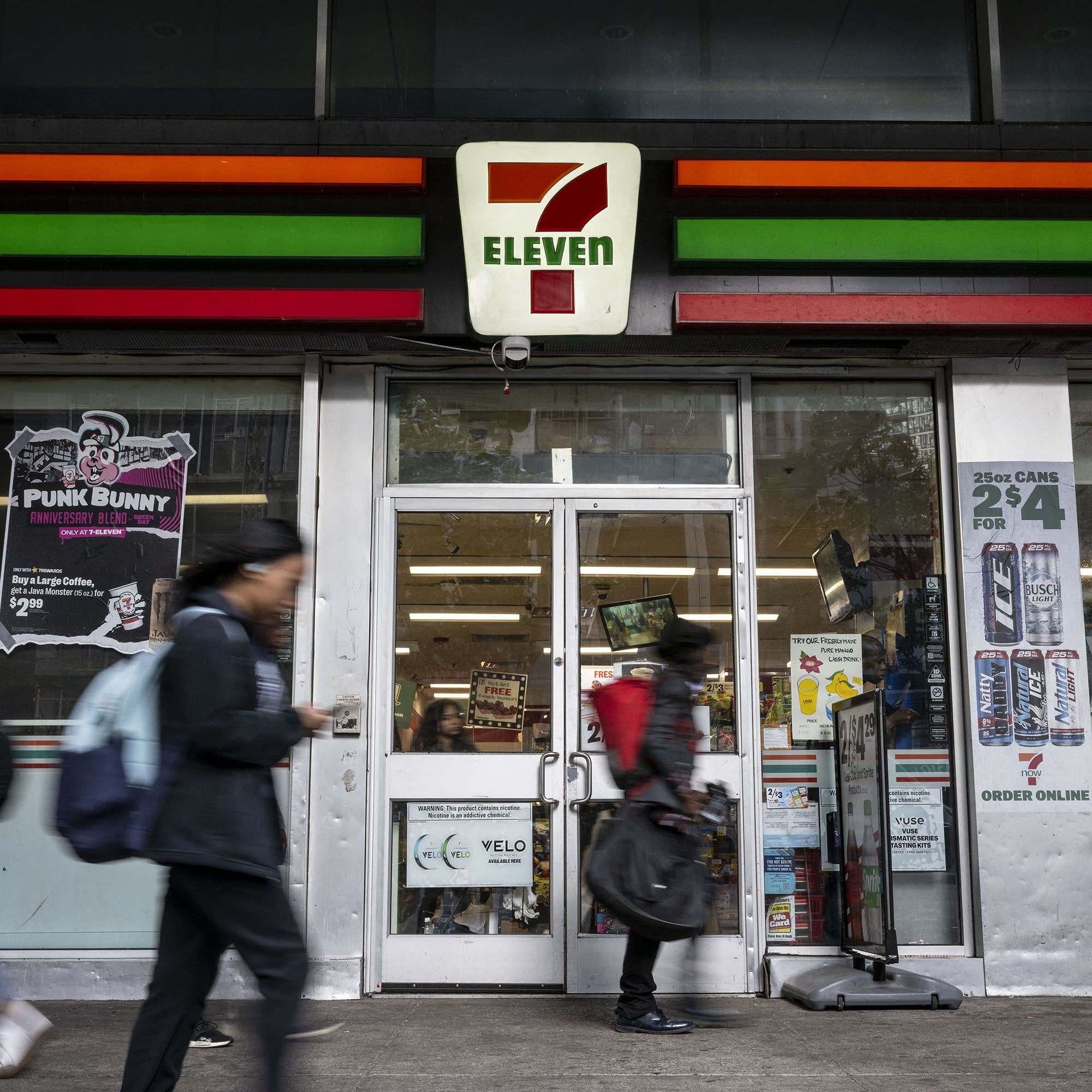
There's Takeover Trouble in the World of Convenience Stores hello, this is the Marketplace Morning Report, and we're live from the BBC World Service. I'm Liana Byrne. Good morning. So the Canadian firm Couchetar, best known for Circle K, is walking away from a $47 billion bid to buy Japan's 7i, the parent company of 7Eleven. Here's the BBC's MorphoGarty.
- [01:27]
Morpho Garty
Had the deal gone through, it would have combined the world's biggest convenience store chain, seven Eleven, with the Canadian Circle K stores to create a global mini mart giant with more than 100,000 stores around the world. Seven and I said they were disappointed and not surprised by their rival's decision, and that they also disagreed with the numerous mischaracterizations. The proposal was widely seen as a litmus test of corporate Japan's willingness to accept foreign takeovers, which for now, there seems to be little appetite for.
- [02:00]
Liana Byrne
More fogerty there. Now let's the numbers. China's power demand just hit a record 1.5 billion kilowatts as blistering heat wave pushes people to crank up the aircon. Half the grid's power came from solar. Meanwhile, tsmc, the Taiwanese chip giant behind Apple and Nvidia, just posted a 60% jump in profits, riding the AI boom to $13.5 billion last quarter. Okay, Bitcoin hit highs this week around $120,000 and has since slipped back. But you might be wondering what's behind the latest rise and whether it's sustainable. To explain, here's Susannah Streeter, head of money and markets at Hargreaves Lansdowne. Hello.
- [02:42]
Susannah Streeter
Hello. Great to be with you.
- [02:44]
Liana Byrne
Susanna. You know, we've seen bitcoin hit record highs this week, but what's fueling this one?
- [02:49]
Susannah Streeter
Well, this really was flagged as crypto week because of course, we had that legislation going through Congress really aimed at cementing bitcoin in the financial system, giving it a greater regulatory framework. So there's been a lot of excitement over that. There is also support for bitcoin because of longer term concerns about just the debt mounting being built up in the United States. And some watchers and enthusiasts for bitcoin see this as a long term weakening pressure on the dollar. And that's also given more to crypto. And then of course, you have this fomo, this fear of missing out. And once you see big climbs in the price of coins and tokens, bitcoin in particular, lots more speculators jump on the bandwagon and that pushes the price even higher.
- [03:51]
Liana Byrne
Yeah, the FOMO premium maybe you might call it. But I mean, some people are even saying it's a safe haven now for investors like gold or silver. Could you go that far?
- [04:03]
Susannah Streeter
No. I mean, even though it's not hard to make a case that bitcoin's current rally carries lasting momentum, it is still so volatile, general trading becomes more stable, its use as a mainstream store of wealth will always come into question. There's also geopolitical flare ups, you know, big sales. So really the best advice is, you know, you might want to hold it a small part of your portfolio if you're a vessel speculator. But you really shouldn't be holding it if you, if you haven't got money, you can afford to lose.
- [04:35]
Liana Byrne
Good advice. Susanna Streeter, head of money and markets at Hargreaves Lansdowne. Thank you so much for joining us on Marketplace.
- [04:41]
Susannah Streeter
Thank you for having me.
- [04:43]
Liana Byrne
Americans are firing up their grills this summer, but they're getting singed by the cost of beef. Prices continue to rise with some cuts reaching all time highs. Monica Miller went to find out why.
- [04:56]
Monica Miller
Uncle Jack's Steakhouse in New York is a known quantity in certain circles. There are framed pictures at the entrance of famous patrons. The owner calls it his wall of fame.
- [05:07]
Oregon Lottery Representative
William Deagle, Uncle Jack's owner, entrepreneur, aka the Steak Doctor.
- [05:11]
Monica Miller
A porterhouse steak for two is listed on the menu at an eye watering $165. But these days, an increase in beef prices has Mr. Deagle offering new menu items that most customers can afford.
- [05:25]
Oregon Lottery Representative
I evolved my menu right, evaluated the menu to have more burger cuts, more steak sandwich cuts. So right now we have an Uncle Jack's steak sandwich. I've always had it, but now I have a French dip because a lot of people can't afford the steak. So they're choosing down to still get the meat experience.
- [05:43]
Monica Miller
Hamburgers are popular items on home grills during the summer. The latest figures show the average pound of ground beef in May was close to $6, a 16% increase compared to last year. One reason why beef prices are so high is the US has the lowest cow inventory in over 70 years. The business wasn't profitable, according to Michael Swanson, agricultural economist for Wells Fargo.
- [06:08]
Michael Swanson
They mean when you don't make money, you stop doing what you do or you do less of it. Simple as that.
- [06:12]
Monica Miller
High living expenses, droughts, and an increase in grain prices are some reasons that have discouraged farmers from raising more cattle or have gone out of business altogether. The US Sells high end cuts like steak to the international market, but it primarily buys what's considered hamburger meat or what's sometimes called grind from abroad. Right now, the US Imports more beef than it exports when we go to.
- [06:37]
Michael Swanson
The supplemental market, about 20% or 15%, depending on how you want to calculate it. On the grind side, Australia, Brazil, places like that. Why? Because they have large cattle herds that are out on the grass walking around. Not really to our taste for steaks, but certainly make a good hamburger.
- [06:55]
Monica Miller
Mr. Swanson says tariffs will have an impact on prices. But despite the sticker shock at the checkout, Americans are the world's largest consumers of beef. Cattle farming could see a resurgence in.
- [07:07]
Michael Swanson
The US but high prices usually bring more production. There's a lot more nice pickup trucks on the road today in cattle country.
- [07:14]
Monica Miller
Roughly 85% of the industry is run by a few large companies and the job outlook for cattle farmers is declining.
- [07:25]
Liana Byrne
Monica Miller with that report. And I'm Liana Byrne with the Marketplace morning report from the BBC World Service.
- [07:37]
Elizabeth and Ethan Finkelstein
From Emmy award winning series this Old House comes a new podcast. This Old House Radio Hour. We tell stories of the artisans, builders and visionaries that keep the spirit of craftsmanship alive. We also uncover America's forgotten homes with cheap old houses. Hosts Elizabeth and Ethan Finkelstein. Places with history, soul and price tags that seem too good to be true. Listen and follow this Old House Radio Hour from LAS Studios and American Public Media. Wherever you get your podcasts.