Loading summary
Transcript31 lines
- [00:00]
A
This podcast is supported by Odoo. Some say Odoo business management software is like fertilizer for businesses because the simple, efficient software promotes growth. Others say Odoo is like a magic beanstalk because it scales with you and is magically affordable. And some describe Odoo's programs for manufacturing, accounting, and more as building blocks for creating a custom software suite. So Odoo is fertilizer Magic Beanstalk building blocks for business Odoo exactly what businesses need. Sign up@odoo.com that's o d o o.com.
- [00:31]
B
Hey, hate to do this.
- [00:32]
C
Could we reschedule our morning hike? I was just about to ask the same next week.
- [00:38]
B
Yes, it's Dunkin Original Blend time.
- [00:41]
C
Staying at home with Duncan? Don't mind if I do.
- [00:43]
D
The home with Duncan is where you want to be when a president says a central banker is fired, but she's not president, I'm David Brancaccio. President Trump says he is immediately firing Federal Reserve Governor Lisa Cook for alleged mortgage fraud. Cook says she's not leaving, and evidence for the allegation, if any, has not been shared publicly. And unlike, for instance, the head of the President's Council of Economic Advisers, Cook does not serve at the pleasure of the president. And experts say she can only be removed if cause is established. Marketplace Washington correspondent Nancy Marshall Genzer joins us now. What's the claim regarding Cook and Trump.
- [01:26]
E
Is referring to allegations that Cook claimed two houses as her primary residence on mortgage applications. Mortgage rates on second homes can be higher than rates for your primary residence. But the Banking act of 1935 says Fed governors can only be fired for cause. And it's not clear that even if Cook did this, it would be cause enough to fire her.
- [01:48]
D
And Cook says she's not stepping down. What's the next step? Maybe court?
- [01:54]
E
It certainly looks that way, David. In a statement through her lawyer, Cook says no cause exists for her firing. Trump does not have the authority to remove her, and she'll continue to carry out her duties.
- [02:06]
D
But let's say Cook is forced out. The president can then fill two vacancies on the Fed Board of governors, which would mean a majority of Trump appointees on that powerful board. They might be independent minded, but they might not be.
- [02:20]
E
And markets would be afraid. The Fed was just doing what the president wants, not what's good for the economy. If investors lose confidence in the Fed, they'll demand higher interest rates to hold U.S. bonds. And I spoke about this with Alex Haquez. He's with Groundwork Collaborative A progressive economic think tank.
- [02:39]
F
All of these moves that Trump is making, that is shaking confidence in the US Is only going to drive up interest rates and certainly long term rates for treasury bonds, which is going to filter through the rest of the economy. It's going to hit people, their mortgages on their credit cards because the market.
- [02:58]
E
Controls those longer term interest rates. So even if the Fed were lowering short term rates, you could still end up with higher rates for things like mortgages. The exact opposite of what Trump wants.
- [03:27]
D
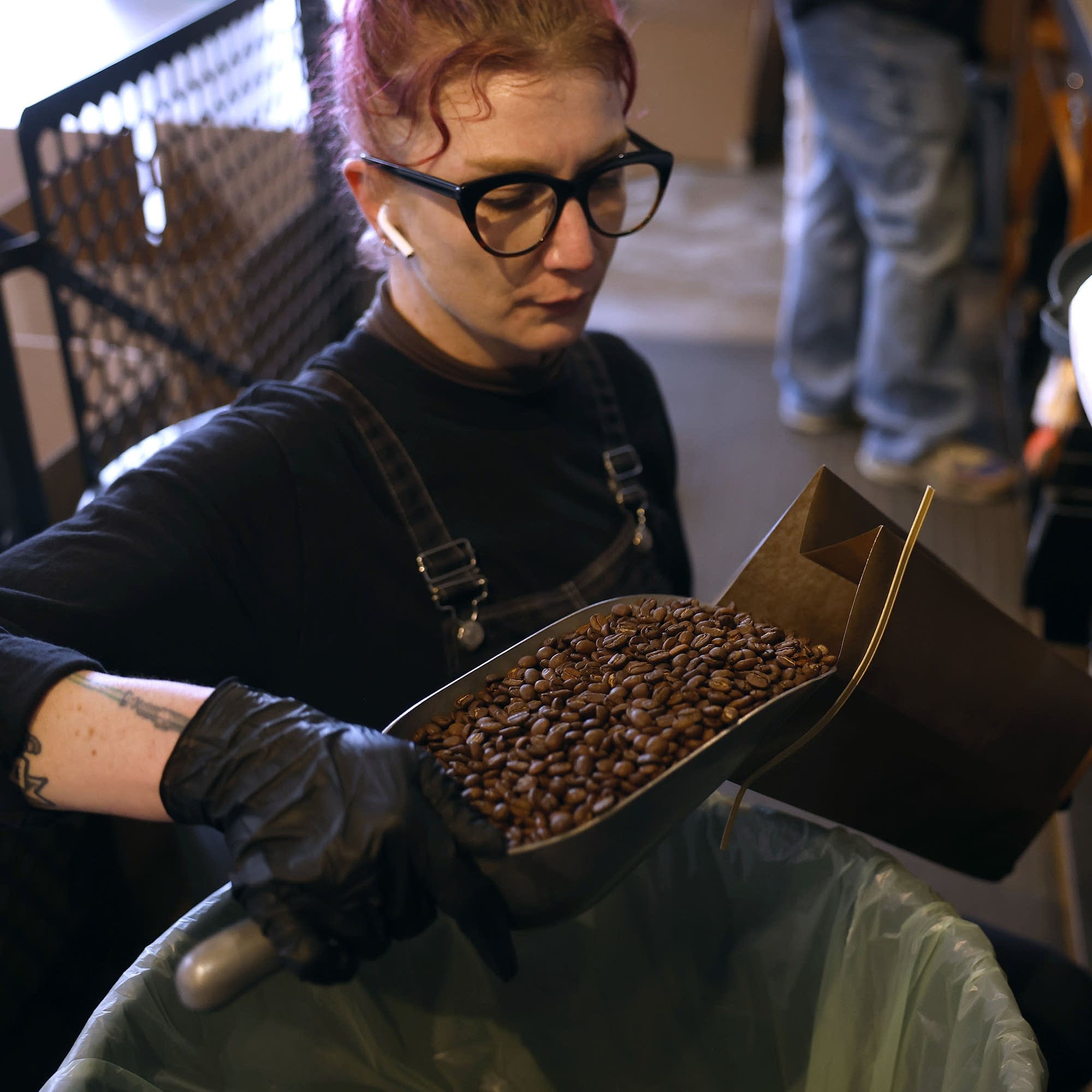
Back to our tariff. Beat the import taxes President Trump is using to reshape the world order, the US labor market and the prices we pay for nearly everything today. Coffee beans from Brazil, which is facing a 50% US tariff. US importers are paying more for coffee wholesale and it's rather difficult to grow coffee beans in the US the BBC's Erin Delmore filed this report for us.
- [03:50]
G
This is a bag of 50 pounds of Brazilian French Roast. It would have been 147.50 before the tariff and 359.50 after the tariff.
- [04:05]
B
Peter Longo's Puerto Rico Importing Company has been a staple on New York City's bleecker Street since 1907. A best seller is Cafeblend. It's reliant on Brazilian beans. They're now subject to a 50% import tax thanks to President Trump's tariffs.
- [04:22]
G
The amount of the tariff is so large that it's going to really affect the price of the coffee. So for instance, if we're selling coffee for $15.99 and there's a 50% tariff, that coffee is going to go up another $8. That's going to be in the 20s. That's crazy. People won't buy it. You know, $30 a pound. That's ridiculous. That's going to kill the market for Brazilian coffee, which is I guess the purpose. They want to punish Brazil for whatever reason, so they're putting a draconian tariff on it. More production at home will mean stronger competition and lower prices for consumers.
- [05:04]
B
President Trump is remaking the global trade world order through tariffs, charging importers like Peter a fee to bring products in from other countries. The goal is to get foreign countries to lower trade barriers and to make foreign made products more expensive so that American made products are more competitive and eventually preferred. That in turn would spur more manufacturing and production of goods right here in the usa. But coffee isn't really grown in the US it can't be. It's a tropical fruit that grows in a narrow strip of land around the equator. It does grow in some parts of Hawaii and Puerto Rico and a tiny slice of Southern California. But. But that's not enough to supply the 450 million cups of coffee Americans drink every day. And so virtually all of it has to be imported. That's why tariffs on coffee producing countries, and especially those 50% tariffs on Brazil, which provides around a third of all coffee consumed in the US Is making life hard for importers and sellers like Peter.
- [06:03]
G
Horribly stressed. Horribly stressed. It keeps me up at night because you have to try to figure out a way to manage your cash flow to anticipate what's coming.
- [06:14]
B
The stakes were high before tariffs were even announced. Back in February, the global price of arabica coffee hit its highest point on record. Even though that's come down a bit, roasted coffee cost consumers 15% more last month than it did a year prior. All of that puts pressure on sellers like Peter.
- [06:30]
G
This is how I make my living. So if we have to shrink, we'll shrink. And if we have to shrink to the point where we go out of business, there's nothing I can do about it. And we'll do the best we can.
- [06:43]
B
But he's betting that that morning cup of joe is something people will keep shelling out for even if it costs them more. I'm the BBC's Erin Delmore for Marketplace.
- [06:53]
D
And stock in Nissan Motors fell hard in Tokyo today, closing down six and a quarter percent. This after Nissan's second largest shareholder said it's selling its whole stake. That shareholder is Mercedes Benz of Germany, which suggests this was a routine portfolio pruning of its pension fund. There's a big overhaul going on at beleaguered Nissan, which announced 11,000 layoffs this spring. I'm David Brancaccio. Marketplace Morning report from APM American Public Media.
- [07:23]
C
The Trump administration is making deep cuts to education research.
- [07:27]
B
The cancellation notices started coming.
- [07:29]
D
When the contract is cut, the study just dies.
- [07:31]
C
It's all happening just as schools are trying to make use of research to improve reading instruction.
- [07:37]
D
There would not have been a Science.
- [07:39]
G
Of Reading without the federal funding.
- [07:42]
E
It wouldn't have happened.
- [07:43]
C
I'm Emily Hanford. On our new episode of Soul to Story, what the Trump cuts mean for the science of reading. Go to your podcast app and follow Sold a story.