Loading summary
Transcript39 lines
- [00:01]
Pharmaceutical Advertiser
For adults with Crohn's disease or ulcerative colitis symptoms. Every choice matters. Tremphya offers self injection or intravenous infusion from the start. Tremphya is administered as injections under the skin or infusions through a vein every four weeks, followed by injections under the skin every four or eight weeks. If your doctor decides that you can self inject Tremphya, proper training is required. Tremphya is a prescription medicine used to treat adults with moderately to severely active Crohn's disease and adults with mild, moderately to severely active ulcerative colitis. Serious allergic reactions and increased risk of infections and liver problems may occur. Before treatment, your doctor should check you for infections and tuberculosis. Tell your doctor if you have an infection, flu like symptoms or if you need a vaccine. Explore what's possible. Ask your doctor about tremphya today. Call 1-800-526-7736 to learn more or visit.
- [00:57]
Matt Levin
Trempharadio.Com this Marketplace podcast is supported by.
- [01:02]
David Brancaccio
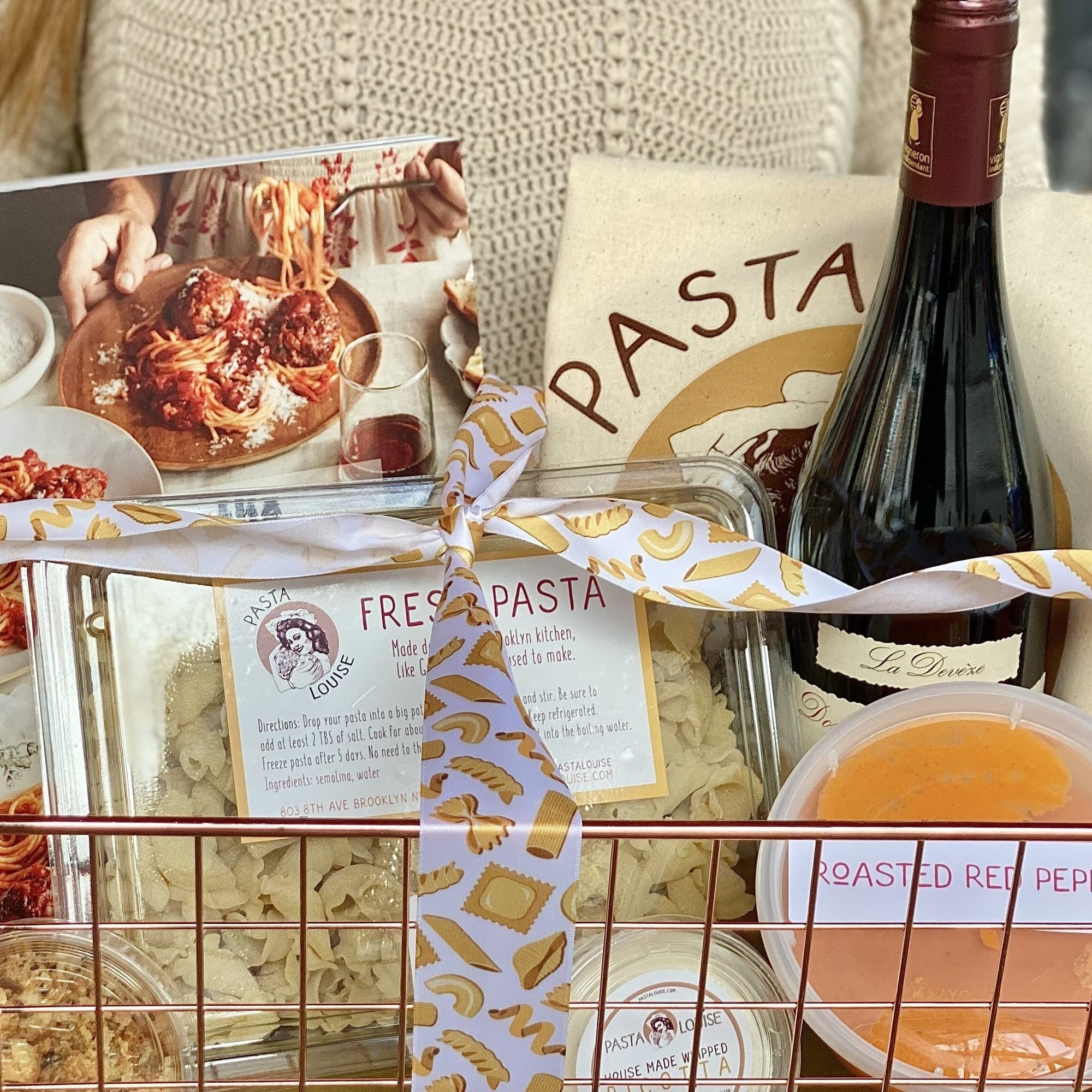
Wealth Enhancement who ask do you have a blueprint for your money? Wealth Enhancement can help you build the right blueprint for investing, retirement, tax and more. With offices nationwide, there's an advisor who's ready to listen and craft a blueprint for your future. Find out more@wealthenhancement.com build basta pasta I'm David Brancaccio in Los Angeles. Good morning to you. Get set for fettuccine, spaghetti, cavatelli, fusilli, farfalla and my personal favorite, strozza pretti. Made in Italy. They get a lot more expensive than made in America macaroni. The Italians have been selling overly cheap. It's called dumping. And now come tariffs that'll nearly double the price of made in Italy Pasta Marketplace's Matt Levin apparently pasta from the.
- [01:54]
Matt Levin
Old world really does taste different. It's why Bennett Furboni uses imported Italian pasta for his lasagna and spaghetti dishes. He's the co owner of Fraboni's Italian Specialties and Delicatessen outside Madison, Wisconsin.
- [02:08]
David Brancaccio
These Italian pastas act differently after they.
- [02:11]
Matt Levin
Come out and they're sauced and they're.
- [02:12]
David Brancaccio
Put in a dish.
- [02:13]
Matt Levin
They hold their texture.
- [02:14]
David Brancaccio
They don't turn into a big glob.
- [02:15]
Matt Levin
Fraboni also sells uncooked Italian pastas for his customers to make at home. He says he'd have to pass at least part of a 92% tariff on to customers. I do worry that we'll lose people to buying stuff from, you know, the big grocery stores, but I try not to lose any sleep over it. The pasta tariffs come at a stressful time for us. Italian trade relations economist Ed Gresser at the Progressive Policy Institute says adding a fight over something as fundamentally Italian as pasta could make things worse.
- [02:46]
David Brancaccio
I can easily imagine the Italian public.
- [02:48]
Matt Levin
Typical guy in Siena or Palermo will notice this and they may be quite upset about it or feel like I want my government to do something about this. Italy exported more than $700 million worth of pasta to the US last year. I'm Matt Levin for Marketplace.
- [03:08]
David Brancaccio
My dad, Professor Pat Brancaccio, used to absolutely no wiggle room insist that there is a right pasta and a wrong pasta for certain sauces. Like it's gotta be linguine if it's clam sauce and never farfalla for Bolognese. However, I recall he was just fine about buying domestic with no government jobs data coming out because of the government shutdown, private sector research has been stepping up. The payroll company ADP now has not just monthly but weekly updates, and the latest one today came in soft. Let's get a take from Jeffrey Cleveland, chief economist at Paden and Riegel.
- [03:42]
Matt Levin
We are taking a look at everything we can get our hands on and perhaps a more timely indicator, something that comes out weekly with about a two week lag, will give us a more real time read on what's going on in the labor market. And unfortunately right now it's saying that we're losing jobs on average over the last four weeks.
- [04:03]
David Brancaccio
He says he's more worried now about the job market getting weaker than he is about inflation going higher.
- [04:21]
Pharmaceutical Advertiser
Save over $200 when you book weekly stays with VRBO this winter. If you haven't seen your college besties since, well, college, you need a week to catch up in a snowy cabin, take a week long vacation and save over $200.
- [04:35]
Multicare Representative / Amy Scott
Book now@vrbo.com Our state has changed a lot in the last 140 years. We know because Multicare has been here guided by a single purpose, making our communities healthier. That comes from making courageous decisions, partnering with local communities to grow programs and services, and expanding healthcare access to those who need it most. Together, we're building a healthier future. Learn more@ multicare.org.
- [05:09]
David Brancaccio
Marketplace's Savannah Peters has been covering New Mexico's new project to subsidize daycare for every family in that state, regardless of income. The money's from oil and gas production. We've met a family near Albuquerque today. How daycare can help businesses here Savannah.
- [05:24]
Savannah Peters
Little Corral Day School serves Albuquerque's east side.
- [05:28]
Natalie Aragon
So this is our threes class. They're having snacks.
- [05:31]
Savannah Peters
What are you having for snackers? Director Natalie Aragon is giving me a tour. Next stop, the Infant Room, where I meet veteran teacher Ms. Daisy, who's been here long enough to remember Eragon's Little Corral days.
- [05:50]
Matt Levin
Look at that.
- [05:51]
Savannah Peters
Used to be one of my babies.
- [05:52]
David Brancaccio
When she was a baby.
- [05:54]
Savannah Peters
Baby girl, really. Ms. Nauli was one of my little friend. ABQ Childcare, that's the nonprofit that runs this and three other daycares around the city, is a family operation started by Aragon's grandparents.
- [06:09]
Natalie Aragon
We've been in business for over 50 years, serving the community.
- [06:13]
Savannah Peters
Over the years, Aragon's family has seen a lot of changes to New Mexico's childcare market, but none as seismic or as sudden as the recent announcement that the state will cover all families daycare bills.
- [06:27]
Natalie Aragon
I was of course excited for our families.
- [06:29]
Savannah Peters
And Aragon says the state reimbursement is more than what she charged for private pay tuition, which should help stabilize her very low margin operation. But she has some reservations.
- [06:42]
Natalie Aragon
In the past we kept our rates low and a lot of families came to us because we were a lot cheaper.
- [06:49]
Savannah Peters
ABQ Childcare's pitch was affordability. It attracted families with military and teacher discounts.
- [06:56]
Natalie Aragon
We're trying to figure out like where do we market to now? And I believe in our quality and care that that will keep our families. But now people have a lot more options.
- [07:05]
Savannah Peters
ABQ Childcare has a highly trained staff, low kid to teacher ratios. What it doesn't have is a big marketing budget. Parents aren't very good at judging the quality of care, unfortunately, and so that does make it harder for the providers to compete on like actual quality. Jessica Brown is an economist who studies childcare markets at the University of South Carolina. She says it's possible this new system could initially favor centers that attract parents with glossy websites promising organic snacks, stimulating STEM activities and backyard chicken coops. While other centers have to recalibrate their business models. I think there's going to be a lot of adjustment cost to the policy. It does take some time to iron out the details and figure out the best way to respond. Brown says if the change spurs more demand for child care, that would smooth things out. Natalie Aragon was ready for a surge in applications come November 1st, but at least so far has only seen a trickle.
- [08:08]
Natalie Aragon
I think a lot of people were like, oh, did you guys get a ton of new kids a day? We're like, no, but we hope we do.
- [08:14]
Savannah Peters
To match that possible boost in enrollment Aragon is also doubling down on hiring efforts. ABQ Childcare just raised its starting wage to 16 an hour in response to an incentive from the state, a move that Eragon hopes will pencil out and pay off. In Albuquerque, I'm Savannah Peters for Marketplace.
- [08:36]
David Brancaccio
Marketplace Online has more on Savannah's reporting on New Mexico's daycare plans. I'm David Brancaccios, Marketplace Morning Report from apm, American Public Media.
- [08:49]
Multicare Representative / Amy Scott
Imagine a future where chocolate and coffee are rare and expensive, where cheap nutritional staples like corn and wheat are threatened. Sounds unpleasant, doesn't it? Well, we could be heading there if we don't recognize that the climate crisis is also a food crisis.
- [09:08]
David Brancaccio
I've seen yields drop because of drought, and believe me, boy, have I seen them drop. We have had dry spells that have lasted years.
- [09:19]
Multicare Representative / Amy Scott
I'm Amy Scott. This season on How We Survive. We investigate how the climate crisis is threatening our most vital food systems and how scientists are racing to develop alternatives that will shape the future of food. Listen to this season of How We Survive on your favorite podcast. Apparently.