Loading summary
Transcript43 lines
- [00:00]
Liana Byrne
This is a call to the leaders.
- [00:02]
Monica Nickelsberg
Who want to redefine their impact, tackle our world's greatest challenges with a powerful network of global business leaders. At MIT Sloan School of Management here.
- [00:14]
Joshua McNichols
In Seattle, we're building the technologies of the future, from AI to clean energy.
- [00:20]
Monica Nickelsberg
But we're also dealing with some of today's biggest challenges, like the housing crisis and the skyrocketing cost of living. We're here to break it all down for you.
- [00:28]
Joshua McNichols
I'm Joshua McNichols.
- [00:30]
Monica Nickelsberg
And I'm Monica Nickelsberg. Join us on Booming, a weekly podcast from KUOW about the economic forces shaping our lives here in the Pacific Northwest. Listen on the KUOW app or wherever.
- [00:41]
Joshua McNichols
You get your podcasts.
- [00:44]
Liana Byrne
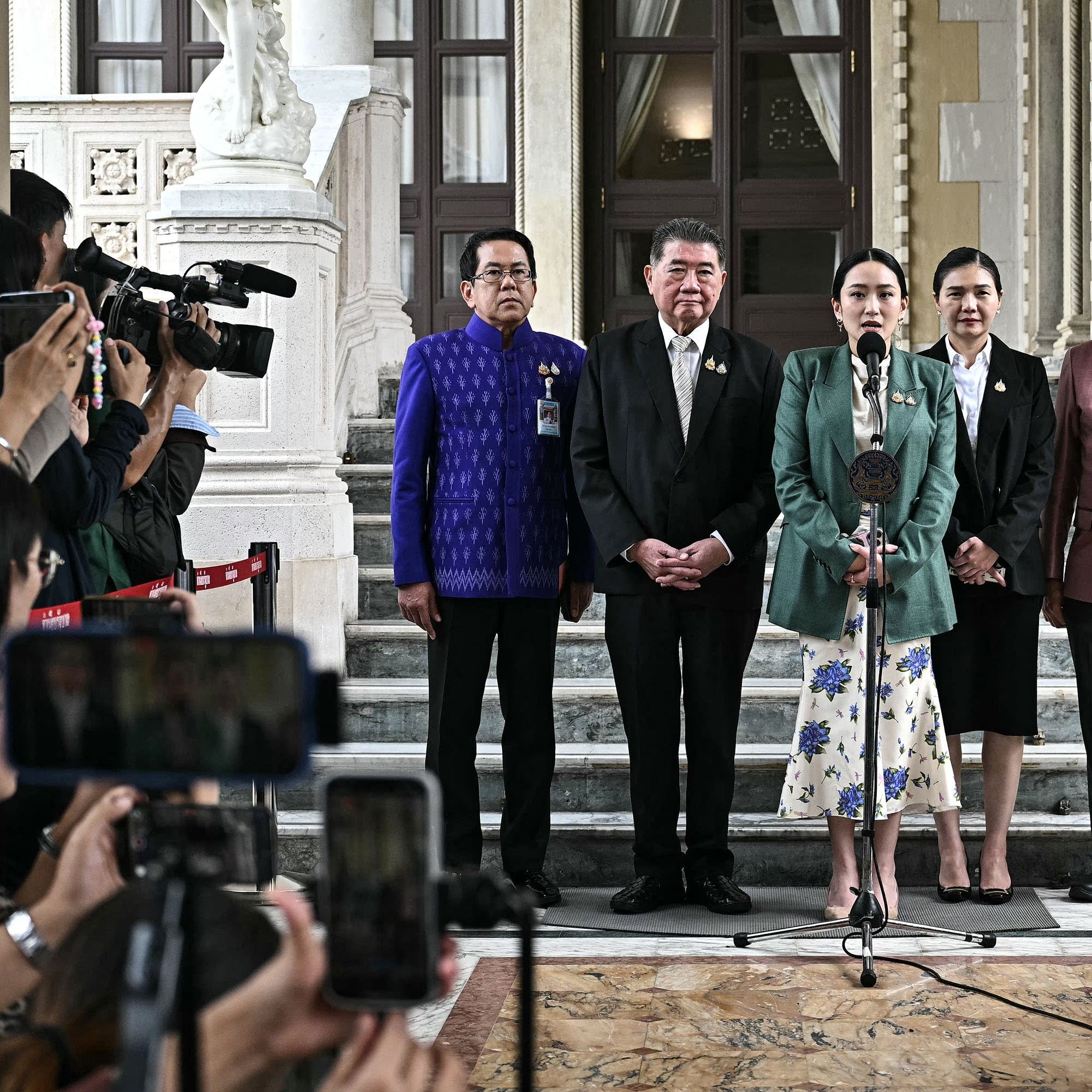
Finance Political drama is making markets nervous. Hello, this is the Marketplace Morning Report, and we're live from the BBC World Service. I'm Liana Byrne. So there's political turmoil brewing in Thailand, and there's recently been major financial turbulence. The prime Minister, Pe Tong Tang Shinawat has been suspended by the constitutional court. The BBC's Shaima Khalil is tracking the fallout. Hello.
- [01:06]
Monica Nickelsberg
Hi.
- [01:06]
Liana Byrne
How is this political turmoil affecting investor confidence in Thailand?
- [01:11]
Monica Nickelsberg
Even before this controversy? And this is a big controversy that has really shaken trust in Pei Tongtang Shinawat's leadership. Really, she's had problems in trust in the Thai economy even before that because, remember, she was already struggling to revive a weak economy. Petong Tang saw her approval ratings fall to 9.2% last week, and that was down from 30.9% in March. You know, it's a huge tumble. And remember as well that her party, the Putai Party, has struggled to launch key economic policies since taking office. These mega projects that we'd seen, for example, that helped boost the popularity of her father, Thaksin Shinawat's government, that hasn't worked. All of this, I think, is sending jitters to investors. And We've seen since January 2025 that overseas investors have persistently sold off Thai shares.
- [02:02]
Liana Byrne
Could we actually see recession in Thailand because of all of this?
- [02:06]
Monica Nickelsberg
It's not beyond possibility at this moment because it's two tier. One is the fact that domestically this is a government that hasn't been able to shore up the economy. If you look at Thailand now, it is positioned as one of the world's worst performing markets.
- [02:20]
Liana Byrne
Okay. The BBC's Shaima Khalil, thanks so much for joining us on Marketplace.
- [02:23]
Monica Nickelsberg
Great to be with you.
- [02:24]
Liana Byrne
Let's do the numbers. Eurozone inflation edged up last month to the European Central Bank's 2% target. And the UK's second biggest food retailer, Sainsbury's, saw its sales rise in the first quarter by 4.7%. Now, the boss of the trading app Robin Hood, Vlad Tenev, says Europe is ahead of the US when it comes to crypto rules in the eu. Once a crypto company gets approved in one country, it can operate across all 27. Robinhood is rolling out new products like tokenized stocks, digital assets that represent shares in public companies which are not currently allowed in the us. He's speaking to us from the company's first international crypto event in Cannes, France. Hello.
- [03:02]
Joshua McNichols
Thank you for having me.
- [03:03]
Liana Byrne
So you're in Cannes today on the French Riviera, and you're talking about crypto products and you've also really pushed into Europe. What is it about Europe that's so attractive?
- [03:12]
Joshua McNichols
Well, I was born here. That's one. So even though I'm American, I'm European as well. And the mission of Robinhood has always been to democratize finance all over the world. So what we really demonstrated here was what the financial system could look like if traditional finance and crypto technology were to fully merge.
- [03:34]
Liana Byrne
Now the EU has launched its markets in crypto assets rules, and a lot of people say that those rules are very clear. So do you think those rules give you a lot more freedom to innovate rather than in the us, or it gives you more legal clarity that you still don't quite have?
- [03:47]
Joshua McNichols
Absolutely. You know, finally, with MICA regulation, we have clarity in the European Union to deliver on a lot of the innovations that we've long described as being possible with crypto technology. And I think the US itself, after many years of trying to, for lack of a better word, obliterate the crypto industry, is ready to catch up. But, but I think this is one area where the EU is admittedly ahead of the US right now, which is clear and sensible. Crypto regulation.
- [04:17]
Liana Byrne
The tone has really totally changed, hasn't it? So I'm sure you're taking advantage of that in the US too.
- [04:22]
Joshua McNichols
Certainly the lack of regulation by enforcement is a good thing in the way that the removal of something very, very bad is good. But I think there's, there's a difference between that and having clear rules of the road. So there, there's still many things that we announced here, like perpetual futures, like stock tokens, which allow tokenization of real world assets that aren't yet permissible in the us, but that we'd be very, very interested in having available to US customers.
- [04:55]
Liana Byrne
Vlad, some of the new products that you're putting out, they can sometimes be seen as maybe riskier. And obviously the retail traders got burned in the meme stock frenzy a couple of years ago. So how do you make sure that users won't have that same experience?
- [05:10]
Joshua McNichols
Yeah, I mean, investing certainly is not without risk. Right. And we make sure we communicate that very clear clearly to our customers. Not everyone is eligible for some of the advanced active trader products like futures and options that we offer. But our goal is to build a platform that's simple, well designed, and that if you are eligible, you have all the tools at your disposal to make informed trading and investing decisions. So I think we have things for every investor, not just the active trader.
- [05:44]
Liana Byrne
Vlad Teneff, CEO and co founder of rabonehud thank you so much for joining us in Marketplace.
- [05:48]
Joshua McNichols
Thank you so much.
- [05:49]
Liana Byrne
Now today marks 25 years since the Ursund Bridge first opened, linking Denmark and Sweden. It's the EU's longest road and rail bridge and it's had a big impact on business in the region. But it hasn't all been smooth sailing. As the BBC's Maddie Savage reports, central.
- [06:06]
Maddie Savage
Copenhagen is a blend of 17th century brightly colored townhouses and and edgy bars and fashion boutiques. But I'm here to visit IO Interactive, a Danish gaming company. It's known for creating the globally popular Hitman franchise and is currently working on a new James Bond game. Something I've been doing a lot recently.
- [06:28]
Joshua McNichols
Is looking at the reaction videos of our launch trailer.
- [06:32]
Maddie Savage
That's Sanja Mondol, who lives in Malmo, Sweden's third largest city city, but commutes over the Irison Bridge to the company's headquarters in Copenhagen. Several times a month.
- [06:42]
Joshua McNichols
It takes me about an hour door to door because of the infrastructure with.
- [06:46]
Monica Nickelsberg
The bridge and the trains.
- [06:47]
Joshua McNichols
And it's super easy.
- [06:48]
Maddie Savage
Driving across can take less than 15 minutes. It's around 10 miles long, including a tunnel section.
- [06:54]
Joshua McNichols
I find it magnificent. We have this beautiful kind of wondrous opportunity to go between countries.
- [07:02]
Maddie Savage
Let me tell you a bit more about the bridge's history as I make my way over to the other side in Malmo. It opened at the turn of the millennium, costing more than $4 billion at the time, with the goal of increasing travel, trade and networking in the region. New figures released by Ericsson's Institute, an independent research organisation, suggest cross border commuting has increased by more than 400% since then. And there's been a big jump in the number of Danes and Swedes starting businesses on either side of the water or moving between the two countries. A short walk from the train station is Malmo University's Urban Studies department, where Helena Bormann is an associate professor. Once you open up the connection, companies can share input markets, customer markets. Finding specialised, skilled staff is easier. Malmo has experienced a surge in new tech startups and life science companies. And more than 100 businesses have moved headquarters or specialist offices here to benefit from the region's infrastructure. And then we have the learning component, which is kind of learning spillovers. We learn by doing, we learn by being close to each other and so on. But I also think for people living in one side of the border and working on the other side, there's a lot of administration involved, you know, taxes, not having to pay double taxes and so on. Another challenge is punctuality. Helena says major disruptions linked to border controls and reduced services during the pandemic eroded trust amongst some commuters. But a recent study by Swedish public service broadcaster SVT suggests around 90% of commuter trains are now punctual and record numbers of people are using them.
- [08:41]
Liana Byrne
The current challenge is that traveling by train between Denmark and Sweden is a success. So the train is crowded.
- [08:48]
Maddie Savage
That's Johan Vessmann, CEO of the Ericssons Institute at Research Organisation. He says a new generation of faster trains with larger capacities are on the.
- [08:58]
Liana Byrne
Way though, but it's will be established about in five, six, seven years in the future. So until then you still will have crowded trains.
- [09:09]
Maddie Savage
Despite facing challenges, the Irasen Bridge remains a European icon for cross border collaboration. And Swedish and Danish authorities are discussing boosting this even further with new fixed connections, including a road and rail tunnel and even a subway between the two Nordic countries. In Sweden, I'm the BBC's Maddie Savage for Marketplace.
- [09:30]
Liana Byrne
And that's it from the Marketplace Morning Report from the BBC World Service, I'm Lianna Byrne. Have a great day and thanks so much for listening.
- [09:45]
Monica Nickelsberg
Hey, everyone, I'm Rima Reis and I'm excited to join Kimberly Adams on Make Me Smart. Together we'll unpack the day's news, whether it's a tariff switch up, the latest on Trump's immigration policy or the future of clean energy. Join us each weekday so we can make sense of it all together, because none of us is as smart as all of us listen to Make Me Smart. Wherever you get your podcasts.