Loading summary
Transcript24 lines
- [00:01]
Marima Reis
Day or night. VRBoCare is here 247 to help make every part of your stay seamless. If anything comes up or you simply need a little guidance, support is ready whenever you reach out. From the moment you book to the moment you head home. We're here to help things run smoothly because a great trip starts with the right support. And hey, a good playlist doesn't hurt either.
- [00:32]
David Brancaccio
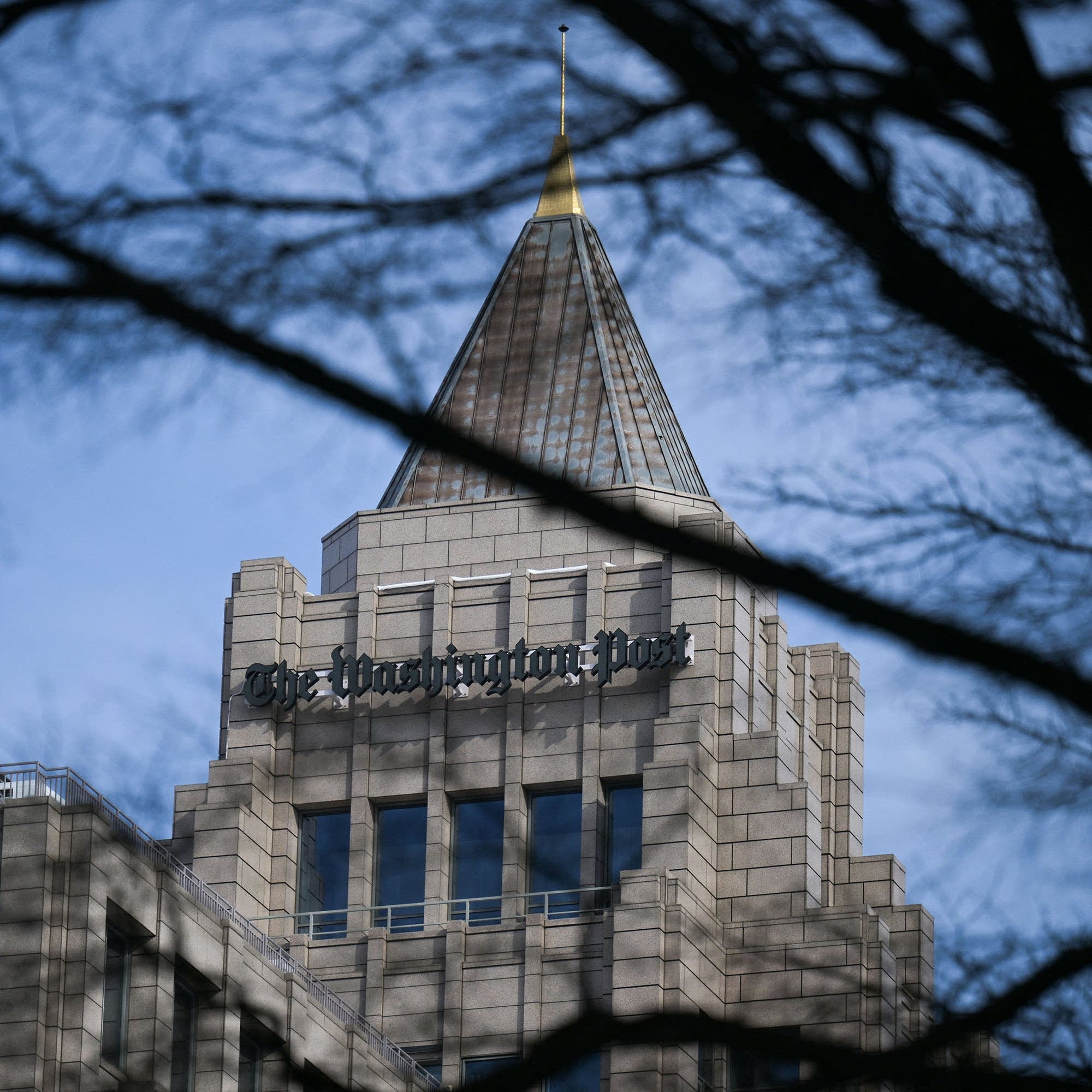
Fact based news is necessary, but can it be profitable? I'm David Brancaccio in Los Angeles. News Corp. The parent company of the Wall Street Journal, Barron's, marketwatch and Fox News, will announce quarterly profits today. News Corp's price to earnings ratio that's a measure of investor optimism in the company is very high compared to other media properties, driven by a sense that the firm Rupert Murdoch developed is doing well converting its legacy media to the digital world. Meanwhile, another tycoon, J.E. jeff Bezos, today faces a backlash for the sweeping layoffs announced this week at the Washington Post, which Bezos owns. There, the digital transformation is not so good. Marketplace's senior Washington correspondent Kimberly Adams has more.
- [01:14]
Marima Reis
The Washington Post layoffs represent a disturbing trend, not just in the media business, but in the country overall, says Arkhan Fung, who teaches public policy at Harvard's Kennedy School. A successful democracy depends on an information environment in which people can understand what's going on with their government and that information and news isn't going to produce itself. And old school news organizations have struggled to find a sustainable business model. A huge amount of advertising revenue, which used to go to organizations like the Washington Post and hundreds of local newspapers, has shifted over to social media organizations. Some of the struggles of the news business are self inflicted, says Nick Usher, who teaches communication studies at the University of San Diego. There's this kind of self fulfilling prophecy. We're not making money so we're going to cut labor. But when you get rid of your journalists, it's kind of hard to do journalism. So newspapers and news publishers are putting themselves in this death spiral where you weaken the product. And when you weaken the product, people leave the people, in this case being subscribers and audiences who have ever more options for where to get their information, whether it's real journalism or not. In Washington, I'm Kimberly Adams for Marketplace. Dinner time. It's where little moments are cherished with Blue cash preferred. Get 6% cash back at US supermarkets and bring everyone together. Did say everyone. Learn more@americanexpress.com Explore bcp terms and cashback cap apply with Blue Cash Preferred.
- [03:08]
Fundrise Announcer
This Marketplace podcast is supported by Fundrise Billion dollar investors don't typically park their cash in high yield savings accounts. Instead, they often use one of the premier strategies for institutional investors, private credit. Now the same passive income strategy is available to investors of all sizes thanks to the Fundrise Income fund, which has more than $600 million invested and a 7.97% distribution rate. With traditional savings yields falling, it's no wonder private credit has grown to be a trillion dollar asset class. Learn more@fundrise.com marketplace. The fund's total return in 2025 was 8%, and the average annual total return since inception is 7.8%. Past performance does not guarantee future results. Current distribution rate as of 12312025 carefully consider the investment material before investing, including objectives, risks, charges and expenses. This and other information can be found in the Income Funds prospectus@fundrise.com Income this is a paid advertisement.
- [04:09]
David Brancaccio
We're talking about the Washington Post. Another property in the Jeff Bezos portfolio. Amazon reports quarterly profits today. Those results could include the cost of closing down its Amazon Fresh and Amazon Go physical stores, which were ways to grab something quick without a trip to the full Whole Foods casino. These had automated just walk out technologies where tech tracks what you've grabbed and bills you automatically. Neal Saunders is managing director at Global Data Retail. Neil, good morning.
- [04:37]
Neal Saunders
Good morning.
- [04:38]
David Brancaccio
All right, Amazon Fresh, Amazon Go. What happened to these guys, do you think?
- [04:42]
Neal Saunders
What they really found with both concepts over time is that they just weren't strong enough to pull customers away from where they were shopping already and they weren't generating the volumes from the stores. They therefore didn't make economic sense. They've tried and they've decided actually it's better to cut our losses and invest in where we know we can make an impact in grocery.
- [05:05]
David Brancaccio
Yeah, and it's not like some people as an alternative, are going completely outside the Amazon fold. I mean, if you need an emergency jug of Tide detergent and a loaf of sourdough, you can get that actually delivered without going over to the nearby store.
- [05:22]
Neal Saunders
Well, that's the thing. You have to look at where Amazon is strong and what Amazon does well. And it really is mostly in the online space. They're super convenient, they're super reliable, they're super fast increasingly when delivering things. And that's actually the arena where they can win when it comes to running physical grocery stores. The country is already pretty saturated.
- [05:47]
David Brancaccio
Neil, did you ever try one of these stores set up with just walk out technology?
- [05:53]
Neal Saunders
I did try them. I've been in quite a few but to be honest, since I was only buying a few things, the differentiation of just being able to walk out wasn't really that strong. Because honestly, self scanning some things or putting them through a register doesn't really take that much longer in a traditional store.
- [06:14]
David Brancaccio
I went to one in an airport and I found it disorienting. I mean, there are these two human employees there to answer my questions. I said, really? I could just walk out right now? Yes. Where there. I felt it was a bit weird. And then I was unnerved that, like, what if because I picked up a candy bar but didn't actually walk out with it, you know, would it register that kind of stuff?
- [06:36]
Neal Saunders
And that was one of the problems with Amazon Go. You never quite knew how much you were spending. And sometimes the technology was a bit glitchy. I mean, sometimes you wouldn't get a receipt for hours and hours until you'd left the shop. And sometimes it never even materialized. So it was all kind of a bit of a mystery. And I think that made a lot of consumers very uncomfortable.
- [06:58]
David Brancaccio
Also, supermarkets, grocery, it's a tough market, always has been. I mean, this fierce competition and profit margins, you know, I'm told, are generally pretty slim.
- [07:10]
Neal Saunders
The grocery market is very, very low margin. It's very focused on price and it's also very saturated and crowded. And if you want come up with a new concept and you want to pull people over to your stores, to your brand, you have to do something that's really compelling. But the question with Amazon physical stores was what is that point of differentiation? What's the reason I should come here over the supermarket I already go to? And honestly, they never really answered that question convincingly.
- [07:44]
David Brancaccio
Neal Saunders is managing director and retail analyst at Global Data Retail. Thank you for this.
- [07:50]
Neal Saunders
You're very welcome. It's great to speak with you.
- [07:53]
David Brancaccio
And in Los Angeles, I'm David Brancaccio. This is the Marketplace Morning report from APM American Public Media.
- [08:05]
Marima Reis
Have you ever kept a financial secret from a partner? I'm Marima Reis, and this week on this is Uncomfortable. I sit down with a divorce lawyer who shares some pretty extreme cases of financial secrecy. They had a forensic accountant went through the numbers and they calculated that he spent $250,000 in a year on strip clubs. And I also chat with a couples counselor about how financial issues in a relationship are often really about trust and power.
- [08:32]
David Brancaccio
I find that like a lot of.
- [08:34]
Neal Saunders
Dudes typically are like, I know how to spend the money the right way. I should be the one that has.
- [08:39]
David Brancaccio
All the control over it. And you with your girl brain don't understand.
- [08:44]
Marima Reis
Listen to this is uncomfortable on your favorite podcast applied.