← Marketplace Morning Report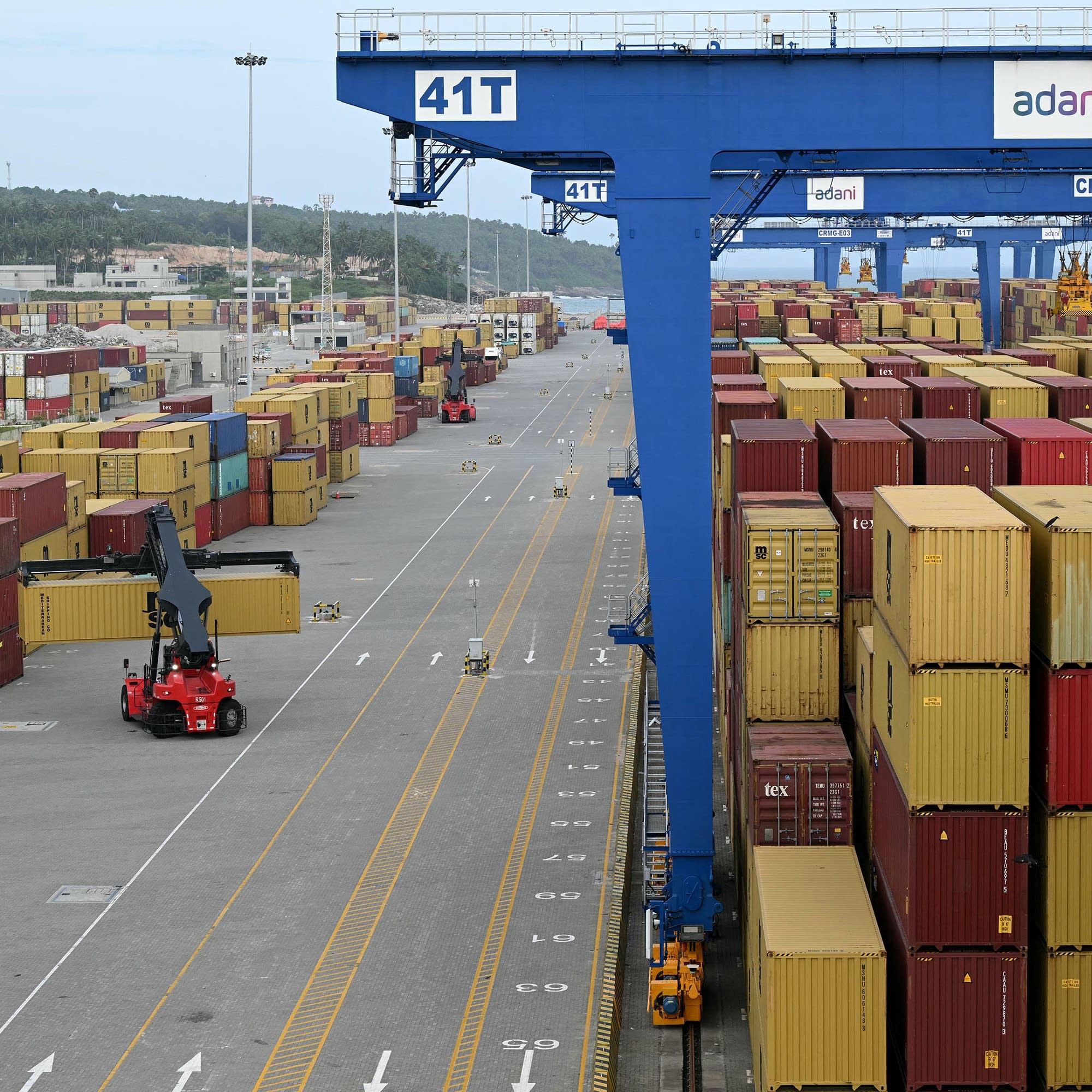
Loading summary
Transcript19 lines
- [00:00]
A
It's tax season and at Lifelock, we know you're tired of numbers, but here's a big one you need to hear. Billions. That's the amount of money and refunds the IRS has flagged for possible identity fraud. Now here's another big number. 100 million. That's how many data points Lifelock monitors every second. If your identity is stolen, we'll fix it, guaranteed. One last big number. Save up to 40% your first year. Visit lifelock.com specialoffer for the threats you can't control. Terms apply. This Marketplace podcast is supported by Wealth Enhancement who ask, do you have a blueprint for your money? Wealth Enhancement can help you build the right blueprint for investing, retirement, tax and more. With offices nationwide, there's an advisor who's ready to listen and craft a blueprint for your future. Find out more@wealthenhancement.com Build.
- [00:55]
B
America agrees a trade deal with India, but the devil may be in the detail. Live from the UK this is the Marketplace Morning report from the BBC World Service. Hello, I'm Nick Qureshi. Has Donald Trump really pulled off another of his much touted trade agreements? The US President announced that America would cut tariffs on goods imported from India and said in return India had promised not to buy any more Russian oil. Trouble is, when Prime Minister Narendra Modi announced the tariff reduction, he did not mention anything about Russia or its oil. Here's the BBC's Asia business correspondent, Arshana Shukla. Hi, Archana.
- [01:31]
C
Hi Nick.
- [01:32]
B
Give us some details then about this trade deal.
- [01:35]
C
Well, the details are still a bit sketchy, but what's clear for now is that US will lower tariffs on Indian goods from 50% to 18%. And that is a big deal because US is India's largest trading partner. More than a third of what India exports goes there. So for export driven sectors like textiles, gems and jewellery, seafood and auto components, it is a major relief. Many of the exporters that we'd been speaking to over the last several months, they said nearly 30 to 50% of their business had collapsed. So for them it's a major relief. But apart from that, the fine print of the deal is really missing. While President Trump says India will stop buying Russian oil, that India will also cut tariff on American goods to zero, none of this is actually confirmed by New Delhi.
- [02:19]
B
Could there be a reason, Archino, why Narendra Modi would promise President Trump various things but not want to make that public?
- [02:27]
C
If we talk about the Russian oil purchases, India and Russia are long term allies and it's unlikely that India will completely cut down its Russian oil purchases, one because it's also cheap and secondly, because of the long standing relations. And even from the geopolitical lens, Beijing, Delhi, Moscow, they've literally deepened their ties after these sweeping tariffs came into effect in last year. So from that perspective, it seems unlikely that such sort of major deal has been struck wherein it would say they would cut Russian oil supplies completely or bringing it down to zero tariffs as far as agriculture and dairy is concerned, which are really very politically sensitive sectors in India. And hence many experts who are looking at some of the sketchy details that are still emerging, they feel that right now what we should position this as just political signals, a truce coming through, but not really a full trade deal in picture.
- [03:24]
B
Archana Shukla, thanks for joining us on Marketplace.
- [03:27]
C
Thank you, Nick.
- [03:28]
B
Well, that takes us to the numbers. And stock markets are reacting well to that deal. India's Nifty 50 trading up 2.7%. And after a big fall in the price of gold and silver on Friday and Monday, support for precious metals has returned. This morning. In early trading on Tuesday, the value of gold jumped by over 6%, its biggest daily rise since November 2008. To Venezuela next, where last week a law was passed opening the country's oil industry to foreign investment. This was a key White House demand following military action last month. The BBC's Roberto Paredes is the first international journalist to report from the country's decaying oil heartland since the removal of President Nicolas Maduro, where people are hoping the industry's revival will once again bring jobs and prosperity.
- [04:20]
D
Maracaibo is the oil heartland of the country with the largest puma reserves in the world. This city is not what it used to be. The colonial style buildings, brightly painted in tropical colors have faded and cracked. The streets are full of potholes and very quiet. Maracaibo used to be the wealthy heart of Venezuela's old boom, but decades of mismanagement have hit it hard. Now it feels like a symbol of a country that has declined. People here are desperate for the political stability and the investment to bring Maracaibo back to life. Getting ready for a trip out on the city's lake. These fishermen are being hit by both the economic downturn and the pollution caused by the decaying oil industry. Carlos used to be able to pull in big catches.
- [05:19]
B
It's getting worse every day. I see it getting worse and worse.
- [05:23]
D
Despite the removal of his president by Donald Trump, he's ready for American investment and the oil to start flowing once more.
- [05:35]
B
It would create jobs and our children wouldn't have to work in the fishing industry anymore.
- [05:42]
D
In a nearby neighborhood, 93 year old Jose is talking about his old job at the state owned oil company. He's keen to show us a special edition Dodge car he bought in the boom years of the 1970s. But like many of the homes here, it's now a faded reminder of how things used to be.
- [06:06]
B
Everything has changed. In the past, things were easier.
- [06:10]
D
We had more comforts. The streets in this area could be straight out of a 1960s American suburb. International oil companies, many with US links, built whole neighborhoods for the workers. But today, many of these houses stand empty and some have been looted. Analysts say it could take tens of billions of dollars and potentially a decade to restore Venezuela's oil output to what it once was. There is still uncertainty over the US's long term plans. Juan Romero is a local member of parliament for the governing Socialist Party. He says there is still anger over the US sanctions and military action that have hit the country. Look at what we Venezuelans are suffering. The events of January 3rd were a physical act of aggression. But the attacks haven't stopped since President Trump announced the start of a firm blockade on the country. There's a lot of theatricality and little reality. Truths are mixed with lies. Venezuela has just passed a new law giving foreign companies far greater access to its oil industry. This has been a key demand of the Trump White House. But for many people here, unlocking the country's vast oil wealth still feels a long way off.
- [07:36]
B
The BBC's Norberto Paredes in the UK, I'm Nick Qureshi with the Marketplace Morning Report from the BBC World Service.
- [07:48]
A
Want even more Marketplace? Sign up to receive weekly tips from our editorial team to help you make the most of your money. Plus, you'll also be the first to know about exclusive Marketplace merchandise and local events. Text Marketplace to 80568 to sign up.