Loading summary
Transcript29 lines
- [00:01]
A
You know what they say. Early bird gets the ultimate vacation home. Book early and save over $120 with VRBO because early gets you closer to the action, whether it's waves lapping at the shore or snoozing in a hammock that overlooks, well, whatever you want it to, so you can all enjoy the payoff come summer with Vrbo's early booking deals. Rise and shine. Average savings $141. Select homes only.
- [00:32]
B
The economic reverberations of war From Marketplace, I'm Sabri Ben, ashore in for David Brancotio. The war with Iran continues to disrupt oil production and shipping channels in the Middle East. It's also raising concerns about global inflation. International Standard Brent crude is up 6% this morning to more than $82 a barrel. A week ago it was around $70. Airlines and travelers are still struggling with closed air routes and Air 11,000 flights have been canceled, affecting one and a half million passengers. Marketplace's Nova Sappho has the latest Crude
- [01:09]
C
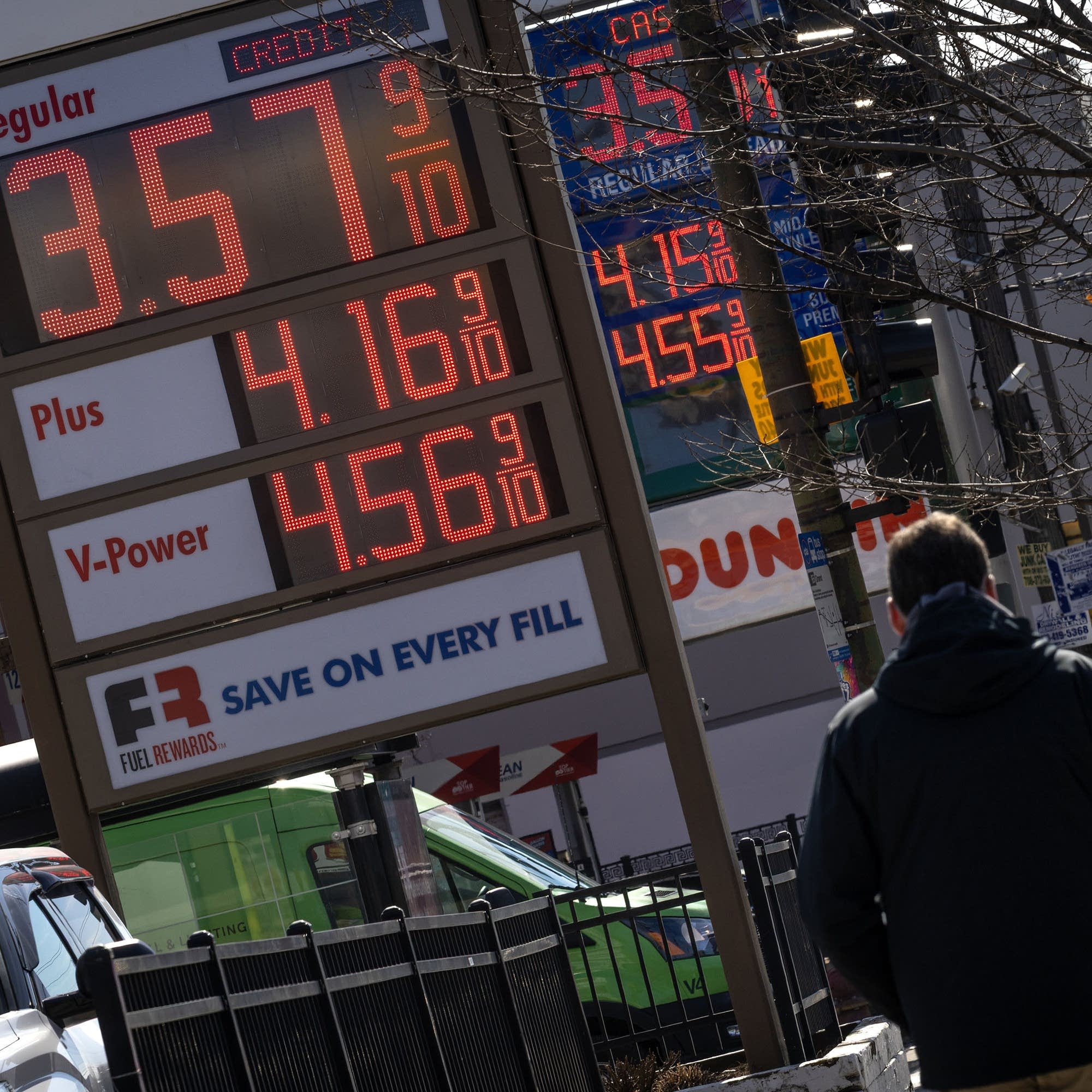
oil prices are rising over concerns that a key waterway for tankers, the Strait of Hormuz, located along Iran's south, will remain effectively off limits. About 150 ships are stranded. Insurers have canceled war risk coverage for tankers. Shipping rates are up and and container ships, not just tankers, are caught in the backup. Consumers may already be feeling the effects. Average gas prices in the US have risen 10 cents in a day, according to AAA. Rising energy prices could hurt airlines, too, which are already struggling with disruptions along Mideast routes. Overall, analysts say the inflationary impact from the military conflict may be temporary and minimal if it is over quickly. But a prolonged war a month or longer could cause energy prices to skyrocket. I'm novasafo for Marketplace.
- [02:01]
B
A week and a half after the Supreme Court struck down many of President Trump's tariffs, the question of refunds for all the businesses that paid them is still hanging in the air. The Trump administration wanted to slow down the refund process. A federal court yesterday said no. On top of that, businesses are facing a whole new round of tariffs to disentangle. So we reconnected with Rachel Rosner to see how her business is doing. She's owner and founder of Eldon Street Tea Shop in Reston, Virginia. Rachel, welcome back.
- [02:30]
D
Hi. Thanks for having me back.
- [02:32]
B
Is it not kind of a math problem trying to navigate like which tariffs went away and then are replaced by which other tariffs? At this point so far, we try
- [02:43]
D
to keep up with the percentage. We do have a couple of industry Wholesale companies and vendors that are closely watching every time these tariffs change, which is helpful, but also they are kind of using it as an advantage as well, saying, oh, you better get your prices locked in before it changes. And that's not really great either. It creates a scarcity. So it's just kind of more of the same stress, more of the same fear and more of the same problem.
- [03:16]
B
A lot of companies are suing to get refunds. Are you?
- [03:20]
D
With legal fees and the time and the commitment to it, we have to weigh out those pros and cons and we are still considering whether that's an option for us or not.
- [03:32]
B
I assume the government's not going to just automatically refund you without you having to work for it.
- [03:39]
D
No, we're definitely going to have to fight for it if we do. And as the president said, it could take, you know, several months to years to get that money back. And I think a lot of consumers also believe that they have rights to that money. But as a small business owner having to pay for these tariffs up front with money that we don't necessarily have and have had to take loans out for so that consumers can continue to purchase those products, it really constrains the ability to move forward for small businesses to get that money that they need.
- [04:15]
B
Do you think that prices would come down now or in the future or are things too kind of crazy to know?
- [04:24]
D
I don't think that prices are going to come down anytime soon because until we recoup the cost of what we paid with the tariffs on the products that we purchased or didn't purchase, some businesses had to leave their stock at the port. Until we recoup those costs, then we can't bring down our prices. And not only that, just the general price of everything has gone up. And unfortunately this has a trickle down effect to my business. And I do think that if we push harder that we would definitely lose customers if we go any higher.
- [05:04]
B
Rachel Rosner, owner and founder of Eldon Street Tea Shop in Reston, Virginia. Thank you as always. Good to talk to you again.
- [05:12]
D
Good to talk to you, Sue.
- [05:31]
A
If you your parent or spouse served
- [05:33]
D
in the military, you could join our family. Our members saved an average of $70 a month on auto insurance when they switched. Tap the banner or visit usaa.com join
- [05:43]
A
today to check your eligibility restrictions apply.
- [05:46]
E
It's tax season and at lifelock. We know you're tired of numbers, but here's a big one. You need to hear billions. That's the amount of money and refunds the IRS has flagged for possible identity fraud. Now here's another big number. 100 million. That's how many data points LifeLock monitors every second. If your identity is stolen, we'll fix it, guaranteed. One last big number. Save up to 40% your first year. Visit lifelock.com specialoffer for the threats you can't control, terms apply.
- [06:17]
B
When the Supreme Court struck down those tariffs last month, it was silent on what's known as the de minimis exception. That's the rule where if your package is worth less than $800, no tariffs. Trump suspended that exemption last summer, which meant steep taxes for the first time in decades on a lot of packages. There were 1.4 billion of them in 20. Marketplace's Sam Fields has more on where things stand now.
- [06:39]
F
Short answer not much has changed since the Supreme Court ruling if you're ordering cheap stuff from abroad.
- [06:45]
D
As of today, consumers, importers, everyone still has to pay full tariffs on items that are imported that are worth under $800.
- [06:55]
F
Michelle Schultz at Schultz Trade Law in Dallas says the sweeping tariffs the president imposed on countries last spring may be gone.
- [07:03]
D
But there are many tariffs still in
- [07:05]
F
place and they still apply to small packages, at least for now. Christopher Tang at UCLA's Anderson School of Management says whether this current tariff landscape is better or worse for you as a consumer depends where you're buying from.
- [07:19]
D
If you buy something from China now on paper the tariff is actually lower than before. But if you buy something from Europe and now it's actually more expensive.
- [07:31]
F
Lots of consumers are still ordering clothes and other things from abroad on sites like Shein and Temu, he says, because even with tariffs, it's often cheaper than shopping. Here. I'm Samantha Fields for Marketplace, and in
- [07:44]
B
New York, I'm Sabri Benishore with the Marketplace Morning Report. From APM American Public Media.
- [07:59]
G
Hey, David Brancaccio here. I hope you're well and that your passport is up to date because I am hosting a trip to Italy this fall and you, you are invited stay at a world class Tuscan villa and step into the world of the Medici, the formidable family whose influence and power helped give rise to the Renaissance and the art we still celebrate today, not to mention the banking system. We're going to visit the world's oldest bank, swim in the thermal spa waters in Montecatini and take in the art of the Uffizi. All of this, and then we'll try to put it all into context with great conversation over even better meals and wine tasting. Please join me and know this buying into this trip will provide essential support for public media. Discover more about this fall's tuscany adventure@marketplace.org travel to reserve your spot today, that's Marketplace. Org travel.